
Preparation is the bedrock of the outdoor experience. Whether scaling a technical alpine route or training for an ultra-endurance event, success is rarely the product of chance; it is the result of meticulous conditioning, specialized equipment, and a strategic mindset. As the United States approaches the 2026 midterm election cycle, advocates from the outdoor recreation sector are increasingly drawing parallels between the discipline required in the backcountry and the urgency of political engagement. With the federal landscape shifting toward significant policy reversals regarding public lands and climate protections, the "Outdoor State"—a massive, often under-leveraged constituency of skiers, climbers, hikers, cyclists, and anglers—is being called to mobilize with the same intensity applied to their physical pursuits.
The Legislative Landscape and Environmental Rollbacks
The past eighteen months have marked a period of aggressive legislative and administrative change regarding environmental stewardship. Policy analysts note a distinct pivot away from the conservation-heavy initiatives that defined the previous four years. These shifts have manifested primarily through the streamlining of energy permitting processes, the re-evaluation of protected status for several National Monuments, and a reduction in the regulatory oversight of public land management agencies.
The implications of these changes are broad, affecting access for recreational users and the ecological health of the landscapes they frequent. When regulatory frameworks are altered without robust public commentary or oversight, the downstream effects often include degraded water quality, increased habitat fragmentation, and a loss of public access to previously managed wilderness areas. For the outdoor industry, which contributes an estimated $1.1 trillion to the U.S. economy, these policy shifts present a systemic risk to the viability of their business models and the preservation of the natural assets upon which they depend.
Chronology of Legislative Action
To understand the stakes of the 2026 midterms, one must look at the recent trajectory of environmental law:
- 2021–2022: A period of significant legislative investment in climate infrastructure, highlighted by the passage of the Inflation Reduction Act, which provided the largest climate investment in U.S. history.
- 2023: The beginning of a pivot toward energy independence and fossil fuel expansion, with the approval of major resource extraction projects on public lands.
- 2024: Heightened litigation and administrative efforts to revisit the boundaries and protections of multiple national monuments, signaling a shift in the philosophy of land management.
- 2025 (Projected): A continuation of efforts to decentralize federal control over environmental standards, shifting more power to state-level decision-makers.
- 2026: The midterm elections, which represent the most significant opportunity for voters to provide a check on these administrative trajectories.
The Outdoor State as a Political Force
Organizations like Protect Our Winters (POW) have identified a strategic opportunity to consolidate the "Outdoor State" into a cohesive voting bloc. By their estimates, there are approximately 45 million eligible voters who identify primarily through their engagement with outdoor recreation. This demographic, while historically fragmented, shares common interests: clean air, accessible public lands, and sustainable climate policy.
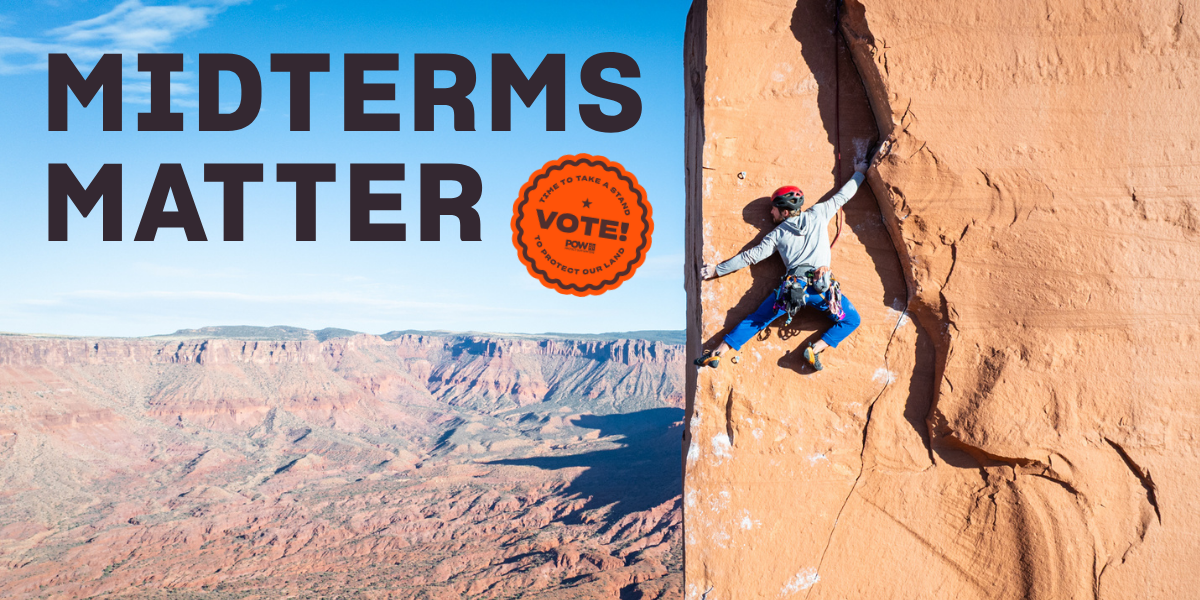
The primary objective for these advocacy groups is to "Shift Who Decides"—a mission to ensure that lawmakers are held accountable to the specific concerns of their constituents who utilize public lands. The logic is rooted in political science: electoral outcomes are often determined by margins of less than two percent. When a dedicated constituency, such as the outdoor community, focuses its collective energy on specific districts, it can effectively move the needle on legislative priorities.
Data-Driven Participation and Voter Trends
Historical data on midterm election turnout suggests that the 2026 cycle is poised to be a high-stakes environment. In 2022, the U.S. experienced a voter turnout rate of approximately 52% of the voting-age population. While historically impressive—ranking as one of the top three midterm turnouts since 1978—it still leaves nearly half of the eligible electorate unrepresented in the federal decision-making process.
Political analysts emphasize that midterms serve as a "referendum" on the incumbent administration. Because they do not feature the high-visibility draw of a presidential race, they are often decided by "low-information" voters who lean heavily on party identification. However, single-issue voters—those driven by environmental concerns—have shown a higher propensity for consistent participation. The strategy for the 2026 cycle involves converting sporadic voters into consistent ones, emphasizing the direct correlation between local environmental health and federal ballot decisions.
Implications of Electoral Outcomes
The 2026 midterms will dictate the composition of the 120th United States Congress. A change in the majority of either the House of Representatives or the Senate would fundamentally alter the oversight committees responsible for the Department of the Interior, the Environmental Protection Agency, and the Department of Agriculture.
If the current trajectory of deregulation continues, experts predict a significant increase in land-use conflicts. Conversely, if a coalition focused on environmental preservation gains a legislative foothold, it could force a legislative impasse, preventing further rollbacks and potentially securing permanent protections for sensitive ecological zones. The "margin" analogy, frequently used by outdoor athletes, is apt here: just as a few millimeters of friction determine whether a climber reaches the summit or falls, a few thousand votes in key swing districts will determine the future of federal land management.
Official Perspectives and Institutional Strategy
While political parties remain focused on national messaging, non-partisan advocacy groups are pivoting toward hyper-local strategies. The emphasis is on digital infrastructure: making registration, polling location identification, and candidate research as seamless as checking a backcountry weather forecast or trail conditions.

In statements regarding their 2026 initiatives, advocacy groups have highlighted that climate policy does not gain traction through hope alone; it gains traction through institutional pressure. By framing climate change and land conservation as defining issues, these organizations hope to make these topics "non-negotiable" for candidates, regardless of their political affiliation. This strategy requires a sophisticated approach to voter education, ensuring that constituents understand not just the broad slogans of candidates, but their specific voting records on environmental riders and land-use bills.
The Role of Civic Engagement in Conservation
Ultimately, the goal is to shift the perception of the ballot box from a secondary civic duty to a primary tool of conservation. For the outdoor community, the preservation of the landscape is as essential as the maintenance of one’s gear. The argument presented by activists is that if one is willing to spend hours training for a mountain summit, dedicating an hour to informed voting is a negligible cost for the protection of those same mountains.
As the 2026 cycle approaches, the political landscape will likely see an increase in activity from outdoor industry leaders and individual enthusiasts. This mobilization is expected to manifest in voter registration drives at trailheads, education campaigns within gear shops, and an increased presence at town hall meetings.
The systemic dismantling of environmental protections is not an inevitable outcome; it is a policy choice. By choosing to engage in the electoral process, the Outdoor State aims to rewrite the narrative of land use in the United States, asserting that the people who use the land, breathe the air, and drink the water should hold the final authority over how those resources are managed. The challenge for 2026 is to ensure that the passion for the outdoors is successfully translated into the language of governance: the vote.

