
The snow-capped peaks of Scandinavia recently played host to a paradigm-shifting gathering that has begun to alter the landscape of professional snowboarding. Conceived through a collaborative partnership between the renowned American snow-shaping collective Snowboy Productions and Swedish professional snowboarder PJ Gustafsson, Days of Thunder has rapidly established itself as a premier fixture on the international winter sports calendar. Following its inaugural debut on Swedish soil in April 2025, the event returned with an expanded vision, reinforcing its status as a sanctuary for pure athletic expression, unscripted creativity, and unadulterated camaraderie.
Unlike traditional winter sports competitions governed by strict scoring criteria, panel judges, elimination rounds, and commercialized spectator arenas, Days of Thunder operates entirely outside the competitive framework. There are no medals, no podiums, no leaderboards, and no financial purses tied to placement. Instead, the multi-day gathering is engineered around a singular, cohesive objective: bringing together a diverse cross-section of the world’s most progressive snowboarders to ride, document, and celebrate the culture of the sport away from the pressures of professional competition.
The Genesis and Philosophy of Days of Thunder
The conceptual framework behind Days of Thunder emerged from a growing sentiment within the global snowboarding community that competitive formats had become overly sanitized. Modern contests frequently prioritize technical gymnastics, axis rotations, and standardized judging criteria over style, individuality, and environmental interaction. Seeking an antidote to this hyper-regulated environment, Snowboy Productions—an entity globally recognized for designing innovative, hand-built transition parks—joined forces with Gustafsson to build an environment where athletes could return to the roots of their craft.
The foundational ethos of the event rests upon inclusivity and creative autonomy. Participants span a wide demographic spectrum, encompassing multi-generational icons, current national team members, X Games veterans, and underground visionaries, alongside unexpected cultural figures such as Finnish television personalities and stunt performers. By removing the adversarial nature of scored contests, Days of Thunder fosters an atmosphere where veterans and rising upstarts share knowledge, push one another’s creative boundaries, and collaborate on filming and photography projects designed to capture authentic snowboarding culture.
Chronology and Park Construction: From Blueprint to Reality
The realization of a Days of Thunder event requires intensive logistical coordination and artisanal engineering. Months of planning precede the physical construction phase, culminating in an intensive operational timeline on location.
The Build Phase
Months prior to the riders’ arrival, technical designers and heavy machinery operators scouted and finalized a brand-new venue site, shifting locations from the previous year to test fresh terrain and snow profiles. Once the site was locked in, the construction crew dedicated four rigorous days to shaping the park under variable mountain weather conditions.
Every transition, hip, and transition feature was custom-built by hand, utilizing a blend of traditional shaping techniques and avant-garde architectural concepts. Several obstacles introduced at the new site were entirely unprecedented, conceptualized specifically to challenge spatial awareness and unlock new avenues of trick execution. By the time the park stood ready under brilliant sunshine, it represented a masterclass in modern snow-sculpting.
The Arrival and Acclimatization
As the build concluded, invited athletes began arriving from across Scandinavia, the United States, Canada, and Bulgaria. The international contingent dropped into the pristine venue to familiarize themselves with the unfamiliar architecture. Unlike standard training sessions plagued by time constraints, the schedule was deliberately structured around prolonged, uninterrupted sessions. Over the course of three intensive days, participants engaged in daily five-hour film and photography blocks, allowing them to thoroughly dissect the park’s unique geometry and execute comprehensive visual documentation.
Architectural Innovation and Standout Performances
The synergy between the meticulously engineered terrain and the caliber of the invited talent yielded an exceptional display of modern snowboarding. Ideal weather windows and consistent snow quality provided optimal surface conditions throughout the weekend, translating into textbook execution of classic maneuvers alongside progressive, boundary-pushing feats.
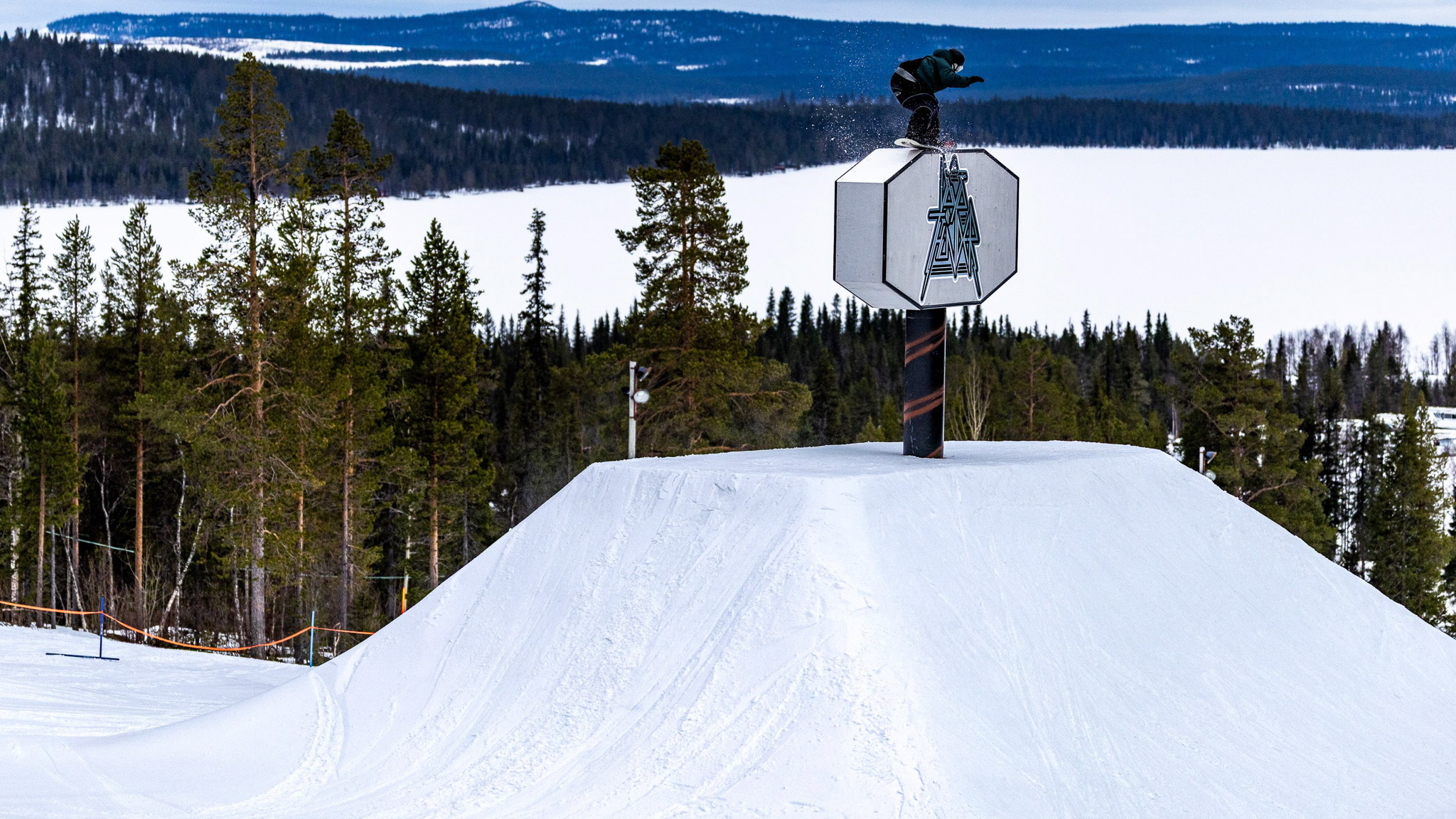
Among the standout performances, Swedish standout Ruben Rosenfors delivered a series of expansive, highly stylish airs executed with trademark amplitude in close proximity to a signature park feature known as Thor’s Hammer. Simultaneously, Zenja Potapov consistently dissected the venue with highly creative, unconventional lines that demonstrated a deep understanding of the park’s fluid layout.
The technical utility of the venue was further amplified by riders such as Kevin Rahko and Nigo Omma Simma. Utilizing the left-side hip feature as a launchpad, both athletes elevated themselves to remarkable heights, transitioning effortlessly between towering straight airs and fluid 360-degree rotations. Familial synchronization was put on display by siblings Blanca and Frej Linnes, who navigated the park in close succession, executing impeccably matched, fluid lines that appeared nearly choreographed to onlookers.
As the multi-day session progressed, the intensity steadily escalated. Finnish up-and-coming rider Leo Haappalainen captured the collective imagination of the camp by progressively escalating his commitment and trick difficulty with nearly every consecutive lap through the park.
A Historic Climax on the Final Day
The culmination of the event occurred during the final fifteen minutes of the closing session on the ultimate day, marking an unforgettable conclusion to the gathering. Having systematically elevated his riding throughout the weekend, Leo Haappalainen elected to attempt an ambitious maneuver that had remained untouched and seemingly impossible since the park’s construction: navigating the apex of the structure known as the hammer.
Approaching the formidable obstacle, Haappalainen initiated the sequence with a precise 50-50 balance trick directly on the crown of the hammer. Maintaining his composure within the compressed timeframe of the closing minutes, he followed the rail entry by launching cleanly off the summit, executing a committing Frontflip into the transition below. The successful landing sent shockwaves through the gathering of peers and media personnel, providing a fittingly dramatic exclamation point to a meticulously executed event.
Industry Implications and the Broader Impact on Snowboarding Culture
The successful execution of Days of Thunder highlights a significant shift in how snowboarding brands, athletes, and media entities conceptualize industry engagement. For decades, the commercial growth of snowboarding was inextricably linked to the contest circuit—World Cups, grand prix events, and televised championships that emphasized quantifiable athletic metrics. However, industry analysts note a growing market fatigue regarding hyper-competitive programming, particularly among core demographics who value authenticity, narrative-driven media, and community-centric experiences.
By bypassing traditional broadcasting models in favor of localized documentation, organic media sharing, and high-end cinematic recaps—such as the comprehensive visual record captured by media contributors including photographer Stephan Jende—Days of Thunder demonstrates the commercial and cultural viability of alternative event formats. Brands partnering with such gatherings gain authentic alignment with core culture rather than superficial exposure through conventional sports advertising.
Furthermore, the collaborative nature of the event addresses longstanding industry concerns regarding athlete burnout and mental health pressures associated with continuous competitive ranking systems. By offering a platform where professional validation is derived from peer recognition and creative expression rather than judges’ scorecards, organizers have inadvertently established a psychological refuge for elite athletes seeking to reconnect with the foundational joys of their sport.
Conclusion and Future Outlook
As the international snowboarding community digests the visual media emerging from the latest Swedish installment, the legacy of Days of Thunder continues to expand. What began as a collaborative vision between Snowboy Productions and PJ Gustafsson has crystallized into a vital cultural institution that challenges industry conventions. By prioritizing community over competition, architectural innovation over standardized formatting, and shared experience over isolated achievement, the event points toward a sustainable, creatively vibrant future for modern snowboarding. The success of the recent gathering ensures that the thunderous echoes of Scandinavia’s premier unconventional snowboarding gathering will reverberate far beyond the borders of its host nation, inspiring future iterations and influencing the broader trajectory of winter sports culture worldwide.

