
The climate movement is currently facing a strategic crossroads where the most significant obstacles to environmental progress are no longer found in laboratory setbacks or market volatility, but in the halls of governance. As legislative agendas shift and administrative policies undergo rapid transformation, the ability of citizens to influence climate policy through the ballot box has emerged as a primary concern for advocacy groups. Protecting democratic access is increasingly viewed not as a separate civic issue, but as a prerequisite for any meaningful action on climate change.
The Legislative Pivot: A Reversal of Climate Policy
The current trajectory of federal environmental policy has been defined by a series of aggressive rollbacks that prioritize short-term resource extraction over long-term sustainability. The most prominent example is the legislative climate following the passage of the One Big Beautiful Bill Act last year. While proponents initially framed the bill as a fiscal adjustment, the subsequent implementation of its provisions has significantly undermined the renewable energy sector.
By clawing back essential tax credits and shortening the developmental runway for solar, wind, and battery storage projects from nine years to a single year, the administration effectively stalled the momentum of the green energy transition. Market analysts have estimated that this sudden shift in regulatory environment resulted in approximately $83 billion in canceled or delayed clean energy investments. Beyond the loss of capital, the economic impact is substantial, with projections indicating a loss of 470,000 potential jobs in the green manufacturing and installation sectors.
This legislative recalibration was followed by a significant shift in public land management. On July 13, the administration finalized an order to reduce the size of the Bears Ears National Monument by 90 percent—shrinking its protected status from 1.36 million acres to roughly 121,000 acres. This decision, which mandates that the removed land be opened for mining operations within 60 days, also included the dissolution of the tribal commission responsible for co-managing the monument. This move has drawn sharp criticism from environmentalists and indigenous advocacy groups, who argue that the policy bypasses public consensus in favor of extractive industry interests.
Chronology of Administrative Actions
The erosion of climate-focused initiatives has occurred in tandem with a series of administrative actions targeting the integrity of the electoral process. The following timeline illustrates the dual nature of these shifts:
- March 2026: The administration directs the Department of Homeland Security (DHS) to aggregate lists of citizens and instructs the United States Postal Service to implement new restrictions on the delivery of mail-in ballots.
- April 2026: A federal court issues an injunction striking down key portions of the DHS and postal directives, citing constitutional violations regarding the right to vote.
- July 2026: The administration terminates the remaining members of the Election Assistance Commission (EAC). The loss of the commission’s quorum effectively leaves the federal body responsible for the certification of national voting systems in a state of administrative paralysis.
- Late July 2026: Legislative bodies in South Dakota and Utah enact new statutes requiring documentary proof of citizenship for voter registration, adding to a growing list of twelve states currently enforcing similar mandates.
- Ongoing: The state of Texas continues an aggressive program of voter roll purges, utilizing federal data sets that have been widely criticized by civil rights groups as flawed and prone to high error rates. Concurrent litigation is currently underway in Ohio regarding similar administrative purges of voter registrations.
Fact-Based Analysis of Electoral Interference
From a structural standpoint, the correlation between the rollback of environmental protections and the restriction of voting access suggests a calculated strategic alignment. Climate policy is inherently long-term, requiring sustained political will and consistent public oversight. By complicating the mechanics of voting, these administrative actions disproportionately affect demographics that are statistically more likely to support aggressive climate action.
The dissolution of the Election Assistance Commission is particularly significant. As the primary federal agency charged with ensuring the reliability of voting machines and election technology, the lack of a quorum creates a vacuum of accountability. Without a functioning EAC, the standard for certifying new hardware or software becomes decentralized and vulnerable to local political pressure.
Similarly, the use of "flawed federal data" for voter roll purges in states like Texas and Ohio raises concerns about the disenfranchisement of eligible voters. When voter rolls are purged based on inaccurate criteria, the result is often the accidental removal of legitimate citizens, who then face significant bureaucratic hurdles to re-register. For organizations like Protect Our Winters (POW), this represents a direct barrier to the democratic process, as the energy required to navigate these administrative hurdles acts as a deterrent to political participation.
Response from Advocacy Groups and Industry Leaders
In response to these developments, advocacy groups have moved to redefine the scope of climate work. The prevailing view among these organizations is that climate activism is now inextricably linked to the protection of voting rights.

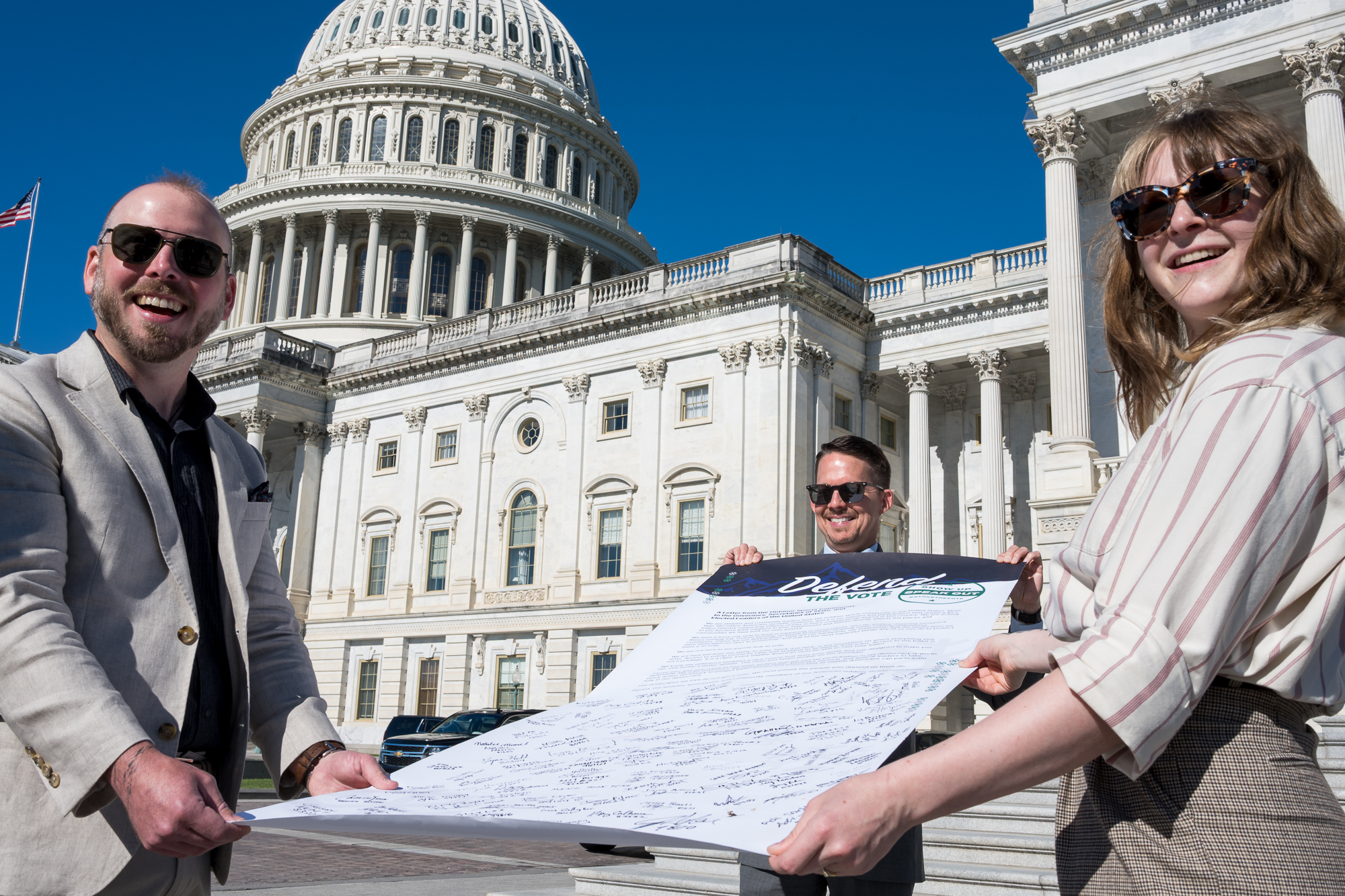
POW has launched the "Defend the Vote" initiative, a targeted campaign designed to engage directly with secretaries of state in key regions, such as Montana and New Hampshire. The goal is to provide resources and legal support in areas where the infrastructure of elections is perceived to be at the highest risk of interference.
This pivot has garnered unprecedented support from the outdoor industry. Corporate partners, many of whom have previously focused their advocacy on public land preservation and carbon neutrality, are now signing onto collective letters demanding the protection of ballot access. The rapid alignment of these brands suggests a growing recognition that their core interests—environmental health and sustainable land management—cannot be secured if the mechanisms of representative democracy are compromised.
The Broader Implications for Environmental Policy
The shift in the political landscape suggests that the climate movement must now operate on two parallel fronts. The first is the traditional advocacy for carbon reduction, clean energy infrastructure, and habitat conservation. The second is the institutional defense of the democratic process.
The rationale is straightforward: if the composition of the legislature determines the fate of environmental regulations, then the process of electing those legislators is the primary mechanism of climate control. As noted by advocates, the ability to "stoke the vote"—or drive voter turnout—is entirely contingent upon the availability of free and fair elections. When the voting process is restricted, the collective voice of the climate-conscious public is effectively muted.
Furthermore, the trend toward decentralized, state-level voting restrictions creates a fragmented electoral map. This complexity forces national organizations to divert their limited resources toward state-level legal and political battles, a strategy that, while necessary, spreads advocacy bandwidth thin. The challenge for these groups is to build a cohesive national movement that can withstand localized efforts to limit voter access.

Looking Toward the Midterms
As the midterms approach, the emphasis on electoral integrity has become the centerpiece of the environmental platform. The message being disseminated is that voting is not merely a civic duty, but a fundamental climate action.
The data suggests that the outcome of these elections will have immediate consequences for the future of federal land management and clean energy policy. If the current administrative trend toward deregulation and resource extraction continues, the window for achieving aggressive climate targets will likely close further. Conversely, if the electorate is successfully mobilized, the potential for reversing these administrative policies remains a possibility.
Ultimately, the argument presented by these groups is that the climate crisis cannot be decoupled from the state of the democratic process. As long as environmental policy is subject to the preferences of a changing guard, the security of our natural resources will remain tethered to the ballot box. Protecting the vote has thus transcended traditional political boundaries to become the essential, foundational work of the modern environmentalist. By ensuring that the electoral process remains transparent, accessible, and secure, these groups aim to preserve the only tool currently capable of shifting the balance of power in favor of the climate.

