
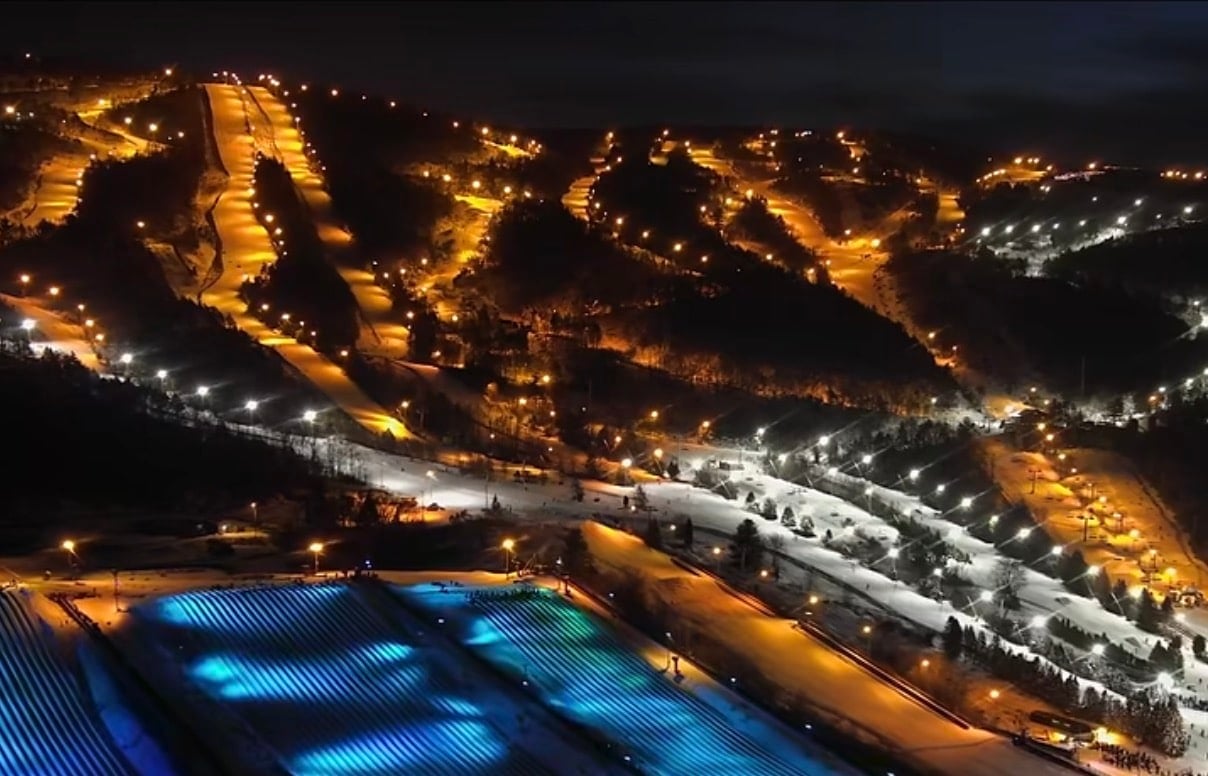
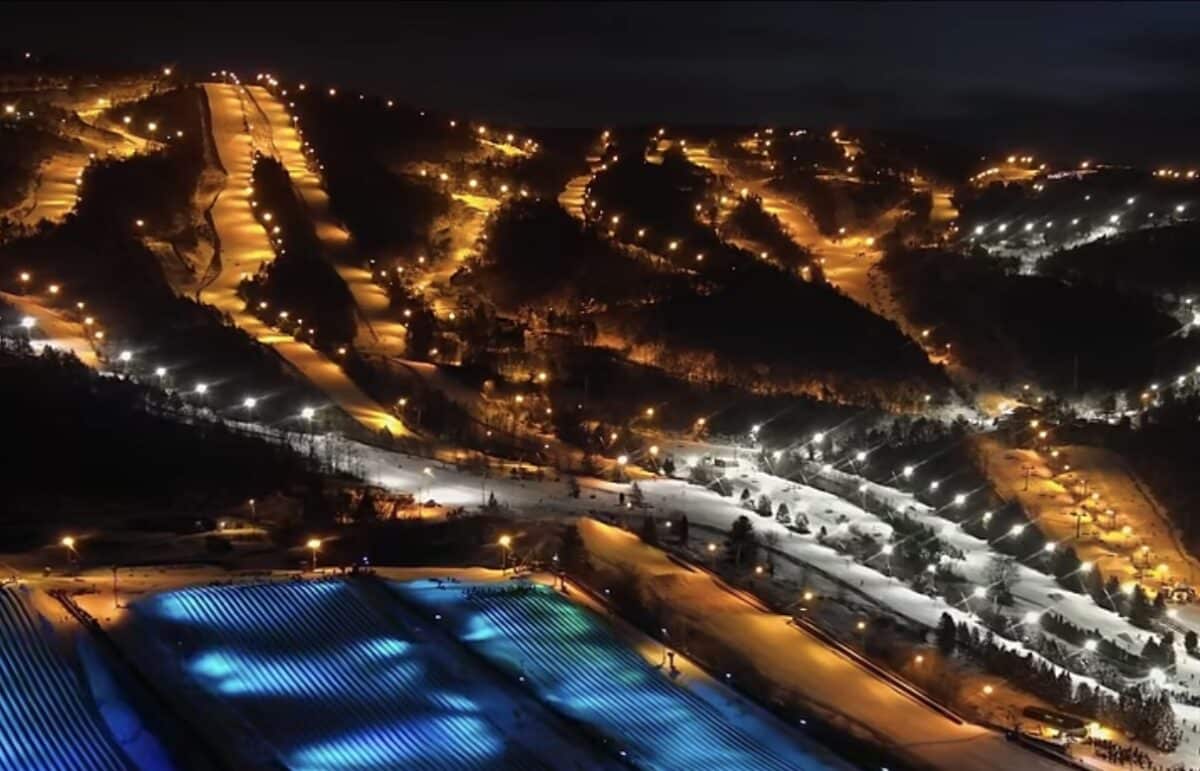
Some of the most critical infrastructure upgrades undertaken by ski resorts happen entirely out of sight or, conversely, shine their brightest after the sun has set. For Pennsylvania’s Blue Mountain Resort, located near Palmerton, the upcoming 2026-27 winter season will mark a definitive technological shift in how it illuminates its sprawling evening terrain. The resort has announced a comprehensive capital improvement project centered on the installation of 315 brand-new LED trail lights. This sweeping overhaul will complete the full conversion of Blue Mountain’s extensive night-skiing network to high-efficiency LED technology, replacing aging legacy fixtures with modern, directional, and energy-conscious illumination systems.
Boasting a 1,082-foot vertical drop—the highest in the Commonwealth of Pennsylvania—Blue Mountain commands an impressive footprint comprising 40 distinct trails spread across 171 skiable acres. While the resort has long established itself as a premier destination for after-dark sliding, offering night skiing across its entire trail network, the physical infrastructure supporting these operations has long relied on conventional high-intensity discharge lighting. By transitioning every bulb and fixture on the evening roster to LED systems, the resort is modernizing a vital operational artery. For the dedicated regional skiing community, whose winter routines frequently involve squeezing in high-speed turns after a standard workday or evening classes, this upgrade promises superior visibility, enhanced safety, and a more reliable on-snow experience.
Illuminating the Slopes: The 315-Light Overhaul
The scope of the 2026-27 lighting upgrade is vast, touching some of the resort’s most popular and heavily trafficked pathways. The 315 new LED fixtures are slated for installation across several key trails and beginner zones, including Vista, Easy Out, School Hill, Come Around, Lazy Mile, Tut’s Lane, and Sidewinder, as well as the Valley School East and West learning areas. Resort leadership has emphasized that while the transition will undoubtedly elevate the visual aesthetic of the mountain at night, the primary catalysts for the project are long-term energy conservation and a measurable reduction in the resort’s overall carbon footprint.
Achieving optimal outdoor lighting for winter sports is a complex engineering challenge. It requires far more than simply replacing old bulbs with brighter alternatives. According to guidelines and research published by the U.S. Department of Energy, well-engineered outdoor LED fixtures provide a vastly superior, more evenly distributed illumination pattern while drastically cutting energy consumption compared to traditional high-pressure sodium or metal halide lighting. Precise fixture design and strategic placement are critical in mountainous terrain, where uneven topography, dark tree lines, and rapidly changing weather conditions can create hazardous shadows or blinding glare. By directing crisp, uniform light precisely onto the snow surface, modern LEDs minimize light pollution and eliminate dark spots, giving skiers and snowboarders enhanced depth perception and reaction time while navigating descents under the stars.
Although Blue Mountain has not yet released specific figures detailing the anticipated kilowatt-hour savings or the exact financial scope of the lighting conversion, the project aligns with broader sustainability trends sweeping the North American ski industry. As utility costs fluctuate and environmental stewardship becomes an increasingly crucial metric for resort operations, energy-efficient infrastructure investments deliver immediate operational dividends. For evening visitors utilizing the resort’s standard night tickets—which grant access to the slopes from 4:00 PM until closing—the tangible result will be a brighter, more consistent, and visually comfortable mountain environment.
Bolstering the Foundations: Subsurface and Snowmaking Enhancements
While the new LED array will command the most attention from evening visitors, a significant portion of Blue Mountain’s current offseason capital expenditure is taking place beneath the surface. To ensure that the newly illuminated trails actually have a viable snowpack to ski on, the resort is executing a series of vital underground infrastructure improvements. Crews are currently installing new underground snowmaking water and air pipelines along School Hill and Vista, directly supporting the terrain that will benefit from the new lighting array.
Additionally, Blue Mountain is upgrading its water delivery capabilities through the installation of automated pump controls at its Creekside pumphouse. These automated systems allow for real-time monitoring and rapid adjustment of water pressure and flow, enabling the resort’s snowmakers to maximize every available hour of cold weather.
These 2026 projects build directly upon a multi-year modernization strategy aimed at climate resilience and resource optimization. In a detailed operational report released in 2024, prominent snowmaking equipment manufacturer TechnoAlpin documented a major technological overhaul at Blue Mountain. That initiative integrated more than 20 high-efficiency TT10 fan guns and upwards of 70 TL8 snowmaking lances into the resort’s arsenal. Industry experts noted that the integration of automated, high-output lances and fan guns was specifically engineered to capitalize on marginal weather windows—short bursts of sub-freezing temperatures common in the mid-Atlantic region—allowing the mountain to rapidly build a deep, durable base across its trail network before the peak holiday rush.
The dual focus on lighting and snowmaking addresses two sides of the same operational coin: preparing the terrain for optimal skiing conditions and maintaining those conditions safely long after daylight hours have faded.
A Regional Trend of Investment in the Poconos
Blue Mountain’s comprehensive upgrades arrive amid a wave of competitive capital investments across the Pocono Mountains region. The Pennsylvania ski market has experienced a renewed surge in resort development and infrastructure spending as operators vie to attract regional drive-market visitors seeking reliable snow conditions and modern amenities.
Just weeks prior to Blue Mountain’s announcement, neighboring Pocono resort Camelback made industry headlines by announcing its first major trail expansion in three decades. Camelback’s plans include the addition of three brand-new trails for the 2026-27 season, a significant milestone for a region where terrain expansion has historically been limited by geography and environmental regulations. While major terrain additions naturally generate considerable buzz among core enthusiasts, industry analysts point out that enhancements to supporting infrastructure—such as lighting, pumping systems, and snowmaking efficiency—are equally vital to maintaining guest satisfaction and operational profitability.
Chronology of Modernization and Capital Improvements
To understand the trajectory of Blue Mountain’s recent investments, it is helpful to examine the timeline of infrastructure development that has shaped the resort over recent years:
- Pre-2024: Blue Mountain establishes widespread night skiing across its 171-acre trail network, relying on legacy high-intensity discharge lighting systems to sustain evening operations.
- 2024 Season: The resort partners with TechnoAlpin to overhaul its snowmaking infrastructure, deploying over 20 TT10 fan guns and more than 70 TL8 snowmaking lances to maximize resource efficiency and exploit short weather windows.
- Offseason 2026: Blue Mountain initiates underground pipeline installations on School Hill and Vista, alongside the integration of automated pump controls at the Creekside pumphouse.
- September 2026: Resort leadership formally announces the 2026-27 winter improvement plan, headlined by the installation of 315 new LED trail lights to complete the total conversion of the night-skiing network.
- Upcoming 2026-27 Winter Season: The newly lit and upgraded trail network debuts to the public, offering enhanced evening visibility, improved energy efficiency, and reliable snowpack management.
Broader Industry Implications and Future Outlook
The comprehensive modernization of Blue Mountain’s night-skiing infrastructure carries broader implications for regional ski resorts operating in lower-latitude or mid-Atlantic climates. As changing weather patterns challenge traditional winter operating models, resorts must find innovative ways to maximize the utility of every operational hour. Night skiing has historically served as a critical revenue driver, allowing resorts to capture localized after-work and weekend-evening traffic that might otherwise bypass the slopes. However, maintaining older, inefficient lighting systems has become increasingly costly in terms of both electricity consumption and ongoing maintenance.
By transitioning entirely to LED technology, Blue Mountain is mitigating long-term operational expenditures while simultaneously elevating the safety and quality of the guest experience. High-performance LED lighting reduces the frequency of bulb burnouts and maintenance delays, ensuring that trail closures due to lighting failures are virtually eliminated. Furthermore, as environmental consciousness grows among consumers, visible commitments to energy efficiency help bolster public relations and align resort operations with modern corporate sustainability standards.
As the winter season approaches, skiers and snowboarders planning evening excursions to the Poconos will encounter a fundamentally transformed visual landscape on trails like Vista, Easy Out, and School Hill. While the 1,082-foot vertical drop remains the same, the technology illuminating the descent represents a major leap forward. For the regional community of night-skiing enthusiasts, the upcoming season will demonstrate how targeted, behind-the-scenes infrastructure investments can directly elevate the simple pleasure of making turns under the lights.

