
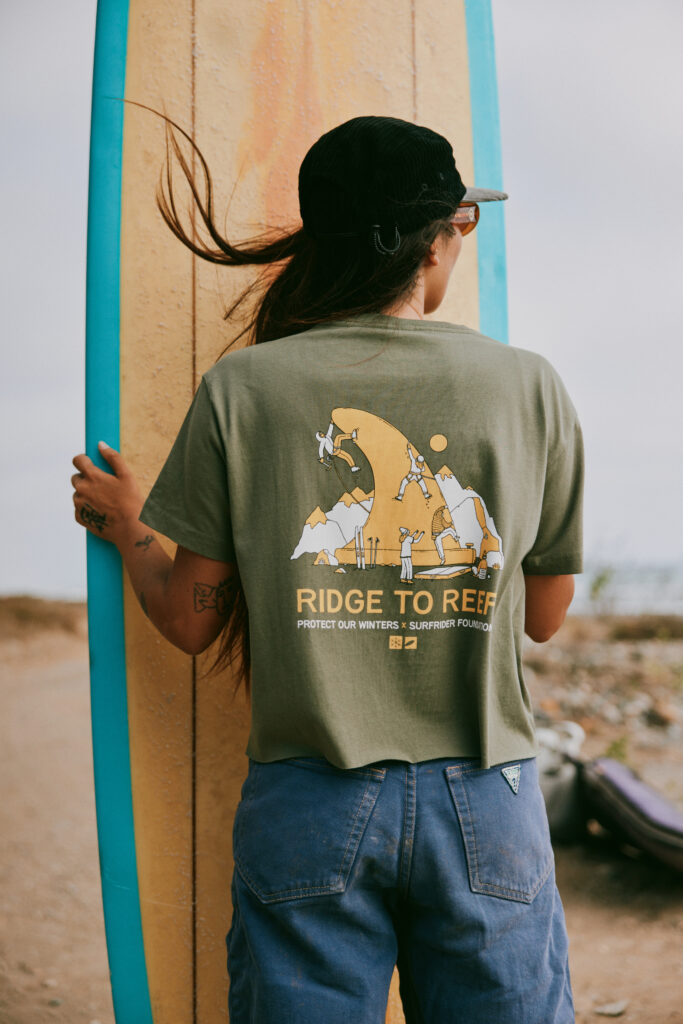
The environmental landscape is currently facing a dual crisis, with both terrestrial and marine ecosystems under significant pressure from industrial expansion and shifting policy frameworks. In a strategic effort to mobilize the outdoor community, Protect Our Winters (POW) and the Surfrider Foundation have launched the "Ridge to Reef" collection. This collaborative initiative, featuring the work of artist Dominic McLeod of Dom Fish Designs, aims to bridge the cultural divide between mountain sports enthusiasts and ocean advocates. By synthesizing visual storytelling with political activism, the partnership seeks to create a unified front against new offshore oil and gas drilling proposals that threaten the integrity of North America’s coastlines and wildlands.
The Converging Threats to Public Lands and Waters
The environmental stakes driving this partnership are substantial. According to reports from the Bureau of Ocean Energy Management (BOEM), offshore leasing programs have historically been a point of contention between energy developers and conservationists. Recent legislative discussions regarding the expansion of oil and gas exploration in federal waters have reignited concerns about the potential for catastrophic spills, seismic disruption to marine life, and the long-term impacts on coastal economies that rely on tourism and recreational fishing.
Simultaneously, mountain ecosystems—the primary focus of POW—are facing accelerated glacial recession and erratic snowpack patterns due to global temperature increases. For the millions of individuals who participate in skiing, snowboarding, climbing, and surfing, these changes represent more than just a loss of habitat; they signal a fundamental shift in the viability of their respective sports. The "Ridge to Reef" initiative operates on the premise that the mountain and the ocean are inextricably linked through the water cycle and climate systems, making their defense a single, unified mission.
A Chronology of Advocacy and Cultural Evolution
The alliance between POW and the Surfrider Foundation is rooted in a long history of outdoor-led environmentalism. Protect Our Winters, founded in 2007 by professional snowboarder Jeremy Jones, was established to address the direct impacts of climate change on the winter sports industry. Jones, a lifelong surfer, noted that his early exposure to environmentalism was shaped by the Surfrider Foundation, which had been operating since 1984 to protect the world’s waves and beaches.
For decades, these two communities operated in parallel, often sharing members but rarely coordinating on major policy advocacy. The current collaboration marks a shift toward an integrated "Outdoor State," a concept that treats the collective of outdoor enthusiasts as a legitimate political constituency.

The trajectory of this movement can be traced through the following phases:
- 1984–2000: The rise of localized coastal activism, with the Surfrider Foundation leading successful campaigns against coastal pollution and overdevelopment.
- 2000–2010: The emergence of climate change as a primary concern for the winter sports industry, leading to the formation of POW.
- 2010–2020: Increased focus on legislative lobbying, with athletes transitioning from brand ambassadors to political advocates.
- 2020–Present: The formalization of cross-industry partnerships, such as the Ridge to Reef project, which leverages artistic and cultural influence to engage a broader demographic in climate policy.
The Role of Art in Environmental Communication
Dominic McLeod’s contribution to the Ridge to Reef collection serves as a visual bridge between disparate outdoor hobbies. His artistic process, which involves translating the rugged aesthetic of the mountains and the fluidity of the ocean into digital illustrations, is designed to lower the barrier to entry for climate advocacy.
McLeod’s work challenges the "silo effect," a phenomenon where outdoor enthusiasts focus exclusively on the specific environment they recreate in, often ignoring the threats to adjacent ecosystems. By merging imagery such as surfboard fins with alpine climbing gear, the collection forces a visual confrontation with the interconnectedness of these environments.
"The environment is not a series of disparate parts; it is a single, integrated system," notes a spokesperson for the initiative. "By using art to highlight this, we are attempting to move the needle on public opinion, making climate advocacy feel accessible rather than exclusive."
Economic and Policy Implications
The economic impact of the outdoor recreation industry is a critical component of the argument for conservation. Data from the U.S. Bureau of Economic Analysis (BEA) indicates that outdoor recreation accounts for approximately 2.2% of the U.S. GDP, contributing nearly $1 trillion in annual economic output. When landscapes are degraded by industrial extraction, these local economies—which rely on clean water, accessible mountains, and healthy beaches—suffer direct financial losses.
The Ridge to Reef campaign is not merely an awareness project; it is a funding mechanism for lobbying and legal defense. By directing 100% of the proceeds from the collection to the advocacy departments of both organizations, the project aims to:
- Fund Legal Challenges: Providing resources for litigation against illegal or ecologically unsound drilling permits.
- Support Grassroots Mobilization: Providing tools for local chapters to engage with their elected officials on policy issues.
- Expand Voter Education: Informing the outdoor community about the voting records of representatives regarding public lands and environmental protections.
Official Perspectives and Collective Action
The philosophy driving the current initiative is best summarized by the motto "action over apathy." This sentiment is shared by both the leadership at POW and the Surfrider Foundation. In discussions regarding the campaign, proponents emphasize that the modern climate activist does not need to be a scientist.
"We are moving past the era where we wait for permission to protect our homes," a representative from the Surfrider Foundation stated. "The strength of our movement lies in the diversity of our skills. Whether you are an artist, a lawyer, an athlete, or a business owner, your contribution to the discourse on climate change is both valid and necessary."
This inclusive approach addresses a common criticism of environmental movements: that they are too technical or inaccessible to the general public. By framing advocacy as a cultural expression rather than just a legislative hurdle, the Ridge to Reef collection attempts to foster a sense of shared ownership over the planet’s future.
Broader Impacts on the Outdoor State
As the legislative landscape regarding fossil fuel extraction remains volatile, the importance of public pressure cannot be overstated. The partnership between POW and the Surfrider Foundation represents a maturing of the outdoor industry’s political voice. By aligning their messaging and pooling their resources, these organizations are better positioned to influence federal land management policies.
The broader implications of this movement are significant. If the outdoor community can demonstrate a unified, consistent, and well-funded opposition to industrial extraction, they can serve as a powerful check on administrative decisions that prioritize short-term resource extraction over long-term environmental stability.
The Ridge to Reef collection is now available to the public, and its success will serve as a bellwether for future cross-disciplinary environmental efforts. As the climate continues to change, the necessity for such collaborative, culture-driven advocacy will only grow. The initiative stands as a testament to the idea that, while the mountain and the ocean may offer different experiences, the duty to protect them remains a singular, shared responsibility for all who call the outdoors their own. By bridging these worlds, the organizers hope to ensure that the landscapes which define the outdoor experience remain preserved for future generations, regardless of the political winds.

