
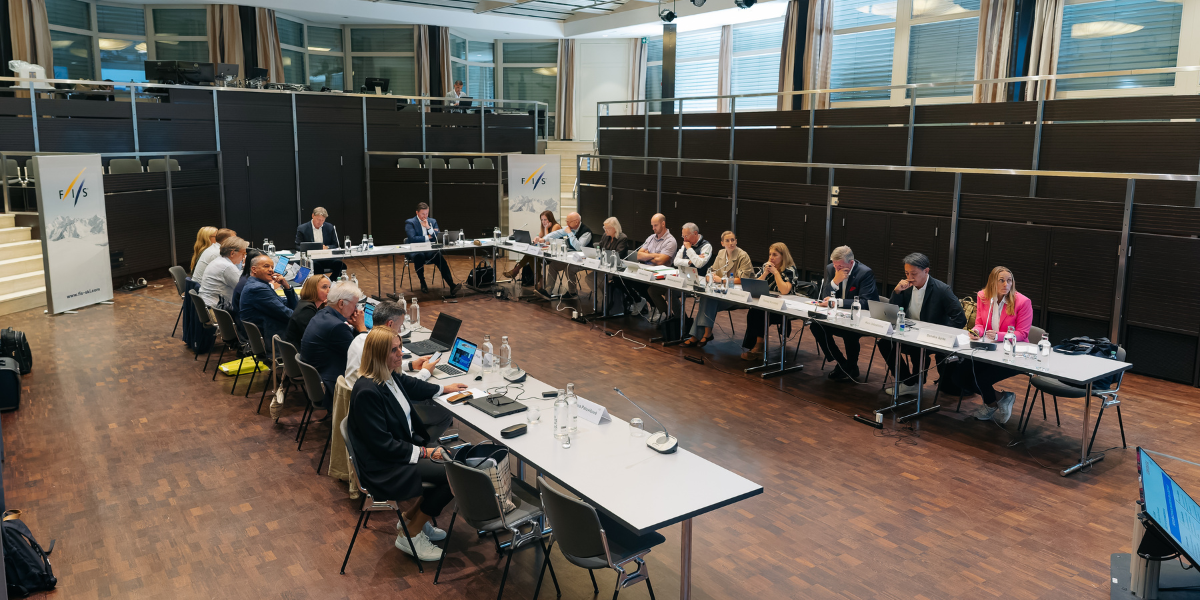
The International Ski and Snowboard Federation (FIS) has formally initiated a series of structural reforms that threaten to fundamentally alter the landscape of professional alpine ski racing, ranging from the frequency of World Championships to the return of neutral athletes from Russia and Belarus. Following a high-stakes, two-day summit in Thun, Switzerland, the FIS Council outlined a vision for the 2026–27 season and beyond that prioritizes commercial growth, logistical efficiency, and a standardized approach to global competition. These proposals, while still in their nascent stages, represent the most significant potential overhaul of the sport’s operational framework in the modern era.
The implications of these decisions are far-reaching. By contemplating the expansion of the World Championship calendar, the adoption of data-driven venue selection, and a rigorous, neutral-participation protocol, FIS is attempting to balance the competing demands of commercial viability and the long-term sustainability of athlete welfare.
The Evolution of the World Championship Calendar
The most headline-grabbing development from the Thun meeting is the proposal to increase the frequency of the Alpine World Ski Championships. Historically, the FIS World Championships have occupied a biennial rhythm, held in odd-numbered years to avoid conflict with the quadrennial Winter Olympic Games. The Council’s decision to explore holding championships in even-numbered, non-Olympic years—potentially as early as 2028 and certainly by 2032—marks a departure from a century-old tradition.
This strategic shift is rooted in a feasibility study that highlights the "sporting value" and "commercial potential" of a more consistent major-event schedule. Currently, the FIS World Cup circuit relies on a series of recurring stops to maintain audience interest during the winter months. By adding a flagship World Championship title event every year, FIS believes it can elevate the visibility of the sport, creating a consistent "event-based" narrative that appeals to broadcasters and global sponsors.
However, the proposal faces significant pushback from various stakeholders. National teams are already managing grueling itineraries; the addition of a major championship in every even-numbered year would drastically increase the physical and financial burden on athletes and support staff. Experts in sports physiology argue that the current density of the World Cup schedule—often spanning four months of back-to-back travel—already sits at the limit of human performance. Adding an annual premier event could lead to overtraining, injury, and a dilution of the prestige traditionally associated with the "World Champion" title.
Implementing a Regionalized World Cup Calendar
Complementing the shift in championships is the Council’s move toward a long-term, regionally clustered World Cup calendar. The current structure, which often sees teams zig-zagging across continents, has been criticized for its massive carbon footprint and extreme logistical costs. Under the new proposal, FIS intends to implement "regional clusters," grouping races by geographic proximity to minimize travel time and maximize the efficiency of resource deployment.
Central to this effort is the introduction of a "Calendar Impact Score." This proprietary metric is designed to move beyond the subjective selection of race venues. While the exact formula remains undisclosed, FIS officials have signaled that the score will be calculated based on financial stability, broadcast reach, sustainability metrics, snow reliability, and the quality of the competition venue.
This, in effect, introduces a meritocratic and commercial filter to the World Cup circuit. Traditional European venues that have hosted races for decades may find themselves under pressure to upgrade their infrastructure or modernize their commercial offerings to survive the new scoring system. Conversely, emerging markets in Asia and North America may see increased opportunities, provided they can prove their ability to meet the stringent criteria set by the new model. The draft for this multi-year calendar is expected to be presented for final approval during the upcoming Autumn Meetings, with teams and organizers anxiously awaiting the specific impact on their traditional race slots.
Establishing a Universal Wild-Card Framework
For years, the use of wild-card entries in alpine skiing has been a source of inconsistency, with varying rules across different disciplines and events. The FIS Council has now committed to a standardized, universal framework for these entries. This policy is intended to provide transparency, ensuring that wild-card athletes meet clear, objective criteria regarding anti-doping compliance, safety certifications, and performance thresholds.
This move is largely viewed as a response to the growing professionalization of the sport. As the gap between the top tier and the rest of the field widens, the criteria for "special entry" must be robust enough to maintain competitive integrity while allowing for the promotion of high-profile athletes who drive viewership. By defining a fixed number of starts and a rigid eligibility period, FIS aims to protect the prestige of the World Cup field while providing a clear pathway for athletes from emerging nations or those returning from injury. The technical committees are tasked with finalizing these regulations by spring 2027, ensuring that the rules are uniform across all disciplines, from downhill to slalom.
The Return of Neutral Athletes: A Contentious Policy
Perhaps the most politically sensitive outcome of the Thun meeting was the approval of a pathway for Russian and Belarusian athletes to compete as neutrals during the 2026–27 season. Since the onset of the conflict in Ukraine, these athletes have been largely sidelined from international FIS competitions. The Council’s decision to reopen the door—under strict neutrality conditions—aligns FIS with the broader stance taken by the International Olympic Committee (IOC).
The conditions for participation are rigorous: athletes must compete as individuals, with no association to their national flags, anthems, or colors. They must sign a formal declaration of neutrality and will remain under constant monitoring for compliance. FIS has explicitly stated that any breach of these requirements will result in immediate sanctions, including the permanent revocation of eligibility.
Critics of the policy argue that the inclusion of these athletes, even under a neutral banner, remains problematic given the ongoing geopolitical situation. Conversely, proponents argue that the Olympic Charter emphasizes the inclusion of individual athletes, provided they adhere to the fundamental principles of the sport. The operational challenge now falls to the eligibility committee, which must vet each individual applicant. As of this writing, no specific names or timelines for entry have been provided, leaving the community to speculate on the impact this will have on the camaraderie and competitive atmosphere of the World Cup tour.
Broader Implications and The Road Ahead
The decisions made in Thun represent a pivot toward a more corporate and data-centric future for FIS. The shift toward a "global event" model—characterized by more frequent championships and a highly vetted, clustered calendar—suggests that the federation is looking to maximize its commercial valuation in a crowded sports media market.
However, the "what happens next" phase remains fraught with uncertainty. With the details of the Calendar Impact Score, the specific criteria for the new wild-card system, and the practical implementation of the neutral-athlete policy still to be determined, the sport finds itself in a period of intense transition.
For the athletes, coaches, and organizers, the next eighteen months will be critical. The industry will be watching closely as the FIS management prepares to present the draft long-term calendar. The ultimate success of these reforms will not be measured by the policy documents themselves, but by whether they succeed in increasing the sport’s global reach without sacrificing the integrity and heritage that have sustained alpine racing for generations. As the calendar turns toward the 2026–27 season, the FIS is effectively betting that a more structured, commercial, and standardized approach is the only way to ensure the sport remains relevant in an increasingly competitive global sports landscape.

