
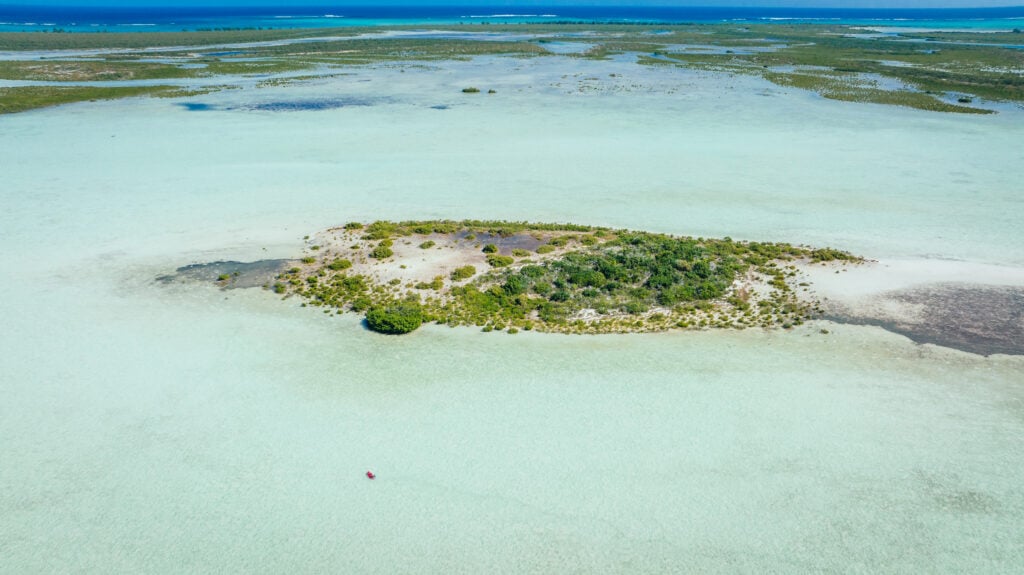
Thousands of data-gathering robots floating in the ocean help us forecast climate and weather impacts, but funding is running out. Today, the sea surface temperature near Palmyra Atoll—a tiny, isolated landmass in the central Pacific—is approximately one degree Celsius warmer than historical averages. While a single degree may seem negligible to a casual observer on a boat, it serves as a powerful meteorological signal. This thermal anomaly is sufficient to influence the behavior of the jet stream, directly dictating precipitation patterns thousands of miles away, including the depth and frequency of snowfall in mountainous regions across the Northern Hemisphere.
The mechanism behind this is rooted in the complex interaction between the ocean and the atmosphere. Warm water transfers heat to the air, creating areas of low pressure that can fundamentally alter wind patterns. Under normal conditions, trade winds maintain a delicate balance, pushing warm water toward Indonesia and keeping the central Pacific relatively stable. However, when these winds falter, a feedback loop ensues: the warm patch expands, atmospheric pressure shifts, and the trade winds weaken further. This process reshapes the storm tracks that eventually batter the Rockies and other regions months later.
The Technological Backbone of Modern Meteorology
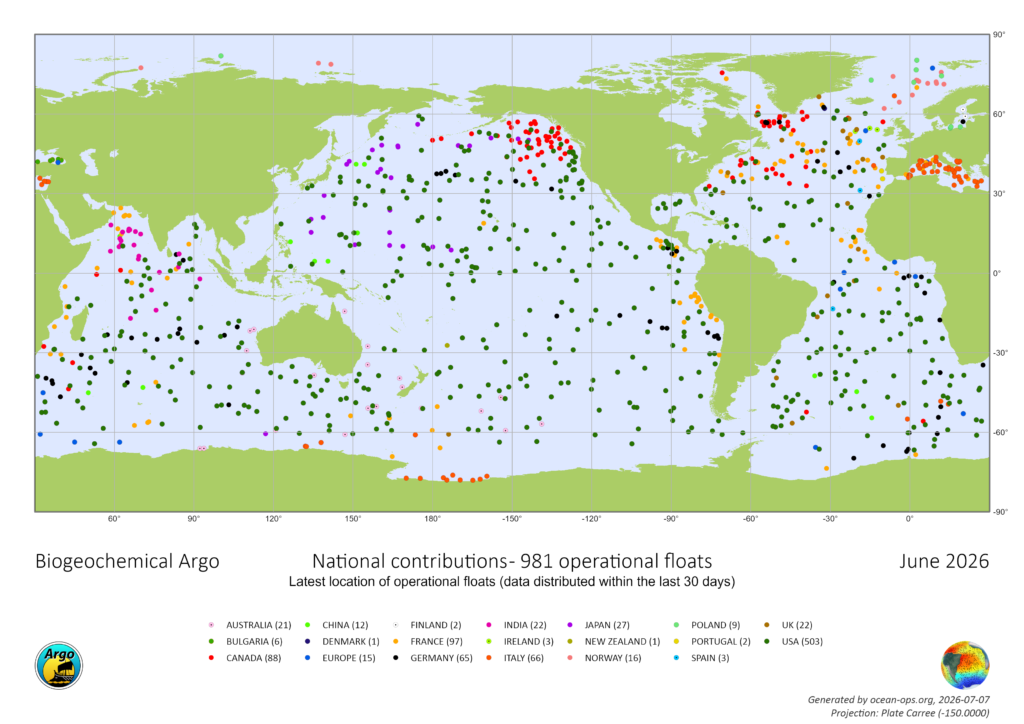
We possess this granular, real-time understanding of ocean temperatures due to a sophisticated, global fleet of approximately 4,000 autonomous robotic floats known as the Argo program. Since its inception in the early 2000s, this network has functioned as the eyes and ears of the scientific community beneath the waves. These floats perform a repetitive, life-saving cycle: they submerge to depths of over a mile to collect vertical profiles of temperature, salinity, and pressure, and then ascend to the surface every ten days to transmit their findings via satellite.
This data is not merely academic; it is the bedrock of modern meteorology. Every weather forecast relied upon by the general public, mariners, aviation authorities, and agricultural sectors originates from the integration of these oceanographic datasets into global predictive models. Despite the program’s vital role in public safety and economic planning, it now faces an existential threat due to significant shifts in federal funding priorities under the current administration.
A Chronology of Scientific Success and Political Uncertainty
The Argo program, named after the mythical ship that carried Jason and the Argonauts, was launched in 1999 as a collaborative international endeavor. Over the last two decades, it has revolutionized oceanography. By providing a consistent, high-resolution snapshot of the world’s oceans, the program has enabled researchers to quantify the immense heat uptake caused by anthropogenic climate change.
The recent fiscal challenges began following the expiration of a critical five-year National Science Foundation (NSF) grant that supported the deployment of 500 new Biogeochemical (BGC) Argo floats. These advanced units are capable of measuring oxygen levels, pH, nitrate concentrations, and chlorophyll, providing insights into the biological health of the ocean. Simultaneously, the development of "Deep Argo" units—capable of descending nearly four miles—has stalled.
Program leaders submitted a renewal proposal to the NSF over 20 months ago. In a standard administrative cycle, such proposals receive a response within six months. The prolonged silence from the agency has left the scientific community in a state of operational paralysis. The U.S. government, which historically has maintained more than half of the global Argo fleet, is now facing a landscape where funding for new float manufacturing has been effectively frozen.
The Economic and Scientific Impact of Data Loss
The cost-efficiency of the Argo program is unparalleled. A single profile collected by a float costs approximately $200. Comparing this to the astronomical costs of deploying research vessels—which require crew, fuel, and weeks of time—reveals the program’s value. Dr. Shawnee Traylor, a chemical oceanographer and member of the POW Science Alliance, emphasizes the sheer scale of the information vacuum that would result from the program’s collapse.
"The ocean stores the bulk of heat and moisture that drives our weather," says Dr. Traylor. "Satellites capture the surface, but forecasters need that subsurface picture to understand what’s brewing below and when we’ll see it in the weather. We are talking about the loss of a foundational dataset that informs everything from hurricane path predictions to long-term climate modeling."
The ocean acts as a massive carbon sink, absorbing approximately 30 percent of human-made CO2 emissions. This absorption drives thermal expansion, which is responsible for roughly one-third of observed global sea-level rise. Without the continuous monitoring provided by Argo, the ability to track the rate of this expansion and the resulting threats to coastal infrastructure will be severely diminished. Dr. Traylor notes that the current rate of oceanic heat absorption is equivalent to the energy of 12 atomic bombs exploding every second—a statistic only discoverable through the precision of the Argo network.
Political Precedents and the Path Forward
The current fiscal environment has seen federal climate research funding, particularly within oceanography, slashed significantly. As the pool of available grants shrinks, the ability to maintain the existing fleet and manufacture replacement units has vanished. This creates a "data degradation" scenario, where the reliability of weather forecasts will begin to decline within the next 24 months as older units fail and are not replaced.
However, recent history offers a template for survival. In mid-2026, the Ocean Observatories Initiative (OOI)—another critical oceanographic monitoring system—faced similar threats of dismantling. That crisis was averted through robust, bipartisan intervention in the U.S. Senate. Senators Jeff Merkley (D-OR) and Lisa Murkowski (R-AK) led a coalition of 11 senators in a letter to the NSF, arguing that the OOI network was a matter of public safety. Their efforts successfully secured the program’s continuity, demonstrating that scientific infrastructure can be protected when framed as an essential component of national security and public welfare.
The Implications for Public Safety
The ramifications of a failed Argo fleet extend far beyond the scientific community. Extreme weather events, such as hurricanes and atmospheric rivers, are becoming more intense and unpredictable. The data provided by Argo floats allows meteorologists to understand the heat content of the upper ocean, which acts as the "fuel" for tropical cyclones.
"Even if they’ve never seen it, everyone is deeply tied to the ocean," says Dr. Traylor. "Sparser data means less warning, particularly about how intense a storm might get. People who care about winter’s disappearance should also care about the ocean data that can tell us how quickly that is coming."
As the program stands at a crossroads, the need for sustained, predictable federal funding is clear. The transition from a well-supported, world-class monitoring network to a degraded, fragmented system would represent a significant setback for global climate resilience. For the researchers and meteorologists who rely on this stream of information, the message is urgent: the tools that allow us to see the coming storm must not be allowed to drift into silence. Whether through renewed Congressional support or redirected agency priorities, the survival of the Argo program is not merely a budgetary matter—it is a requirement for the continued safety and preparedness of the global population.

