
The legendary slopes of the Bec des Rosses in Verbier, Switzerland, bore witness to a historic milestone in professional freeride snowboarding as Swiss-Mexican rider Liam Rivera secured victory at the prestigious YETI Xtreme Verbier. Delivering a run that will be analyzed by athletes and enthusiasts for years to come, Rivera posted an unprecedented score of 96 points, marking the highest score ever recorded in a Snowboard Men competition on the intimidating Swiss face.
This landmark achievement cements Rivera’s status at the pinnacle of modern freeriding. The 26-year-old reigning FIS Freeride World Champion executed a high-risk, technically demanding line that immediately captivated the thousands of spectators gathered at the base of the mountain and electrified the global broadcast audience. Meanwhile, the broader competition carried significant championship implications, highlighted by French veteran Victor de Le Rue securing a historic fifth overall Freeride World Tour (FWT) title after finishing second on the day with a respectable 75 points.
The convergence of record-breaking athleticism, decades of mountain heritage, and the culmination of the seasonal title race makes the 2026 edition of the YETI Xtreme Verbier one of the most memorable stops in the history of the Freeride World Tour. As the winter sports community processes the magnitude of Rivera’s performance and de Le Rue’s sustained dominance, the event serves as a defining moment for the trajectory of competitive snowboarding.
Anatomy of a Record-Breaking Run
To understand the magnitude of Liam Rivera’s 96-point score on the Bec des Rosses, one must examine the sheer technical difficulty and objective danger of the venue. Often referred to as the crown jewel of the Freeride World Tour, the Bec des Rosses is a staggering wall of rock, ice, and variable snow conditions located in the Swiss Alps. With gradients exceeding 50 degrees in sections, athletes face uncompromising terrain where a minor miscalculation can result in catastrophic consequences.
From the starting gate, Rivera exhibited absolute precision and composure. Rather than opting for a conservative descent to secure a podium finish, the Swiss-Mexican rider chose a hyper-aggressive line that demanded absolute commitment. The centerpiece of his run featured a colossal air off the cliffs at the top section of the face—a maneuver that required immense air-awareness and perfect execution to land cleanly on the steep, compressed snowpack below.
Following the opening drop, Rivera maintained high speed into the mid-section of the mountain, where he executed a burly, perfectly controlled backflip. The transition from the massive cliff drop directly into the technical freestyle trick demonstrated an elite level of versatility, seamlessly blending big-mountain freeriding with modern freestyle progression. The clean execution, fluid line choice, and lack of hesitation during critical moments justified the judges’ historic score, which instantly eclipsed previous benchmarks on the men’s snowboarding side of the Verbier competition.
The home crowd response was immediate and deafening. For Rivera, who grew up watching the event as an aspiring young athlete and subsequently developed his skills through the local Verbier Freeride Team, crossing the finish line in first place represented the fulfillment of a lifelong ambition.
A Lifelong Journey to the Summit
Liam Rivera’s victory on home snow is the logical culmination of a deeply rooted relationship with the Swiss Alps and the Freeride World Tour pipeline. Growing up in the shadow of the Verbier peaks, Rivera was immersed in the culture of extreme mountain sports from an early age. Like many local youths inspired by the pioneers of the sport, he dedicated his formative years to navigating the treacherous couloirs and cliffs of the Val de Bagnes region.
His development was significantly accelerated through his involvement with the Verbier Freeride Team, an organization renowned for producing elite-level mountain athletes by instilling rigorous safety protocols, deep snow-science knowledge, and advanced technical riding skills. Transitioning from regional junior events to the international stage, Rivera steadily built a reputation for fearlessness and tactical intelligence.
The momentum of his career reached a crescendo during the previous competitive cycle when he captured the coveted title of FIS Freeride World Champion. That victory established him among the global elite, but conquering the Bec des Rosses in the manner he did elevates his career to a historic echelon. In interviews following the event, Rivera reflected on the emotional weight of the victory.
"It’s a competition I’ve watched since I was a kid, and winning it feels unreal," Rivera stated, visibly moved by the achievement. "I’m so happy to have put down my run and deliver a show in front of my family and the Swiss crowd."
The Championship Implications: Victor de Le Rue’s Fifth Title
While Liam Rivera claimed the spotlight for the individual event victory, the broader narrative of the day included a momentous achievement in the overall standings. French snowboarding legend Victor de Le Rue delivered a characteristically calculated and high-performing descent, earning 75 points to secure second place at the YETI Xtreme Verbier.
More importantly, the points accumulated from this performance were more than sufficient to cement de Le Rue’s status at the top of the overall rankings, officially securing his historic fifth overall Freeride World Tour title. De Le Rue’s career has been defined by consistency, unmatched adaptability across varying global snowpacks, and a strategic approach to big-mountain competition that allows him to maximize points while managing risk.
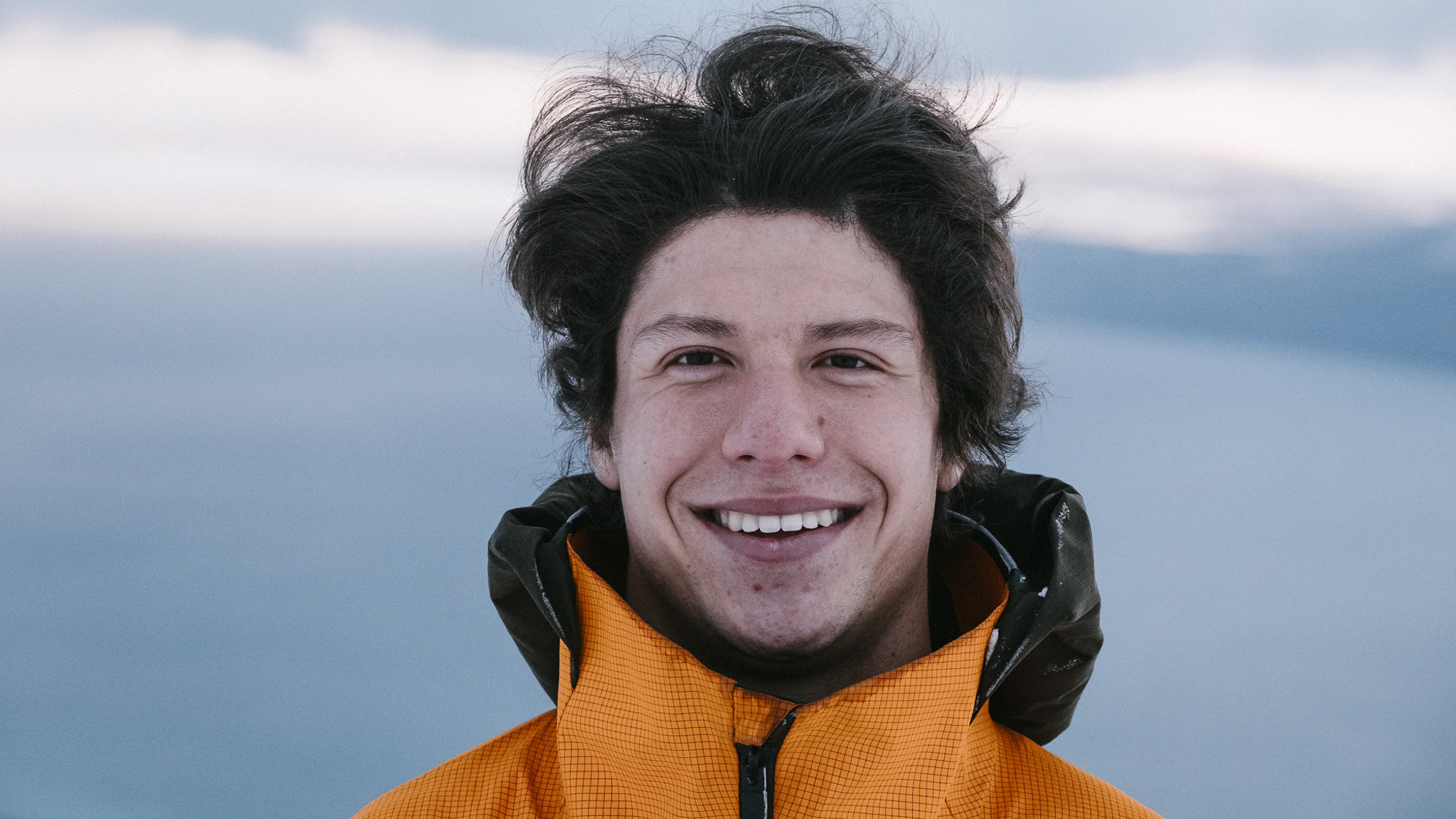
Securing a fifth title places de Le Rue in an extremely exclusive tier of winter sports athletes. In a discipline as volatile and hazardous as freeriding, sustaining excellence across multiple seasons requires physical endurance, mental resilience, and advanced tactical planning. While Rivera represents the explosive, progressive future of the sport, de Le Rue’s enduring championship run demonstrates the value of veteran mastery.
Industry and Equipment Perspectives
The technical demands of modern freeriding place immense pressure on equipment manufacturers to produce gear that can withstand bone-jarring impacts, steep-angle carving, and variable high-alpine conditions. Rivera’s historic run was facilitated in part by high-performance gear, specifically his setup featuring Nidecker LT Supermatic bindings—a piece of equipment that has recently garnered critical acclaim within the snow sports industry, earning a prominent spot in the esteemed Whitelines 100 review list.
The intersection of elite athletic performance and equipment innovation was highlighted by industry leadership following the conclusion of the event. Thierry Kunz, Nidecker Brand Lead, expressed profound enthusiasm for Rivera’s milestone achievement and the broader trajectory of the athlete’s career.
"What a season for Liam," Kunz noted in an official statement. "To already be the reigning FIS World Champion and then go and post the highest score in Verbier history on the Bec des Rosses—it’s a special thing to witness. As a Swiss brand, we could not be more proud."
The synergy between local athletes and domestic brands underscores the tight-knit nature of the European snow sports ecosystem, where regional talent often serves as the primary testing ground for cutting-edge winter hardware.
Chronology of the YETI Xtreme Verbier
To fully appreciate the context of Rivera’s victory, it is necessary to examine the operational timeline and historical significance of the YETI Xtreme Verbier. Founded decades ago as a humble gathering of passionate alpinists and snowboarders seeking to push the boundaries of gravity, the event has evolved into the undisputed finale of the global Freeride World Tour calendar.
The path to the 2026 event began months prior with preliminary qualifying events across various continents, where riders fought for a limited number of ranking spots to secure a position on the elite FWT roster. As the season progressed through stops in Europe and North America, the leaderboard fluctuated dramatically, setting up a high-stakes finale in Verbier.
In the days leading up to the competition window, safety patrols, mountain guides, and tour officials meticulously evaluated the stability of the snowpack on the Bec des Rosses. Given the recent weather patterns in the Swiss Alps, variable wind crusts and buried weak layers presented significant risk management challenges. Once the green light was given, riders were granted a single inspection window to memorize their lines from a distance before dropping into the unknown.
On the day of the event, the men’s snowboard category unfolded under intense pressure. Early riders set a competitive baseline, but it was clear that winning the event would require unprecedented risk-taking. When Rivera dropped into the start gate midway through the start list, he executed a masterclass in line selection and execution, posting the insurmountable 96-point standard. De Le Rue followed later in the program, riding with trademark tactical precision to secure his second-place finish and wrap up the overall crown.
Broader Impact and Implications for Competitive Freeriding
Liam Rivera’s record-breaking performance at the YETI Xtreme Verbier and Victor de Le Rue’s historic fifth title capture represent a pivotal juncture for competitive freeride snowboarding. For years, the discipline fought for recognition alongside more mainstream Olympic winter sports like slopestyle and halfpipe. However, the raw authenticity, unscripted nature, and sheer visual spectacle of big-mountain freeriding have cultivated a rapidly expanding global fanbase.
The establishment of a 96-point benchmark on the Bec des Rosses raises the bar for future generations of riders. It demonstrates that the boundaries of what is possible on a snowboard in extreme terrain are still expanding. As coaching, sports science, and equipment engineering continue to evolve, athletes are approaching life-threatening terrain with unprecedented levels of preparation and technical confidence.
Furthermore, Rivera’s victory highlights the increasing globalization and cross-cultural appeal of the sport. As a Swiss-Mexican rider representing the pinnacle of European alpine competition, his success broadens the demographic reach of freeriding, inspiring youth in non-traditional mountain regions to pursue elite winter athletics.
As the dust settles on the 2026 Freeride World Tour season, the winter sports community is left to reflect on a masterclass of athleticism in the heart of the Swiss Alps. With champions like Victor de Le Rue cementing their legacies and rising stars like Liam Rivera shattering historical records, the future of competitive freeriding remains brighter, faster, and more daring than ever before.

