
As the 2026 summer season draws to a close, the Alpine region is experiencing a long-awaited meteorological transition. After enduring the most devastating summer for high-altitude tourism in six decades, a recent influx of cold air and fresh precipitation has brought a glimmer of hope to glacier-based ski resorts. While the scars of an unprecedented heatwave remain visible across the mountain landscape, the arrival of autumn snowfall has reignited industry discussions regarding the upcoming 2026/27 winter season.
A Summer of Unprecedented Extremes
The summer of 2026 will be recorded as a watershed moment for the Alps, characterized by a series of relentless heatwaves that began in May and persisted through late August. Data compiled by meteorological agencies indicates that this year was the warmest on record for the region, significantly outpacing the averages seen in the late 20th century.
The impact on glacier stability was profound. Throughout July and August, iconic ski areas such as Passo Stelvio in Italy and Zermatt/Cervinia were forced to cease operations prematurely. The situation at Passo Stelvio became a focal point for environmental concern, as photos from mid-August depicted a landscape stripped of its protective snow cover, revealing dangerously exposed ice. By early August, Zermatt/Cervinia had officially closed its summer slopes, followed shortly by Saas-Fee on August 10th. At the height of the crisis, the Alps reached a unprecedented nadir: for a period, there was not a single lift-served ski area operational in the entire region, a scenario that would have been unthinkable just twenty years ago.
Recent Meteorological Developments
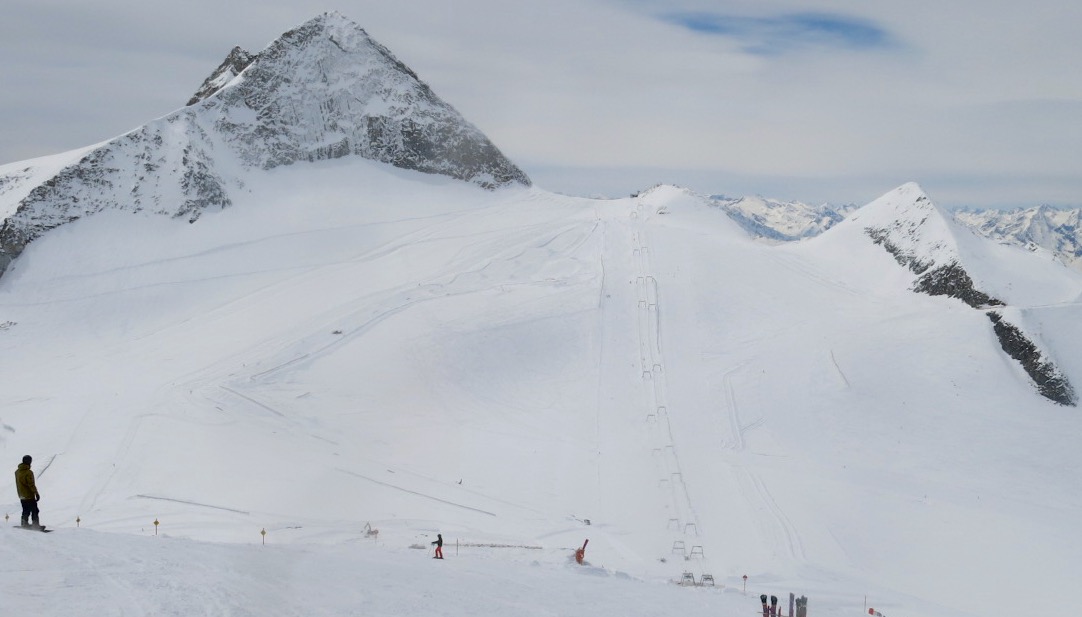
The tide began to turn in mid-September as a low-pressure system moved across the European Alps, bringing a drop in temperatures and the first significant snowfall since the spring. In some high-altitude locations, accumulation reached 20 centimeters, offering a necessary, if brief, reprieve for the dehydrated glacier surfaces.
This change in weather has prompted immediate reactions from resort operators. Passo Stelvio, having shuttered its facilities due to extreme temperatures in August, has re-opened its lifts to the public. Meanwhile, in Switzerland, major resorts such as Saas-Fee and the Zermatt/Cervinia complex are closely monitoring conditions. While officials have stated that the current snow depth is insufficient for a full-scale reopening of all runs, both areas have confirmed that they are prepared to mobilize lift operations as soon as safety and snow volume permits.
The Science of Glacier Degradation
The current state of the Alpine glaciers is a subject of intense scientific scrutiny. Fraser Wilkin, a meteorologist and contributor to weathertoski.co.uk, notes that the damage sustained this summer is the result of a "perfect storm" of climatic factors.
"The consequences of the extreme heat in the Alps this summer have been impossible to ignore," Wilkin stated. "A series of heatwaves that began in May, combined with a winter that delivered only modest snowfalls, left the high-altitude glaciers in an exceptionally vulnerable state."
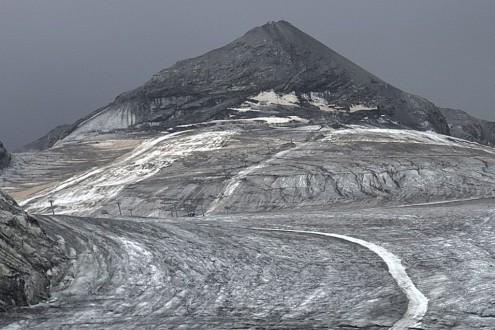
Wilkin explains that the primary mechanism of preservation for these glaciers is the "albedo effect"—the ability of fresh, white snow to reflect solar radiation back into the atmosphere. When that snow cover vanishes, it exposes the darker, older glacial ice beneath. This dark surface absorbs significantly more heat, which in turn accelerates the melting process exponentially. As this feedback loop continues, the underlying topography of the mountains becomes increasingly unstable, leading to increased risk of rockfalls and the permanent loss of perennial ice.
Looking Toward the 2026/27 Winter Season
While the summer was defined by loss, the industry is now pivoting toward the winter ahead. Austria, which typically leads the European market in opening its high-altitude resorts, is currently the center of anticipation. Resorts such as the Kitzsteinhorn in Kaprun and the Pitztal Glacier are the traditional bellwethers for the start of the season.
While no official start dates have been confirmed as of mid-September, several Austrian operators are eyeing early October for a potential season launch. In Italy, Val Senales has been widely reported as targeting September 18th for a limited reopening, though the resort has yet to issue an official confirmation.
The sentiment in the industry is one of cautious optimism. PlanetSKI editor James Cove, currently reporting from the Rocky Mountains in Alberta, Canada, notes that the mood among international ski professionals is shifting.

"While there are no ski areas currently open in Canada, the first snow has already fallen, and there is a tangible shift in the conversation among those in the industry," Cove remarked. "I recently met with friends from the Sunshine Village piste patrol and ski school, and their thoughts are, without question, turning to winter. Seeing those first flakes of snow falling, even if it doesn’t change the trajectory of the coming winter, acts as a psychological reset after a difficult summer."
Broader Economic and Environmental Implications
The instability of the summer ski season poses a significant challenge to the economic model of Alpine resorts. Many high-altitude areas have historically relied on summer skiing to sustain local employment and tourism revenue during the off-season. The trend of early closures and the physical degradation of the glaciers are forcing resort managers to rethink their long-term strategies.
Investment is increasingly shifting toward snow management technologies, such as advanced snow-farming techniques—where winter snow is buried under insulating materials during the summer—and improved infrastructure to support year-round mountain tourism that does not rely solely on skiing. However, the physical reality remains that the cryosphere is changing. The events of 2026 serve as a stark reminder that the traditional seasonal calendar is being rewritten by rising global temperatures.
Future Outlook
As the industry prepares for the upcoming season, the focus remains on the reliability of high-altitude infrastructure. The integration of improved weather forecasting, aggressive glacier protection measures, and diversified tourism offerings will be the hallmarks of successful resorts in the coming decade.
For the immediate future, all eyes are on the webcams and weather stations across the high Alps. The transition from a record-breaking summer of heat to a potentially productive autumn of snow is the first step in the industry’s attempt to stabilize after a period of unprecedented volatility. As temperatures continue to fluctuate, the resilience of both the mountain environment and the ski industry will be tested as never before.
The winter of 2026/27 will be a critical period for assessing the long-term viability of high-altitude winter sports. With early snow already beginning to coat the peaks in Switzerland and Austria, the focus now turns to whether the coming winter will provide the necessary snowfall to rehabilitate the glaciers and offer the sustained conditions required for a robust ski season. For the residents of mountain towns and the international ski community, the arrival of autumn represents more than just a change in temperature; it is a vital indicator of the health of the alpine ecosystem.

