
The Italian national women’s speed team, a powerhouse in the FIS Alpine Ski World Cup circuit, faces a period of uncertainty as its marquee athlete, Sofia Goggia, has been forced to abandon a crucial training camp in Ushuaia, Argentina. The 2018 Olympic downhill champion, widely regarded as one of the most resilient figures in modern skiing, returned to Italy on Friday after suffering from persistent, unexplained fatigue that rendered her unable to continue her preparations for the upcoming 2026-27 season.
The situation has triggered an immediate response from the Italian Winter Sports Federation (FISI) medical staff. Upon her arrival in Italy, Goggia underwent a series of comprehensive medical evaluations on Saturday. While early reports indicate the absence of physical injury—a significant relief given the athlete’s history of high-impact crashes—the underlying cause of her physical decline remains elusive. As the global ski community awaits further clarification, the focus has shifted toward diagnostics and the logistical challenge of recalibrating a training schedule designed to peak in time for the Sölden season opener in October.
Chronology of the Ushuaia Deployment
The Italian speed team, including stalwarts such as Laura Pirovano, Elena Curtoni, and Marta Bassino, arrived in the Argentine hub of Ushuaia on August 23. This remote, high-latitude location is a staple for elite skiers seeking winter conditions during the Northern Hemisphere’s summer. The training camp is critical, serving as the foundation for technical and speed disciplines before the circuit moves to the Southern Hemisphere’s transition and eventually back to Europe.
According to reports from La Gazzetta dello Sport, the initial phase of the camp proceeded according to the coaching staff’s expectations. Goggia, who has historically been characterized by her high-intensity training volume, successfully completed multiple sessions across the super-G, giant slalom, and slalom disciplines. It was only after these initial successful days that her physical state began to deteriorate.
When Goggia reported that she no longer felt capable of training at the intensity required for professional alpine competition, team leadership opted for a conservative approach. She was initially granted a two-to-three-day recovery period, a common protocol for athletes experiencing acute exhaustion or altitude-related strain. However, when the fatigue proved persistent and failed to abate under rest, the team’s technical director, Gianluca Rulfi, made the executive decision to repatriate the athlete. The consensus among the medical staff was that the diagnostic capabilities required to address her condition could not be adequately accessed in the remote Argentine setting.
Medical Implications and Official Stance
The sudden departure has naturally led to speculation regarding the nature of the illness. In an effort to manage the narrative and emphasize the severity of the situation, Gianluca Rulfi spoke to the media, clarifying that the incident is strictly health-related. "The issue is not an injury," Rulfi stated, emphasizing that Goggia’s inability to train was a safety precaution rather than a response to a specific trauma.
Regarding the diagnosis, Rulfi acknowledged that medical staff are exploring a wide spectrum of possibilities. He noted that while hantavirus—a rare but serious viral infection known to be present in certain regions of South America—was mentioned as a theoretical possibility among the medical team, it remains purely speculative. As of this writing, no official diagnosis has been provided by the Italian federation. The primary objective of the current medical board is to rule out systemic issues before determining a return-to-snow protocol.
Furthermore, the team addressed extraneous rumors circulating on social media regarding the internal dynamics of the camp. Speculation had surfaced suggesting that friction between Goggia and her newly appointed ski technician, Markus Gufler, might have played a role in her early departure. These rumors were officially dismissed by sources close to the team, who maintained that the relationship between the athlete and her technical staff remains professional and that the focus is exclusively on Goggia’s physiological recovery.
Data and Historical Context
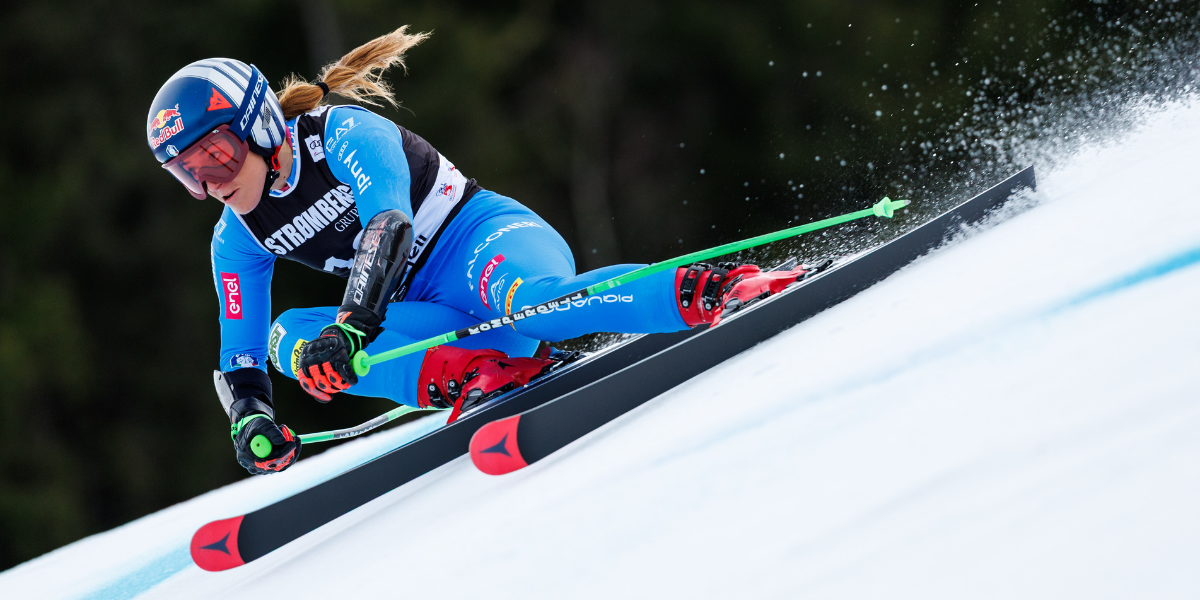
Sofia Goggia enters the 2026-27 season as one of the most decorated speed skiers in history. Her career statistics underscore the gravity of any interruption to her preparation. With 29 World Cup victories to her name, she stands on the precipice of a significant milestone. Of these wins, 19 have been in the downhill discipline. A single additional victory would bring her to the 30-win threshold, while a 20th downhill win would further cement her status as one of the most dominant speed specialists of her generation.
Her training cycle is not merely about maintaining current form but is specifically geared toward the 2027 World Championships in Crans-Montana, Switzerland. This event remains the crown jewel of her upcoming schedule, as she seeks to secure the elusive gold medal that would fill the final gap in an otherwise overflowing trophy cabinet.
The current interruption threatens to disrupt a high-performance training cycle that has been years in the making. Typically, the transition from the South American camps to the European season requires a delicate balance of recovery and intensity. By missing the second half of the Ushuaia camp—and potentially the planned subsequent sessions in Chile—Goggia loses valuable time on snow, which is the primary instrument for refining equipment and physiological conditioning.
Implications for the World Cup Opener
The immediate question facing the FISI is the feasibility of Goggia’s participation in the World Cup season opener. The women’s giant slalom is scheduled for October 24 in Sölden, Austria. With approximately six weeks remaining, the window for recovery is narrowing.
The Sölden race is a high-stakes environment. While Goggia is primarily known for her prowess in speed events (downhill and super-G), her ability to compete in giant slalom is vital for her overall standing and for maintaining the technical sharpness required for speed events. If her health does not return to baseline within the next two weeks, the team may be forced to forgo the Sölden opener to ensure she is fully prepared for the speed-heavy portion of the calendar that follows in the late autumn.
From an analytical standpoint, the situation underscores the volatility of elite winter sports. Athletes operate at the peak of their physiological limits, and even minor disruptions to the endocrine or immune system can have outsized impacts on performance. The "persistent fatigue" mentioned in the team’s statement could range from a simple viral infection to more complex issues related to overtraining or environmental stressors.
Looking Forward: The Path to Recovery
The medical community and the Italian public are currently awaiting a formal statement regarding the results of the diagnostic tests conducted over the weekend. Until a diagnosis is confirmed, the federation is maintaining a policy of total silence regarding a potential return-to-snow date.
For now, the strategy is one of extreme caution. In the high-stakes environment of World Cup alpine skiing, attempting to return before full recovery could lead to long-term health consequences or an increased risk of injury. The Italian team’s decision to pull Goggia from the camp as soon as the fatigue failed to resolve is indicative of a shift toward long-term athlete welfare.
As the international circuit prepares for the winter, the spotlight will remain on the FISI medical team. Goggia’s history of battling back from significant injuries—including multiple major knee surgeries—has earned her a reputation as an athlete who thrives under adversity. However, this particular challenge, defined by its lack of clarity and its sudden onset, represents a different kind of hurdle. Whether this is a temporary setback or a factor that will necessitate a structural change in her season plans remains to be seen. The coming days will be critical, as the medical staff compiles the data necessary to navigate the path toward the 2026-27 season.

