
The landscape of Norwegian cross-country sprinting is undergoing a subtle, yet significant, demographic shift. At the recent high-stakes test race in Holmenkollen, 19-year-old Lars Opstad Vike solidified his status as the country’s most promising breakout talent by securing a podium finish, effectively outperforming established members of the national elite squad. This performance, marked by tactical maturity and raw speed, comes as a direct challenge to the established order of the sport, occurring only eight weeks before the competitive season commences at Beitostølen.
The race, which served as a crucial benchmarking exercise for the national team’s sprint specialists, featured a formidable field. Olympians, world championship medalists, and seasoned veterans lined up on the start grid, yet it was the junior national sprint champion who dictated the narrative. While his older brother, 22-year-old Olympic bronze medalist Oskar Opstad Vike, had previously managed to narrowly defend his position against his sibling during the Toppidrettsveka festival in August, the dynamic shifted decisively in Holmenkollen.
A Shifting Hierarchy in the Opstad Vike Household
The sibling rivalry between Lars and Oskar has become a focal point of pre-season discussions. Prior to the test race, Oskar publicly labeled his younger brother as the odds-on favorite, citing a noticeable shift in the “balance of power” within their training environment. This was not merely brotherly hyperbole; the data from recent training cycles had indicated that Lars was narrowing the gap in explosive capacity and recovery speed.
Following the race, the reality of this transition became undeniable. When asked about his performance relative to his brother, the elder Opstad Vike conceded the defeat with a mix of exhaustion and humor, jokingly remarking that he might need to look for a new place to live. Despite the gravity of the result, the 19-year-old remained composed, attributing his success to tactical positioning rather than a complete overhaul of the hierarchy. His modesty, however, could not mask the technical proficiency he displayed throughout the heats.
Race Analysis and Technical Breakdown
The sprint format in Holmenkollen demanded high-level aerobic capacity paired with anaerobic bursts—a combination that favored the current training regime of the younger generation. The race was won by the 27-year-old Aron Åkre Rysstad, representing the Scandic Sørvest regional team. Rysstad, who has been in peak physical condition throughout the autumn, maintained a consistent lead, crossing the line ahead of national team stalwart Even Northug. Lars Opstad Vike rounded out the top three, demonstrating an ability to hang with the sport’s most established finishers during the critical final stretch.
The field behind the podium was arguably more impressive than the finishers themselves. Notable athletes such as Erik Valnes, Ansgar Evensen, and former U23 world champion Filip Skari finished behind the teenager. Furthermore, the 20-year-old Lars Heggen—who made a sensational transition to the elite national team after just one senior season—found himself further down the leaderboard at ninth place. This volatility in the results underscores the depth of talent currently vying for spots in the Norwegian squad for the upcoming World Cup circuit and the world championships in Falun.
The Significance of Pre-Season Benchmarking
National team coach Eirik Myhr Nossum expressed satisfaction with the intensity observed during the session. For the coaching staff, these test races are not merely about the final results; they are about evaluating which athletes have successfully translated their summer training blocks into race-specific speed.
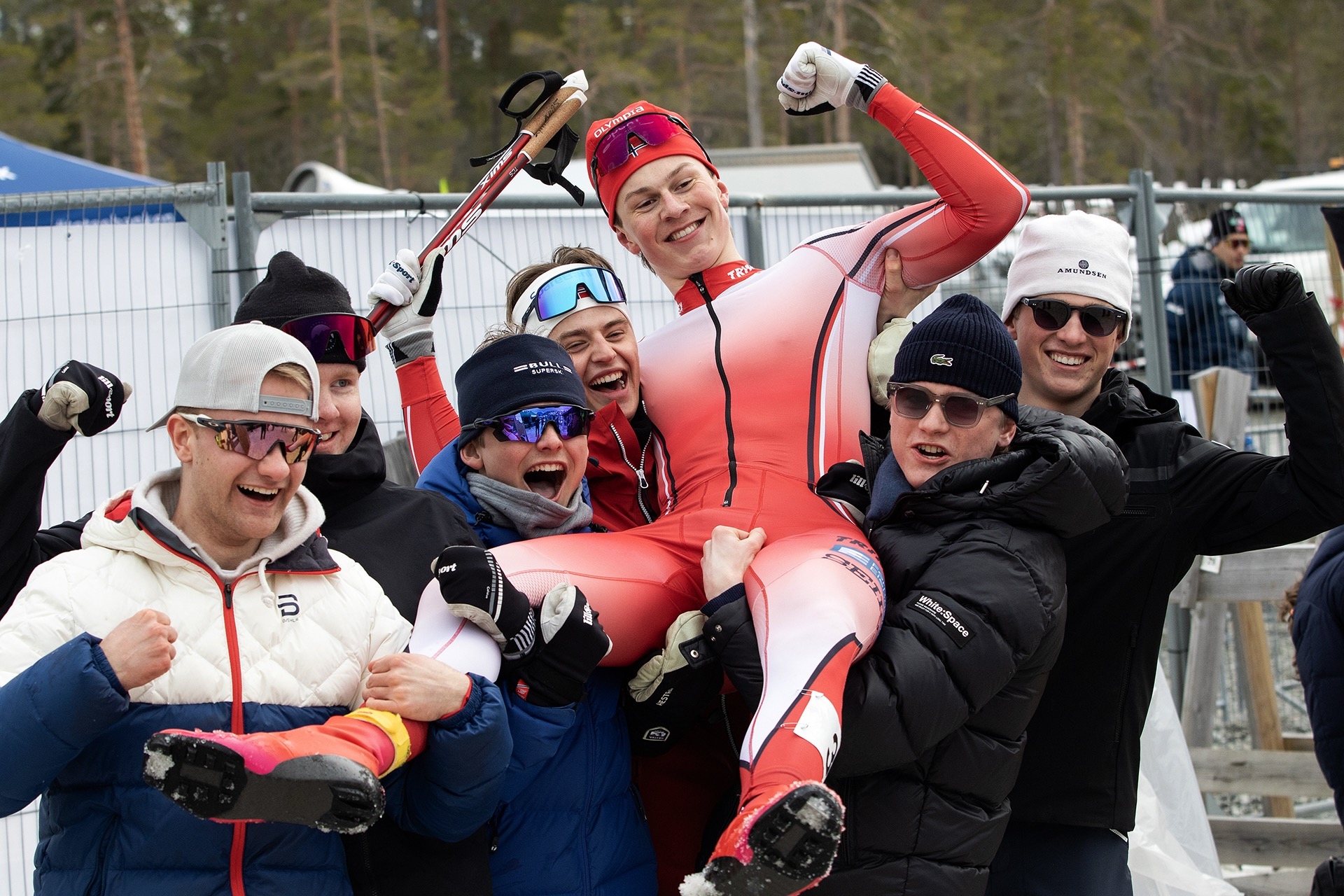
“This is a clear indicator that the winter season is rapidly approaching,” Nossum noted. “When the younger athletes, such as Lars, begin to put this kind of pressure on the established core, it raises the baseline for everyone. It forces the veterans to refine their approach and ensures that we are not entering the international season with any complacency.”
The stakes for the 2026-2027 season are high. With the FIS World Championships in Falun, Sweden, scheduled for February 22 to March 7, 2027, the window for athletes to secure their place in the national team quota is narrowing. The test race in Holmenkollen serves as a critical checkpoint in the selection process. Athletes who failed to perform at their expected level, such as the seasoned sprinters who finished outside the top echelon, now face a period of intensified training and scrutiny before the official season opener.
Chronology of the 2026 Pre-Season Sprint Circuit
The trajectory of the current sprint landscape can be traced back to the early summer months. The following timeline outlines the key events that have defined the current competitive environment:
- Winter 2026: Lars Opstad Vike secures the gold medal at the Junior National Championships, signaling his rise as a top-tier prospect.
- August 2026 (Toppidrettsveka): The summer sprint series provides the first major test against the world elite. Oskar Opstad Vike manages to hold off his brother, but the margin is minimal, highlighting the rapid development of the junior.
- Late August 2026 (Blink Festival): Lars Heggen demonstrates the depth of the U23 cohort by winning the sprint despite experiencing equipment failure, setting a high standard for his peers.
- September 29, 2026 (Holmenkollen Test Race): The defining shift in the internal hierarchy. Lars Opstad Vike achieves a podium finish, while established veterans are relegated to lower positions.
Broader Implications for the National Team
The emergence of a new wave of sprinters poses a strategic challenge for the Norwegian management team. While the veterans bring experience and reliability in championship settings, the raw output of younger athletes like Vike and Heggen provides a tactical versatility that could be instrumental in team sprints and heat-based racing.
The tactical implications are twofold. First, the influx of younger, hungry talent necessitates a more rigorous selection process, as the gap between the national team members and the regional team athletes continues to shrink. Second, the psychological pressure on established stars is likely to increase. As seen in the recent Holmenkollen race, when established names are challenged by athletes with less to lose, the intensity of the race increases, often leading to faster times and more aggressive racing strategies.
Looking Toward Beitostølen and Beyond
The next major milestone in the calendar is the season opener at Beitostølen, taking place from November 20 to 22. This event will be the first true test of the winter, with snow-based conditions providing a different set of variables than the rulleski (roller-ski) races of the summer. The results from Beitostølen will determine the nominations for the opening rounds of the World Cup, which commences on November 27.
The performance of Lars Opstad Vike has fundamentally altered the expectations for the winter. Whether he can sustain this level of intensity when faced with international competition remains to be seen. However, the evidence from the autumn test races suggests that the Norwegian sprint contingent is entering the season with more depth and internal competition than in previous years.
For the sport of cross-country skiing, this represents a healthy cycle of renewal. As the older guard looks to defend their titles at the Falun World Championships, they are now doing so with the knowledge that the next generation is not only waiting in the wings but is actively competing for the podium. The coming months will determine if this shift in the "balance of power" in the Opstad Vike household is a prelude to a larger, national shift in the hierarchy of the sport.

