
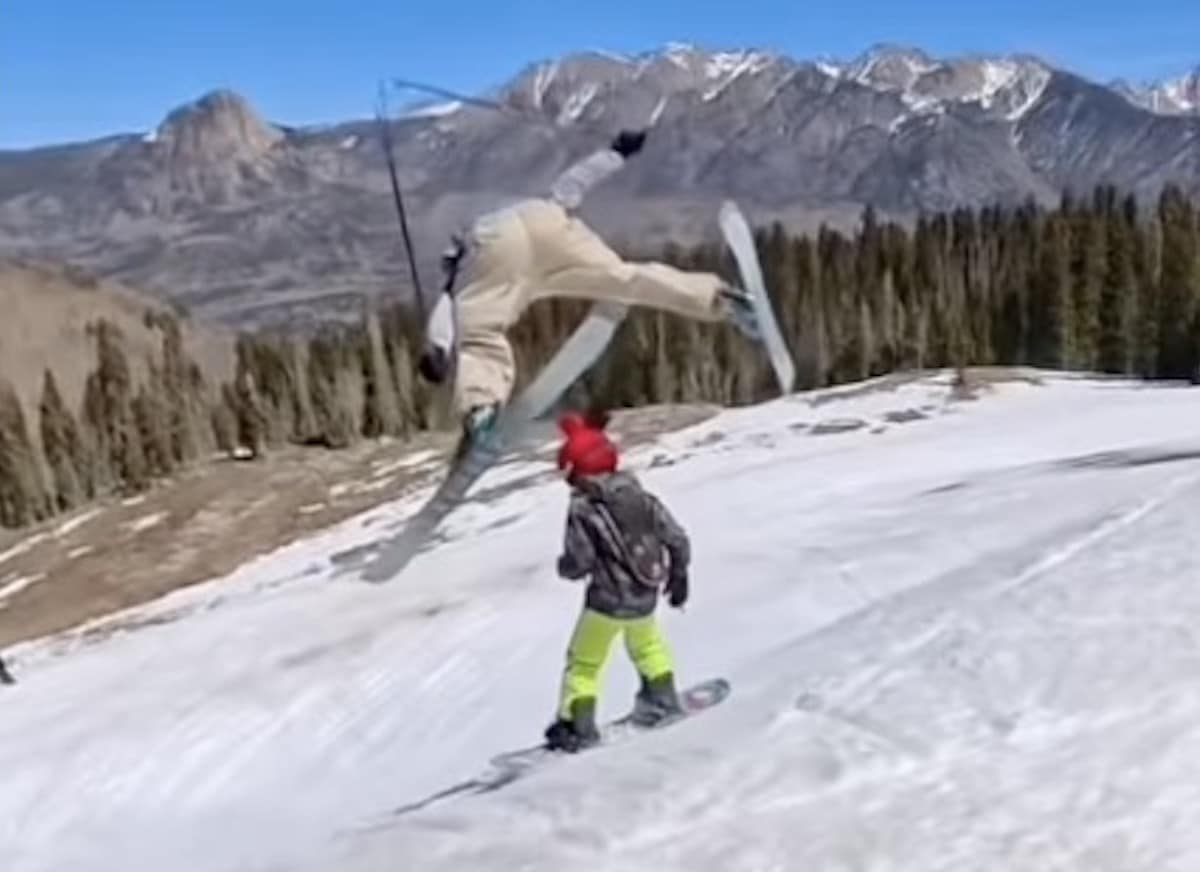
A terrifying near-miss in a ski resort terrain park has highlighted the critical dangers of unsupervised children in active snow sport zones, with video evidence showcasing the lightning-fast reflexes of a skier who narrowly avoided a collision with a young child who had wandered into a jump’s landing area. The incident, captured on video and shared widely on social media, serves as a stark reminder of the inherent risks in terrain parks and the paramount importance of parental supervision and adherence to safety guidelines.
The incident, which occurred on March 23, 2026, at an unspecified ski resort, involved skier Dave Sugnet, who was preparing to launch off a large jump. As Sugnet approached the lip of the jump, he observed a small child standing directly in the landing zone, a blind spot for skiers coming over the jump. Without hesitation and with remarkable agility, Sugnet managed to execute an emergency maneuver, adjusting his trajectory mid-air to avoid a direct impact with the child. The video clearly depicts the child’s precarious position and the split-second evasive action taken by Sugnet, preventing what could have been a catastrophic accident.
Background: The Perils of Terrain Parks and Blind Spots
Terrain parks, designed for skiers and snowboarders to perform jumps, rails, and other freestyle maneuvers, are inherently dynamic environments. While they offer thrilling challenges, they also present unique safety concerns, particularly regarding visibility and user awareness. A common hazard in terrain parks is the presence of blind spots, areas where skiers or snowboarders launching off a jump cannot see the landing zone below. This is precisely where the incident occurred.
The skier responsibility code, a set of guidelines established by organizations like the National Ski Areas Association (NSAA), emphasizes the skier’s duty to maintain control and avoid collisions. Rule number two, for instance, states that the downhill skier always has the right of way. However, the complexity of terrain parks often blurs these lines. Skiers and snowboarders launching jumps operate under the assumption that the landing area is clear, a presumption that is critically undermined when unauthorized individuals, especially children, occupy these zones.
Park SMART Initiative: A Framework for Safety
In response to the growing popularity and inherent risks of terrain parks, the National Ski Areas Association (NSAA) has promoted the "Park SMART" initiative. This program aims to educate participants on safe practices within these specialized areas. The core tenets of Park SMART include:
- Start Small: Encouraging users to begin with smaller features and gradually progress as their skills develop.
- Make a Plan: Emphasizing the importance of assessing each feature and planning a safe approach and execution.
- Always Look: A crucial directive for skiers and snowboarders to check the landing zone before dropping into a jump or feature.
- Respect: Fostering a culture of respect for both the features and other users within the park.
- Take It Easy: Advising participants to be aware of their limits and to focus on landing safely.
The incident involving Dave Sugnet directly underscores the "Always Look" principle, not just for the jumper, but also for those who might be in or around the park.
Chronology of the Near-Miss
While a precise timeline is difficult to establish from the video alone, the sequence of events is clear:
- Observation of the child: Dave Sugnet, preparing for his jump, would have first noticed the child in the landing zone as he approached the take-off.
- Assessment and immediate reaction: Recognizing the imminent danger, Sugnet’s training and instincts would have triggered an immediate assessment of his options.
- Mid-air evasive maneuver: In a matter of seconds, Sugnet executed a significant adjustment to his trajectory while airborne, diverting his path away from the child.
- Safe landing and immediate aftermath: Sugnet successfully landed, shaken but unharmed. The child, though startled, also appeared to be unharmed, having narrowly avoided a severe impact.
Reactions and Implications
Following the incident, Dave Sugnet himself shared the video with a plea to parents: "Have you seen your child today? Please, please, please tell your children to stay away from landings in the large terrain park. This was way too close." This direct appeal highlights the emotional toll such near-misses can have on individuals and underscores the urgent need for greater awareness.
The video’s viral spread has ignited discussions across skiing and snowboarding communities, as well as among parents. Many have expressed shock and concern, emphasizing the necessity of constant vigilance when children are present in potentially hazardous areas like ski resorts. Resort operators also bear a responsibility to ensure clear signage and, where possible, to implement safety measures that mitigate risks in terrain park areas. This could include increased patrolling, designated waiting areas away from jump landings, and educational campaigns for families.
Broader Impact and Analysis
This incident has significant implications for ski resort safety protocols and parental responsibility. It underscores that while professional skiers like Sugnet possess extraordinary skills, they cannot be expected to anticipate and react to every unpredictable hazard, especially those involving unsupervised children.
The fact that the child was in a blind spot, a common characteristic of terrain park jumps, suggests a potential lapse in supervision. Parents or guardians are expected to maintain a close watch on their children, particularly in areas with active sports and potential for high-speed collisions. Teaching children about the rules of the mountain, including designated safe zones and areas to avoid, is as crucial as teaching them how to ski or snowboard.
Furthermore, the incident prompts a re-evaluation of how terrain park safety is communicated. While initiatives like Park SMART provide valuable guidance, their effectiveness relies on widespread adoption and understanding. Ski resorts may need to intensify their efforts in educating visitors about the specific dangers of terrain parks, perhaps through visual aids, on-mountain announcements, and interactive safety briefings, especially during peak family visitation times.
The availability of video evidence, while serving as a powerful cautionary tale, also raises questions about the security of terrain park areas. In some cases, resorts might consider physical barriers or improved sightlines where feasible to reduce the likelihood of accidental intrusions into critical zones.
Conclusion: A Call for Collective Responsibility
The near-catastrophic event at the ski resort is a wake-up call for all involved in snow sports. It highlights the vital importance of:
- Enhanced Parental Supervision: Ensuring children are always supervised in active ski areas, especially terrain parks.
- Education and Awareness: Promoting adherence to safety codes like Park SMART and educating all users about the specific risks of terrain parks.
- Resort Responsibility: Encouraging ski resorts to implement robust safety measures, clear signage, and ongoing educational campaigns.
- Individual Vigilance: Reminding every individual on the mountain to be aware of their surroundings and to act responsibly.
While Dave Sugnet’s incredible reflexes averted disaster, the incident serves as a powerful reminder that relying solely on individual skill is not a sustainable safety strategy. A collective commitment to vigilance, education, and responsible behavior is essential to prevent future tragedies and ensure that mountain environments remain enjoyable and safe for everyone. The lessons learned from this near-miss must be integrated into ongoing safety efforts to protect the youngest and most vulnerable participants in the world of snow sports.

