
The intricate world of Olympic snowboard judging, a critical component in determining medalists in high-stakes disciplines such as Big Air, Halfpipe, and Slopestyle, has undergone substantial evolution, driven by a commitment to fairness, accuracy, and the sport’s progressive spirit. Following a recent Olympic cycle, a detailed discussion with veteran judges Gaz Vogen, Adam "Beggsy" Begg, and Iztok Sumatic sheds light on the nuanced criteria, technological advancements, and transparent communication strategies now underpinning competitive snowboarding at the pinnacle of winter sports. Their insights reveal a dynamic system striving to balance technical prowess with artistic expression, directly influenced by athlete feedback and past controversies.
Understanding the Scorecard: The DAVE-P Framework
For disciplines like Big Air and Halfpipe, judging operates on an "overall impression" basis, meticulously evaluated against the DAVE-P criteria: Difficulty, Amplitude, Variety, Execution, and Progression. This holistic framework ensures that a rider’s performance is assessed across multiple dimensions, moving beyond mere technical complexity to encompass the breadth and artistry of their run. Difficulty gauges the inherent challenge of the tricks performed, considering factors like rotation count, off-axis spins, and switch take-offs. Amplitude measures the height and airtime achieved, a testament to the rider’s power and control. Variety assesses the diversity of tricks, including different spin directions (frontside, backside, switch frontside, switch backside), grab variations, and the use of various features. Execution scrutinizes the flawlessness of the performance, from clean take-offs and landings to held grabs and overall control. Finally, Progression rewards innovation, recognizing new tricks, unique combinations, and groundbreaking approaches that push the sport’s boundaries.
In these events, a panel of six scoring judges each awards a score out of 100 for every run. Adam "Beggsy" Begg, serving as the head judge, plays a crucial role in compiling these scores. To mitigate potential outliers and ensure a fair average, the highest and lowest scores are eliminated, with the remaining four scores then averaged to determine the final run score. This system, refined over multiple Olympic cycles, aims to provide a robust and equitable assessment of each athlete’s performance.
Slopestyle’s Nuances: Sectional and Compositional Evaluation
Slopestyle, with its multi-feature course design, necessitates a more granular judging approach. The system employs six dedicated section judges, each responsible for evaluating one of the course’s distinct features—be it a rail, a jump, or a transition. Each section judge awards a score out of 10 points, providing immediate feedback on individual trick execution within the course flow.
Complementing these sectional evaluations are three composition judges, whose role is to assess the entire run as a cohesive artistic and athletic statement. These judges initially award scores out of 100, which are then condensed via a specific tabulation system into a score out of 40. This compression ensures that the overall composition component, while vital, contributes appropriately to the total score, which is then scaled to a final figure out of 100 for broadcast. Beggsy once again acts as the head judge, overseeing the intricate compilation process and facilitating critical discussions among the judging panel.
The shift in terminology from "overall impression judges" to "composition judges" in slopestyle reflects a significant refinement in criteria emphasis. As Iztok Sumatic explains, this change places greater responsibility for assessing trick difficulty on the section judges. While difficulty remains a component of the composition judges’ scores, their primary focus now lies on the execution and variety of the entire run, including the diversity of spin directions, off-axis rotations, and grab variations. This evolution seeks to reward the comprehensive flow and artistic merit of a run, rather than solely prioritizing individual trick difficulty within the broader compositional assessment. This refined focus addresses past criticisms regarding how overall impression could sometimes overshadow specific technical details.
Beijing Backlash and Technical Revolution: Ensuring Fair Play
A pivotal moment that catalyzed significant changes in Olympic snowboard judging infrastructure occurred "four years ago" at the Beijing 2022 Winter Olympics. The controversy surrounding Canadian Max Parrot’s gold-medal-winning run in the men’s slopestyle, where a widely publicized "knee grab" error was missed by broadcast cameras, underscored a critical vulnerability in the judging system: reliance on inconsistent camera angles. Public and media scrutiny, particularly from prominent figures within the snowboarding community, highlighted the disparity between what judges saw and what was available to a global audience, leading to widespread calls for enhanced transparency and accuracy.
Recognizing the profound impact of visual evidence on fair judging, Gaz Vogen revealed a proactive and unprecedented response: "After the incident in Beijing four years ago, we realised we couldn’t really trust the OBS [Olympic Broadcast Service] to give us the consistent camera angles that we wanted." The Olympic Broadcast Service (OBS), responsible for all camera operations and feed distribution to broadcasters worldwide, often prioritizes dynamic, audience-engaging shots over the consistent, analytical angles crucial for judging. This inherent conflict prompted the judging committee to take decisive action.
For the subsequent Olympic cycle, a groundbreaking initiative was implemented. The judging panel, through a partnership with a dedicated production team from Alibaba, brought in their own independent camera setup and management for Big Air, Halfpipe, and Slopestyle events. This strategic investment allowed judges unparalleled control over camera angles, ensuring consistent perspectives for every rider’s run. "For us as judges, the best way is to see the same angle for every single runner, because the perspective of the camera will change our perception of the trick," Gaz elaborated. This bespoke system dramatically improved visual clarity and consistency, effectively eliminating instances of missed tricks or obscured views that had plagued previous events. The result was a judging feed reportedly "clearer than what we saw" on public broadcasts, with Gaz proudly stating, "we didn’t have a single missed trick from the camera the entire Games." This technological leap represents a profound commitment to accuracy and impartiality, directly addressing one of the sport’s most significant judging challenges.
Deconstructing a Gold: Mari Fukada’s Slopestyle Victory
The Women’s Slopestyle final provided a compelling illustration of the refined judging criteria in action, particularly in the nuanced assessment of Mari Fukada’s gold-medal-winning performance against formidable competitors like Zoi Sadowski-Synott (silver) and Kokomo Murase (bronze). The outcome, which saw Fukada secure the top spot despite her run featuring "only" two 720s, sparked commentary from figures like Todd Richards, who questioned how a run with seemingly lower rotational difficulty could triumph in the contemporary landscape of the sport.
The judges’ explanation hinged on the paramount importance of flawless execution and comprehensive variety. Gaz Vogen emphasized Mari Fukada’s "absolutely flawless execution," noting her perfectly locked-over rails and precisely held grabs throughout her run. In stark contrast, Zoi Sadowski-Synott’s otherwise impressive run, which included a more difficult jump line (900, 1080, 1080), suffered a critical deduction on a second section frontside lipslide, where she "slipped out," resulting in a significantly lower score of 4.6 for that feature. Beggsy corroborated this, stating, "Mari’s was the only flawless run on the day. Every other run had little instabilities, whether it’s an early-off, or a hand touch, or an edge of some sort."

Furthermore, Mari Fukada’s run excelled in the variety criterion. She successfully incorporated all "four directions of spin" (frontside, backside, switch frontside, and switch backside), a key element communicated to riders in pre-event meetings. Kokomo Murase’s run, while technically impressive in other aspects, notably lacked a switch backside spin, a factor that significantly impacted her composition score (36.0 compared to Zoi’s 38.53) despite a higher trick score (49.80 vs. 48.95). Beggsy clarified that a "switch backside boardslide" on a rail, while performed switch, doesn’t count as a "switch backside rotation" in the air, as the rider primarily faces forward during the maneuver.
Mari’s run also showcased a "front seven at the end… off the toes," a distinct take-off style that, while not providing a "gigantic boost," was taken into consideration for its added difficulty and variety. This subtle differentiation, rooted in rider feedback about increased difficulty, served as a "separator if needed," demonstrating the meticulous attention to detail in the contemporary judging system. The judges collectively underscored that while progressive tricks are valued, riders themselves prioritize well-executed maneuvers with long-held grabs, affirming that execution remains central to avoiding a "spin to win" mentality and preserving the sport’s stylistic integrity.
Beyond the Spin-to-Win: Redefining Big Air and Halfpipe Progression
The evolution in judging philosophy extends profoundly to Big Air, where the traditional emphasis on maximizing rotations is being challenged by a growing appreciation for diverse axes of rotation and unique trick execution. Frank Jobin’s performance in the men’s Big Air final exemplified this shift, with his double rodeo and switch backside double rodeo—"only" a 1440 and a 1260 respectively—earning high scores amidst a field of 1800s and 1980s. This rewarding of non-traditional spins, as Gaz Vogen explains, is a direct reflection of rider input, who have expressed that rodeos and other "weirder, low-rotational tricks on different axes—like Eli Bouchard’s tricks—are harder and deserve more points."
This dynamic, which has been a consistent theme in World Cup Big Air contests over the past two seasons, signifies a conscious effort to broaden the spectrum of rewarded tricks and prevent the sport from devolving into a monotonous "space race of extra 180s." Beggsy reiterated that this push for creative, unique, and different axis spins, including alley-oops in halfpipe, originates from the riders themselves. The judges are actively working with the community to establish equitable scoring benchmarks for these innovative maneuvers against more traditional spins.
A compelling historical parallel can be drawn to Sage Kotsenburg’s gold medal at the Sochi 2014 Olympics. His "Holy Crail" grab on a relatively lower-spinning trick was seen as a spark, encouraging other riders to focus on different grabs and creative execution. Iztok Sumatic likened the current emphasis on varied axes and unique tricks to this past moment, suggesting that rewarding innovation through scores acts as a catalyst for broader adoption and progression within the sport.
However, the transition is not without its challenges. While Big Air qualifiers often showcase a greater diversity of "switch rodeos, butter tricks, pullbacks," with these tricks receiving good scores, the finals often see riders revert to higher-rotational "spin to win" strategies. Beggsy noted that this is largely due to the high-stakes environment where riders prioritize landing a solid "backup trick" for security, leading to a temporary regression in trick selection. Frank Jobin, in this instance, was one of the few who successfully carried his unique trick selection into the finals. This ongoing dialogue between judging criteria and rider strategy underscores the delicate balance between encouraging innovation and navigating competitive pressures.
Halfpipe’s High Stakes: Scotty James vs. Yuto Totsuka and the Alley-Oop Frontier
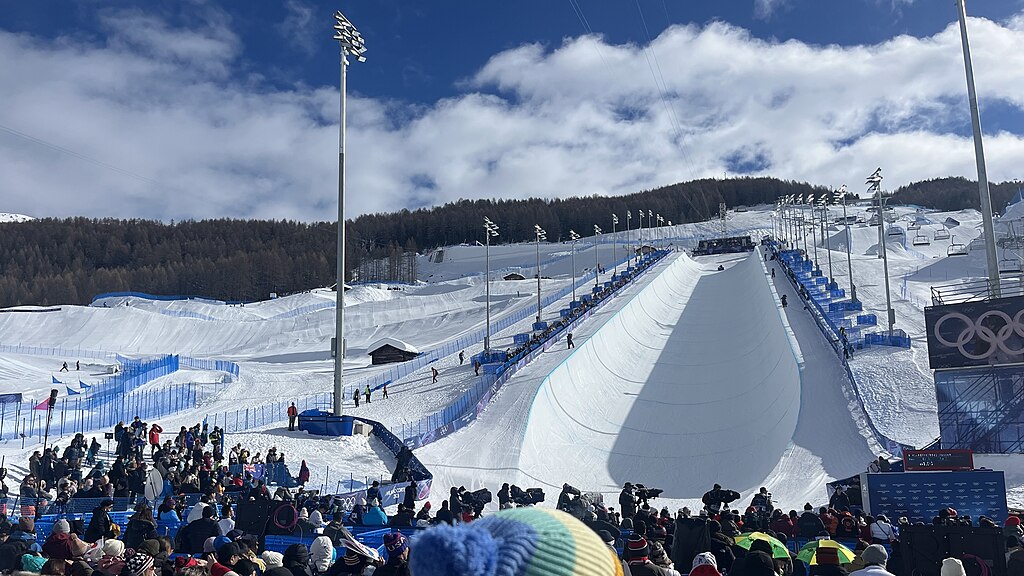
The men’s halfpipe final presented another intense contest, with Scotty James (silver) visibly expressing dissatisfaction with his score compared to Yuto Totsuka’s gold-medal run. The judges clarified that "execution was probably the biggest point" separating the two. Gaz Vogen noted Scotty’s "a little bit under-rotated" first and last hits, which resulted in less clear landings. While Scotty displayed impressive combinations, such as a back 10 into a switch back 14, and had aimed for a challenging back 16 on his final, ultimately unsuccessful run, it was Yuto’s more "flawless" execution and diverse trick selection—including what Gaz described as "four and a half directions" due to the inclusion of an alley-oop—that earned him the gold.
A significant highlight of the halfpipe competition was Ryusei Yamada’s extraordinary "switch frontside alley-oop 10 off the heels." Beggsy confirmed this as "another NBD [never been done] in competition," performed off the heels and back up the pipe, a maneuver that Iztok Sumatic described as having "blew my mind." Iztok passionately advocated for the alley-oop as a crucial "frontier to still be explored" for progression in halfpipe snowboarding.
Gaz Vogen further elaborated on how such tricks contribute to progression scores: "With that progression criteria we look at whether it’s a new rotation, or whether it’s just elements of a trick that push the sport forward [like a unique take-off]." Ryusei’s trick scored highly not only on difficulty—a switch alley-oop rodeo mid-run followed by a substantial back double 10—but also on its unique progressive elements. The judges noted that the "more people that start doing that trick, then the less kind of progressive reward it gets," though its difficulty reward would remain. This dynamic incentivizes continuous innovation, echoing Scotty James’s own pioneering efforts in introducing his unique switch back 12 ahead of the Pyeongchang Olympics, which at the time significantly boosted his variety and progression scores. The irony, as Gaz pointed out, is that Scotty was "probably the first one on that kind of variety of having all four directions and different takeoffs," but the rest of the field has since caught up. Despite the intense competition, Iztok concluded, "I would say the top eight athletes all overcame themselves, and that was the raddest, the most progressive, the best snowboarding in half pipe I’ve ever seen."
The Future of Snowboarding: A Progressive Olympics and Community Spirit
Overall, the recent Olympic cycle was perceived as highly progressive for snowboarding, despite some logistical challenges. Issues such as "speed issues for some of the women in slopestyle" and a Big Air jump that "wasn’t massive" were acknowledged, yet the spirit of innovation and camaraderie prevailed.
Gaz Vogen singled out the women’s Big Air contest as his "favourite contest I’ve judged," highlighting the "very rapid rate" at which women’s snowboarding is progressing. This rapid evolution, coupled with an exceptionally supportive community, created a compelling atmosphere. Moments like Kokomo Murase’s emotional reaction to winning a medal, in stark contrast to the perhaps more subdued celebrations at X Games, underscored the profound significance of Olympic recognition. Beggsy noted her tears as a powerful testament to the value athletes place on Olympic accolades. Gaz also praised Mia Brookes’ courageous attempt at a back 16, a trick she had reportedly never tried on snow before, further illustrating the athletes’ willingness to push boundaries on the biggest stage. While hypotheticals remain, such attempts signal a vibrant future for the sport.
Judges’ Verdict: Confidence in the System
In a concluding statement relayed through Gaz Vogen, Head Judge Adam "Beggsy" Begg delivered a resounding endorsement of his team and the judging process: "Can you let Whitelines know that I back the team 100 percent. There is nobody I would rather have on such a big event. Their experience, knowledge, work ethic, and calmness under pressure was why they were selected for this. They judged to the criteria and the guidelines set in riders meetings. And that despite how it went down in slope they are the current best in the world!" This emphatic statement serves to reaffirm the professionalism, expertise, and integrity of the Olympic snowboarding judging panel, underscoring their unwavering commitment to upholding the sport’s evolving standards and ensuring a fair and progressive competitive environment. The continuous dialogue with athletes, the strategic adoption of advanced technology, and the constant refinement of criteria all point to a judging system that is not only responsive to the sport’s dynamic nature but also deeply invested in its future.

