
Glaciers, magnificent yet perilous, present a constant array of dangers to those who traverse their icy expanses. These dynamic frozen rivers are characterized by an inherent instability, marked by the potential for falling ice, unpredictable shifts, and the insidious threat of hidden crevasses. These deep fissures, often obscured by a deceptively uniform blanket of snow, can transform a seemingly safe path into a treacherous trap. While wind-driven snow can form bridges capable of supporting a traveler’s weight, these formations are inherently unreliable, making any crossing a high-stakes gamble.
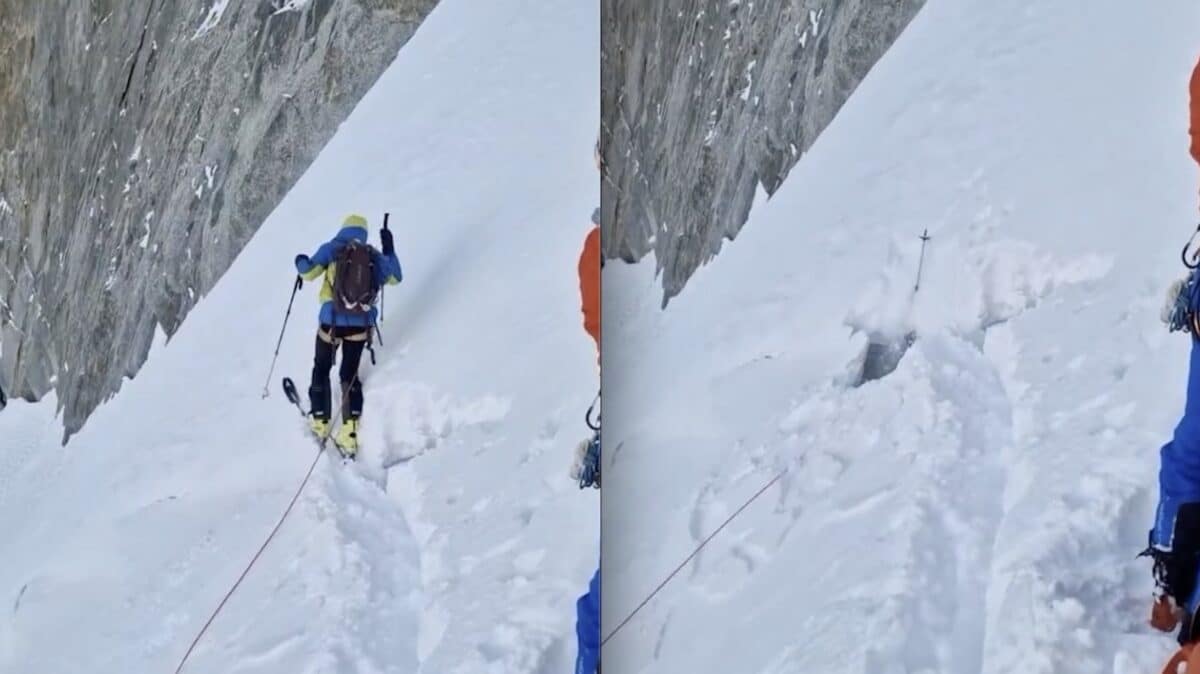
In a recent demonstration of meticulous risk assessment and skillful execution, mountain guide Peter von Känel navigated a precarious situation involving a bergschrund—a distinct crevasse found at the terminus of a mountain glacier, often near its highest point. Von Känel, an experienced mountaineer, was actively testing the snow bridge spanning this formidable gap. He fully acknowledged the significant risk of collapse and subsequent fall, a danger inherent in such endeavors. However, through the diligent application of proper belaying techniques, he effectively mitigated the potential for a catastrophic outcome. When the snow bridge inevitably gave way, Von Känel’s fall was controlled, preventing a potentially severe or fatal plunge.
The incident, captured in a widely shared social media post, underscores the critical importance of preparedness and safety protocols in glacial environments. Von Känel’s calculated approach serves as a potent reminder that even seasoned professionals must exercise extreme caution and employ best practices when exploring these challenging terrains. The bergschrund, a common feature on many glaciers, represents a significant hazard due to the often-thin and unstable snow that bridges its opening. These features form as the glacier pulls away from the bedrock at its head.
The Perils of Glacial Travel
Glacial environments are inherently dynamic and unforgiving. The surface of a glacier is rarely static, constantly shifting and reforming. This instability leads to the formation of crevasses, which are fractures in the ice. These can range in size from a few feet to hundreds of feet deep. The danger is amplified by the fact that crevasses are often hidden beneath layers of snow, especially during winter months or periods of heavy snowfall. These snow bridges, while appearing solid, can be remarkably thin and brittle, incapable of supporting significant weight. The consequences of falling into a crevasse can be severe, ranging from injury due to the fall itself, to hypothermia and potential entrapment.
A Calculated Risk: Peter von Känel’s Incident
The incident involving Peter von Känel occurred as he was engaged in the process of evaluating the stability of a snow bridge over a bergschrund. Bergschrunds are particularly hazardous as they are typically located at the very top of a glacier, where the ice is pulling away from the mountain rock. This separation creates a large void, and the snow that accumulates over it can be highly unpredictable. Von Känel’s actions demonstrated a profound understanding of these risks. He was not simply venturing blindly; he was actively assessing the conditions.

His decision to proceed with testing the snow bridge, despite the inherent danger, was made possible by his use of a robust safety system. By being properly belayed, he ensured that even if the snow bridge failed, his fall would be arrested by the rope and anchor system. This technique is a cornerstone of mountaineering safety, allowing climbers to explore potentially hazardous areas with a significantly reduced risk of injury. The video footage clearly shows the moment of collapse and Von Känel’s controlled descent, highlighting the effectiveness of his safety measures.
The Importance of Glacial Safety Protocols
The inherent dangers of glacial travel necessitate a strict adherence to established safety protocols. Mountaineering experts universally advise against undertaking glacial journeys alone. The rationale is twofold: the increased risk of accidents and the vital need for assistance should an incident occur.
Key Safety Measures Employed by Glacial Travelers:
- Crevasse Probes: These long, often collapsible poles are used to systematically probe the snowpack ahead. By tapping the snow with the probe, climbers can detect changes in density and identify potential hollows or weak spots that may indicate a hidden crevasse. Glaciologists and experienced mountaineers often use these probes extensively before setting up camp or traversing large glacial expanses.
- Rescue Practice: Comprehensive training in crevasse rescue techniques is paramount. This includes understanding how to self-arrest a fall, how to set up anchor systems, and how to haul a fallen companion out of a crevasse. Regular practice ensures that these life-saving skills are second nature in a high-stress situation.
- Ice Axes: These essential tools serve multiple purposes on a glacier, including self-arresting a slide on icy terrain and providing stability during movement.
- Crampons: Spiked attachments worn on boots, crampons provide crucial traction on ice and hard-packed snow, preventing slips and falls.
- Roping Together: For groups traveling on a glacier, being roped together is a fundamental safety measure. This creates a system where if one member falls into a crevasse, the others can potentially arrest the fall and assist in a rescue. The distance between individuals in a rope team is also carefully managed to optimize safety.
Background and Context of the Event
While specific details regarding the exact location and date of Peter von Känel’s incident are not fully elaborated in the provided text, the context points to a professional mountain guide operating in a European glacial region. The year of publication, 2026, suggests the event is recent or a re-telling of a notable occurrence. The image associated with the article, depicting a person falling into a crevasse, further emphasizes the gravity of the situation. The fact that it was a "search for a safe route" implies a deliberate attempt to navigate through potentially unknown or changing glacial conditions, a common practice for guides and explorers aiming to find optimal paths for their clients or expeditions.
The use of social media, particularly Instagram, to share such experiences has become a significant aspect of outdoor and adventure culture. These platforms allow for the rapid dissemination of information, often serving as a de facto news source for niche communities. The sharing of Von Känel’s experience, while potentially alarming, also serves an educational purpose, highlighting the realities of glacial exploration and the importance of preparedness.
Broader Implications and Analysis
Incidents like the one involving Peter von Känel serve as critical case studies for the mountaineering and glaciology communities. They reinforce the dynamic nature of glaciers, which are increasingly subject to the effects of climate change. Warming temperatures can lead to accelerated glacial melt, increased instability, and changes in crevasse formation and snow bridge integrity. This means that previously known routes may become more dangerous, and the predictability of glacial conditions is diminishing.
The incident also brings to the forefront the evolving role of social media in disseminating safety information. While powerful for raising awareness, it is crucial that such content is presented responsibly, emphasizing the professional expertise and safety measures involved rather than sensationalizing the danger. The responsible sharing of such events can foster a culture of caution and preparedness among aspiring adventurers.
The fact that Von Känel was a professional guide underscores the inherent risks even for those with extensive experience and training. It suggests that no amount of expertise can completely eliminate the dangers posed by glaciers. Therefore, continuous learning, adaptation to changing conditions, and an unwavering commitment to safety protocols are essential for anyone venturing onto these icy landscapes. The data from organizations monitoring glacial retreat, such as the World Glacier Monitoring Service (WGMS), consistently shows significant ice loss globally, underscoring the increasing challenges and risks associated with glacial environments. For instance, reports from the Intergovernmental Panel on Climate Change (IPCC) have detailed substantial reductions in glacier mass worldwide, impacting ecosystems and communities dependent on glacial meltwater.
Official Responses and Expert Commentary (Inferred)
While no direct official statements are provided, it is reasonable to infer that such an incident would prompt discussions within guiding organizations and mountaineering associations. These bodies typically review such events to update safety guidelines and training programs. Mountain safety experts would likely emphasize the following points:
- Continuous Education: The need for ongoing training and education in glacier travel and rescue techniques is paramount, especially given the changing glacial conditions.
- Risk Assessment: Thorough and ongoing risk assessment is critical before and during any glacial expedition. This includes evaluating weather forecasts, snowpack stability, and recent geological activity.
- Technological Advancement: While traditional methods remain vital, advancements in glacier monitoring technology, such as satellite imagery and GPS tracking, can provide valuable data for route planning and hazard identification.
The sharing of such a video, even by the individual involved, can be seen as a form of proactive safety education. It serves as a stark visual reminder of the potential consequences of underestimating the power and unpredictability of glacial environments. The mountaineering community relies on such shared experiences to learn and adapt, ensuring that future expeditions are conducted with the highest possible degree of safety.

