
In a display of extraordinary skill and daring, Norwegian professional skier Benjamin Forthun has successfully hydroplaned an astounding 367 feet across a frigid glacial lake, achieving speeds estimated at 65 miles per hour. The feat, captured in striking footage, has ignited discussion within the skiing community about its potential status as the longest pond skim ever recorded. Forthun, known for his adventurous spirit and commitment to pushing the boundaries of snow sports, documented his achievement, expressing his elation and posing the question of a world record.
The Genesis of a Record-Breaking Skim
The event unfolded in the remote and visually stunning landscape of Norway, a region renowned for its dramatic fjords and pristine natural beauty. While the exact date of Forthun’s successful attempt is not definitively stated, the accompanying imagery suggests a period of ample daylight, characteristic of higher latitudes during certain times of the year. The challenging nature of traversing a frozen or partially frozen body of water on skis, especially over such an extensive distance, implies a meticulously planned and executed endeavor.
Pond skimming, a popular end-of-season tradition at many ski resorts, typically involves skiers and snowboarders attempting to glide across a pool of water without sinking. The distances achieved in these events are usually measured in mere tens of feet. Forthun’s undertaking, however, transcends this traditional format, transforming a recreational activity into a high-speed athletic challenge across a vast natural expanse. The sheer scale of the glacial lake presented a unique set of variables, including ice stability, water depth, and the overall surface friction, all of which would have demanded precise calculation and control.
A Daring Attempt: The Physics of Hydroplaning
Forthun’s remarkable achievement hinges on the principles of hydroplaning, a phenomenon typically associated with vehicles on wet roads. In this context, the skis, moving at a significant velocity, would have generated enough upward force to lift them off the water’s surface, allowing them to glide. The key factors enabling this sustained glide over 367 feet include:

- Speed: Achieving a velocity of approximately 65 mph is critical. This speed generates the necessary hydrodynamic lift to overcome the drag and resistance of the water.
- Ski Design: The type and condition of Forthun’s skis would have played a pivotal role. Longer, wider skis with a specific base construction might be optimized for generating lift and maintaining stability at high speeds on water.
- Water Surface Conditions: The state of the glacial lake’s surface is paramount. A smooth, relatively unbroken expanse of water, or thin, stable ice that allows for a consistent glide, would be ideal. The presence of choppy water or significant ice irregularities would drastically increase the risk of submersion.
- Technique: Forthun’s skiing technique would have been crucial for maintaining balance, controlling direction, and ensuring consistent pressure on the skis to sustain the hydroplaning effect. This likely involved a specific stance and body positioning adapted for this unique environment.
- Launch and Entry: The approach to the water, including the gradient of the approach slope and the initial speed generated, would have been critical for initiating the hydroplaning phase effectively.
The distance of 367 feet is a substantial measure, far exceeding typical pond skim records. For context, the average length of a standard Olympic swimming pool is 50 meters (approximately 164 feet). Forthun’s feat is more than double this length, highlighting the extraordinary nature of his accomplishment.
The Journey to Success: Multiple Attempts and Dedication
While Forthun’s statement expresses relief at finally succeeding, it also implies that the journey to this record-breaking skim involved a considerable number of attempts. The original reporting mentions that Forthun "did not specify how many attempts he made." This suggests a process of trial and error, refinement of technique, and adaptation to the challenging conditions. Each failed attempt would have likely resulted in "soaked ski boots," a common hazard in pond skimming, but in this case, potentially a much more immersive and prolonged dunking given the vastness of the lake.
The dedication required to repeatedly attempt such a feat, particularly in a cold climate and with the inherent risks involved, speaks volumes about Forthun’s commitment and passion. The extensive daylight hours available at northern latitudes would have provided ample opportunity to practice and refine his approach without being constrained by darkness. This extended window of opportunity is a significant factor in understanding how such a challenging objective could be pursued and ultimately conquered.
Community Reaction and the Pursuit of Records
News of Forthun’s extraordinary skim has generated considerable interest within the skiing and extreme sports communities. His own quote, "Not sure, but maybe the longest pond skim ever??" perfectly encapsulates the excitement and speculation surrounding the record.
Official recognition of this feat as a world record would likely require independent verification of the distance and adherence to specific criteria set by record-keeping bodies. This would involve precise measurement of the glide path, confirmation of the speed achieved, and potentially, documentation of the equipment used and the conditions under which the skim took place.
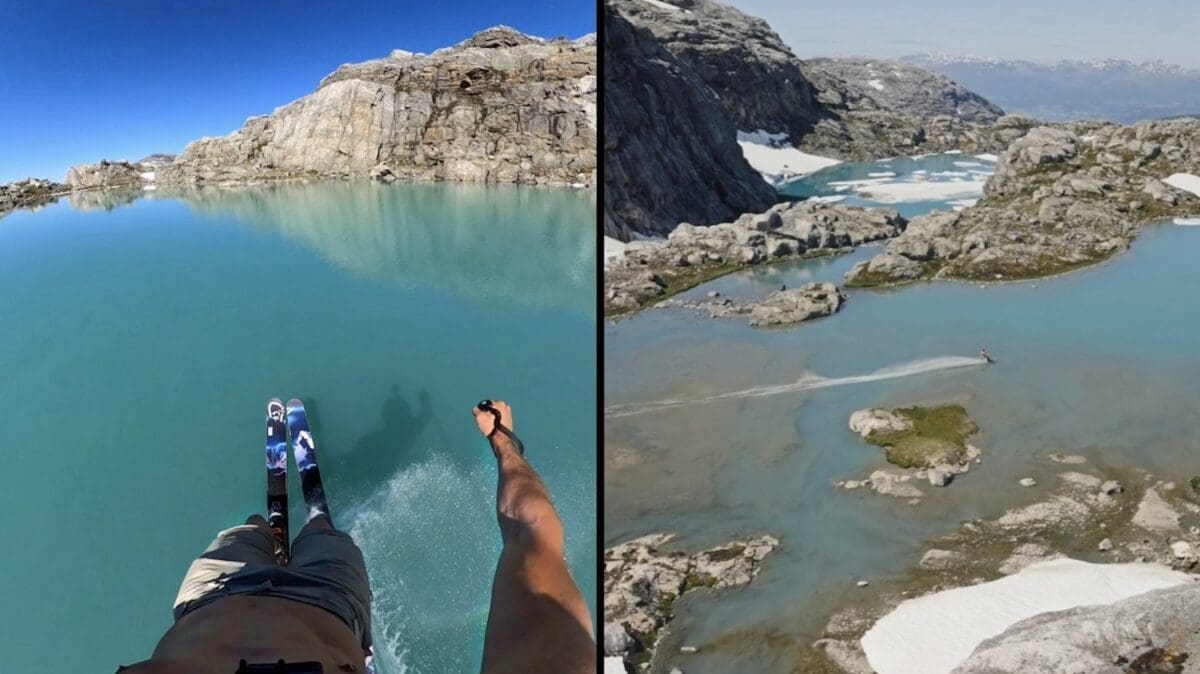
Should this be officially recognized as a world record, it would not only elevate Benjamin Forthun’s status within the sport but also inspire future athletes to explore the limits of what is possible in snow and water-based extreme sports. The inherent challenge of verifying such a record in a remote natural setting could present logistical hurdles, but the visual evidence is undeniably compelling.
Broader Implications and the Spirit of Adventure
Benjamin Forthun’s achievement is more than just a personal triumph; it is a testament to the enduring human spirit of adventure and innovation. In an era where many extreme sports have become highly organized and commercialized, Forthun’s accomplishment harks back to the roots of exploration and pushing boundaries for the sheer challenge and exhilaration of it.
The successful hydroplaning across such a vast glacial lake could have several implications:
- Inspiration for Future Athletes: This feat could inspire a new generation of skiers and athletes to think outside the box and attempt similar, perhaps even more ambitious, challenges. It demonstrates that with creativity, dedication, and a deep understanding of physics and technique, seemingly impossible feats can be achieved.
- Advancements in Ski Technology: The specific equipment and techniques employed by Forthun might lead to further research and development in ski design, particularly for high-speed gliding and hydroplaning applications.
- Promotion of Extreme Sports Tourism: Such remarkable achievements can draw attention to the unique natural environments where they occur, potentially boosting interest in adventure tourism in regions like Norway.
- Revisiting Traditional Sports: Forthun’s success in redefining the limits of a traditional activity like pond skimming could encourage a re-evaluation of other established sports and their potential for innovation and expansion.
The visual impact of the footage is undeniable, showcasing a lone skier defying gravity and the very nature of water. It captures a moment of pure athletic prowess set against a breathtaking natural backdrop, a potent reminder of the incredible capabilities of the human body and the allure of conquering the elements. As the discussion continues regarding its potential world record status, Benjamin Forthun’s 367-foot hydroplaning ski across a Norwegian glacial lake stands as a remarkable achievement, etched into the annals of extreme sports history.

