
The hallowed slopes of Jackson Hole Mountain Resort are synonymous with challenging descents, yet beyond the celebrated Corbet’s Couloir lies an even more formidable test of skill and nerve: the S&S Couloir. This notorious chute, largely unridden due to its extreme entry requirements—a mandatory air or a perilous wallride down a near-vertical rock face—has once again been brought into sharp focus by skier Henry Allen’s remarkable accomplishment. Allen’s successful execution of the wallride, documented and shared online, serves as a potent reminder of the extreme limits of inbounds skiing and the psychological fortitude required to push them.
The Legend of S&S Couloir
The S&S Couloir, universally acknowledged as one of North America’s gnarliest ski runs, derives its name from ski patrollers Charlie Sands and John Simms, the first individuals to successfully navigate its treacherous path. Unlike the more widely known Corbet’s, which offers a dramatic cliff drop, S&S presents a unique and daunting challenge right from its inception. The couloir’s steep pitch, coupled with its unforgiving terrain, renders it inaccessible to the average skier. The sheer rock faces and the compressed nature of the snow often make a traditional entry impossible, necessitating a calculated leap or the audacious maneuver of a wallride. This extreme characteristic has historically led to S&S being ridden by only the most elite and daring athletes, often under specific snow conditions that might render the entrance slightly more manageable.
The inherent danger and technical difficulty of S&S Couloir are amplified by its location within the resort’s boundaries. While backcountry skiing offers limitless opportunities for extreme terrain, the S&S Couloir represents the pinnacle of what can be achieved and safely accessed within a managed ski area. Its difficulty is not merely a matter of steepness but also of precise line selection, commitment, and the ability to adapt to unpredictable snow conditions and rock features.
Henry Allen’s Daring Ascent
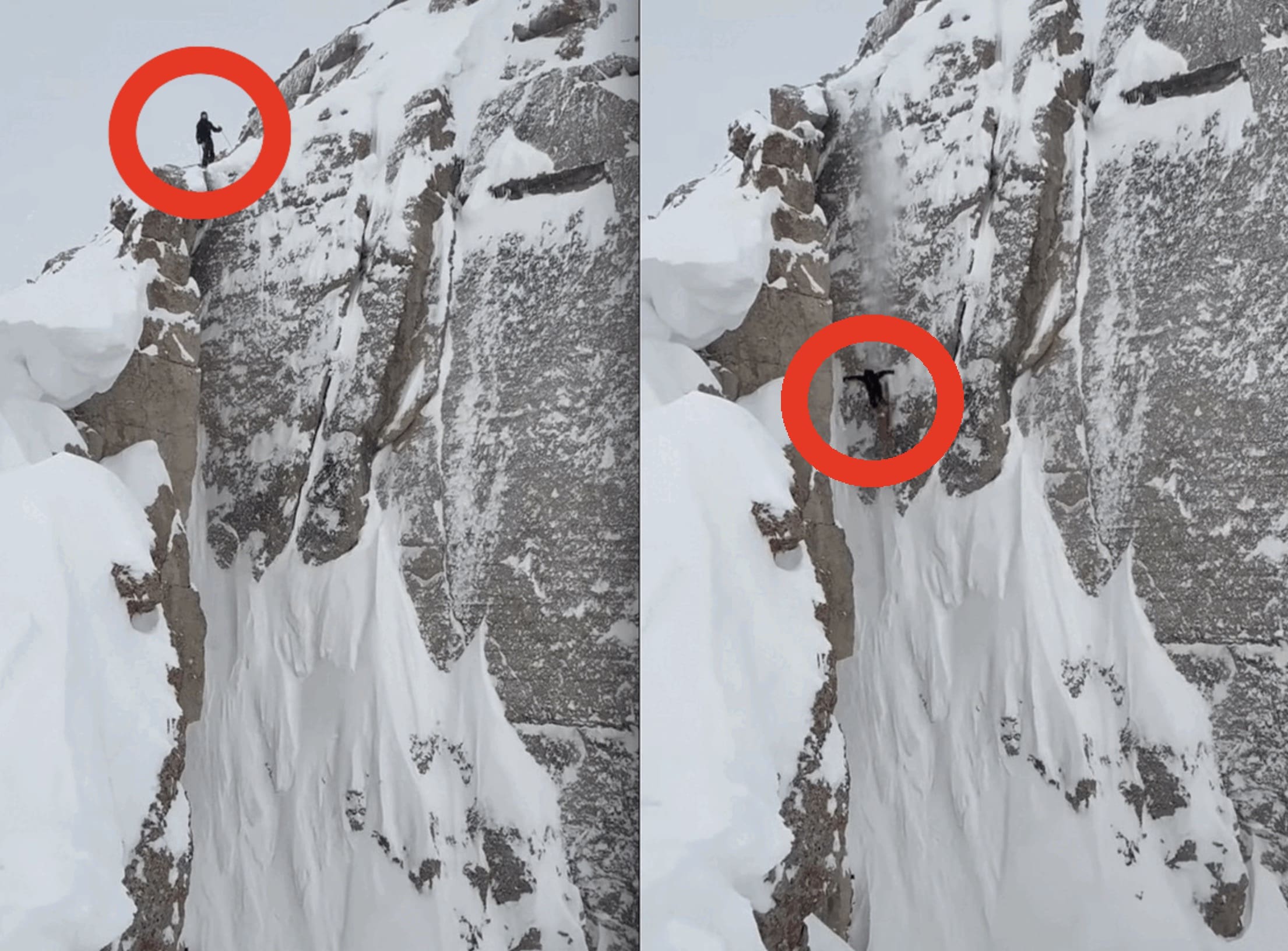
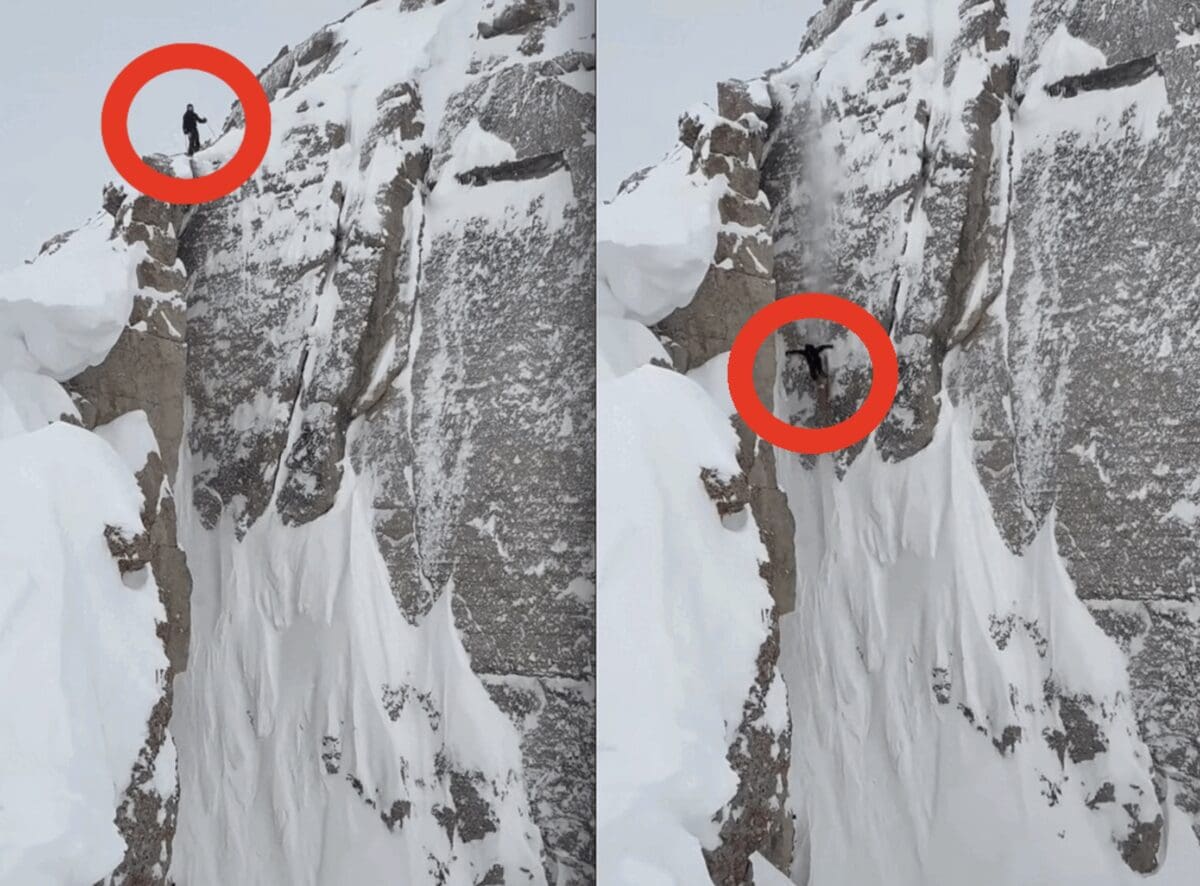
Henry Allen, a skier known for his commitment to personal growth and pushing boundaries, recently added his name to the short, exclusive list of those who have conquered the S&S Couloir. Allen’s motivation stemmed from his personal philosophy of "doing one thing everyday that scares you." For him, the S&S Couloir represented the ultimate embodiment of this principle. Choosing the wallride option, Allen executed a flawless descent, a testament to his technical proficiency and unwavering mental fortitude. The visual evidence, shared on social media platforms, showcases the sheer verticality of the rock face and the precision required to navigate the wallride successfully. This feat not only highlights Allen’s exceptional skiing ability but also provides a rare glimpse into the execution of such a high-risk maneuver within a controlled, albeit extreme, environment.
The Instagram reel capturing Allen’s descent immediately garnered significant attention within the skiing community, sparking discussions about the accessibility and safety of such extreme terrain, even within resort boundaries. The video serves as a powerful educational tool, demonstrating the technical nuances of the wallride and the critical decision-making involved in choosing such a line.
Context and Chronology of Extreme Skiing at Jackson Hole
Jackson Hole Mountain Resort has a long-standing reputation for demanding terrain. Corbet’s Couloir, established as a challenge in the 1960s, has become a benchmark for extreme skiing, with annual competitions like the Kings and Queens of Corbet’s drawing elite athletes from around the globe. This event, typically held in late winter or early spring, showcases skiers and snowboarders performing tricks and navigating the couloir’s challenging pitch. However, the S&S Couloir predates the widespread recognition of Corbet’s as a competitive venue and has always been considered a more raw and less forgiving challenge.
The history of S&S Couloir is intertwined with the development of ski patrolling and the exploration of Jackson Hole’s vast and rugged landscape. Its first successful descents by Sands and Simms in the early days of the resort laid the groundwork for understanding the mountain’s most extreme possibilities. Over the decades, the couloir has remained a test piece, with only a handful of skiers attempting and successfully completing it. Each successful descent is often a carefully planned event, relying on optimal snow conditions, low winds, and a significant amount of personal preparation.
The chronological progression of extreme skiing at Jackson Hole can be observed through the evolution of both publicized descents and the resort’s own infrastructure development. While the resort has expanded its lift-served terrain, the natural, extreme features like S&S Couloir have remained largely untouched by development, preserving their raw challenge. The increasing sophistication of helmet cameras and social media platforms has, in recent years, allowed for more documentation of these feats, bringing previously obscure challenges to a wider audience. Henry Allen’s recent descent fits into this ongoing narrative of pushing the boundaries of what is possible on skis in one of North America’s most iconic ski destinations.
Supporting Data and Analysis of Extreme Terrain
The S&S Couloir’s gradient is estimated to be in excess of 50 degrees, with sections approaching verticality. This extreme pitch, combined with potential exposure to rock, ice, and avalanche risk (though mitigated by ski patrol assessment within resort boundaries), places it in the highest category of skiing difficulty. For context, expert-level ski runs typically range from 40 to 50 degrees. The "wallride" maneuver, as demonstrated by Allen, involves using the side of the skis to maintain contact with a near-vertical surface, essentially skiing on a wall. This requires exceptional balance, edge control, and nerve.
The physical demands of such a descent are immense. Skiers must maintain control at high speeds on a near-vertical slope, absorbing terrain irregularities with their legs and core. The psychological pressure is equally significant, with the consequences of a loss of control being severe. Analysis of such feats often involves biomechanical studies to understand the forces at play and the precise techniques employed. The ability to execute a wallride, in particular, requires a deep understanding of snow-to-edge friction and the subtle shifts in weight distribution necessary to maintain momentum and direction on an unconventional surface.
The increasing popularity of extreme skiing has led to a greater demand for challenging terrain. Resorts like Jackson Hole, with their natural geological advantages, are prime locations for these endeavors. However, the documentation of such events also raises questions about the potential for increased risk-taking by less experienced skiers inspired by these feats. The "copycat" effect is a concern for ski resorts, which must balance providing access to challenging terrain with ensuring the safety of all patrons.
Potential Reactions and Broader Impact
While no direct official statements from Jackson Hole Mountain Resort regarding Henry Allen’s specific descent have been released, the resort typically acknowledges and celebrates significant achievements by skiers on its terrain. The ski patrol’s role is paramount in assessing and managing the safety of such areas, and their implicit approval or tolerance of such descents, when conditions permit, is crucial. The resort’s general stance is to allow experienced individuals to test their limits on designated challenging areas, provided they do so with a high degree of personal responsibility and awareness of the inherent risks.
The broader impact of Henry Allen’s S&S Couloir wallride extends beyond individual accomplishment. It serves as a powerful testament to the enduring allure of extreme skiing and snowboarding. Such feats inspire a new generation of athletes and enthusiasts to hone their skills and pursue their own ambitious goals. Furthermore, it highlights the unique and invaluable natural assets that destinations like Jackson Hole possess, attracting a specific demographic of visitors who seek out the ultimate challenges.
However, the documentation of these extreme activities also prompts a conversation about the ethics and responsibilities associated with sharing such content. While inspiring, it is crucial to emphasize that these descents are performed by highly skilled individuals with years of training and experience. The visual spectacle can, unfortunately, sometimes overshadow the immense preparation and risk involved, potentially leading less experienced individuals to attempt maneuvers beyond their capabilities.
Implications for the Future of Extreme Skiing
Henry Allen’s successful wallride down the S&S Couloir at Jackson Hole Mountain Resort is more than just a remarkable skiing achievement; it is a landmark moment that pushes the perceived boundaries of what is possible within the realm of inbounds, extreme terrain. This feat underscores the evolving nature of skiing as a sport, where technical prowess, mental fortitude, and a deep understanding of natural environments converge.
The continued exploration and documentation of such challenges at iconic locations like Jackson Hole are likely to fuel further innovation in skiing techniques and equipment. As athletes continue to push the envelope, the sport itself evolves, inspiring advancements in training methodologies and safety protocols. The S&S Couloir, once a mythical challenge for the few, has now been re-contextualized by Allen’s daring act, serving as a beacon for those who aspire to conquer the seemingly impossible, one near-vertical wallride at a time. The legacy of this descent will undoubtedly resonate within the skiing community, inspiring a new wave of athletes to dream bigger and push harder in their pursuit of the ultimate alpine challenge.

