
In a dramatic and fortunate turn of events, a 42-year-old hiker identified as Yang Meng narrowly escaped a potentially fatal fall down a steep mountain in China’s Anhui province, thanks to the timely intervention of a sturdy tree. The incident, captured on video, occurred on a treacherous section of the Fanzengjian Mountains, where recent typhoon rains had rendered the rocky terrain exceptionally slippery. Meng lost his footing on the exposed rock face and began an uncontrolled descent, sliding feet-first with no apparent means of self-arrest. His perilous slide was ultimately halted by a tree, which absorbed the force of his fall and prevented him from plummeting further down the unforgiving slope. Meng sustained only minor injuries to his hand and thigh, a testament to the fortunate circumstances of his rescue.
The Incident: A Near-Disastrous Slip
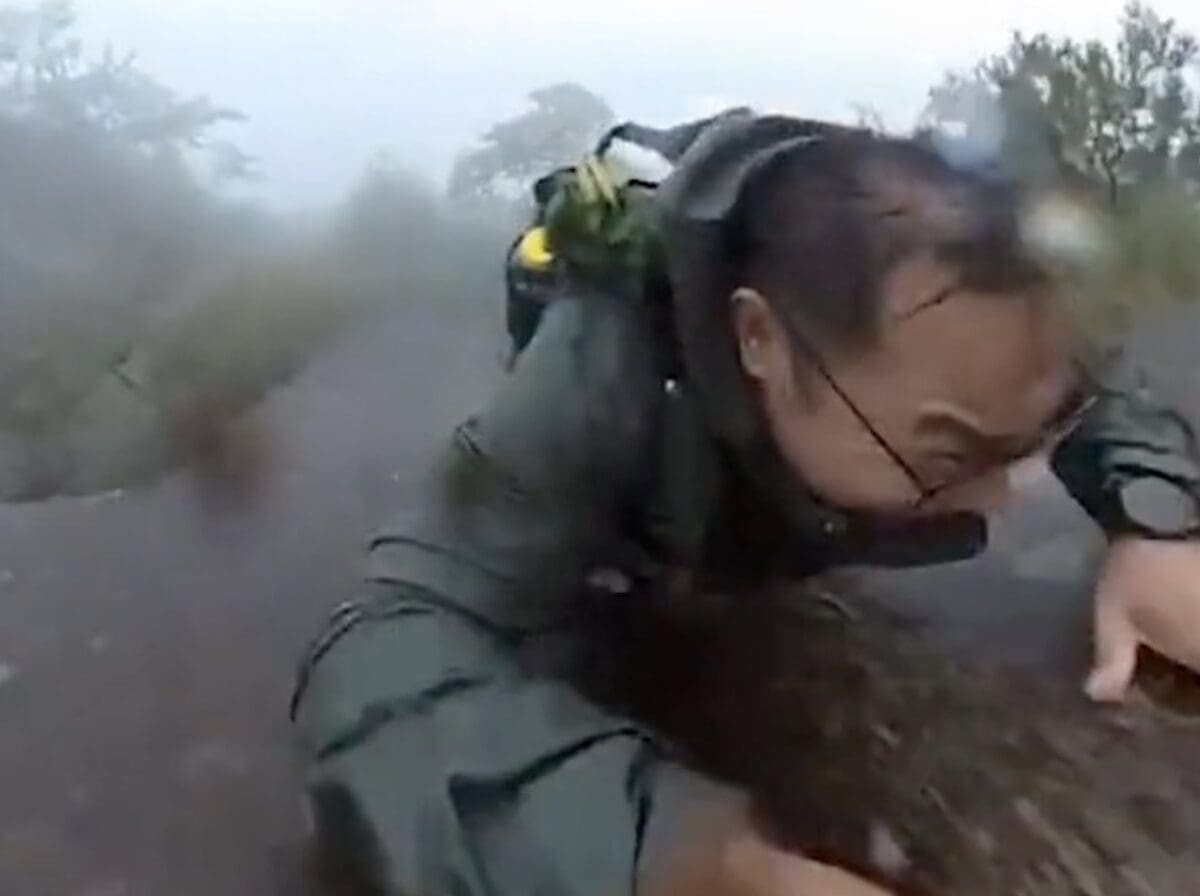
The event unfolded as Yang Meng was navigating a particularly challenging ascent in the Fanzengjian Mountains. Reports indicate that the area had recently experienced significant rainfall due to a typhoon, a meteorological event that often leads to increased risks for outdoor enthusiasts in mountainous regions. The exposed rock, normally a stable surface, became a hazardous trap under the slick conditions. As Meng lost his balance, his trajectory carried him downward at an accelerating rate. The visual evidence captured by a bystander or a trail camera shows the hiker sliding rapidly down the incline, his arms flailing in an attempt to regain control. The sheer speed of his descent, coupled with the steepness of the terrain, suggested a grim outcome.
However, fate intervened in the form of a well-positioned tree. The impact with the tree, while undoubtedly forceful, acted as a crucial braking mechanism. It effectively arrested Meng’s uncontrolled slide, preventing him from continuing his fall and potentially sustaining severe or life-threatening injuries. The visual documentation of the incident highlights the abrupt halt of his movement, with the tree standing as a silent, yet vital, rescuer.
Immediate Aftermath and Personal Account
Following the incident, Yang Meng expressed profound gratitude for the tree’s intervention, crediting it directly with saving his life. Despite the shock and the physical impact of the fall, his injuries were remarkably minor, limited to superficial wounds on his hand and thigh. This outcome is often considered fortunate in falls of this nature, where the potential for fractures, head injuries, or internal trauma is significant. Meng’s survival and relatively minor injuries underscore the critical role the natural environment played in mitigating the severity of the accident.

Broader Context: The Fanjingshan World Heritage Site
The Fanzengjian Mountains are part of the larger Fanjingshan region, recognized by UNESCO as a World Heritage Site. Located within the Wuling mountain range in Guizhou Province, Fanjingshan is characterized by its dramatic altitudinal range, spanning from 500 to 2,570 meters above sea level. This significant elevation difference supports a remarkable diversity of vegetation and geological formations.
Fanjingshan is ecologically unique, described as an "island of metamorphic rock in a sea of karst." This geological isolation has fostered an environment where many plant and animal species that originated during the Tertiary period (approximately 65 million to 2 million years ago) have persisted. The region boasts a high degree of biodiversity, including a notable number of endemic species. Among these are the Fanjingshan Fir (Abies fanjingshanensis) and the Guizhou Snub-nosed Monkey (Rhinopithecus brelichi). It also serves as a sanctuary for endangered species such as the Chinese Giant Salamander (Andrias davidianus), the Forest Musk Deer (Moschus berezovskii), and Reeve’s Pheasant (Syrmaticus reevesii). Furthermore, Fanjingshan hosts the largest and most continuous primeval beech forest in the subtropical region, contributing to its global ecological significance.
The mountainous terrain, while offering breathtaking natural beauty, also presents inherent risks to visitors. Trails can be steep, rugged, and subject to rapid changes in weather conditions. The incident involving Yang Meng serves as a stark reminder of the importance of preparedness, appropriate gear, and situational awareness when traversing such environments.
Risk Factors and Analysis
The incident highlights several key risk factors prevalent in outdoor recreation:
- Slippery Conditions: Typhoon rains significantly increase the risk of falls on rocky or earthen surfaces. The presence of moisture can reduce friction, making even familiar terrain treacherous.
- Steep Terrain: The Fanzengjian Mountains are characterized by steep sections, which offer less margin for error when footing is lost. The acceleration due to gravity on a steep slope can quickly turn a minor slip into a dangerous fall.
- Lack of Adequate Traction: While not explicitly stated, it is possible that the footwear or equipment used by the hiker was not optimally suited for the extremely slippery conditions, contributing to the loss of footing.
- Uncontrolled Descent: Once a fall begins on a slippery slope, it can be difficult or impossible for an individual to regain control without external assistance or natural obstacles.
The role of the tree in this scenario is a classic example of how natural features can inadvertently act as safety mechanisms. In situations where an individual is sliding uncontrollably, any solid object that can impede the descent can be a lifesaver. The strength and placement of this particular tree were instrumental in preventing further injury.
Official Responses and Safety Recommendations
While no specific official statements from local park authorities or emergency services regarding this particular incident have been released, such events typically prompt reinforcement of safety guidelines. Park management often reiterates the importance of:
- Checking Weather Forecasts: Being aware of weather patterns, especially the potential for rain or storms, is crucial for planning hiking trips.
- Appropriate Footwear: Wearing sturdy hiking boots with good traction is paramount, especially in areas known for slippery conditions.
- Trekking Poles: For steep or potentially hazardous terrain, trekking poles can provide additional stability and help prevent falls.
- Sticking to Marked Trails: Wandering off established paths can lead hikers into unexpected and more dangerous areas.
- Informing Others of Itinerary: Letting someone know where you are going and when you expect to return is a vital safety measure.
- Assessing Conditions: Hikers should be prepared to turn back if conditions deteriorate or if they feel the terrain is beyond their capabilities.
The presence of the video evidence, shared widely on social media platforms, has undoubtedly amplified awareness of the dangers of hiking in adverse weather conditions. While the individual was fortunate, the incident serves as a cautionary tale for all outdoor enthusiasts.
Broader Implications for Adventure Tourism
Incidents like Yang Meng’s, while often dramatic, can have broader implications for the adventure tourism industry. They highlight the delicate balance between promoting the allure of natural landscapes and ensuring visitor safety. For regions like Fanjingshan, which attract both domestic and international tourists, maintaining a strong safety record is paramount.
The virality of the video can serve a dual purpose: it can act as a powerful deterrent, making individuals more cautious, or it can inadvertently encourage risk-taking behavior if not contextualized with clear safety advice. News outlets and social media platforms have a responsibility to present such events in a manner that educates rather than sensationalizes.
The fortunate outcome for Yang Meng is a powerful reminder that even with careful planning, the unpredictable nature of the environment can present unforeseen challenges. However, it also underscores the resilience of the human spirit and the sometimes unexpected ways in which nature can offer protection, even amidst its inherent dangers. The Fanjingshan World Heritage Site, while a place of immense natural beauty and ecological importance, demands respect and careful consideration from all who venture into its wild embrace. The story of Yang Meng’s near-miss is a stark reminder of this imperative.

