
The 2026 alpine ski racing season concluded with a flourish at the World Cup Finals in Kvitfjell, Norway, where three prominent members of the Stifel U.S. Ski Team’s downhill contingent—Olympic champion Breezy Johnson, veteran Jacqueline Wiles, and rising star Allison Mollin—marked the end of their international campaigns. Each athlete, navigating distinct phases of their professional journeys, closed the season with significant momentum and a clear strategic outlook toward 2027. Their collective performances underscore the diverse strengths within American women’s speed skiing, showcasing a blend of championship pedigree, enduring resilience, and burgeoning talent.
The 2026 season was particularly demanding, featuring not only the rigorous World Cup circuit but also the prestigious Olympic Games and World Championships. For downhillers, these major events represent the pinnacle of their sport, requiring meticulous preparation, peak physical condition, and unwavering mental fortitude. The U.S. women’s team demonstrated remarkable depth and adaptability throughout these challenges, securing medals and consistent top finishes across various speed events. The World Cup Finals in Kvitfjell served as a culminating point, bringing together the season’s top performers in a series of high-stakes races.
Breezy Johnson: Sustaining a Championship Legacy
At 30 years old, Breezy Johnson has firmly cemented her status among the elite in international downhill racing. The 2026 season was a testament to her sustained excellence, highlighted by her triumphant capture of the Olympic downhill gold medal. This monumental achievement was preceded by her victory at the 2025 World Championships, establishing her as a formidable force in the sport’s most prestigious events. Johnson’s career boasts an impressive tally of 11 World Cup podiums—10 in downhill and one in super-G—even as she continues her quest for a maiden World Cup victory. Her consistency at the highest level is a remarkable feat, particularly in a discipline renowned for its unpredictability.
The World Cup Finals in Kvitfjell saw Johnson deliver another stellar performance, securing a second-place finish in the downhill. This result was crucial, allowing her to clinch third place in the overall downhill standings for the season, further solidifying her position as one of the world’s premier speed specialists. The Kvitfjell track, known for its challenging terrain and varying conditions, proved to be a fitting arena for her consistent prowess.
In an exclusive interview with Ski Racing Media (SRM), Johnson reflected on her extraordinary success in championship events. When asked about her consistent ability to perform under the immense pressure of the Olympics and World Championships, Johnson maintained a pragmatic perspective. "I don’t know. People keep asking me that," she stated. "I just treat them like another race, so I’m not really sure what made the Olympics and World Championships different. You know, I do have 10 other World Cup podiums, so I wouldn’t say I’m bad everywhere else." This response highlights her mental approach: a focus on execution and consistency, rather than succumbing to the heightened stakes of major competitions. Her ability to normalize these high-pressure environments is a key component of her winning formula.
Johnson also discussed her experience at Kvitfjell, a venue where she had previously achieved a third-place finish. "I feel good. I really like this hill. It’s a great slope. It’s fun to be here with the men for Finals," she remarked, appreciating the unique atmosphere of a combined men’s and women’s Finals event. The course, she noted, presents subtle variations annually. "It varies a little bit all the time. It’s a little bit different because the men are here. The set’s a tiny bit different in some places. I think in most places, I like it a bit better, and then, I think, just by chance, by it being later in the season, that some of the terrain is a little bit bigger, so just figuring that out." This adaptability to changing course conditions is another hallmark of her elite performance.
Looking ahead to the off-season and the subsequent 2027 campaign, Johnson emphasized continuity. "I’ll definitely do a bigger debrief once the season’s over, but [regarding] training, I think in many ways for me the Olympic win was a validation that my process worked," she explained. "Sometimes you have to wait longer than you think. Things like globes and Olympic gold medals are sometimes harder than just going out there and trying hard. You have to have all the pieces line up together and do everything right, and I don’t think you want to change too much when things are going pretty well, so I feel good." This strategic conservatism, rooted in the success of her established training regimen, underscores her confidence in her current approach.
Beyond the slopes, Johnson also shared exciting personal news regarding her upcoming wedding. Her fiancé, Connor Watkins, famously proposed in the finish area after the 2026 Olympic super-G race, just three days after her historic downhill victory. "The plan is I think we’ll do it sometime next year. We’ll figure that out," she shared. "I’m very grateful because I think we’re going to do it in Jackson Hole, which is my home mountain. And I think they are very generously giving us a great venue to host it at, so I’m very excited." This personal milestone adds another layer to her already remarkable year, demonstrating a harmonious balance between her professional ambitions and personal life.
Johnson’s journey to Olympic gold is particularly significant for the U.S. Ski Team, which has a storied but not overly dense history of women’s downhill champions. Her consistent presence on the podium and her ability to deliver under the brightest lights make her a crucial leader and benchmark for the entire team. Her strategic decision to maintain her "winning formula" suggests a focused and disciplined approach to sustaining her elite status for seasons to come.
Jacqueline Wiles: The Triumph of Resilience and Fundamentals
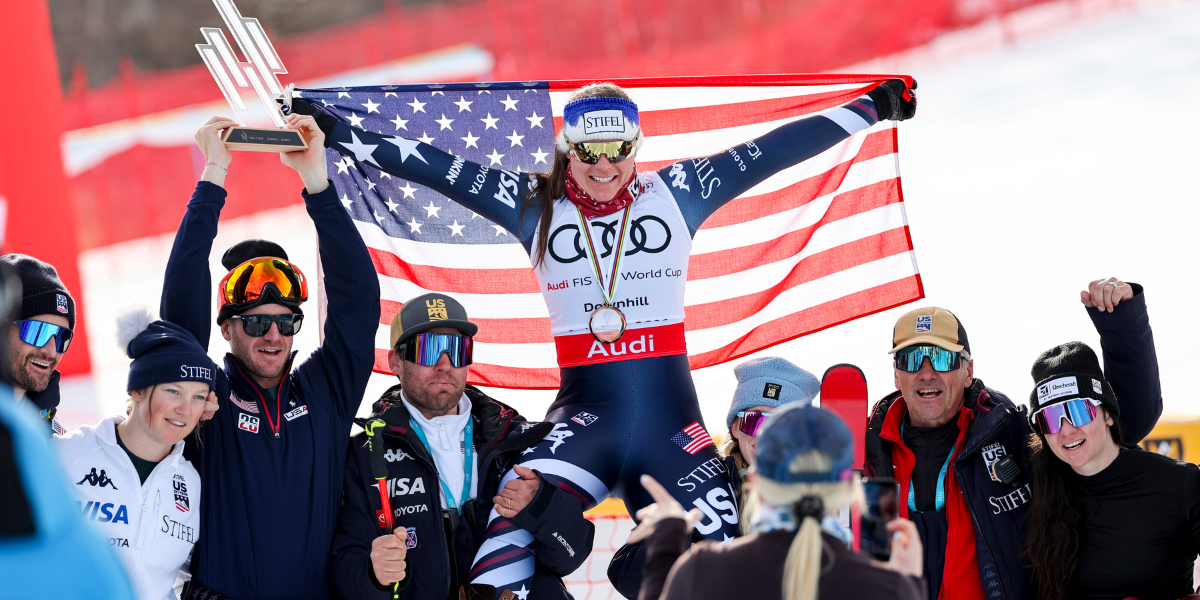
Jacqueline Wiles, at 33, represents the epitome of resilience in alpine ski racing. The 2026 Olympics showcased her remarkable strength and tenacity, as she secured a bronze medal in the innovative team combined event alongside teammate Paula Moltzan, and impressively placed fourth in the individual downhill race. These achievements are particularly poignant given the significant challenges she has overcome throughout her career, most notably a severe injury sustained in 2018. The 2026 season marked a profound step forward, signaling a triumphant return to consistent, high-level performance after years of dedicated rehabilitation and mental fortitude.
Wiles’s career trajectory underscores the brutal demands of professional ski racing. Her 2018 crash, which resulted in multiple serious injuries, forced her into a prolonged period of recovery and introspection. Many athletes might have retired in the face of such adversity, but Wiles’s determination saw her through. Her journey back to the World Cup circuit and, ultimately, to Olympic medal contention, is a powerful narrative of perseverance.
When asked to summarize her season, Wiles expressed deep satisfaction. "It felt like a really good step for me this year," she told SRM. "I feel like I’ve had these years where I knew I could be at another level, but injuries and lack of confidence because of those injuries kind of held me back. I feel like everything clicked this season. I came in healthy for the first time in a while and had a great prep period skiing fast, and I brought that confidence into the season. I think it showed." Her statement highlights the critical interplay between physical health and mental confidence, especially after a traumatic injury. The "prep period" she mentioned is crucial for elite skiers, involving months of intense physical conditioning, technical training on glaciers, and equipment testing. A healthy and productive prep period is often a precursor to a successful race season.
Wiles openly discussed the lingering impact of her 2018 crash, particularly the psychological battle against fear. "I think when you have an injury that you struggle with mentally for years, it’s something that never fully goes away," she admitted. However, she emphasized her growth in managing it: "I would say, at the start, you kind of have this new level of perspective that I think is really helpful. And I think it has helped me use that fear in a positive way and not let it debilitate me now. So, yes, I’d say fear is always there, but learning to harness it has been helpful." This insight into the mental game reveals the profound psychological strength required to compete in a high-risk sport like downhill, particularly after a life-altering injury. Her ability to "harness" fear, transforming it from a debilitating force into a tool for focused performance, is a testament to her mental resilience.
A key to Wiles’s resurgence has been her strategic return to fundamental techniques. "After the last Olympics, I took a whole year off and really figured out my equipment," she revealed. "I took a step back to focus on drills and freeskiing and I think, just every year since then, that has built up really well and I go back to the same fundamentals in the spring, of taking my skiing just to the ground level again. I think that is what keeps giving me confidence and it kind of spirals from there." This deliberate, methodical approach to skill refinement and equipment optimization, often overlooked in the pursuit of marginal gains, has clearly paid dividends. "Freeskiing" refers to skiing without the pressure of a race course, allowing athletes to experiment and refine their technique in a less structured environment.
Looking ahead to the 2027 season, Wiles’s priorities are clear. "Any time there’s a World Champs, that is definitely a key part of the season that you really want to do well in," she stated, indicating her ambition for another major championship performance. Beyond specific medals, her overarching goal is consistency: "At the same time, I just want to ski solid and confident and have a consistent year. So, just strong, confident skiing is my goal."
As the demanding season drew to a close, Wiles expressed a universal desire among elite athletes: rest and home. "First, I’m really excited to just go home and sleep in my own bed and eat my own food," she shared. "It’s been three months now since I’ve been there, so I’m just really excited to go back home, be with people I love and care about and enjoy summer in Oregon. It’s a beautiful time there." This sentiment underscores the personal sacrifices inherent in a professional ski racing career, with extended periods away from home and loved ones. Wiles’s journey is an inspiring example of how dedication, mental toughness, and a focus on core principles can lead to renewed success even after significant setbacks.
Allison Mollin: A Breakthrough Season for the Rising Star
Allison Mollin, affectionately known as "Amo," made a resounding impact in her first full World Cup season at just 21 years old. Her performance was nothing short of impressive, highlighted by her remarkable consistency: she scored points in every downhill race until the World Cup Finals. This level of sustained performance as a newcomer is a rare feat, signaling her rapid adaptation to the elite circuit.
Qualifying for the World Cup Finals is a significant benchmark for any athlete, requiring a finish within the top 25 of the discipline standings. Mollin’s achievement in reaching this threshold, especially with a limited number of prior World Cup starts, underscores her exceptional talent and potential. Her seamless transition from development programs to the highest level of the sport has been a highlight of the 2026 season for the U.S. Ski Team.
In her interview with SRM, Mollin attributed her rapid progress to a sustained, multi-year developmental trajectory. "I think it’s been building for a long time, over the last two or three years, since I’ve been on the [Stifel U.S.] Ski Team," she explained. "It’s just like finally putting all the pieces together, with a little bit of Europa Cup last year, and gaining a little more confidence by spending time in Europe with the Europa Cup. That’s all just coming together nicely for this season." The Europa Cup circuit serves as a critical stepping stone for aspiring World Cup athletes, providing valuable experience in competitive international racing and familiarization with European venues and conditions. Mollin’s success highlights the effectiveness of this development pathway within the U.S. Ski Team system.
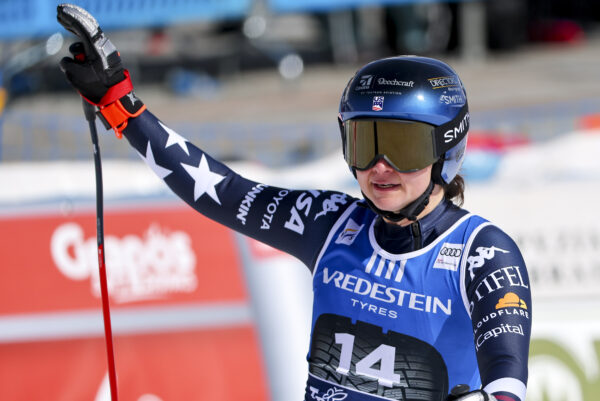
Mollin also articulated her specific strengths on the downhill course. "My strengths are gliding and putting my nose in it when it’s a little bumpy or a little dark," she stated. "That’s where I feel like I can excel." "Gliding" refers to maintaining speed over flatter sections of the course, often requiring subtle body adjustments and an intuitive feel for the snow. "Putting her nose in it" describes her willingness to aggressively attack challenging, uneven, or poorly lit sections, where many skiers might become more tentative. These attributes are highly valued in downhill, where confidence and technical prowess in varied conditions are paramount.
While celebrating her achievements, Mollin also articulated clear goals for further improvement. "Next season, I’m really trying to work more on the technical side," she revealed. "Really tightening the line everywhere is a big focus for me, and a little more on the aggression side. Doing that a lot on GS and super-G will translate into downhill." This strategic approach to honing her technical skills in giant slalom (GS) and super-G is common among speed specialists, as these disciplines demand precision and tactical aggression that directly enhance downhill performance. "Tightening the line" refers to taking the most direct and efficient path down the course, minimizing unnecessary movements and maximizing speed.
Reflecting on her most satisfying achievement of the season, Mollin pointed to her consistency. "I’m most happy about the consistency," she affirmed. "I sometimes have the tendency to taper towards the end of the season as I get tired, but this year has been really good. I scored in every downhill this season, so that was beyond my goals at the beginning. I’m really proud of that consistency." This self-awareness and ability to maintain peak performance throughout a long, grueling season speak volumes about her physical and mental conditioning.
Mollin also offered valuable advice for younger athletes aspiring to ski downhill. "Just try it, even if it’s just a cruise or standing up," she encouraged. "It’s the peak of ski racing because it’s the fastest, the most jumps. That is ski racing! So, just give it a chance, everyone. Don’t be afraid of it. It’s pretty fun!" Her enthusiastic endorsement of downhill skiing, highlighting its thrill and inherent excitement, serves as an invitation for the next generation to embrace the sport’s ultimate speed discipline. Her advice, coming from a young athlete who has just successfully navigated the transition to the World Cup, carries significant weight and inspiration.
The Stifel U.S. Ski Team’s Dynamic Downhill Trio: Broader Implications
The collective performances of Breezy Johnson, Jacqueline Wiles, and Allison Mollin during the 2026 season underscore a robust and dynamic period for the Stifel U.S. Ski Team’s women’s speed program. Their individual successes, spanning different career stages, paint a picture of a well-rounded team with both immediate medal-winning potential and a promising future.
Johnson’s continued dominance in championship events, culminating in Olympic gold, elevates the entire program. Her consistent podium finishes and strategic approach to training provide a high benchmark for her teammates and solidify the U.S. as a major contender in women’s downhill. Her presence offers invaluable mentorship and inspiration, demonstrating what is achievable through dedication and a refined process.
Wiles’s inspiring comeback story, marked by Olympic bronze and top-five finishes, highlights the profound resilience within the team. Her ability to overcome significant injury and return to elite form serves as a powerful testament to her character and the comprehensive support system—from medical staff to coaches—that facilitates such journeys. Her focus on fundamentals and mental fortitude provides a template for managing the inherent challenges of professional sport.
Mollin’s breakthrough season as a consistent point-scorer and World Cup Finals qualifier signals the successful development of new talent. Her rapid ascent from the Europa Cup circuit demonstrates the strength of the U.S. Ski Team’s pipeline and its ability to prepare young athletes for the rigors of the World Cup. Her fresh perspective and enthusiasm are vital for invigorating the team and ensuring future depth.
Collectively, this trio represents a potent mix of experience, grit, and emerging potential. Their shared experiences, from training camps to race days, foster a supportive and competitive environment. The insights they’ve shared regarding their processes, mental approaches, and future goals provide valuable lessons for the entire organization. For the U.S. Ski Team, this confluence of talent augurs well for the upcoming 2027 World Championships and, critically, for the next Olympic cycle. The blend of a proven champion, a resilient veteran, and a burgeoning star creates a formidable force capable of challenging for top honors across the international alpine skiing landscape. The future of American women’s downhill skiing appears not only bright but also exceptionally well-rounded.

