
Barely having had a moment to fully decompress from her record-shattering but emotionally grueling 2021-2022 season, Mikaela Shiffrin, the 31-year-old alpine phenom, carved out precious hours in April at Copper Mountain, Colorado. Amidst a flurry of media commitments across the nation, her return home to Colorado provided a unique opportunity to engage with a group of 11- to 14-year-old girls from elevateHER. This local nonprofit is dedicated to empowering young women through outdoor adventure, fostering resilience and confidence in mountain environments. The program’s partnership with Share Winter, a national organization committed to increasing youth participation in snow sports, underscores a broader mission that Shiffrin actively champions. Through her "MikGives" initiative, she has personally raised approximately $500,000 for Share Winter, solidifying her commitment to the sport’s future beyond the competitive arena.
A Direct Connection: Inspiring the Next Generation
This particular outing marked Shiffrin’s inaugural direct interaction with children involved in the Share Winter-supported program. The participants hailed primarily from Salida, Colorado, and its surrounding communities, representing a diverse spectrum of snow sports experience. While a select few were already honing their skills as ski racers with Team Monarch, many were beginners, some venturing onto skis or snowboards for the very first time. Shiffrin demonstrated a profound personal investment in their development, notably spending a dedicated twenty minutes with one 12-year-old girl, patiently guiding her through the fundamentals of making turns. This hands-on approach, far removed from the high-stakes environment of World Cup racing, highlighted a different facet of her relationship with skiing.
Shiffrin articulated a significant shift in her perspective this year, noting, “I feel different at this time this year than I have any other year. I am thinking about what life has to offer beyond the sport and what can be done maybe simultaneously, things like this where I connect with the snow sports community on a different level.” This reflection signifies a deepening appreciation for the broader community aspect of skiing, moving beyond the traditional spectator-athlete dynamic. She emphasized, “Up until this point it’s been, come watch me race and maybe I’ll get to an autograph in the finish. The snow sports community, what it actually is, is celebrating everybody’s uniqueness and all of their different passions and lifestyles – a shared experience in one place.”
She further underscored the importance of nurturing a love for the sport for its own sake, rather than solely as a pathway to professional racing. “When you see these kids out here, it’s a perfect example of this. Nobody said they wanted to become a professional ski racer. That is what our sport needs. We don’t necessarily need ski racers; we need to develop the pipeline. We need people to just enjoy the sports for what they are, to get outdoors in the open air and move their bodies in that way.” This philosophy aligns perfectly with Share Winter’s mission, which aims to provide grants to local organizations to offer learn-to-ski and snowboard programs, making snow sports accessible to a wider demographic and fostering lifelong participation. The palpable enjoyment of every participant on the slopes with Shiffrin that day served as a powerful testament to the success of this community-focused approach.
Shiffrin’s Enduring Legacy and Evolving Role Model Status
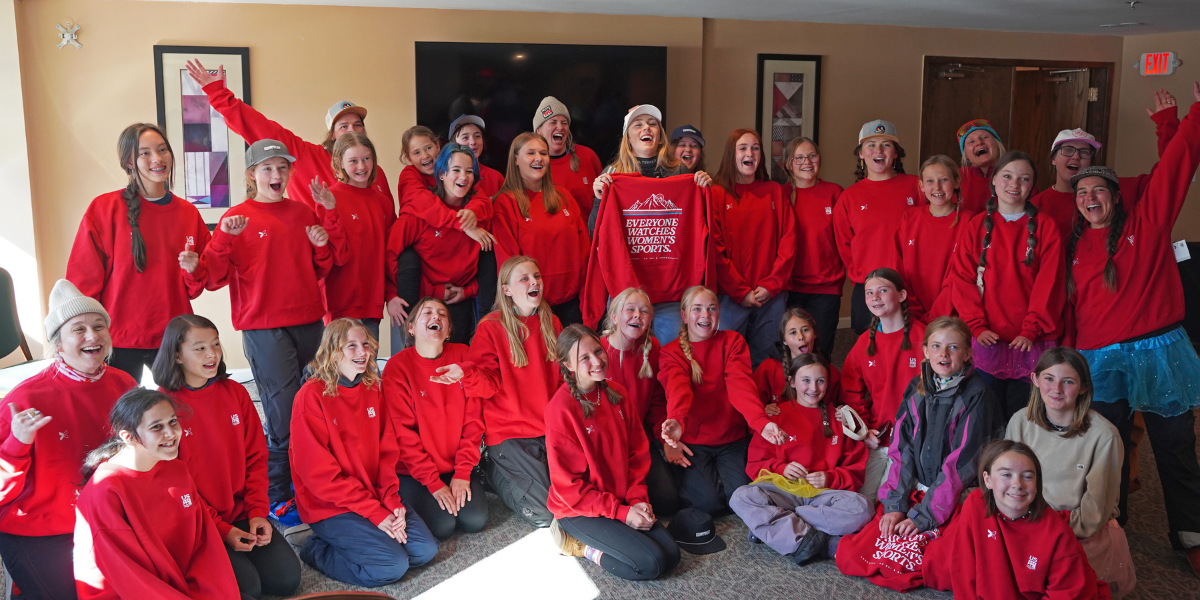
The profound impact of Shiffrin’s presence was evident in the reactions of the young participants. Zia Ziaknaer, 14, expressed her admiration, stating, “She’s just such a cool person. I just admire her determination and how she brought herself to this level and worked so hard for that.” While none of the girls explicitly declared ambitions to become the "next Mikaela Shiffrin," her unwavering dedication and unparalleled success serve as a powerful exemplar of pursuing one’s goals at the highest echelons of any field.
Amalia McNeirney, 13, articulated how Shiffrin’s journey resonated with her personal aspirations. “Mikaela inspires me so much because I love to ski, but I’m also really passionate about mountain biking,” she explained. “Watching her pursue her dreams from such a young age reminds me of myself. I’ve been on my bike since I was 2 years old. Now I’ve been racing Enduro, and next year I’ll race on the high school cross-country team. Maybe one day, I’ll be in the World Cup.” McNeirney also highlighted Shiffrin’s grounded nature, adding, “Some celebrities are more about the money and the fame, but she still has that local connection.” This sentiment underscores the authenticity and relatability that Shiffrin brings, especially in her home state of Colorado, where she is seen as a local hero.
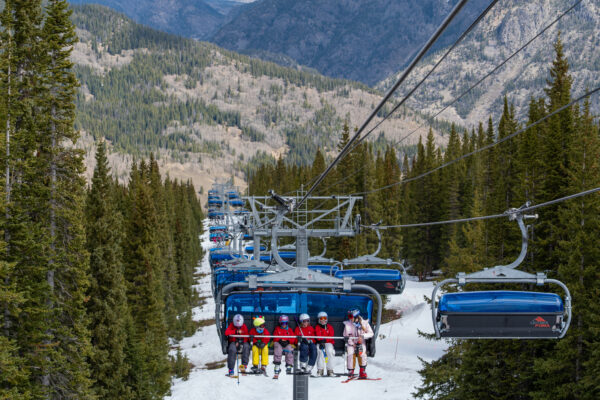
Even those unfamiliar with Shiffrin’s illustrious career were quickly captivated by her presence. Aolani Cook, 13, who experienced her first-ever chairlift ride on that memorable day, enthusiastically declared, “I think she’s awesome. Now I know who Mikaela is and what she does. It inspires me to just live your dream.” This demonstrates the intrinsic power of direct mentorship and the ability of a prominent figure to ignite passion and ambition in young minds, irrespective of prior knowledge. These interactions underscore the broader societal impact athletes can have when they actively engage with their communities, transitioning from distant heroes to tangible inspirations.
A Career Crossroads: Shifting Gears in Alpine Racing
Beyond her role as a mentor, the day also prompted Shiffrin to reflect on the trajectory of her own career. Despite holding the record for the most World Cup victories by any alpine skier, a feat she achieved by surpassing Ingemar Stenmark’s long-standing record of 86 wins during the 2022-2023 season, her motivation, she admitted, is evolving. She has secured 97 World Cup wins across all disciplines as of the end of the 2023-2024 season, a testament to her versatility and dominance.
However, Shiffrin revealed a profound realization regarding her specialty, slalom. “I think I’ve reached my ceiling in how fast I can ski slalom,” she stated candidly. She elaborated that while she continues to secure victories in the discipline, the overall competitive level is rapidly escalating. Consequently, she no longer perceives significant room to further elevate her personal slalom speed. “I just can’t ski it faster than I have been,” she reiterated, acknowledging a personal limit. “I used to think you can always get faster, but I don’t know that I personally have the capability to do that anymore.” This acceptance of a perceived physiological or technical plateau in her signature event presents a unique challenge for an athlete defined by continuous improvement.
This realization, she conceded, can be a potent inhibitor of motivation. “The feeling of hitting your ceiling – that’s the most limiting thing for motivation.” In stark contrast, Shiffrin finds renewed curiosity and challenge in the giant slalom (GS) and super-G (SG) disciplines. These speed events, requiring a different blend of power, precision, and courage compared to the technical nuances of slalom, still present unknowns for her. She expressed, “I’m really curious to see where that can go.” This burgeoning interest suggests a potential strategic realignment in her training and competition focus in the coming seasons, potentially leading to a greater emphasis on GS and SG, where she believes there is still room for growth and exploration. Shiffrin has already demonstrated significant prowess in these disciplines, holding multiple World Championship titles and Olympic medals in GS, and having secured World Cup victories in SG. A shift could see her further cement her legacy as an all-around alpine force.
Processing the Olympic Hurdle: A Season of Emotional Weight
This evolving mindset is intrinsically linked to Shiffrin’s ongoing process of metabolizing the immense emotional toll of the Beijing 2022 Olympic Winter Games. The Games, which saw her fail to finish three of her five individual races – including her favored slalom and giant slalom – became a public spectacle of unexpected struggle for an athlete accustomed to podium finishes. “You know, I haven’t cried since the Olympics,” she shared, describing a pervasive sense of emotional numbness she attributes to the sheer intensity and unexpected trauma of the experience. “I think when you go through something traumatic and unexpected, everything else just doesn’t bring the same emotion.”
Throughout the entire 2021-2022 season, the pressure of expectation was a constant, unrelenting force. This pressure emanated not only from her own stringent internal standards but also from the relentless external gaze of media and public perception. “The toughest thing was that the whole world expected me to win,” she confessed, highlighting the extraordinary burden placed upon elite athletes. “And the downside is the criticism that comes if I don’t.” This public scrutiny, amplified by social media, can create an isolating environment for even the most resilient competitors.
To navigate this unprecedented pressure, Shiffrin relied heavily on the structured support system provided by her team. This included regular sessions with a sports psychologist, where she actively confronted her deepest fears, which were paradoxically tied to both her past successes and her failures. This proactive approach to mental well-being is increasingly recognized as crucial in elite sports, with athletes like Simone Biles and Naomi Osaka also bringing the topic to the forefront of public discourse. Shiffrin noted that this psychological support was instrumental during the Olympics, allowing her to completely disengage from social media and its potentially toxic commentary.
Reflecting on her four Olympic appearances, from her debut in Sochi 2014 to Beijing 2022, Shiffrin observed a complete transformation in her perspective. “If you asked me in Sochi, I wouldn’t recognize this version of myself,” she stated, underscoring the profound personal growth she has undergone. Her key takeaway from the challenging Beijing experience was a deepened appreciation for the individuals surrounding her. She cited the development of a strong, unified support system within her team as one of the season’s most significant accomplishments.
“At the Olympics, my big fear was feeling isolated,” she admitted. “I thought nobody would understand the weight of it.” Instead, she found that her team coalesced to create what she described as a “supportive bubble,” which proved invaluable in helping her navigate the immense psychological pressure. “It was a really big growth moment – a growth season for all of us together,” she concluded. This collective experience of overcoming adversity highlights the critical role of team dynamics and mental fortitude, not just individual talent, in the highly demanding world of professional sports. Shiffrin’s candidness about her struggles contributes to a broader, much-needed dialogue about athlete mental health, normalizing vulnerability and advocating for robust support systems within competitive environments. Her continued engagement with youth programs like elevateHER and Share Winter further solidifies her role as a leader both on and off the slopes, inspiring not only future athletes but also fostering a healthier culture within sports.

