
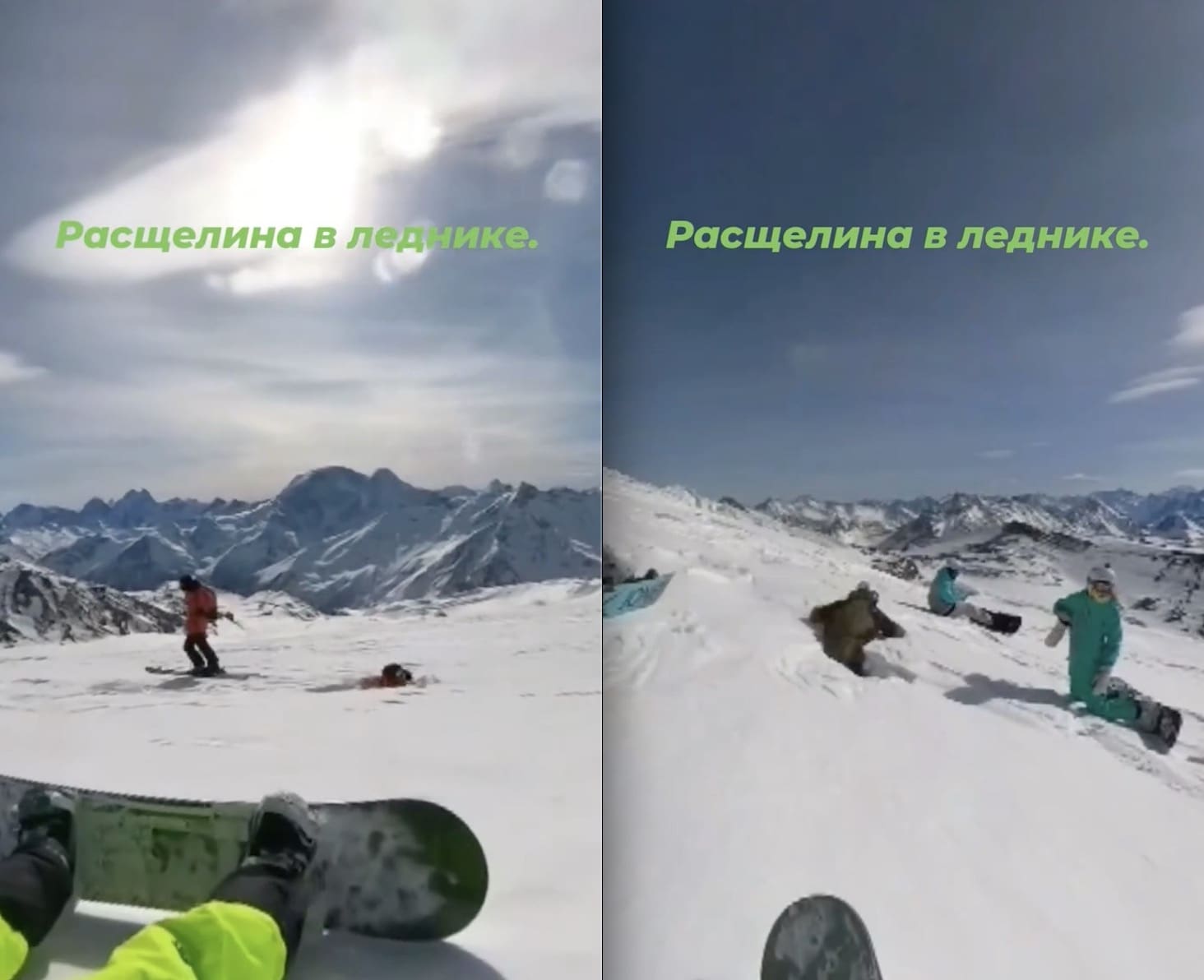
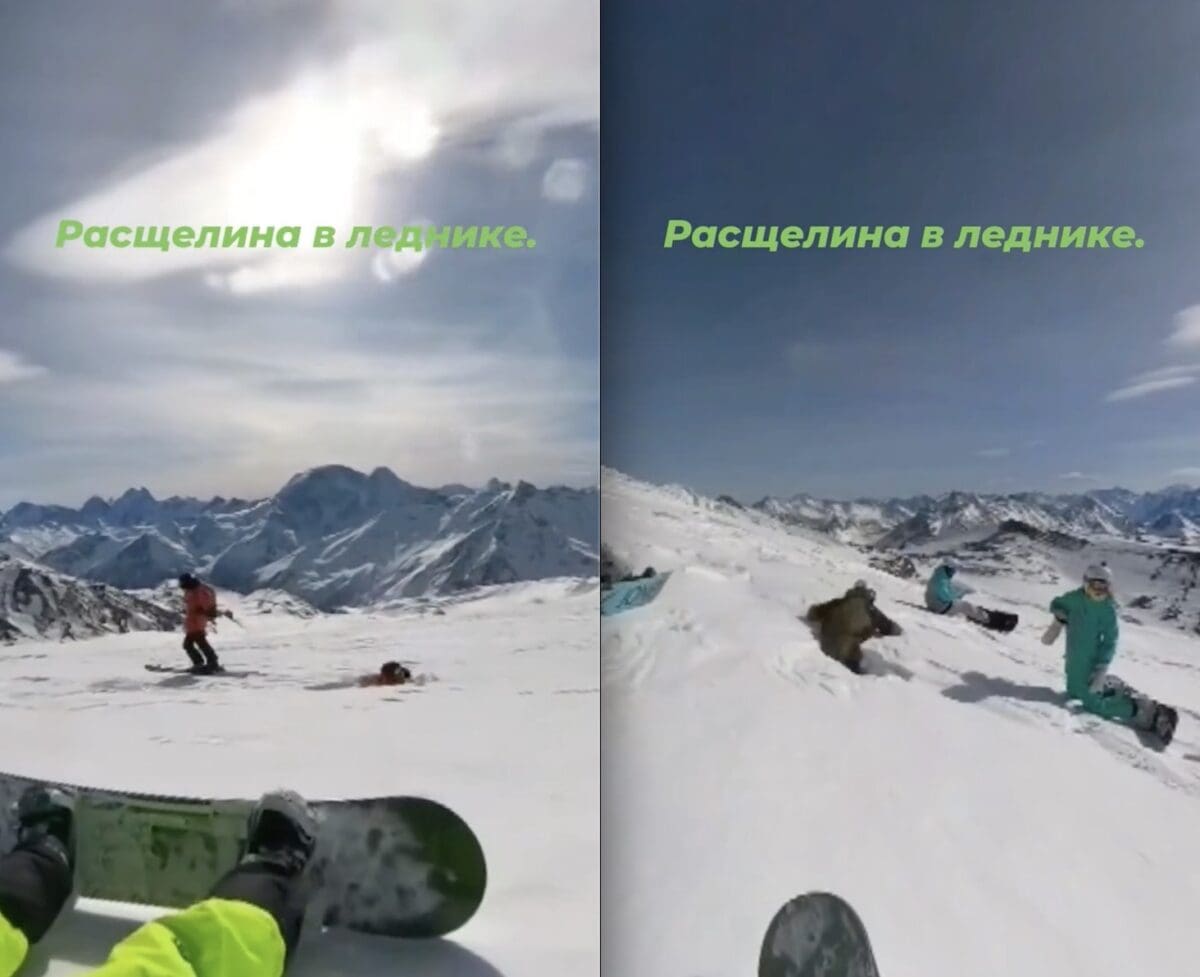
A recent incident on a glacial expanse has brought to the forefront the inherent dangers of backcountry snow sports, as a group of snowboarders narrowly escaped a perilous encounter with a seemingly hidden crevasse. While the exact location and date of the event remain undisclosed, video footage circulating online captures a moment of sheer terror as the icy ground beneath the riders gave way, plunging at least one individual into the unforgiving depths of a crevasse. The footage, which has garnered significant attention, showcases the swift and decisive actions of the group, highlighting the critical importance of preparedness and teamwork in such high-risk environments.
The Incident Unfolds: A Sudden and Terrifying Plunge
The dramatic event, captured in a short video clip, depicts a group of snowboarders traversing a snow-covered glacier. As one rider navigates the undulating terrain, the snow surface abruptly collapses, revealing a deep, blue-tinged fissure. The snowboarder, caught off guard, disappears into the crevasse, leaving their companions in a state of shock. The immediate aftermath reveals a remarkable display of composure and quick thinking. The remaining snowboarders, rather than succumbing to panic, rapidly assess the situation. Their actions suggest prior training or an intuitive understanding of crevasse rescue protocols.
Initial analysis of the video suggests that the crevasse was not immediately apparent, likely concealed by a thin layer of snow. This phenomenon, known as a snow bridge, is a common hazard on glaciers, formed when snow accumulates over a crevasse, creating a seemingly solid surface. However, these bridges can be deceptively weak and prone to collapse under weight, especially during warmer periods or when compromised by underlying ice melt. The fact that the crevasse appeared with "little warning," as described in the original report, underscores the deceptive nature of glacial environments.
The Crucial Role of Crevasse Rescue Skills
The incident serves as a stark reminder of the indispensable nature of crevasse rescue skills for anyone venturing onto glaciers. Glaciers are dynamic geological formations, constantly shifting and fracturing, creating a network of crevasses that can range from mere inches to hundreds of feet deep. Travel on these icy landscapes inherently carries the risk of falling into one of these fissures, a scenario that can quickly become life-threatening without proper knowledge and equipment.
Crevasse rescue involves a complex set of techniques, including:
- Self-Arrest: The immediate ability to stop a slide if one falls into a crevasse.
- Anchoring and Belaying: Establishing secure anchor points and using ropes to protect oneself and others.
- Rope Systems: Understanding and deploying various rope configurations for hauling and lowering individuals.
- Communication: Maintaining clear and concise communication within the group, especially during high-stress situations.
- Medical Assessment: The ability to assess and provide immediate aid to an injured party.
The video footage, while brief, appears to show the group initiating a rescue operation, indicating that they possessed at least some of the necessary skills or were able to improvise effectively. The presence of multiple individuals suggests a higher likelihood of a successful rescue, as crevasse rescues are often a team effort, requiring multiple people to manage ropes and haul systems.
Timeline and Chronology of a Near-Disaster
While a precise timeline is difficult to establish without further details, the sequence of events can be inferred from the available visual and textual information:
- Glacier Travel: The group was engaged in recreational snowboarding on a glacial terrain, likely a backcountry area known for its challenging ascents and descents.
- Unforeseen Collapse: As one snowboarder proceeded, the snow bridge supporting them gave way without significant prior indication.
- The Fall: The snowboarder plunged into the crevasse.
- Immediate Reaction: The remaining snowboarders reacted swiftly, halting their own movement and assessing the situation.
- Rescue Initiation: The group began to implement rescue protocols, likely involving securing the scene, assessing the depth of the crevasse, and preparing to extract their fallen companion.
- Successful Extraction (Presumed): The original report suggests that "everyone involved likely made it out alright," implying a successful rescue operation. The calmness of the group in the video further supports this assumption.
The speed at which the group appears to have mobilized their rescue efforts is a testament to either extensive training or a remarkable capacity for decisive action under duress.
Supporting Data: The Perils of Glacial Travel
Glaciers, while awe-inspiring, are inherently hazardous environments. Data from various mountaineering and avalanche safety organizations consistently highlight crevasses as a significant cause of accidents and fatalities in glacial terrain.
- Crevasse Depth: Crevasses can vary dramatically in depth, with some extending hundreds of feet below the surface. Even shallow crevasses can cause serious injury due to the fall and potential for hypothermia or entrapment.
- Snow Bridge Stability: The stability of snow bridges is highly variable and depends on factors such as snow depth, temperature, wind, and underlying ice structure. Warmer temperatures can accelerate melting, weakening these natural bridges.
- Geographic Distribution: Glaciers are found in mountainous regions and polar areas worldwide. Popular backcountry destinations for snowboarding and skiing often intersect with glacial environments, making crevasse awareness crucial. For instance, regions like the European Alps, the Himalayas, and parts of Alaska and Canada are known for their glaciated terrains.
- Accident Statistics: While specific statistics for snowboarders falling into crevasses are not widely publicized, general mountaineering accident reports frequently cite crevasse falls as a significant risk. Organizations like the American Alpine Club and the Swiss Alpine Club document such incidents, emphasizing the need for specialized training.
Background Context: The Growing Popularity of Backcountry Snowboarding
The increasing popularity of backcountry snowboarding, driven by a desire for untracked powder and a departure from crowded resorts, has led more individuals to explore glaciated and avalanche-prone areas. This trend, while offering incredible experiences, also necessitates a heightened awareness of the risks involved. Many backcountry enthusiasts now invest in avalanche safety courses and glacier travel training.
The incident involving these snowboarders underscores the fact that even experienced individuals can be caught off guard by the unpredictable nature of glaciers. It is a stark reminder that "riding out" on a glacier, especially without proper preparation, is a gamble with potentially severe consequences.
Official Responses and Expert Analysis (Inferred)
While no official statements have been released regarding this specific incident, the actions of the snowboarders and the subsequent discussion align with established safety protocols promoted by outdoor safety organizations.
- Mountain Rescue Organizations: Agencies responsible for mountain rescue would likely emphasize the critical importance of comprehensive training for anyone planning to venture onto glaciers. They would advocate for the use of essential safety gear, including ropes, harnesses, ice axes, and crevasse rescue equipment.
- Glaciologists and Geologists: Experts in glaciology would explain the formation and behavior of crevasses, highlighting the dynamic nature of glaciers and the challenges in predicting crevasse formation and snow bridge stability.
- Backcountry Safety Educators: Instructors of avalanche and glacier safety courses would likely use this incident as a case study to reinforce the importance of their training, stressing that theoretical knowledge must be coupled with practical application and constant vigilance. They would reiterate that even seemingly safe snow can conceal a deadly drop.
Broader Impact and Implications
This incident has several significant implications for the backcountry snow sports community:
- Reinforcement of Safety Standards: The event serves as a powerful, albeit unfortunate, case study that reinforces the necessity of rigorous safety standards and advanced training for glacier travel. It highlights that even experienced riders can face unexpected dangers.
- Increased Awareness of Hidden Dangers: The "little warning" aspect of the crevasse collapse emphasizes the often-deceptive nature of glacial surfaces. This should prompt all individuals engaging in such activities to maintain a higher level of vigilance and assume the ground beneath them is potentially unstable.
- Importance of Group Dynamics and Preparedness: The apparent successful rescue underscores the value of a cohesive group, clear communication, and the presence of individuals with rescue skills. It suggests that a well-trained and prepared group is far more likely to overcome such emergencies.
- Technological Advancements in Rescue: While not directly evident in this incident, the ongoing development of specialized crevasse rescue equipment and techniques, such as advanced pulley systems and communication devices, plays a crucial role in mitigating risks and improving rescue outcomes.
In conclusion, the harrowing encounter with a hidden crevasse experienced by these snowboarders is a potent reminder of the respect that glacial environments demand. While the group’s apparent composure and successful rescue are commendable, the incident serves as a critical educational moment for the entire backcountry community, emphasizing that preparation, knowledge, and unwavering vigilance are not merely advisable but essential for survival. The allure of untouched snow must always be tempered by a profound understanding of the inherent risks and a commitment to mastering the skills required to navigate them safely.
