
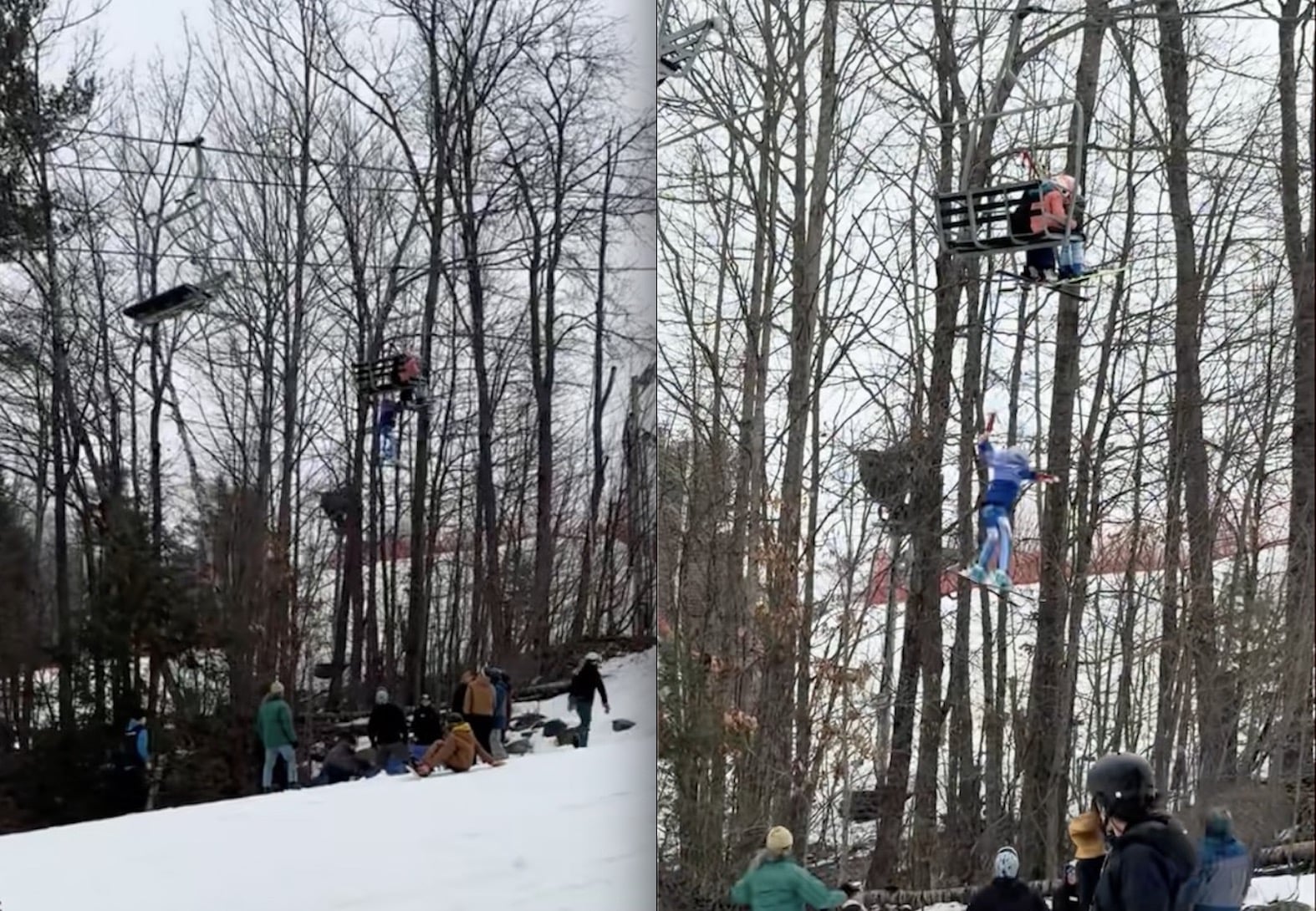
Disturbing video footage has emerged from Pats Peak Ski Resort in Henniker, New Hampshire, capturing a terrifying incident where a young girl narrowly avoided serious injury after falling from a chairlift. The video shows the skier, whose age has not been publicly disclosed, slipping beneath the chairlift’s safety bar and subsequently losing her grip, dangling precariously before falling to the ground below. The incident, which occurred over the weekend, has sparked discussions about chairlift safety protocols and the vigilance of resort staff.
The Incident Unfolds: A Near-Tragedy on the Slopes
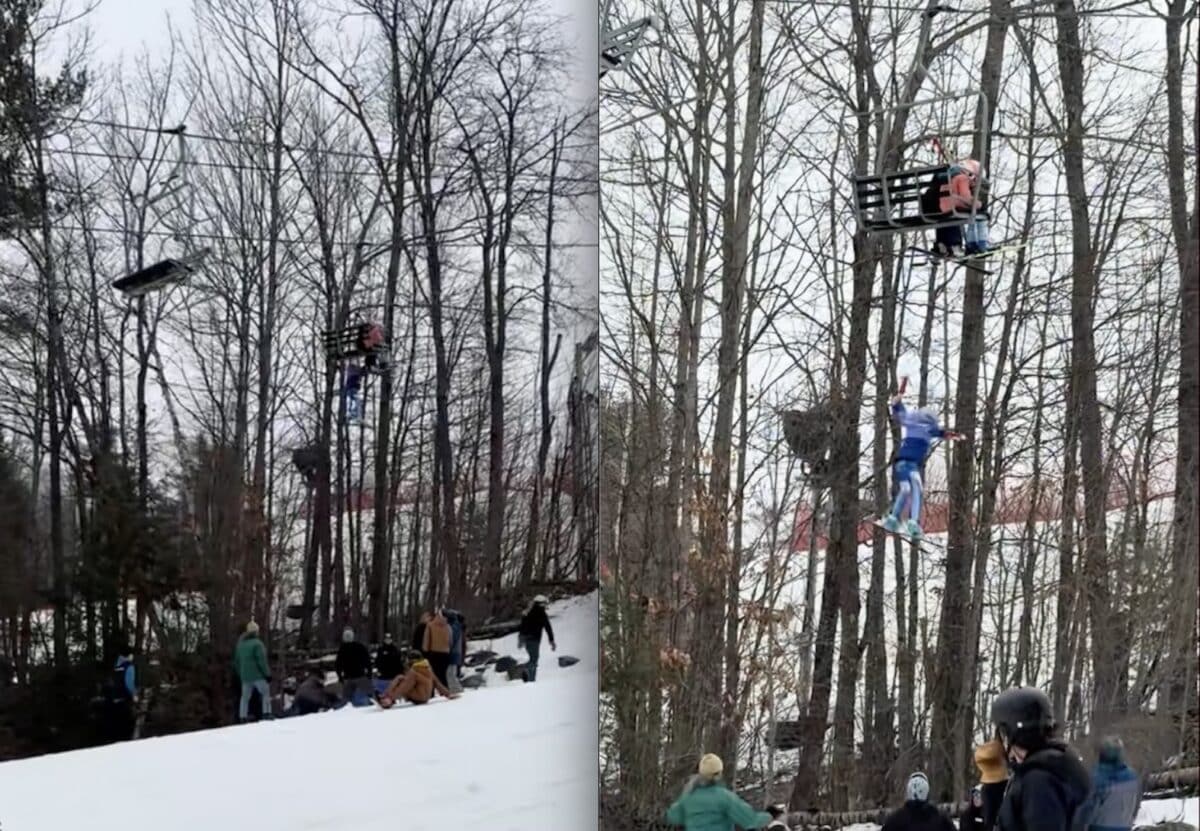
The harrowing event took place on a chairlift at Pats Peak Ski Resort, a popular destination for winter sports enthusiasts in New Hampshire. According to initial reports and the accompanying video, the young skier was in the process of lowering the chairlift’s restraint bar when she lost her footing. This critical moment led to her slipping entirely from the chair, with her body precariously suspended by the footrest. The footage vividly illustrates the terrifying moments as she dangled, a stark reminder of the inherent risks associated with ski lift operations, even for seemingly routine maneuvers.
The fall occurred just uphill from the chairlift’s loading area, a detail that proved crucial in the swift response by resort personnel. The proximity to the loading zone allowed for immediate awareness and intervention, a factor that undoubtedly contributed to the fortunate outcome.
Rapid Response and Fortunate Outcome
In a testament to the training and preparedness of Pats Peak Ski Resort’s staff, a tragedy was averted through a combination of quick thinking and swift action. Resort personnel were alerted to the unfolding emergency and immediately initiated the protocol to stop the chairlift. Simultaneously, ski patrol members were deployed to the scene.
Crucially, padding was strategically positioned beneath the falling skier. This prepared intervention served as a vital buffer, designed to absorb the impact of the fall and mitigate potential injuries. Following the incident, ski patrol promptly evaluated the young skier. In a significant relief to all involved, the evaluation confirmed that the child sustained no injuries. This outcome, while undoubtedly a result of fortunate circumstances and rapid response, underscores the importance of effective emergency procedures at ski resorts.
Official Statements and Resort Protocols
Following the incident, the general manager of Pats Peak Ski Resort addressed the situation, providing a brief explanation of the events as understood by the resort. The manager confirmed that the child was reportedly attempting to lower the restraint bar at the time of the incident, which led to her slipping from the chair.
While the resort has not released further details regarding the specific chairlift involved or the exact circumstances leading up to the child’s attempt to adjust the bar, their statement emphasizes the swift and effective actions taken by their staff. The prompt stopping of the chairlift and the deployment of ski patrol with protective padding highlight the resort’s commitment to guest safety and their established emergency response protocols.
The Pats Peak Ski Resort operates multiple chairlifts, some of which are of the fixed-grip variety, while others are of the detachable grip type, allowing for slower loading and unloading speeds. The specific type of lift involved in this incident would influence the dynamics of the event and the potential for intervention. Detachable grip lifts, often found on higher-traffic or longer-duration rides, typically offer a more controlled loading experience.
Analyzing Chairlift Safety: Data and Best Practices
Chairlift incidents, while relatively rare, can have severe consequences. Data from the National Ski Areas Association (NSAA) indicates that between 1979 and 2021, there were an average of approximately 5.7 serious injuries per year related to chairlift use. These statistics, while seemingly low in the context of millions of skier visits annually, underscore the critical nature of safety procedures.
Common causes of chairlift-related incidents include:
- Loading and Unloading Errors: Passengers failing to properly board or disembark the chairlift, often due to inexperience, distractions, or improper technique.
- Passenger Misconduct: Actions such as rocking the chair, standing up, or leaning over the edge.
- Mechanical Failures: Though infrequent, these can lead to significant incidents.
- Environmental Factors: High winds or icy conditions can sometimes contribute to difficulties.
The incident at Pats Peak appears to fall under the category of loading/disembarking errors, specifically related to the operation of the safety bar. Modern chairlifts are equipped with various safety features, including restraint bars, anti-rollback devices, and emergency stop buttons. The effectiveness of these features relies heavily on both their design and the adherence to operating procedures by both staff and patrons.
The Role of the Safety Bar
The safety bar, or restraint bar, is a critical component of chairlift safety. Its primary function is to prevent passengers from falling out of the chair during transit. Most modern chairlifts have a bar that passengers pull down after boarding and lift before disembarking. The incident suggests a failure in this process, where the bar was either not fully secured or was manipulated in a way that allowed the skier to slip beneath it.
Ski resorts typically provide clear instructions on how to load, ride, and unload chairlifts. These instructions often include advice on keeping hands and feet inside the chair and refraining from adjusting the safety bar during the ride, unless instructed to do so by lift attendants. The age of the skier is a significant factor in understanding the context; younger children may require greater supervision and assistance from parents or guardians, or even resort staff, to ensure their safety on the lift.
Chronology of the Incident: A Moment-by-Moment Reconstruction
While a precise minute-by-minute timeline is not publicly available, the sequence of events can be inferred:
- Boarding the Chairlift: The young skier, along with potentially others, boards a chairlift at Pats Peak.
- Attempting to Lower Safety Bar: As the chair ascends, the skier attempts to lower the restraint bar.
- Slipping Beneath the Bar: During this maneuver, the skier loses balance or footing, causing her to slip under the partially or fully lowered safety bar.
- Dangling Precariously: The skier is left suspended by the footrest of the chair, with her body hanging below.
- Alerting Resort Staff: Witnesses or the skier herself (if able) signal for help, or resort staff notice the anomaly.
- Chairlift Stopped: Resort personnel immediately activate the emergency stop mechanism for the chairlift.
- Padding Deployed: Ski patrol swiftly positions protective padding directly beneath the dangling skier.
- Fall and Impact Mitigation: The skier loses her grip and falls, landing on the deployed padding.
- Immediate Medical Evaluation: Ski patrol conducts an on-site assessment of the skier.
- Confirmation of No Injuries: The evaluation confirms the skier is uninjured.
Broader Implications and Future Considerations
This incident, while concluding without injury, serves as a potent reminder of the constant need for vigilance in the ski industry. It prompts several considerations for both resorts and patrons:
- Enhanced Passenger Education: Resorts may consider reinforcing passenger education on chairlift safety, particularly for younger skiers and novice riders. This could involve clearer signage, on-lift announcements, or even brief demonstrations at loading areas.
- Staff Training and Supervision: The swift response from Pats Peak staff underscores the importance of well-trained and attentive lift operators and ski patrol. Continuous training on emergency procedures and regular drills are essential.
- Chairlift Design and Technology: While modern chairlifts are engineered with safety in mind, ongoing research and development in lift technology could explore further enhancements to prevent such incidents, potentially through more intuitive restraint systems or advanced monitoring.
- Parental Supervision: The role of parents and guardians in supervising children on chairlifts cannot be overstated. Ensuring children understand and follow safety instructions, and providing assistance when necessary, is paramount.
The Pats Peak Ski Resort incident, though a fortunate one in its outcome, highlights the inherent risks of winter sports and the critical importance of safety protocols, staff training, and passenger awareness. The resort’s prompt and effective response mitigated what could have been a far more tragic event, but it also provides an opportunity for reflection and potential improvements across the industry to ensure the safety of all who enjoy the slopes. The video of the incident, shared widely, has undoubtedly served as a stark visual for the importance of adhering to chairlift safety guidelines.
