
ASPEN, Colo. – The prestigious NorAm Finals speed series concluded in Aspen, Colorado, delivering an exhilarating display of alpine ski racing across two downhills and two Super-G races for both women and men. From March 18-22, the challenging slopes of Aspen Mountain tested the mettle of competitors, demanding exceptional strength, precise surface management, and an unwavering ability to carry speed through the critical bottom sections of each course. The event served as a crucial proving ground, not only crowning champions but also determining coveted World Cup start positions for the upcoming season, all while navigating unseasonably warm temperatures that added an extra layer of complexity for athletes and organizers alike.
The series unfolded with a clear, well-structured schedule, allowing athletes to adapt and showcase their versatility across the high-speed disciplines. The U.S. National Championship Downhill kicked off the action, setting the tone for a week where experience and emerging talent would frequently clash for podium honors. The consistent efforts of the Aspen Valley Ski Club in preparing and maintaining the race tracks under challenging conditions garnered widespread praise from the athletes, ensuring a fair and competitive environment despite the warm spring weather.
Women’s Speed Series: A Blend of World Cup Pedigree and Youthful Ascent
The women’s races provided a compelling narrative, featuring established World Cup athletes reaffirming their class alongside dynamic young skiers making their mark.
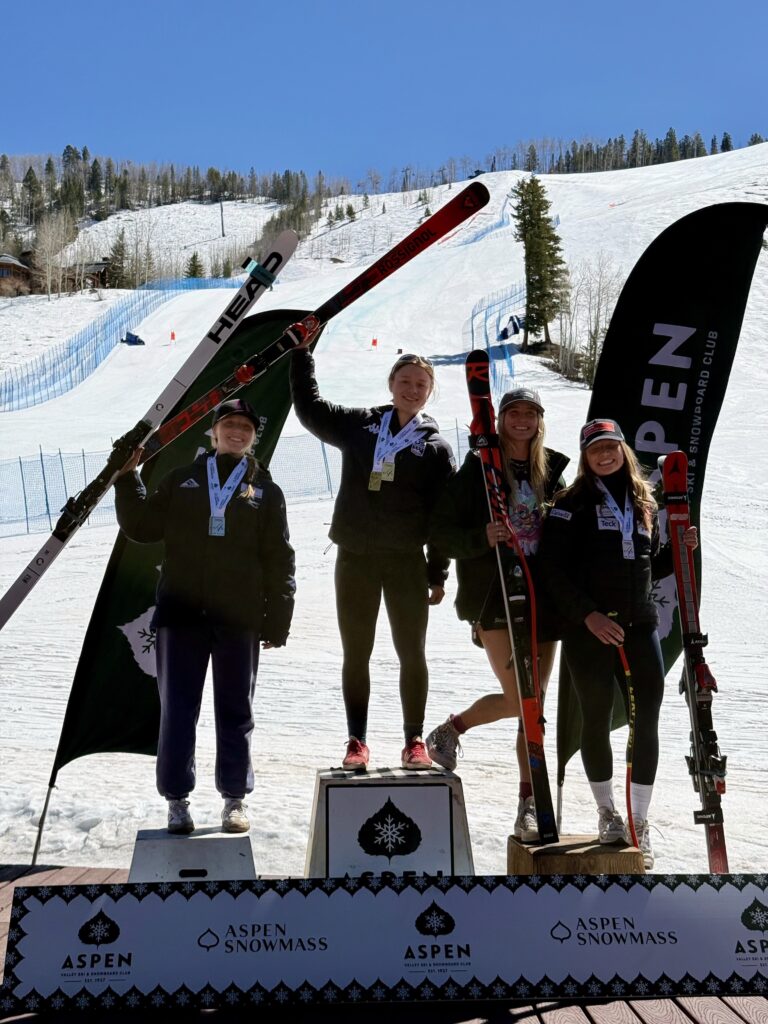
Downhill Race 1 – U.S. National Championship (March 18)
The opening day saw Isabella Wright (USA, 1997, Atomic) claim the U.S. National Downhill title with a blistering time of 1:07.00. Wright, a seasoned World Cup veteran and an Olympian with her sights set on the 2026 Games, demonstrated her intimate knowledge of the Aspen course, a hill she considers a "second home." Her victory was particularly poignant, marking a "full circle" moment as she returned to race where her early career had roots. "I skied for Aspen Valley Ski Club for two years, and this is definitely a second home for me," Wright commented, reflecting on her connection to the venue. She also acknowledged the diligent work behind the scenes: "Aspen Valley Ski Club did an amazing job preparing the track… with the extremely warm temperatures, they are handling it so well."
Wright’s performance underscored her strong season, which included scoring Super-G points in Soldeu and impressive 13th- and 16th-place downhill finishes in St. Moritz on the World Cup circuit. Tricia Mangan (USA, 1997, Head) finished a mere 0.08 seconds behind Wright, securing second place and highlighting the intense competition at the top. The podium was rounded out by Mari Renick (USA, 2009), a remarkably young talent who, at just 16 years old, signaled her arrival on the national stage with a third-place finish, 1.70 seconds off Wright’s pace. The top five also featured Kaitlin Keane (USA, 2004) and Julia Cunningham (USA, 2007), further illustrating the depth of burgeoning talent in the U.S. women’s speed program.
Downhill Race 2 – NorAm Finals (March 19)
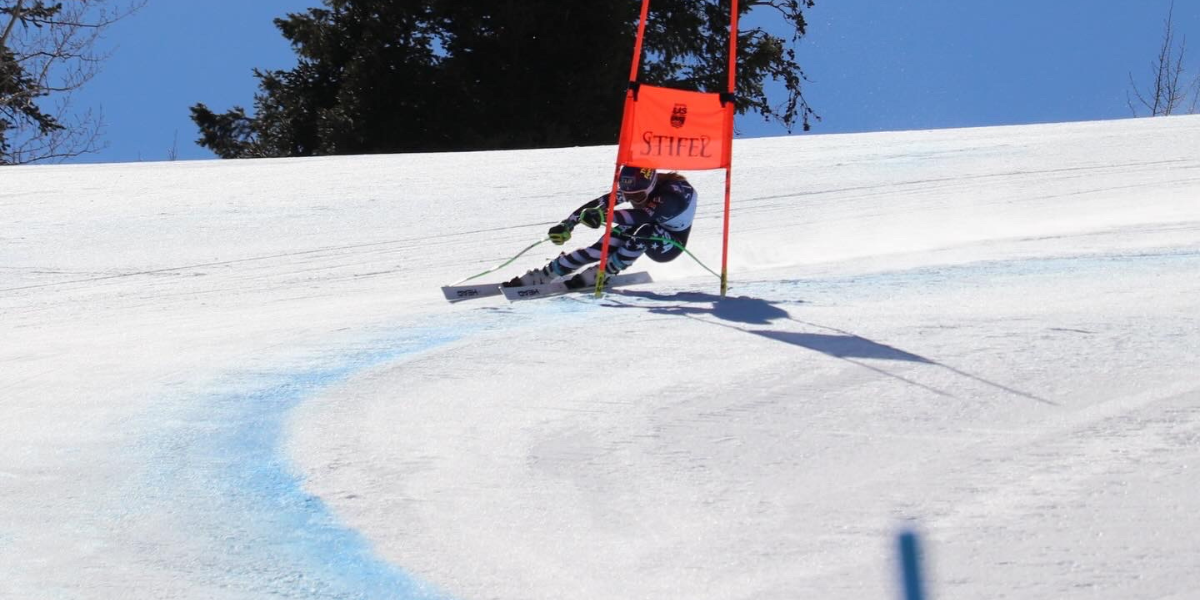
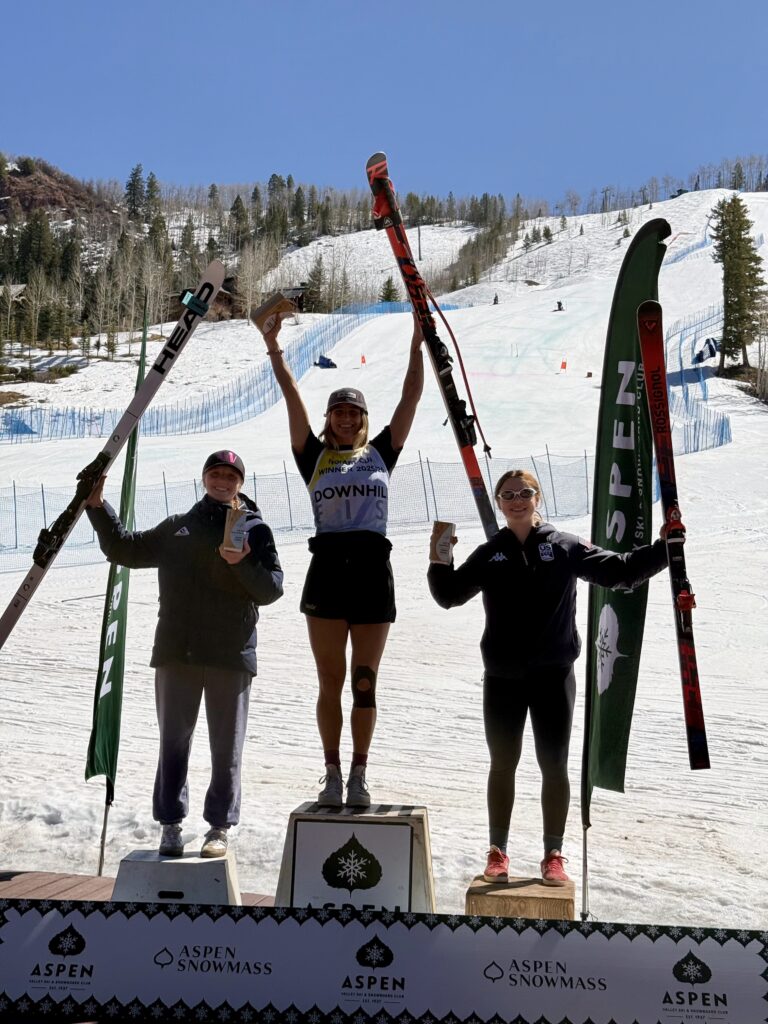
The second downhill race saw another young American ascend to the top. Beatrice May (USA, 2006), a 19-year-old Stifel U.S. Ski Team athlete and Dartmouth freshman, clinched victory with a time of 1:08.35. May, an alumna of Burke Mountain Academy, executed a flawless run, skillfully carrying speed through the lower pitch to secure her win. This triumph capped a breakthrough season for May, where her consistent performances led her to a third-place finish in the overall NorAm downhill standings, a significant achievement for an athlete balancing collegiate studies with elite racing.
Mari Renick (USA, 2009) continued her impressive form, backing up her national championship podium with a strong second-place finish, just 0.24 seconds behind May. Her consistent showing in these high-stakes races, especially at such a young age and in her inaugural FIS season with Ski & Snowboard Club Vail, ultimately earned her a coveted World Cup downhill start position for the next season – a testament to her immense potential. The podium was shared by two Canadians, Zoe Gray (CAN, 2004) and Stefanie Fleckenstein (CAN, 1997), who tied for third place, adding an international flavor to the competition and demonstrating the strong contingent from north of the border. Julia Cunningham (USA, 2007) secured her second top-five finish, placing fifth.
Super-G Race 1 (March 21)
The shift to Super-G did little to deter Isabella Wright’s momentum. She added a Super-G win to her impressive week, clocking 54.16 seconds and once again showcasing her ability to carry speed and adapt across different disciplines. Her consistent performance further solidified her status as a leading figure in U.S. women’s speed skiing. Wright expressed her enthusiasm for the developing talent: "I love being back here… and being surrounded by so many up-and-comers. It’s truly my honor to be here… and see that women’s speed is building itself back up in the U.S." Her sentiment highlighted a broader positive trend within the national ski team development pipeline.
Beatrice May (USA, 2006) continued her excellent week with a second-place finish, 1.01 seconds behind Wright, further cementing her versatility and consistent performance. Kaitlin Keane (USA, 2004) secured third place, demonstrating her growing prowess in Super-G. Logan Grosdidier (USA, 2008) and Sarah Bennett (CAN, 2001) rounded out the top five, with Grosdidier’s fourth place foreshadowing her imminent breakthrough.
Super-G Race 2 (March 21)
The final women’s speed race belonged to Logan Grosdidier (USA, 2008), who stepped into the spotlight with a remarkable victory, posting a time of 54.01 seconds. At just 17 years old and in her first year on the Stifel U.S. Ski Team, Grosdidier’s win was a significant milestone. It followed her Junior World Super-G silver medal earlier in the season and a string of top-five NorAm Super-G finishes. Her ability to finish ahead of two established World Cup athletes, Isabella Wright (who placed a very close second, +0.03) and Elisabeth Bocock (USA, 2005, who finished third, +0.11), underscored her burgeoning talent and her readiness to compete at the highest levels. Kaitlin Keane (USA, 2004) maintained her strong showing with a fourth-place finish, and Mari Renick (USA, 2009) once again found herself in the top five, securing fifth place and adding to her impressive NorAm Finals tally. Grosdidier’s performance is a clear indicator of the bright future for U.S. women’s speed racing.
Men’s Speed Series: Veterans Reassert Dominance, New Guard Secures World Cup Spots
The men’s speed series was equally enthralling, witnessing a mix of powerful performances from seasoned athletes and strategic runs from rising stars.
Downhill Race 1 – U.S. National Championship (March 18)
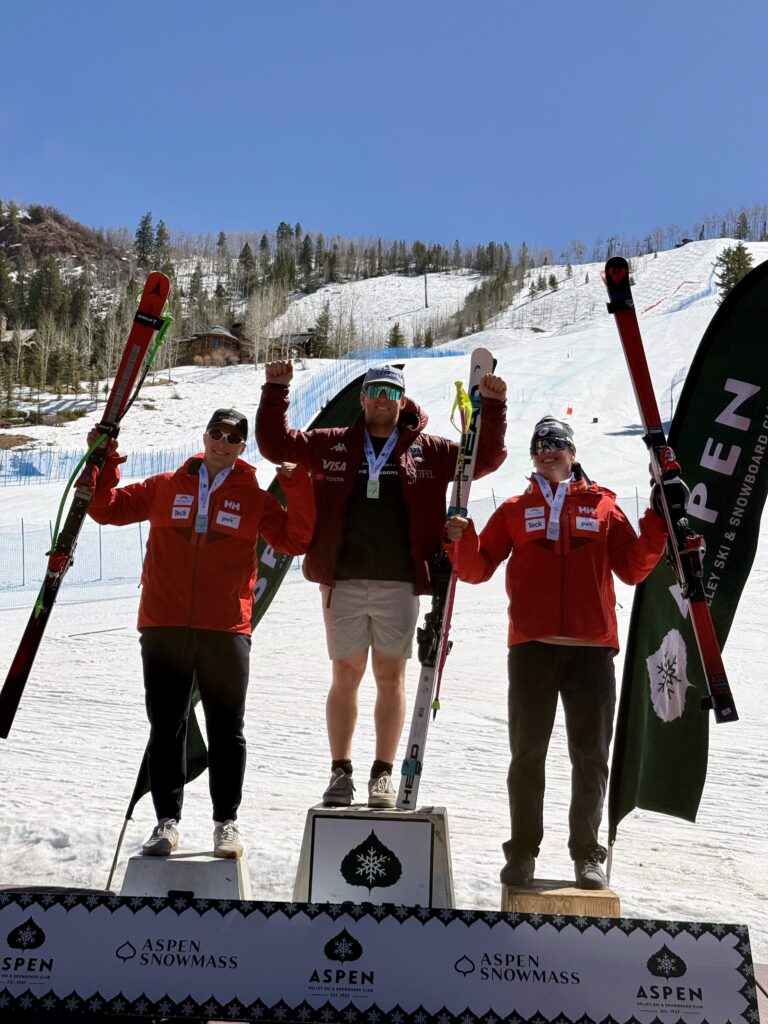
Isaiah Nelson (USA, 2001) claimed the U.S. National Downhill Championship with a commanding time of 2:07.72. Nelson, a powerful young skier, demonstrated his aggressive style and ability to navigate the demanding Aspen course. His victory was a strong statement, showcasing his potential as a future force in American speed skiing. Tristan Lane (USA, 1998) secured second place, 0.56 seconds behind Nelson, followed by veteran Sam Morse (USA, 1996) in third, 0.68 seconds back. Jeffrey Read (CAN, 1997, Atomic), a prominent Canadian World Cup racer, finished fourth, indicating the international quality of the field. Erik Arvidsson (USA, 1996, Head), another experienced American, rounded out the top five.
Downhill Race 2 – NorAm Finals (March 19)
Erik Arvidsson (USA, 1996, Head) delivered a masterful performance in the second downhill, winning the race with a time of 2:08.12. This victory was a significant moment for Arvidsson, marking a triumphant full return from an injury that sidelined him in previous seasons. The 2016 Junior World Downhill Champion had shown steady progression throughout the winter, finishing 33rd in the World Cup downhill standings, and this win served as a powerful culmination of his comeback. "It feels good to be racing back in the U.S.," Arvidsson shared, acknowledging the organizing committee’s efforts. "They did a great job… managing to get the race off in such crazy warm temperatures." His win also secured him the NorAm downhill title, a crucial achievement that comes with a World Cup start position. "It feels good to lock up the downhill title and have that in my back pocket going into next year," he added, looking ahead to the next season with renewed confidence.
The podium also featured strong Canadian representation, with Brodie Seger (CAN, 1995, Atomic) taking second place and Sascha Gilbert (CAN, 1996) finishing third. Patrick Kenney (USA, 1997, Völkl) and Sam Morse (USA, 1996) completed the top five, showcasing the depth of talent competing for NorAm points. Wiley Maple, an Aspen Valley Ski Club athlete, also secured a World Cup downhill start position for the next season, having demonstrated exceptional late-season World Cup form, including scoring in four consecutive World Cup downhill races.
Super-G Race 1 (March 20)
Isaiah Nelson (USA, 2001) continued his dominant run, securing his second victory of the series in the first Super-G race with a time of 52.65 seconds. Nelson attacked from the start, navigating the course cleanly and carrying impressive speed throughout. "It’s been a blast racing in Aspen," Nelson stated. "The crew has done a great job to set up some sweet speed races. I had a lot of fun skiing the downhill track and seem to have found the fast line." His performance underscored his versatility and confirmed his status as a leading contender in the speed disciplines. Nelson, the 2022 Junior World Super-G champion, had already won three NorAm Super-G races this season, and this win officially secured him the NorAm Super-G title, earning him a coveted World Cup start position for the upcoming year. His season also included notable 10th- and 15th-place finishes in Europa Cup Super-G races and two World Cup downhill starts, highlighting his rapid ascent.
Bradshaw Underhill (USA, 2000) narrowly missed the top spot, finishing an agonizing 0.02 seconds behind Nelson in second place. Erik Arvidsson (USA, 1996, Head) continued his consistent week, securing third place, 0.44 seconds back. Johs Braathen Herland (NOR, 2003) and Jeffrey Read (CAN, 1997, Atomic) rounded out the top five, showcasing the international competitiveness of the field.
Super-G Race 2 (March 22)
The final men’s speed event saw Jeffrey Read (CAN, 1997, Atomic) claim victory with a time of 53.19 seconds. Read’s win was particularly impressive as he navigated a deteriorating surface from a later bib number, demonstrating remarkable precision and determination. "I just wanted to go out and hammer, put it all on the line," Read explained. "Starting with a later bib, I knew it had to be precise and full gas all the way down." He added, "It was getting a little peely up top… but once you committed, it was back on the gas through the finish." Despite a challenging World Cup season where he scored 19 Super-G points, Read’s performance in Aspen stood out as one of his strongest of the year, echoing his previous success, including a second-place finish in a World Cup Super-G in Kvitfjell in 2024 and two qualifications for the World Cup Finals Super-G.
Erik Arvidsson (USA, 1996, Head) continued his excellent form throughout the series, securing second place, just 0.12 seconds behind Read. Johs Braathen Herland (NOR, 2003) claimed third, followed by Sam Morse (USA, 1996) in fourth. Brodie Seger (CAN, 1995, Atomic) and Isaiah Nelson (USA, 2001) tied for fifth place, further highlighting the tight competition and the depth of talent on display in Aspen.
World Cup Spots Secured: A Gateway to Elite Racing
The NorAm Finals are more than just races; they are a critical pathway to the highest level of alpine skiing. Several athletes earned invaluable World Cup start positions for the upcoming season based on their NorAm overall discipline standings:
- Downhill (Men): Erik Arvidsson (USA) and Wiley Maple (USA) secured World Cup downhill starts. Arvidsson’s hard-fought return from injury culminated in this significant achievement, while Maple’s consistent World Cup scoring demonstrated his readiness.
- Downhill (Women): Mari Renick (USA) and Stefanie Fleckenstein (CAN) earned their World Cup downhill spots. Renick’s achievement is particularly noteworthy, securing this elite opportunity at just 16 years old in her first FIS season. Fleckenstein’s spot is a testament to her resilience, coming after a challenging return from her 2023 Val d’Isère crash, where she still managed to score points despite the setback.
- Super-G (Men): Isaiah Nelson (USA) and Jeffrey Read (CAN) secured World Cup Super-G starts. Nelson’s dominance in the NorAm Super-G circuit was rewarded, while Read’s consistent presence at the top tiers of the sport ensures his continued participation.
- Super-G (Women): Isabella Wright (USA) and Logan Grosdidier (USA) earned World Cup Super-G spots. Wright, already a World Cup regular, solidified her position, and Grosdidier’s breakthrough performance secured her a well-deserved opportunity to compete against the world’s best.
These World Cup spots represent not just individual triumphs but also a significant boost for the respective national teams, injecting fresh talent and reinforcing the experienced core.
What the Week Showed: A Changing of the Guard and Enduring Class
The NorAm Finals in Aspen provided a clear picture of the current landscape and future trajectory of North American alpine speed skiing. World Cup veterans like Isabella Wright, Erik Arvidsson, and Jeffrey Read demonstrated their enduring class, showcasing the technique, mental fortitude, and experience that define elite performance. Wright’s dual victories and consistent top finishes, Arvidsson’s successful return and NorAm title, and Read’s tactical win against challenging conditions underscored the value of their World Cup experience.
However, the undeniable shift is coming from behind, signaling a vibrant new generation ready to challenge the established order. Logan Grosdidier’s Super-G victory, Beatrice May’s downhill win, Mari Renick’s remarkable achievement of earning a World Cup spot at just 16, and Isaiah Nelson’s dominant performance to secure a discipline title are all compelling evidence of this emerging talent. These young athletes are not just participating; they are actively competing for and winning at the highest levels of regional competition, often outperforming or closely matching their more experienced counterparts. Their performances highlight the success of development programs and the increasing depth of talent in both the U.S. and Canadian ski teams.
The successful execution of the NorAm Finals speed series in Aspen, despite the significant challenge of warm temperatures, also deserves commendation. The efforts of the Aspen Valley Ski Club and all event organizers in maintaining race-ready conditions were crucial to providing a fair and high-quality competition for all athletes.
As the speed series concludes, the focus now shifts to the technical NorAm Finals, which are set to begin, promising further excitement and critical competitions that will continue to shape the careers of North America’s top alpine skiers. The blend of seasoned expertise and youthful exuberance seen in Aspen suggests a promising future for the sport, with a robust pipeline of talent poised to make their mark on the international stage.
