
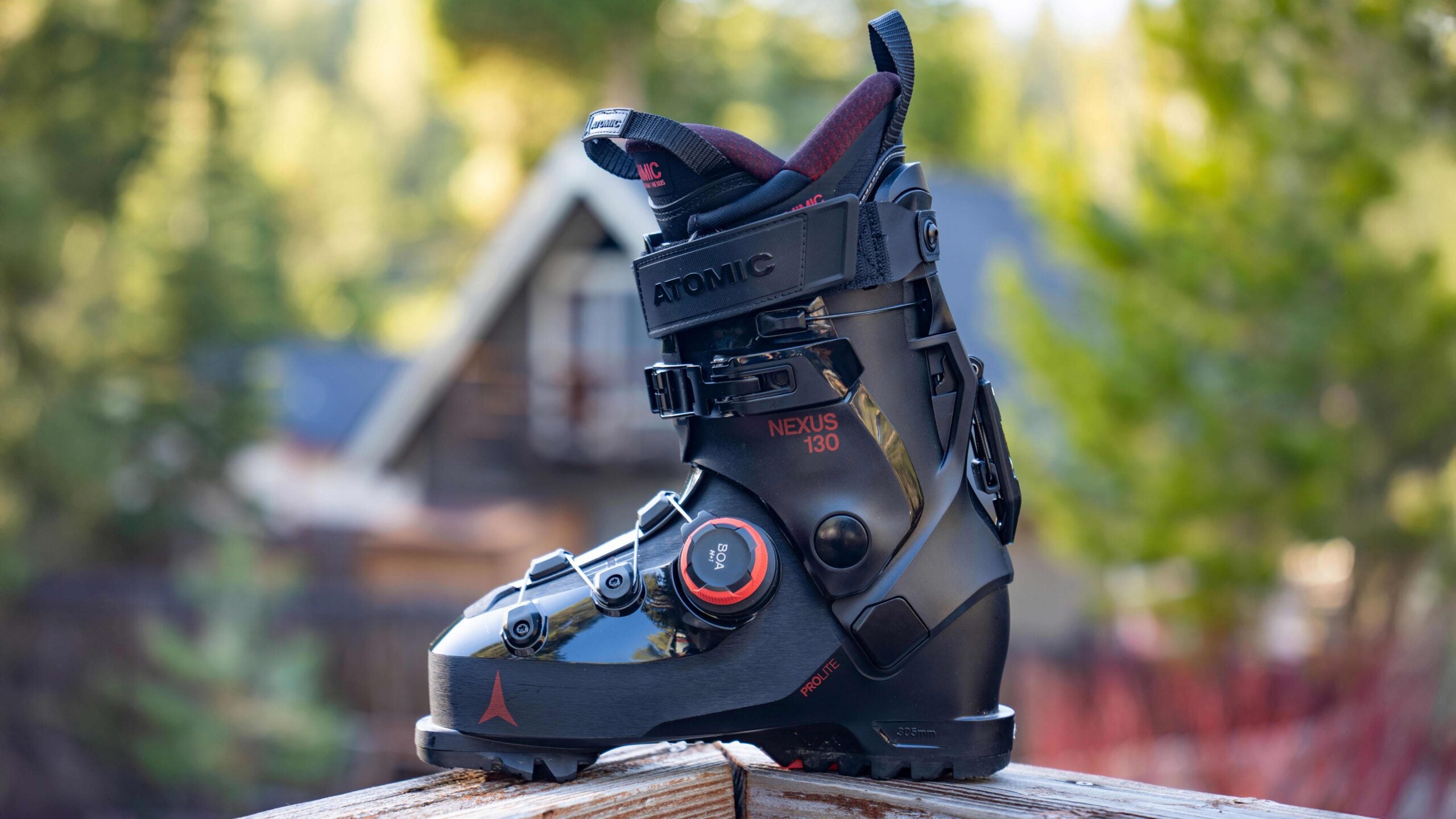
The ski industry is witnessing a significant evolution in boot design, epitomized by the upcoming launch of the Atomic Nexus 130 BOA. This flagship model spearheads Atomic’s new series, engineered to reconcile the historically conflicting demands of ease of entry and high-performance downhill skiing. Set to arrive in shops in Fall 2026, the Nexus 130 BOA promises to address a long-standing challenge for a substantial segment of the skiing population: those who require effortless access to their boots but refuse to compromise on aggressive, hard-charging performance on the slopes.
For decades, skiers have navigated a binary choice: traditional four-buckle boots offering precision and power, often at the cost of considerable struggle during entry and exit, or rear-entry boots, which provided unparalleled convenience but frequently sacrificed crucial downhill control and feel. The Atomic Nexus 130 BOA, with its innovative mid-entry design, seeks to transcend this dichotomy, marking a pivotal moment in the industry’s response to an aging yet highly active demographic of skiers who continue to push boundaries despite evolving physical limitations.
The Evolution of Ski Boot Design: A Historical Perspective
The journey of ski boot technology is a chronicle of continuous innovation, driven by the desire to enhance both performance and comfort. Early ski boots, often made of leather, offered flexibility but lacked the rigidity for aggressive skiing. The advent of plastic boots in the 1960s revolutionized the sport, ushering in an era of unprecedented power transmission and control. However, these boots, particularly the ubiquitous four-buckle front-overlap designs, presented their own set of challenges. Their rigid shells and tight closures, while excellent for performance, often made them notoriously difficult to don and doff, especially in cold conditions.
In response to this accessibility issue, the 1980s saw the rise of rear-entry boots. These designs featured a hinged cuff that allowed skiers to simply step into the boot from the back, offering a level of convenience unmatched by their front-entry counterparts. Brands like Salomon, Nordica, and Koflach popularized these models, particularly among recreational skiers and those with mobility concerns. However, the design inherent to rear-entry boots often led to compromises in lateral stiffness and heel hold, resulting in a less precise feel and reduced performance for advanced skiers. As performance demands escalated, rear-entry boots gradually faded from prominence in the high-performance segment, leaving a void for skiers who prioritized both ease and power.
In recent years, as the population of active skiers has matured, coupled with advancements in material science and closure systems, manufacturers have renewed their focus on intelligent easy-entry solutions. The development of new plastics that maintain flexibility at low temperatures, alongside innovative liner technologies and precise micro-adjustment systems like BOA, has opened new avenues for designers. This renewed emphasis acknowledges that many dedicated skiers, though potentially facing issues like arthritis, past injuries, or reduced flexibility, still possess the skill and desire to engage in challenging terrain and dynamic skiing.
Atomic’s Mid-Entry Innovation: The Nexus Design
The Atomic Nexus 130 BOA represents a sophisticated re-imagining of easy-entry principles. Unlike a traditional front-entry or a classic rear-entry boot, the Nexus employs a "mid-entry" architecture. This design allows the front and rear sections of the cuff to articulate and separate, creating a wide opening that enables skiers to step straight into the boot without significant bending or struggling. This hands-free entry system is a key differentiator, providing a level of convenience reminiscent of rear-entry boots but integrated into a performance-oriented shell.
Central to the Nexus’s functionality is its intuitive closure system. It features a set-it-and-forget-it top buckle, which secures the upper cuff, minimizing repeated adjustments. The critical mid-entry platform is controlled by a robust rear lever, drawing parallels to the walk-mode mechanisms found on modern alpine touring (AT) boots. This lever, when engaged, locks the cuff into a rigid downhill skiing position, and when disengaged, facilitates the expansive opening for entry. Skiers can activate this lever with minimal effort, even using their other foot, promoting a truly hands-free experience.
Further enhancing the fit and performance is the incorporation of the BOA H+1 closure system in the lower shell. While the bootfitter’s initial skepticism regarding BOA’s suitability for individuals with compromised fine motor skills is acknowledged, the design allows for the BOA dial to be pre-tightened before entry. This ensures that once the foot is in place, only minor adjustments are needed, mitigating potential difficulties. The BOA system provides a highly uniform and precise wrap around the foot, crucial for eliminating pressure points and enhancing responsiveness. Complementing this is Atomic’s renowned heat-moldable Mimic Platinum liner, which adapts precisely to the skier’s foot contours, offering a custom-like fit directly out of the box and further contributing to exceptional heel hold and comfort.
Bridging the Gap: Performance on the Snow
The true test of any ski boot lies in its on-snow performance, and the Atomic Nexus 130 BOA aims to defy expectations for an easy-entry design. Despite its accessible entry system, the Nexus 130 boasts a formidable 130 flex rating, placing it firmly in the category of boots designed for expert and aggressive skiers. Initial on-snow reviews, conducted in variable spring conditions, confirm its surprising capability to handle aggressive skiing.
The boot’s ability to maintain high performance is attributed to several design elements. The sophisticated shell construction, particularly its dual-pivot design—similar to technologies seen in boots like the Lange Shadow—plays a critical role. This engineering allows for more efficient power transmission and generates a lively, springy rebound out of carved turns, providing a dynamic and responsive feel. For skiers accustomed to lower-volume, highly precise boots, the Nexus 130 BOA, with its 101mm last, may initially feel more voluminous. However, aggressive skiing, which involves driving the heel into the well-shaped heel pocket, quickly reveals its inherent stability and heel hold. Even for those with typically lower-volume feet, the heel retention proves largely effective, while skiers with genuinely high-volume feet are expected to find the heel hold exceptional. The ankle break position, designed to sit high and slightly forward, also caters well to skiers with higher insteps, optimizing leverage and control.
The overarching sentiment from performance tests is that the Nexus 130 BOA "skis like a real 130-flex boot," dispelling any lingering doubts that ease of entry must come at the expense of downhill prowess. This balance is critical for its target audience, who demand both convenience and the ability to confidently tackle challenging terrain from bell to bell.
Targeting the Underserved Market: A Strategic Move
Atomic’s investment in the Nexus series represents a strategic response to a significant, yet historically underserved, segment of the ski market. Industry data consistently indicates a demographic trend of an aging but highly active population of skiers. According to reports from organizations like the National Ski Areas Association (NSAA) and various market research firms, a substantial portion of frequent skiers are over the age of 50. While these experienced individuals possess decades of on-snow expertise, they may increasingly face physical challenges such as arthritis in the hands or knees, reduced flexibility, or recovering from past injuries, which make the traditional struggle of putting on stiff ski boots a deterrent.
For these skiers, the Nexus 130 BOA is not merely an incremental improvement; it is a potential game-changer. It enables them to continue participating in the sport they love without the pre-skiing anguish of wrestling with their gear. The ability to step into a boot hands-free, without stooping, removes a significant barrier to participation, extending the skiing lifespan of dedicated enthusiasts. This demographic is also typically affluent and willing to invest in high-quality equipment that enhances their experience, making them a valuable market segment for premium products like the Nexus.
The "bootfitter’s perspective" highlighted in the initial assessment underscores this point. Bootfitters, on the front lines of skier interaction, frequently encounter individuals whose physical limitations complicate traditional boot fitting. Products like the Nexus streamline their work, allowing them to offer out-of-the-box solutions that previously required extensive customization or compromise. This shift benefits both the retailer and, more importantly, the end-user.
Comparative Analysis and Market Positioning
In the landscape of easy-entry ski boots, the Atomic Nexus 130 BOA carves out a distinct niche. While other manufacturers have explored similar concepts, their market positioning often differs. For instance, the Nordica HF (Hands-Free) series prioritizes ultimate ease of entry and comfort, featuring a single buckle closure and often integrated heating elements. While exceptionally convenient, the HF series generally offers a more relaxed fit and a softer flex, catering to a less aggressive, comfort-focused skier. The Nexus, in contrast, explicitly aims for performance, making it a direct competitor to traditional high-performance boots for its target demographic.
Another notable design is the Rossignol Vizion, which also employs a mid-entry concept. While a direct comparative performance analysis with the Vizion was not detailed in the initial review, the Nexus 130 BOA’s robust 130 flex and advanced internal construction (Mimic liner, dual-pivot design) suggest a strong emphasis on downhill capability that positions it at the forefront of the accessible performance category. Atomic’s strategic entry into this segment signifies a mature market where specialization and targeted innovation are key drivers of growth. By offering a boot that outskis comfort-focused easy-entry models while matching the convenience, Atomic is appealing to a discerning clientele that demands the best of both worlds.
Broader Implications for the Ski Industry
The introduction of the Atomic Nexus 130 BOA carries significant implications for the wider ski industry. Firstly, by addressing the practical challenges faced by an experienced and passionate segment of skiers, Atomic is helping to retain long-term participants in the sport. Keeping these individuals on the slopes longer contributes to sustained revenue for resorts, equipment manufacturers, and ski retailers.
Secondly, the Nexus represents a benchmark in innovative boot design. It demonstrates that combining advanced materials, sophisticated engineering, and user-centric design principles can overcome traditional trade-offs. This success is likely to inspire other manufacturers to further explore and refine easy-entry performance solutions, potentially leading to a new wave of innovation across the industry. The integration of BOA technology, already gaining traction in high-performance boots, into an accessible design further validates its versatility and impact on fit precision.
Finally, Atomic’s move reinforces its reputation as a brand committed to innovation and understanding skier needs. By venturing into "niche products aimed at the fringes of their audience," Atomic is actually addressing a substantial demographic that has been overlooked, proving that true innovation often lies in solving specific, unmet user problems. This approach fosters brand loyalty and positions Atomic as a leader in forward-thinking ski equipment.
The Full Nexus Lineup and Future Outlook
The Atomic Nexus 130 BOA is merely the vanguard of a comprehensive new series. The full lineup, scheduled for release in Fall 2026, will include various models catering to a spectrum of flex preferences and genders:
- Men’s Models: Nexus 120 BOA, Nexus 110 BOA, and Nexus 110 (without BOA).
- Women’s Models: Nexus 105 BOA W, Nexus 95 BOA W, and Nexus 95 W (without BOA).
This broad range ensures that the accessible performance concept is available to skiers of different skill levels and physical demands, allowing more individuals to experience the benefits of easy entry combined with robust downhill capability. The option for models without the BOA system suggests Atomic is also considering skiers who might prefer a more traditional buckle closure or a slightly different fit profile, further broadening the appeal of the Nexus family.
In conclusion, the Atomic Nexus 130 BOA stands as a testament to intelligent design and market responsiveness. It shatters the long-held belief that convenience and high performance are mutually exclusive in ski boot technology. For the countless skiers who have battled stiff plastic and cold conditions, or faced the frustration of having to compromise their performance demands for ease of access, the Nexus offers a compelling solution. It represents a significant step forward, promising to save skiers from the proverbial "parking lot struggle" and empower them to truly ski bell-to-bell, focusing their energy and passion on the slopes rather than on their equipment. The fall of 2026 will undoubtedly mark a new era for accessible, high-performance skiing.
