
The Winter Olympics represent the pinnacle of competitive snow sports, a global stage where athletes push the boundaries of human performance and technical mastery. Behind every gravity-defying trick and every medal-winning run stands a dedicated team, often spearheaded by coaches whose contributions, though less visible, are absolutely vital. One such figure is Ben Kinnear, the Head of GB Snowsport’s Park and Pipe Snowboard program and the long-time coach of British snowboarding prodigy, Mia Brookes. Kinnear provides an exclusive insight into the immense pressures, meticulous preparation, and split-second strategic decisions that define an Olympic campaign, particularly detailing the dramatic moments surrounding Mia Brookes’ groundbreaking — and almost landed — backside 1620 in the women’s Big Air final, a trick she had never before attempted on snow.
The Unseen Architects of Olympic Glory: The Critical Role of Snowboard Coaches
In the high-octane world of Olympic snowboarding, coaches occupy a unique and often understated position. Unlike their counterparts in mainstream sports like football or boxing, who frequently command media attention and public recognition, snowboard coaches largely operate outside the spotlight. Yet, their presence is undeniable, particularly at the top of the drop-in ramp, where they exude a palpable energy akin to Proximo from Gladiator, preparing their riders for battle. They are the last voices athletes hear before risking life and limb, offering crucial encouragement, technical reminders, and psychological grounding. Their reactions to a successful landing can be more exuberant than the riders themselves – a testament to their deep emotional investment, as seen when Zoi Sadowski-Synnott’s coach famously orchestrated an impromptu Haka in her honor after a medal-winning run. Even seasoned commentators like the BBC’s Ed Leigh and Tim Warwood frequently name-check these figures, including veterans like Danny Kass, who, much like Oliver Reed’s character, bears the scars and a silver medal from his own competitive days.
Despite this critical role, the precise nature of a snowboard coach’s duties, beyond the visible fist-bumps and pep talks, remains largely unknown to the general public. Ben Kinnear, with a decade of experience coaching Mia Brookes, is exceptionally qualified to illuminate this demanding profession. His insights reveal a blend of technical expertise, psychological support, strategic planning, and profound personal dedication. The high-stakes environment of the Olympics amplifies every aspect of their role, transforming every decision into a potentially career-defining moment for their athletes.
A Decade of Dedication: Ben Kinnear’s Journey with Mia Brookes
Ben Kinnear’s partnership with Mia Brookes is a testament to long-term athletic development and unwavering commitment. Their journey began a decade ago, a formative period that predates Mia’s emergence as a global phenomenon. "I remember her turning up in Laax," Kinnear recounts, recalling a GB Snowsport junior camp where Mia celebrated her tenth birthday. Even at such a young age, her talent was unmistakable. "We rode some powder in the trees, and I remember taking a picture of her throwing methods through some little pillow line, with that classic Mia style already," he reminisces. This early recognition of her unique flair and passion for snowboarding laid the foundation for their enduring collaboration.
Today, Kinnear holds a significant leadership position within British snow sports, heading the entire park and pipe snowboard program for GB Snowsport, the national governing body. However, a substantial portion of his time is dedicated to nurturing its brightest star, Mia Brookes. "She has the most demanding schedule," Kinnear explains, detailing the constant travel and intense training required to compete at the elite level. He or Mikey Williams, a private coach with whom Mia also works closely, accompanies her to the vast majority of contests, ensuring consistent support and guidance.
The Beijing Winter Olympics marked a significant milestone for both Mia and Ben, representing their inaugural appearance on the grandest stage in winter sports. Despite his attempts to manage expectations and normalize the event for Mia — and himself — the unique atmosphere of the Games proved transformative. "I’ve tried to tell myself – and her – over the last year or so that it’s just an event like any other," Kinnear admits. "But until you get here, you don’t quite comprehend just how many more eyeballs there are on you." This realization underscores the profound shift in scale and scrutiny that the Olympics brings, impacting everything from athlete performance to coach perception.
Olympic Preparation: A Strategic and Evolving Process
Preparing for an event of Olympic magnitude is a multi-faceted endeavor that extends far beyond immediate training sessions. While the Olympics were certainly on the horizon for the past two years, Kinnear emphasizes that Mia’s overall approach to her career hasn’t been solely dictated by this singular event. Major competitions like the X Games have been equally prioritized, and the advanced tricks Mia has mastered for these events naturally translate to the Olympic stage. Her progression is not merely a reactive response to specific contest demands but a proactive pursuit of excellence.
"Snowboarding is very self-determined," Kinnear explains, highlighting the agency athletes like Mia possess. "They’ve got a good eye on the tricks that they want to learn, and they keep an eye on the progression of the sport and what’s needed to compete." This intrinsic motivation is coupled with a distinctive artistic ambition. "With Mia in particular, she always wants to put her stamp on things. It’s not just chasing the tricks everyone else is doing," he states, emphasizing her creative approach to the sport. This commitment to individuality ensures that her performances are not just technically proficient but also uniquely captivating.
A typical training day for Mia and Ben is characterized by its dynamic nature. "No two days are ever exactly the same," Kinnear notes. Some days might involve collaborative sessions with riders from other nations, fostering a competitive yet friendly environment where new grabs are explored and boundaries are pushed. Other times, the focus is intensely singular, such as a December trip to Ruka, Finland, where it was just Mia and Ben, working meticulously on refining a frontside 10. This adaptable approach allows for both broad skill development and highly specific technical refinement.
A key factor in Mia’s consistent excellence is her profound love for snowboarding. "What’s great about Mia, more than just about any other athlete, is she will genuinely want to go snowboarding every single day," Kinnear reveals. This innate passion translates into an unparalleled volume of practice and repetition. "The mileage and repetition she gets because she enjoys it so much is part of what builds her amazing level of consistency—but also her flair." This dedication differentiates her from athletes who might view training as a chore. Her approach is likened to the difference between merely learning to play a song on a guitar and truly mastering it to perform with soul and originality. Mia’s repetitions are not robotic; they are fueled by a genuine desire to explore the mountain, throw methods, ride rails, and film edits, all while diligently perfecting her contest-ready maneuvers.
The Olympic Spectacle: Beyond the Competition
While contests are a regular feature of a professional snowboarder’s life, the Olympics undeniably carry a different weight. Kinnear humorously recounts his initial nonchalance about the opening ceremony, only to find himself unexpectedly moved by the experience. As coaches, they were granted marching passes, and the brief 10-second walk-out had a surprisingly profound effect. "It almost legitimised my entire career choice in the eyes of some friends and family," he laughs. The heightened media coverage and public interest meant his neighbors were suddenly texting his wife, Hannah, trying to decipher the intricacies of Big Air scoring.
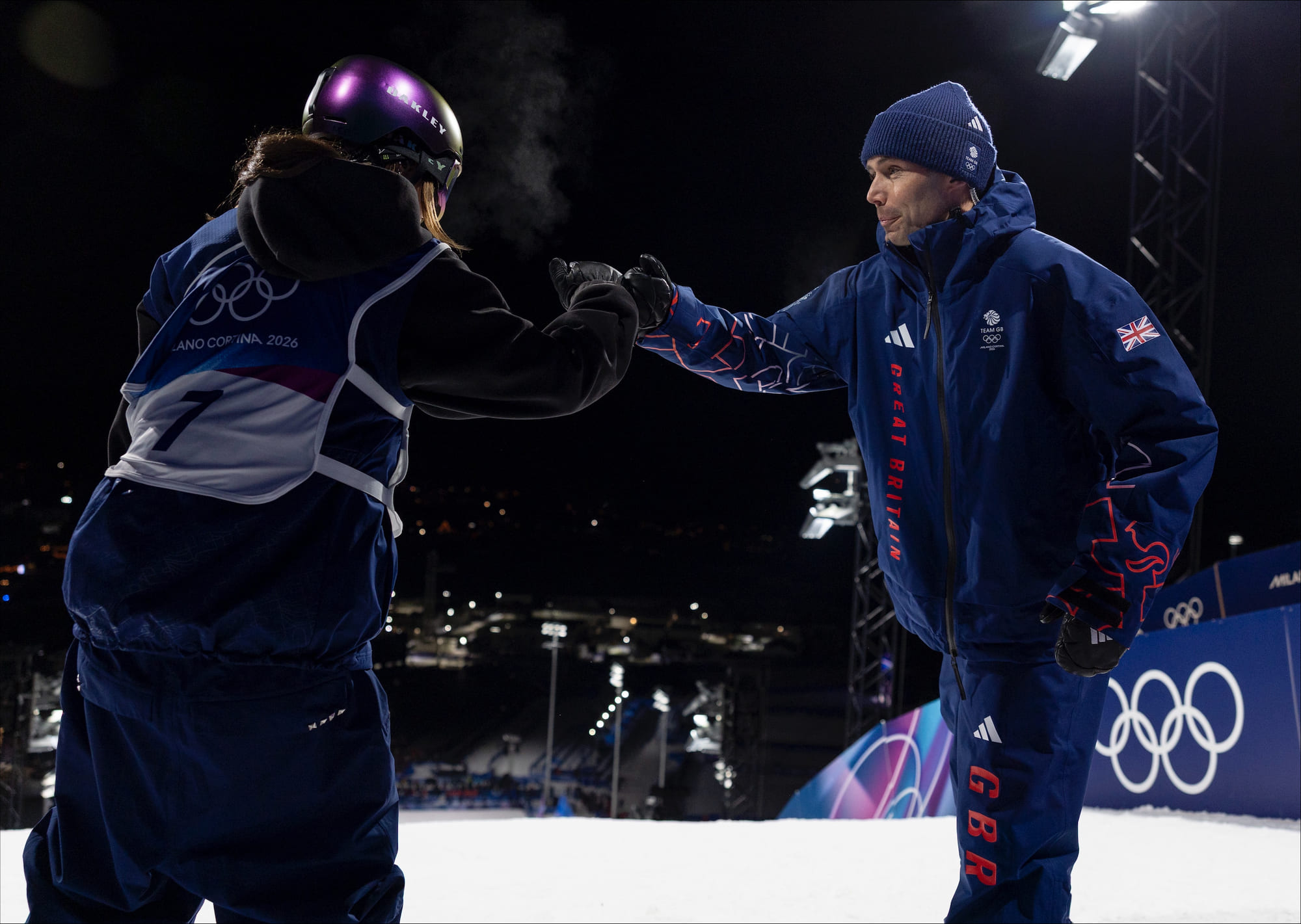
This increased visibility serves a greater purpose: introducing snowboarding to a broader audience. "It also seems like a lot of people are like, ‘holy crap, snowboarding looks so fun, I want to give it a whirl’ or, you know, the neighbors’ children want to give it a shot," Kinnear observes. This newfound enthusiasm for the sport among casual viewers is a significant positive outcome of the Olympic platform, inspiring a new generation of participants.
Beyond the competitive aspect, the Olympics also powerfully showcase the unique culture of snowboarding. The Big Air final, while a display of astounding progression, also highlighted the deep mutual respect among riders. Athletes regularly congratulate each other, celebrating both success and daring attempts, regardless of the outcome. Kinnear specifically notes Mia hugging competitors who had edged her off the podium and Anna Gasser’s gracious congratulations to her rivals. This camaraderie is a hallmark of competitive snowboarding, setting it apart from many other sports.
The emotional intensity of the event extended to everyone involved, including the coaches. "What took me by surprise is how emotional it felt after that event for everyone involved—including all of us coaches at the top," Kinnear shares. Descending from the start gate, irrespective of their athlete’s final standing, there was a palpable sense of shared respect. This collective emotion stemmed from a profound understanding of the immense time, energy, and personal sacrifices made by all — athletes, coaches, and support staff alike — being away from friends and family for extended periods. To culminate these efforts in such a spectacular display, demonstrating the true spirit of the sport to a global audience, generated a level of emotion that genuinely surprised Kinnear, confirming that the demanding journey was indeed worthwhile.
The Big Air Final: A High-Stakes Strategic Showdown
The women’s Big Air final was a historic event, showcasing an unprecedented level of progression in women’s snowboarding. The path to this final, however, was not without its challenges for Mia. Kinnear recalls a rare misstep during the qualifiers. "Yeah, that’s quite rare for Mia," he notes, referring to her fall on the first jump. This unexpected setback, however, proved to be a catalyst, forcing Mia into an "ultra-focused, land at all costs" mindset for her second jump, which she successfully executed. This early pressure served as valuable preparation for the even higher stakes of the final, demonstrating her steely resolve.
Leading into the final, strategic discussions were crucial. The team had considered various scenarios, knowing that a combination of a very well-executed 1260 and a 1440 might be enough for a podium finish, but much depended on the performances of other competitors. The dynamic nature of the competition quickly altered these calculations. As soon as South Korea’s Suenguen Yu landed both her runs with exceptional skill, dropping before Mia, Kinnear realized the game had changed. "I knew those tricks were only gonna maybe scrape a podium because of the level. I was like ‘right, this is on now, you’re gonna need everything.’"
A pivotal moment occurred between Mia’s second and third runs. As she was called away for a "fluoro test" — a process where the snowboard is scanned for illegal fluorinated waxes, a regulation implemented to ensure fair play and environmental sustainability — precious minutes ticked by. Though the test itself is brief, the delay meant Mia and Ben had only a few minutes to confer at the top of the elevator leading to the drop-in. Mia initially suggested a "Cab 14 clean up," aiming to improve her score on a trick she had already landed. However, Kinnear had to deliver a swift, unvarnished assessment of the situation. "Like look, Koko [Murase] is probably going to land the Cab 14 cleaner," he informed her. "If Koko fell in the last run, you might just scrape a bronze. But it’s going to be a tight one. You do a 16 and it’s probably a 92, or 93. And at that point that was going to be first place." The choice was clear: play it safe for a slim chance at bronze, or go for an unprecedented trick with the potential for gold.
The Audacity of the 1620: Analysis and Implications
The decision to attempt a backside 1620 in the Olympic final was nothing short of audacious. Mia had never landed the trick on snow before, only on an airbag. They had discussed attempting it during training earlier in the week, but the timing never felt right. Kinnear later found humor in the situation: "I laughed, because she didn’t want to try it earlier in front of maybe 10 people in training, and instead she waited until there’s over a million people watching." This speaks volumes about Mia’s competitive spirit and ability to rise to the occasion. The prevailing atmosphere among the competitors was one of "full send" from the outset, reinforcing the mindset: "if not now, then when do you give it a crack?" Mia, fueled by excitement, managed to calm her heart rate, focus, and commit to the monumental attempt.
The sheer noise of the crowd, a roar of anticipation and excitement, led to a moment of hopeful confusion for Kinnear. "I’ve got a radio in my ear but I remember all I got was static from whoever was at the bottom trying to tell me what happened because there was so much noise," he recounts. His initial hope that she had landed it was quickly dashed when he saw GB Snowsport Ski Coach Pat Sharples with his hands in his head, signaling a fall. For a fleeting 10 to 15 seconds, Kinnear entertained the possibility, only to realize the truth.
Despite the fall, the strategic correctness of the decision was immediately validated. Koko Murase, as predicted, went on to land her final trick cleanly, solidifying her position and confirming that a conservative approach from Mia would not have secured a medal. "I was incredibly proud of her, giving it a crack—honestly, sometimes even I don’t know how she can step up and do that," Kinnear states, reflecting on Mia’s courage. Mia herself harbored no regrets, understanding that she had pushed her limits and attempted an NBD, or "Never Been Done," trick in the most critical moment. This bold move, even without a successful landing, had a profound psychological impact. Kinnear observed a significant boost in Mia’s confidence shortly after the event, making her "pretty hungry for slopestyle," the next discipline on her Olympic schedule. This attempted 1620 not only showcased Mia’s immense talent and bravery but also served as a powerful statement about the progression of women’s snowboarding, inspiring athletes worldwide to push past perceived limits.
The Future of British Snowboarding and Beyond
Ben Kinnear’s role extends beyond coaching Mia Brookes; as Head of GB Snowsport’s Park and Pipe program, he is instrumental in nurturing the next generation of British snowboarders. Mia’s remarkable performances and fearless approach on the Olympic stage serve as a powerful beacon, inspiring young athletes across the UK to pursue their dreams in snow sports. Her ability to consistently land high-level tricks, combined with her artistic flair and willingness to innovate, sets a new benchmark for aspiring riders.
The broader implications of Mia Brookes’ Olympic journey, guided by Kinnear, are significant for British snowboarding. Her visibility at the Games, coupled with the dramatic narrative of her 1620 attempt, undoubtedly raises the profile of the sport in a country not traditionally associated with winter sports prowess. This increased attention can translate into greater participation at grassroots levels, more funding opportunities, and ultimately, a stronger talent pipeline for GB Snowsport. The "holy crap, snowboarding looks so fun" reaction from the public, as observed by Kinnear, is precisely what is needed to expand the sport’s reach.
Looking ahead, Mia Brookes remains a formidable force. Her newfound confidence and hunger for slopestyle, a discipline where she has already demonstrated exceptional skill, suggest that her Olympic narrative is far from over. With Ben Kinnear’s continued guidance, her trajectory points towards further innovation and potentially more groundbreaking performances. The partnership between athlete and coach, built on trust, strategic foresight, and a shared passion for progression, continues to drive the sport forward, challenging boundaries and redefining what is possible on the biggest stages. The story of Mia’s 1620, even unlanded, becomes a legend in itself, a testament to the relentless pursuit of excellence and the enduring spirit of competitive snowboarding.
