
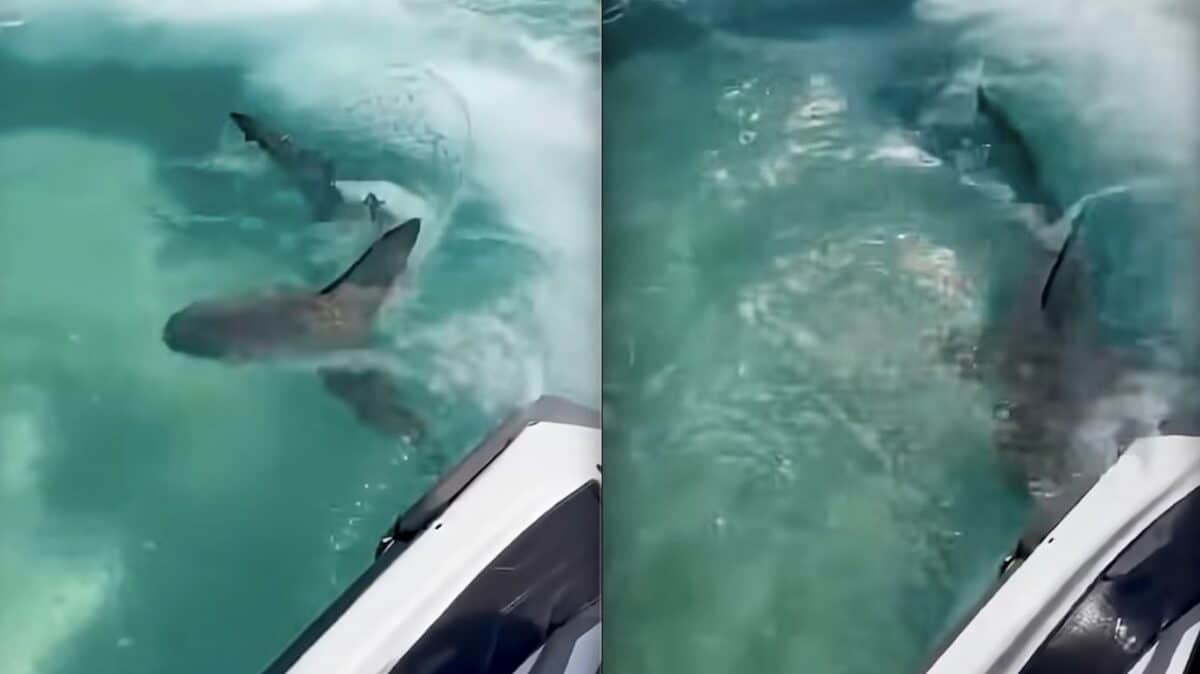
A striking video emerging from the waters off Anna Maria Island, Florida, has captured the attention of marine enthusiasts and the public alike, showcasing an aggressive encounter between a bull shark and a personal watercraft, commonly known as a jet ski. The footage, filmed recently, depicts the large shark repeatedly interacting with the stationary jet ski, an unusual behavior that highlights the complex and often misunderstood nature of these apex predators. While shark attacks on humans remain exceptionally rare, this incident serves as a potent visual reminder of the raw power and unpredictable instincts of marine wildlife.
Background of the Encounter
The precise date and time of the incident are not publicly detailed in the initial reports, however, the location off Anna Maria Island places it within a region known for its vibrant marine ecosystem and recreational boating activities. Anna Maria Island is situated on the west coast of Florida, renowned for its pristine beaches and abundant marine life, including various shark species. Bull sharks (Carcharhinus leucas) are particularly common in these warm, shallow waters, and their presence is a regular feature of the coastal environment.
Bull sharks are distinguished by their stout bodies, broad snouts, and a reputation for aggression, which has cemented their status as one of the shark species most frequently implicated in human encounters. A key factor contributing to their notoriety is their physiological adaptability, allowing them to thrive not only in saltwater but also in brackish and even freshwater environments. This capability enables them to venture far up rivers and into estuaries, expanding their territory and increasing potential interactions with human populations and infrastructure.
Despite their formidable reputation, it is crucial to contextualize the frequency of shark attacks. Globally, documented shark attacks on humans average fewer than 20 fatalities per year. This statistic stands in stark contrast to the millions of sharks, estimated at over 20 million annually, that are lost each year due to the fishing industry. This disparity underscores the significant conservation challenges faced by shark populations worldwide, driven by overfishing, habitat degradation, and finning practices.
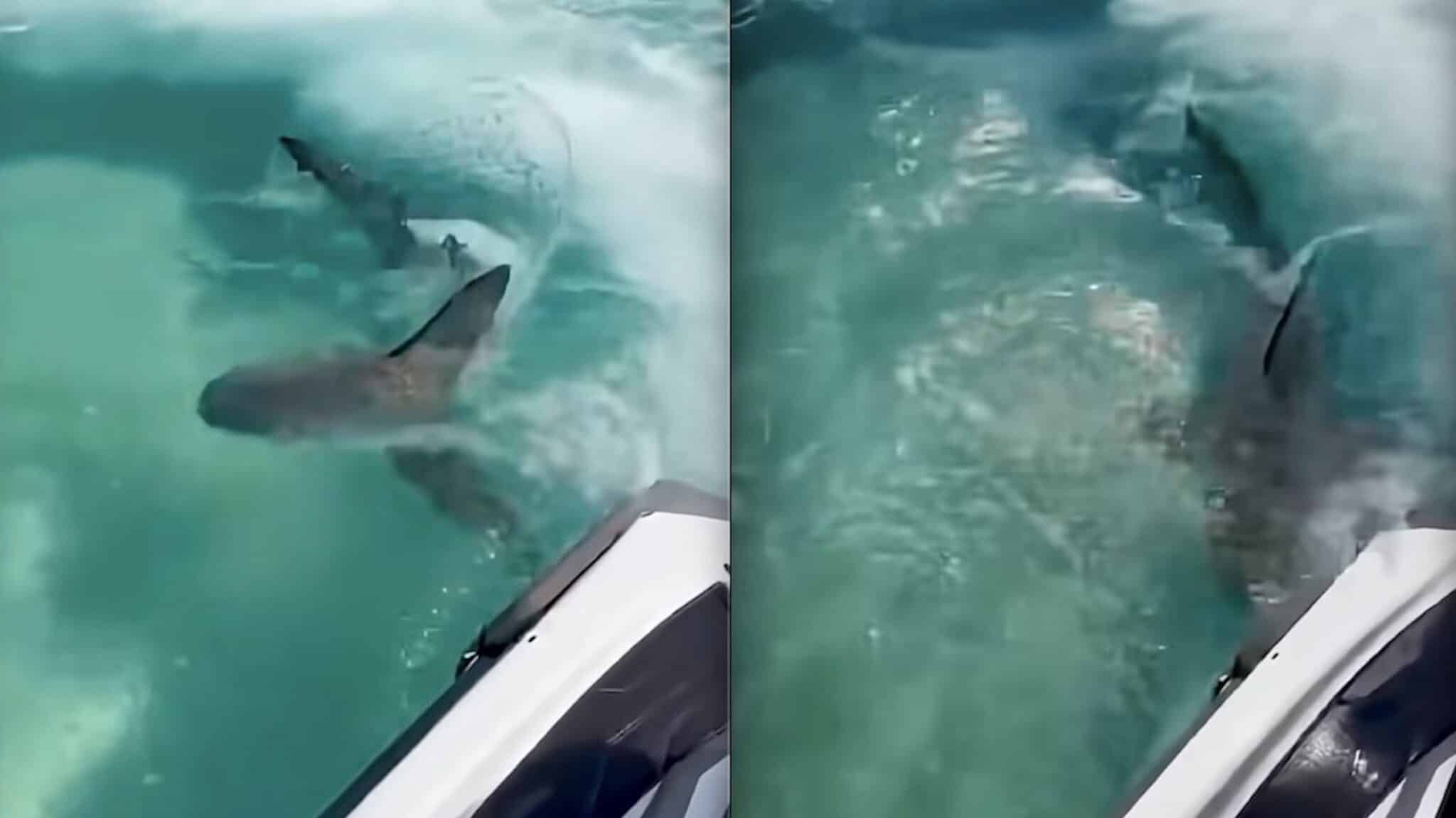
The behavior captured in the video—a shark actively engaging with a jet ski—is indeed noteworthy. Unlike typical predatory behavior directed at live prey, the shark’s focus on the inanimate object raises questions about its motivations. Experts suggest several possibilities for such an interaction, ranging from curiosity and territorial defense to mistaken identity or even a response to the vibrations or sounds emitted by the watercraft.
Analysis of the Shark’s Behavior
The bull shark’s decision to interact with a jet ski, a man-made object significantly larger than its usual prey, is a subject of considerable interest for marine biologists. While direct commentary from the individuals involved or any marine wildlife experts on this specific incident is not yet available, general principles of shark behavior can offer insight.
Possible Motivations for the Interaction:
- Curiosity and Investigation: Sharks, like many animals, possess a natural curiosity. They explore their environment using multiple senses, including sight, smell, and electroreception. A novel object like a jet ski, with its unusual shape, material, and potential vibrations, could have triggered an investigative response. Sharks often investigate objects by bumping or nudging them with their snouts.
- Territorial Defense: In certain circumstances, sharks may perceive unfamiliar objects or activities within their perceived territory as a threat. The jet ski’s presence, especially if it was stationary or moving in a manner that disrupted the shark’s usual environment, could have elicited a defensive reaction.
- Mistaken Identity: While less likely with a jet ski compared to a surfer or swimmer, it is theoretically possible that the shark perceived the watercraft as a potential food source, especially if visibility was poor or the shark was under stress. However, the sustained interaction without immediate consumption suggests this is not the primary driver.
- Response to Stimuli: Jet skis, particularly when idling or moving, can generate vibrations and sounds that might be perceived by sharks. These stimuli could potentially attract or agitate the shark, prompting it to investigate the source.
The video’s depiction of the shark repeatedly approaching and interacting with the jet ski suggests a persistent engagement rather than a fleeting encounter. This sustained interest further supports the theory of investigation or a territorial response.
Broader Implications and Context
This incident, while visually dramatic, should not be interpreted as indicative of an escalating threat to boaters or jet ski operators in the region. It serves as a rare and compelling illustration of a bull shark’s natural behaviors and its capacity for interaction with its environment, which now includes human-made objects.
Conservation Status and Human Impact:
The conservation status of bull sharks, while not globally endangered, faces regional challenges due to human activities. Understanding their behavior, even in unusual circumstances like this, is vital for fostering coexistence between humans and these important marine predators. The vast disparity between shark fatalities and the number of sharks killed by humans emphasizes the critical need for conservation efforts. Incidents like this can sometimes lead to negative perceptions of sharks, potentially hindering conservation initiatives.
Safety in Marine Environments:
For individuals frequenting coastal waters, especially those engaged in water sports like jet skiing, understanding basic safety principles remains paramount. While sharks are generally not aggressive towards humans, respecting their space, avoiding murky waters during dawn or dusk when sharks are more active, and being aware of the surrounding marine environment are prudent measures. The video itself does not provide details about whether the jet ski occupants were present or how they reacted, but it underscores the importance of vigilance.
Scientific Observation:
Footage of such interactions provides valuable data for marine biologists studying shark behavior. Analyzing the duration, intensity, and specific actions of the shark can contribute to a deeper understanding of their behavioral repertoire and the triggers that influence their interactions with the environment. Sharing such videos responsibly, with appropriate context, can also serve an educational purpose, demystifying sharks and promoting respect for marine wildlife.
Conclusion
The bull shark’s interaction with the jet ski off Anna Maria Island is a compelling visual narrative that underscores the wild and untamed nature of our oceans. While the footage is undoubtedly striking, it is essential to view it within the broader context of shark behavior and conservation. Bull sharks, like all wildlife, exhibit complex instincts that can lead to unpredictable encounters. As human activity increasingly intersects with marine habitats, understanding and respecting these apex predators becomes ever more crucial. This incident serves as a potent reminder of the need for continued research, responsible stewardship of marine ecosystems, and a balanced perspective on the relationship between humans and the ocean’s most iconic inhabitants. The rarity of such events, contrasted with the significant threats faced by shark populations globally, highlights the delicate balance of coexistence in shared aquatic spaces.
