
As the global energy landscape undergoes its most significant transformation since the Industrial Revolution, the rapid scaling of renewable energy technologies has been met with a sophisticated and well-funded campaign of opposition. This phenomenon, characterized by a blend of genuine local concerns and strategically manufactured narratives, aims to stall the transition from fossil fuels to clean energy. Across social media platforms, community forums, and legislative hearings, claims regarding the alleged dangers of wind turbines, the inefficiency of solar farms, and the environmental toll of electric vehicles (EVs) have proliferated. However, climate scientists, economists, and energy policy experts warn that much of this rhetoric is the product of a coordinated disinformation effort designed to protect the financial interests of the fossil fuel industry while delaying necessary climate action.
The Strategic Evolution of Climate Obstructionism
The current wave of opposition to renewable energy does not exist in a vacuum; it is the latest iteration of a decades-long effort to maintain the dominance of carbon-intensive energy sources. In the late 20th century, the primary tactic of obstruction was climate denial—the outright rejection of the scientific consensus that human activity causes global warming. As the physical evidence of climate change became undeniable, the strategy shifted toward "climate delayism." This involves acknowledging the problem while arguing that current solutions are too expensive, unreliable, or environmentally damaging in their own right.
According to research from the University of Exeter and other academic institutions, this shift has birthed a new ecosystem of disinformation. Rather than arguing that the planet isn’t warming, bad actors now seed narratives that focus on the perceived aesthetic and ecological flaws of clean energy infrastructure. This strategy leverages "wedge issues," such as the impact of offshore wind on marine life or the land-use requirements of solar arrays, to create friction within local communities and stall project approvals.

Defining the Divide: Misinformation Versus Strategic Disinformation
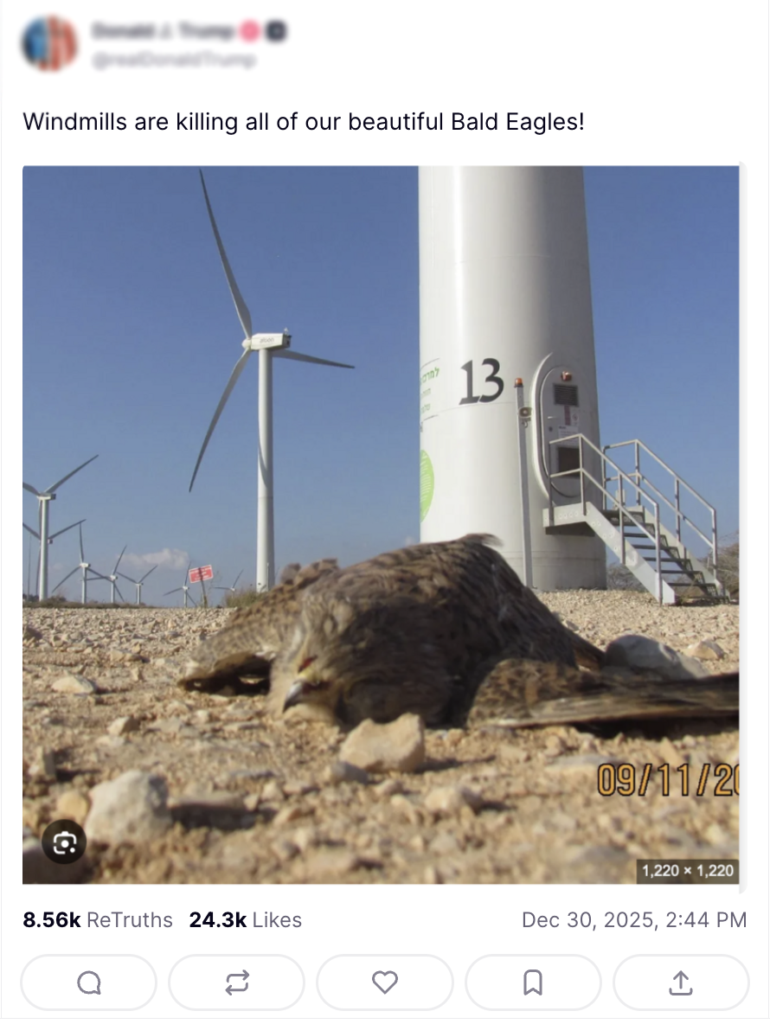
To understand the current information crisis, it is essential to distinguish between misinformation and disinformation. Misinformation refers to the sharing of false or misleading information without a malicious intent to deceive. A common example is a concerned citizen sharing a post about wind turbines harming local bird populations because they believe they are protecting wildlife. While the data may be skewed or taken out of context, the individual’s motivation is often rooted in genuine concern.
Disinformation, conversely, is the intentional creation and dissemination of false or misleading narratives to achieve a specific political or financial objective. Fossil fuel interests and their associated political action committees have historically invested millions of dollars into public relations campaigns that mimic grassroots movements—a practice known as "astroturfing." By seeding specific talking points into the public discourse, these entities can turn localized skepticism into a national movement against renewable energy deployment.
A Chronology of the Energy Narrative Shift
The timeline of energy disinformation reveals a clear pattern of reactive messaging aimed at neutralizing technological breakthroughs:
- 1970s–1980s: Internal documents from major oil companies reveal that their own scientists confirmed the link between fossil fuel combustion and global warming. Despite this, public-facing campaigns focused on scientific uncertainty.
- 1990s–2000s: The emergence of the Global Climate Coalition and other industry-funded groups worked to prevent the United States from joining international climate agreements, such as the Kyoto Protocol, by emphasizing economic catastrophe.
- 2010s: As solar and wind costs plummeted, the narrative shifted to "grid instability." Critics claimed that renewables could never provide "baseload" power, ignoring advancements in battery storage and smart-grid technology.
- 2020s–Present: With the passage of major climate legislation like the U.S. Inflation Reduction Act (IRA), the focus has moved to the "hidden costs" of renewables, specifically targeting mineral extraction for EV batteries and the localized environmental impacts of large-scale infrastructure projects.
Analyzing the Lifecycle Emissions of Electric Vehicles
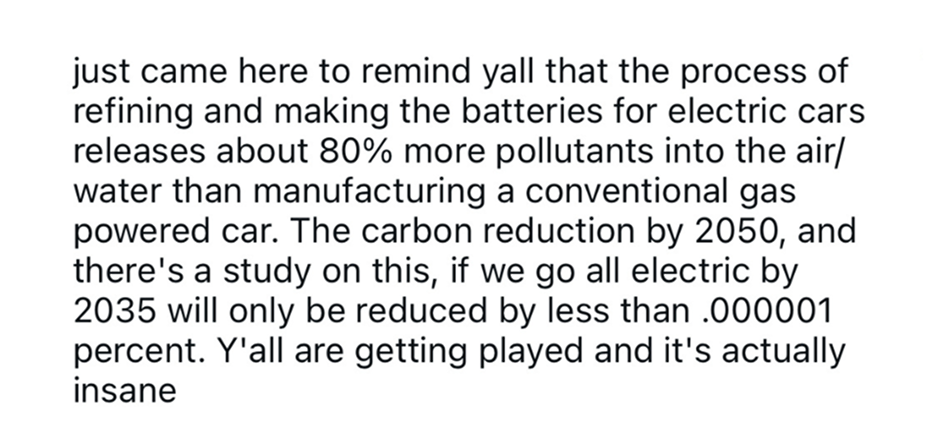
One of the most persistent narratives in the clean energy debate is the claim that the production of electric vehicles is more environmentally damaging than the production and operation of internal combustion engine (ICE) vehicles. This argument typically focuses on the carbon-intensive nature of lithium-ion battery manufacturing and the ecological impact of mining minerals like cobalt and nickel.
However, comprehensive lifecycle assessments (LCAs) provide a different perspective. Researchers at the Massachusetts Institute of Technology (MIT) Energy Initiative have found that while the initial manufacturing phase of an EV may have a higher carbon footprint than a gasoline car, the total lifetime emissions are significantly lower. On average, a gasoline-powered vehicle emits approximately 350 grams of CO2 per mile over its lifetime. In contrast, a fully battery-electric vehicle produces roughly 200 grams per mile. As the power grid becomes cleaner through the addition of more wind and solar energy, the "emissions gap" between EVs and ICE vehicles continues to widen, making EVs the clear choice for long-term decarbonization.
The Ecology of Offshore Wind: Balancing Infrastructure and Conservation
The development of offshore wind farms has become a primary target for disinformation, with critics claiming these projects cause mass mortality among whales and birds. These claims often gain traction following whale strandings, despite federal agencies like the National Oceanic and Atmospheric Administration (NOAA) stating there is no scientific evidence linking offshore wind site preparation to whale deaths.
Journalistic and scientific analysis suggests that climate change itself is the greatest threat to marine ecosystems. Warming oceans shift the migration patterns of prey species, leading marine mammals into busier shipping lanes where they are at higher risk of vessel strikes. While any large-scale infrastructure project—whether it is an offshore wind farm or an offshore oil rig—requires rigorous environmental impact assessments to minimize local disruption, the systemic risk posed by continued fossil fuel extraction is far greater. Oil spills, such as the Deepwater Horizon disaster, have historically caused catastrophic, long-term damage to aquatic habitats that far outweighs the localized footprint of wind turbine foundations.
The Economic Imperative: Cost Realities of the Energy Shift
The narrative that renewable energy is an expensive luxury is increasingly contradicted by market data. According to the International Renewable Energy Agency (IRENA), the cost of solar photovoltaics (PV) has fallen by nearly 90% over the last decade, while the cost of onshore wind has dropped by roughly 70%. In many parts of the world, building new renewable energy capacity is now cheaper than continuing to operate existing coal-fired power plants.
Furthermore, the volatility of global fossil fuel markets—exacerbated by geopolitical conflicts—highlights the economic security offered by domestic renewable energy. Unlike oil and gas, the "fuel" for wind and solar is free once the infrastructure is in place. This allows for more predictable long-term energy pricing, protecting consumers from the price shocks common in the hydrocarbon economy.
Counteracting the "Perfection as the Enemy of Progress" Narrative
A common rhetorical device used in disinformation campaigns is the "straw man" argument, where clean energy is held to a standard of absolute perfection that fossil fuels are never required to meet. For instance, critics point to the environmental impact of lithium mining while ignoring the massive, ongoing ecological destruction caused by mountaintop removal coal mining or fracking-induced seismic activity.
Policy experts argue that the transition must be evaluated based on a "net-benefit" framework. No energy source is without an environmental footprint; however, the goal is to transition to the system that causes the least harm while meeting the needs of a modern society. By focusing on the imperfections of clean energy in isolation, disinformation campaigns attempt to paralyze the transition, effectively choosing the known, greater harm of fossil fuels over the lesser, manageable impacts of renewables.
Strategic Recommendations for Information Literacy and Advocacy
As the disinformation campaign scales alongside the renewable energy rollout, organizations like Protect Our Winters (POW) and other advocacy groups emphasize the importance of media literacy and civic engagement. To counter the spread of misleading narratives, experts suggest the following actions for the public:

- Verification of Sources: Before sharing information regarding energy technology, consumers should verify the credentials of the author and the funding sources of the organization publishing the data. Peer-reviewed journals and government scientific agencies remain the gold standard for accurate information.
- Understanding Logical Fallacies: Recognizing "red herrings" (distractions) and "false analogies" is crucial. When a critic compares the localized impact of a solar farm to the global impact of climate change, they are often employing a false equivalence.
- Support for Transparent Policy: Advocating for transparency in political lobbying and campaign finance can help expose the "dark money" that often funds disinformation campaigns.
- Local Engagement: Participating in municipal planning meetings allows residents to voice legitimate concerns about infrastructure projects while ensuring that the conversation remains grounded in facts rather than fear-based rhetoric.
The transition to a clean energy economy is not merely a technical challenge but a social and informational one. By dismantling the coordinated disinformation campaigns funded by legacy energy interests, society can move toward a more sustainable and economically resilient future. The path forward requires a commitment to scientific integrity and a recognition that while the transition is complex, the cost of inaction remains the greatest threat of all.
