
The men’s Super-G season reaches a critical moment Sunday in Courchevel, France, with the rescheduled final regular-season race poised to determine the World Cup Finals qualifiers and potentially propel Marco Odermatt closer to an unprecedented fourth consecutive crystal globe in the discipline. Originally slated for Saturday, the race was postponed following a significant overnight snowfall, with nearly 50 centimeters blanketing the iconic French resort. This dramatic weather event transformed the Val d’Isère-Courchevel venue, demanding intensive efforts from the organizing committee to clear the piste and ensure safe racing conditions for Sunday’s high-stakes competition. The rescheduling adds an extra layer of anticipation to an already pivotal event, serving as the penultimate Super-G of the 2025-26 Alpine World Cup season.
This comprehensive article provides a deep dive into the Courchevel Super-G, offering the full start list, essential viewing information, in-depth field analysis, current season standings, and a spotlight on the key contenders vying for podium positions and crucial World Cup points. With only two Super-G races remaining – Sunday’s event in Courchevel and the subsequent World Cup Finals – the outcome here will definitively finalize the top-25 athletes eligible for the Finals and critically shape the final pursuit of the discipline title.
Weather Impact and Race Rescheduling in Courchevel
The decision to cancel Saturday’s Super-G was a direct consequence of the substantial snowfall that swept through the French Alps. Accumulations nearing half a meter overnight rendered the "L’Éclipse" course unsafe and unraceable, despite the best efforts of the local organizing committee. Such conditions pose significant challenges, not only in terms of visibility and soft snow but also in maintaining the structural integrity of the race surface. Fresh, deep snow can drastically alter the course, making it unpredictable and increasing the risk of falls and injuries for athletes hitting high speeds. The International Ski and Snowboard Federation (FIS) prioritizes athlete safety, and the call to postpone was made after thorough assessment of the conditions and the feasibility of preparing a fair and firm track.
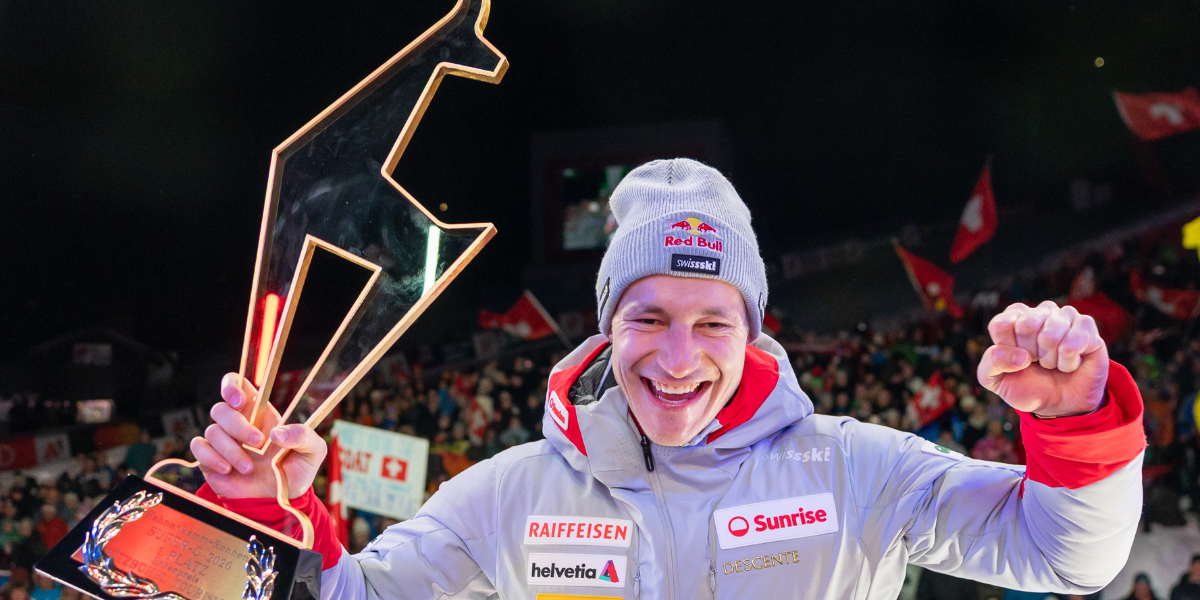
The rescheduling to Sunday necessitated rapid mobilization of course workers and snow groomers to compact the fresh snow, allowing for a firm and consistent surface. While challenging, Courchevel has a reputation for hosting high-caliber events and its teams are experienced in managing adverse weather. The delay, however, means athletes have one less day for mental preparation and course inspection, adding an element of adaptability to an already demanding discipline. For spectators, the anticipation has merely shifted, promising a thrilling contest on what is expected to be a fast, yet potentially still tricky, track.
Marco Odermatt’s Dominance and Crystal Globe Pursuit
At the forefront of the Super-G standings is Switzerland’s Marco Odermatt, who enters the Courchevel race with a commanding 425 points. His lead positions him strongly in the hunt for what would be an extraordinary fourth consecutive Super-G crystal globe. This achievement, if realized, would solidify his place among the sport’s all-time greats in speed disciplines, a testament to his consistent excellence and tactical prowess. Only a handful of male skiers in World Cup history, such as Hermann Maier and Aksel Lund Svindal, have demonstrated such prolonged dominance in a single speed discipline. Odermatt’s consistency across varied Super-G courses—from the icy slopes of Kitzbühel to the technical challenges of Val Gardena—underscores his versatility and mastery.
Odermatt’s momentum is undeniable. Just prior to Courchevel, during Friday’s downhill event, he clinched both the World Cup downhill globe and the prestigious overall World Cup title. These accomplishments highlight his comprehensive supremacy across the men’s circuit, making him the undisputed king of Alpine skiing this season. His ability to perform under pressure, combined with his technical precision and aggressive yet controlled style, makes him the favorite in any speed event he enters. For the Swiss star, Courchevel represents not just another race, but a critical step towards cementing another historic season. A strong performance here could virtually guarantee the Super-G globe, allowing him to approach the World Cup Finals in Kvitfjell, Norway, with reduced pressure in this specific discipline.
The Intense Battle for World Cup Finals Qualification

While Odermatt’s lead seems insurmountable, the battle behind him, particularly for the coveted top-25 spots that qualify for the World Cup Finals, is incredibly tight. The Finals, held at the end of the season, are a prestigious gathering of the best athletes in each discipline, offering higher prize money and significant prestige. For many skiers, qualifying is a season-long goal that can impact future funding and national team selections.
The current Super-G standings show Vincent Kriechmayr (AUT) in second with 267 points, Stefan Babinsky (AUT) in third with 243 points, Raphael Haaser (AUT) in fourth with 241 points, and Giovanni Franzoni (ITA) in fifth with 240 points. These athletes are separated by mere points, meaning Courchevel’s result could dramatically reshuffle their positions. Beyond the top five, the competition intensifies around the 25th-place cutoff. Athletes hovering near this threshold will be under immense pressure to deliver a clean, fast run. A single mistake could mean missing out on the Finals, while a strong finish could secure their spot. This dynamic injects an additional layer of drama and urgency across the entire start list, as every fractional second will count.
Super-G Podium Trends: A Season of Diverse Talent
The 2025-26 Super-G season has, so far, been characterized by a healthy mix of established stars and emerging talents. Through six World Cup Super-G races, there have been five different winners and a remarkable ten different podium finishers representing five nations. This diversity underscores the competitive depth of the discipline, even with Odermatt’s overall dominance.
Men’s World Cup Super-G Podiums – 2025-26 Season (6 of 9 races):

- Copper Mountain (USA): 1st Marco Odermatt (SUI), 2nd Vincent Kriechmayr (AUT), 3rd Raphael Haaser (AUT)
- Beaver Creek (USA): 1st Vincent Kriechmayr (AUT), 2nd Fredrik Möller (NOR), 3rd Raphael Haaser (AUT)
- Val Gardena / Gröden (ITA): 1st Jan Zabystřan (CZE), 2nd Marco Odermatt (SUI), 3rd Giovanni Franzoni (ITA)
- Livigno (ITA): 1st Marco Schwarz (AUT), 2nd Alexis Monney (SUI), 3rd Franjo von Allmen (SUI)
- Wengen (SUI): 1st Giovanni Franzoni (ITA), 2nd Stefan Babinsky (AUT), 3rd Franjo von Allmen (SUI)
- Kitzbühel (AUT): 1st Marco Odermatt (SUI), 2nd Franjo von Allmen (SUI), 3rd Stefan Babinsky (AUT)
(Note: The Olympic Cortina race, while providing context, is not included in World Cup statistics.)
World Cup Super-G Podium Appearances by Country:
- Austria: 6 podiums
- Switzerland: 5 podiums
- Italy: 2 podiums
- Czech Republic: 1 podium
- Norway: 1 podium
This data reveals that Austria and Switzerland continue to field the deepest and most consistent Super-G squads, accounting for the majority of podium finishes. However, the emergence of winners from other nations like the Czech Republic (Jan Zabystřan) and strong showings from Italy and Norway demonstrate the global talent pool. For Courchevel, this trend suggests that while Odermatt remains the top favorite, the fight for the remaining podium spots will be fierce and open to several well-performing athletes.
Field Analysis: Key Contenders and Start Order Dynamics
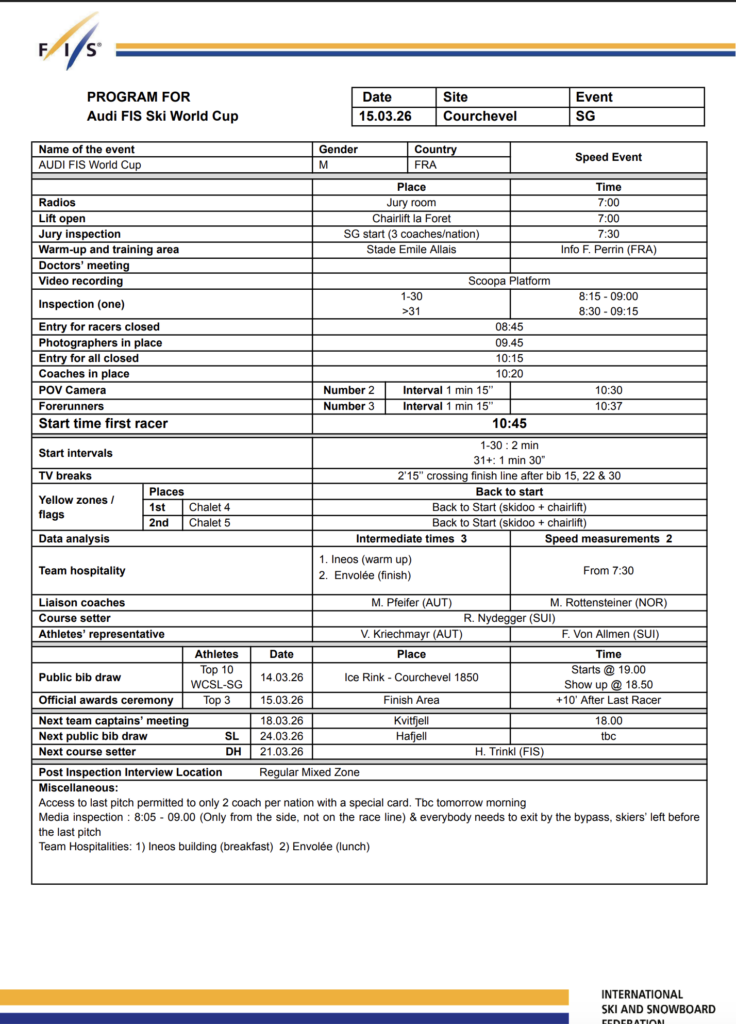
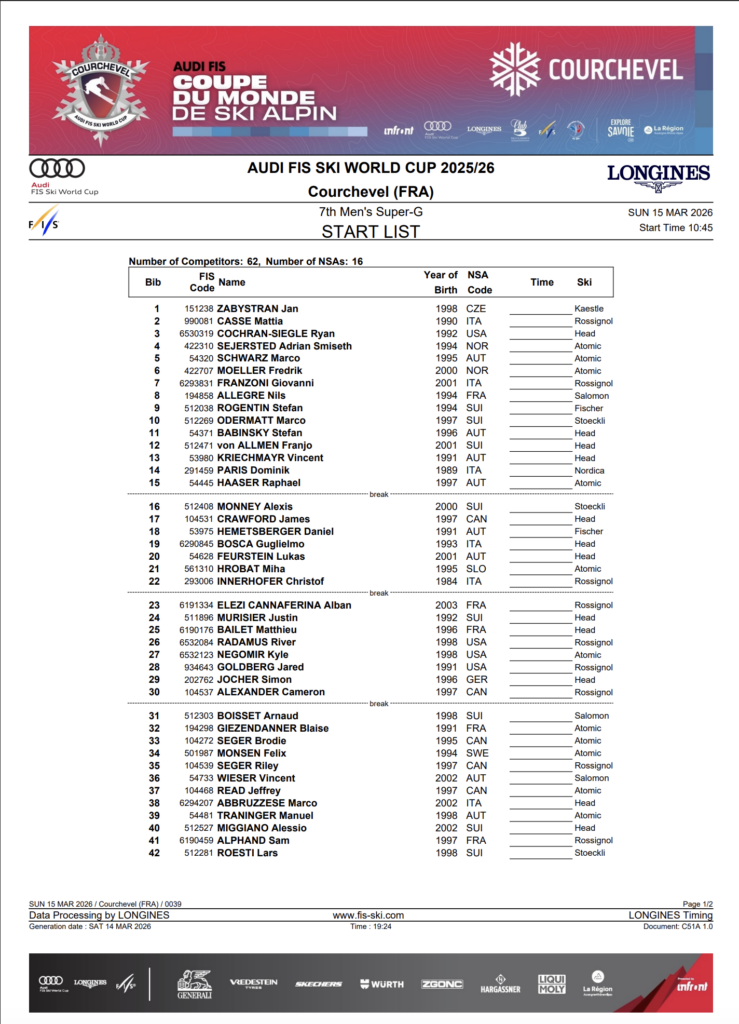
The start list for the Courchevel Super-G offers crucial insights into potential race dynamics. The strongest group of contenders is notably concentrated between bibs 7 and 15, indicating that the early pace and benchmark times will be set quickly. Historically, early bib numbers in Super-G can be advantageous, as the course surface is often at its freshest and most consistent before being affected by multiple racers. However, in conditions with fresh snow, later bibs might benefit from course reports and a track that has been slightly cleared by preceding skiers.

Top Ten – WCSL Super-G (Start Order Snapshot):
- Bib 7 Giovanni Franzoni (ITA, 2001, Oakley) – WCSL SG 6
- Bib 8 Nils Allegre (FRA, 1994) – WCSL SG 9
- Bib 9 Stefan Rogentin (SUI, 1994) – WCSL SG 5
- Bib 10 Marco Odermatt (SUI, 1997, Stöckli) – WCSL SG 1
- Bib 11 Stefan Babinsky (AUT, 1996, Head) – WCSL SG 7
- Bib 12 Franjo von Allmen (SUI, 2001, Head) – WCSL SG 2
- Bib 13 Vincent Kriechmayr (AUT, 1991, Head) – WCSL SG 3
- Bib 14 Dominik Paris (ITA, 1989, Nordica) – WCSL SG 10
- Bib 15 Raphael Haaser (AUT, 1997, Atomic) – WCSL SG 4
This tight block of early bibs includes most of the season’s established podium threats and the discipline leader, Odermatt. The course setter, Reto Nydegger from Switzerland, is known for setting challenging and technical courses that reward precise and aggressive skiing. Given his nationality, some might infer a course setting that subtly favors the Swiss style, but ultimately, the best skier on the day will prevail. The fast-paced nature of Super-G, with limited training runs, demands quick decision-making and flawless execution, especially on a course recently impacted by heavy snow.
National Team Spotlight
Stifel U.S. Ski Team:
The American contingent arrives in Courchevel with a blend of experience and ambition. Ryan Cochran-Siegle (Bib 3), an Olympic silver medalist, leads the U.S. squad with a favorable early start number. His consistent form this season in Super-G positions him as a strong contender capable of a top result. However, much of the U.S. focus will be on River Radamus (Bib 26). Radamus currently sits just outside the projected top-25 cutoff for the World Cup Finals. This race is his final regular-season opportunity to secure his place in Kvitfjell, Norway. A strong performance is not just about points, but about maintaining his trajectory and standing within the sport. Other U.S. athletes, including Kyle Negomir (Bib 27), Jared Goldberg (Bib 28), Sam Morse (Bib 43), Bryce Bennett (Bib 49), and Erik Arvidsson (Bib 52), will also be aiming for points, with several of them looking to improve their World Cup start positions for the next season. Their collective performance will be crucial for the team’s overall standing and momentum.
Alpine Canada:
Canada continues to field a deep speed squad, spearheaded by James Crawford (Bib 17) and Cameron Alexander (Bib 30). Crawford, a former World Champion in Super-G, is known for his aggressive and fearless skiing, capable of challenging for strong results when conditions align with his style. Alexander has also shown flashes of brilliance this season, demonstrating the potential to break into the top ranks. The team also includes Brodie Seger (Bib 33), Riley Seger (Bib 35), and Jeffrey Read (Bib 37), all of whom contribute to Canada’s robust presence in speed events. Their combined efforts aim to solidify Canada’s position as a formidable force on the World Cup circuit.
GB Snowsport:
Representing Great Britain is Maximilian Laughtland (Bib 61). As a younger athlete, Laughtland’s participation in these high-level World Cup races is primarily focused on gaining invaluable experience, learning from the world’s best, and progressing his career. Every start against such a competitive field contributes significantly to his development in the sport.
The Courchevel Venue: A Race of Renown
Courchevel, nestled in the heart of the French Alps, is a storied venue on the Alpine World Cup circuit. Known for its challenging and often technical courses, it frequently hosts significant races. The "L’Éclipse" piste, specifically designed for speed events, offers a steep and demanding profile that tests skiers’ courage, technical precision, and aerodynamic tucks. The recent snowfall, while posing initial challenges, could also create a softer, grippier surface, potentially favoring skiers with excellent feel for the snow and adaptive technique. The race will be run under the watchful eye of FIS Technical Delegate Jean-Philippe Vulliet (FRA), ensuring adherence to all safety and fairness protocols.
Conclusion: A Consequential Race in the French Alps
Sunday’s Super-G in Courchevel is far more than just another stop on the World Cup calendar. It is a pivotal moment that will not only shape the immediate Super-G standings but also definitively finalize the field for the highly anticipated World Cup Finals. For Marco Odermatt, it represents a golden opportunity to take a commanding step towards his fourth consecutive crystal globe, further solidifying his legendary status. For athletes on the cusp of qualification, it’s a make-or-break scenario where every turn, every hundredth of a second, carries immense weight.
The unpredictable nature of Super-G, combined with the recent weather challenges and the tight clustering of top contenders in the early start numbers, promises a thrilling and potentially dramatic race. Fans can expect a high-octane contest where strategic line choices, aggressive skiing, and mental fortitude will be paramount. As the Alpine skiing world turns its attention to Courchevel, the stage is set for a truly consequential day of speed racing.
Daily Program and Start List Information:
Sunday’s Super-G is scheduled for March 15th, with the race commencing at 5:45 a.m. EDT / 2:45 a.m. PDT. Fans in Great Britain can tune in at 9:45 a.m. GMT. For comprehensive coverage and live streaming options in the USA, audiences can refer to Ski & Snowboard Live. The full daily program and detailed men’s Super-G start list are available through the provided links, offering all necessary information for following this crucial event.
