
The United States energy and environmental landscape has undergone a series of rapid shifts as the Trump administration implements a coordinated strategy to prioritize fossil fuel extraction, scale back renewable energy infrastructure, and reassess the role of federal climate research. In a series of executive actions and departmental orders issued during the mid-winter period, the administration has moved to halt major offshore wind developments, propose a vast expansion of offshore oil and gas leasing, and intervene in the scheduled closure of coal-fired power plants. These moves represent a significant departure from previous federal policies that emphasized a transition toward a decarbonized power grid and the preservation of coastal waters from industrial activity.
The Suspension of Major Offshore Wind Infrastructure
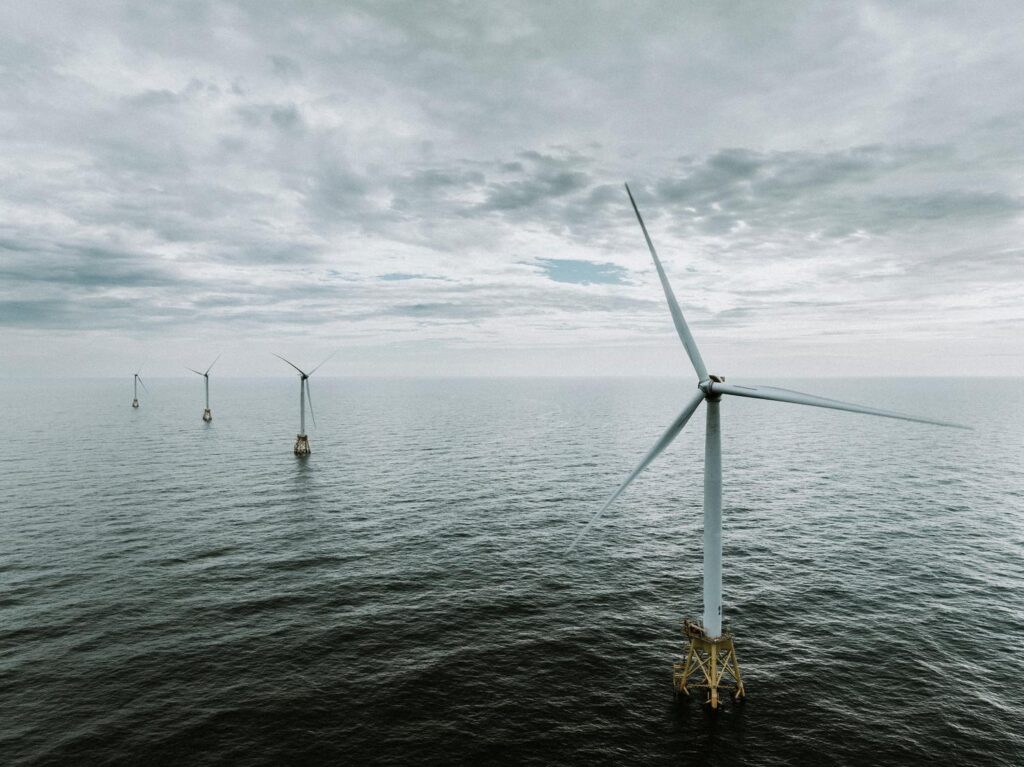
In a move that has sent shockwaves through the renewable energy sector, the Department of the Interior (DOI) has issued orders to halt five major offshore wind projects that had already reached the construction phase. These projects—Vineyard Wind, Revolution Wind, Coastal Virginia Offshore Wind, Sunrise Wind, and Empire Wind—represent billions of dollars in private and public investment and were slated to provide several gigawatts of clean electricity to the Eastern Seaboard.
The administration cited "national security concerns" as the primary justification for the work stoppage, categorizing the specific nature of these concerns as classified. This invocation of security protocols allows the executive branch to bypass standard judicial review and administrative procedures that typically govern federal permits.
Timeline and Scale of the Affected Projects
The halted projects were at various stages of completion:

- Vineyard Wind (Massachusetts): An 800-megawatt project that had already begun delivering power to the grid.
- Coastal Virginia Offshore Wind (Virginia): A 2.6-gigawatt project led by Dominion Energy, which was set to be the largest in the country.
- Revolution Wind (Rhode Island/Connecticut): A 704-megawatt project aimed at powering over 350,000 homes.
Industry analysts note that these five projects were the vanguard of the U.S. goal to reach 30 gigawatts of offshore wind capacity by 2030. The sudden halt creates significant legal and financial uncertainty for developers. According to data from the American Clean Power Association, the offshore wind pipeline supports more than 50,000 jobs in manufacturing, shipping, and construction. The suspension of these permits risks the immediate termination of contracts and the potential withdrawal of international capital from the U.S. energy market.
Proposed Expansion of Offshore Drilling Across 1.27 Billion Acres
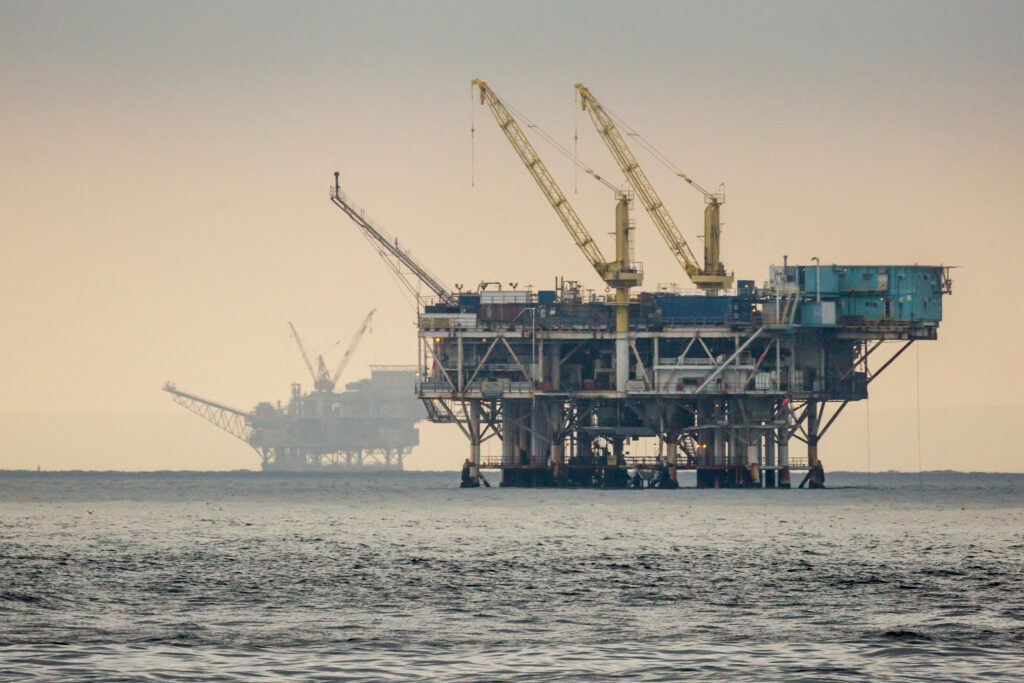
Simultaneously, the administration has released a draft proposal for the National Outer Continental Shelf (OCS) Oil and Gas Leasing Program, which would open nearly all U.S. coastal waters to drilling. The proposal encompasses 1.27 billion acres, including areas in the Atlantic, Pacific, and Arctic Oceans, as well as the Eastern Gulf of Mexico—regions that have been largely protected from leasing for decades.
This proposal seeks to reverse the 2024–2029 Five-Year Plan, which had limited leasing to the fewest number of sales in the program’s history. The new plan argues that maximizing domestic oil and gas production is essential for energy dominance and reducing reliance on foreign energy sources.
Economic and Environmental Context
The proposal has drawn immediate reactions from coastal governors and environmental organizations. Opponents highlight the potential risks to the $190 billion "blue economy," which includes tourism, recreation, and commercial fishing. Data from the National Oceanic and Atmospheric Administration (NOAA) indicates that coastal counties contribute over $9 trillion to the U.S. GDP annually.
The expansion into the Arctic is particularly controversial. The region’s harsh conditions and remote location make spill response extremely difficult. Furthermore, the Arctic is warming at nearly four times the global average, and scientists warn that increased industrial activity could accelerate the loss of permafrost and sea ice, impacting global weather patterns.
The Future of the National Center for Atmospheric Research
The administration has also signaled a potential defunding or total shutdown of the National Center for Atmospheric Research (NCAR). Based in Boulder, Colorado, and managed by the University Corporation for Atmospheric Research (UCAR) under a cooperative agreement with the National Science Foundation (NSF), NCAR is a cornerstone of global climate and weather science.
Scientific Contributions at Risk
NCAR’s mission extends beyond academic research; it provides the fundamental data used for:
- Aviation Safety: Developing turbulence detection and icing forecast systems.
- Wildfire Management: Modeling fire behavior to assist first responders in the Western U.S.
- Agricultural Planning: Long-term drought and precipitation forecasting.
- National Defense: Providing atmospheric modeling used by the Department of Defense for global operations.
The threat to NCAR follows a broader trend of questioning federal climate datasets. If NCAR’s funding is eliminated, the U.S. would lose the Community Earth System Model (CESM), one of the world’s most widely used climate simulation tools. This would essentially blindfold policymakers and private industry regarding future snowpack projections, water availability, and extreme weather risks.
Federal Intervention in Colorado Coal Power
In a rare use of emergency authority, the U.S. Department of Energy (DOE) invoked Section 202(c) of the Federal Power Act to keep the Craig Generating Station Unit 1 in Colorado operational. The nearly 50-year-old coal plant was scheduled for retirement in late 2025, but the DOE order forces the plant to remain online to ensure "grid reliability."
The Conflict Over Grid Reliability
The order was issued despite the fact that Unit 1 was already offline due to significant mechanical failures. Tri-State Generation and Transmission Association, the plant’s operator, had previously determined that repairing the unit was not economically viable. The transition plan for the Craig station was part of a broader state-approved strategy to move toward more cost-effective renewable energy and natural gas.

The DOE’s intervention raises several critical issues:
- Cost to Ratepayers: Forcing an uneconomic plant to run typically results in higher utility bills, as the costs of maintenance and fuel are passed on to consumers.
- Regulatory Overreach: State leaders in Colorado have expressed concern that the federal government is overriding state-level energy planning and utility commission decisions.
- Environmental Impact: Craig Unit 1 is a significant source of carbon dioxide and sulfur dioxide. Prolonging its life delays the reduction of emissions in a region already struggling with ozone levels and shrinking water resources in the Colorado River basin.
Broader Impact and Implications for the 2026 Midterms
The convergence of these policies suggests a systematic effort to lock in fossil fuel infrastructure and dismantle the institutional framework of climate science. These actions are not merely local or industry-specific; they represent a fundamental shift in the American approach to the global energy transition.
Legal and Economic Analysis
Legal experts anticipate a wave of litigation. The suspension of offshore wind permits will likely be challenged under the Administrative Procedure Act, with developers arguing that the "national security" claims lack a factual basis and constitute an "arbitrary and capricious" use of power. Similarly, the offshore drilling proposal must undergo a lengthy public comment period and environmental impact statements, which will be fiercely contested by a coalition of coastal states.
From an economic perspective, the administration’s focus on coal and offshore drilling contrasts with global market trends. The International Energy Agency (IEA) has reported that global investment in clean energy is now significantly outpacing investment in fossil fuels. By pivoting away from offshore wind, the U.S. risks losing its competitive edge in a multi-trillion-dollar global industry to European and Asian markets.
Public and Political Response
Advocacy groups, including Protect Our Winters (POW) and the Surfrider Foundation, are mobilizing to bridge the gap between inland and coastal communities. These organizations argue that the impacts of offshore drilling and coal emissions are interconnected, affecting everything from mountain snowpack to ocean health.
As the 2026 midterm elections approach, energy policy is expected to be a central campaign issue. The administration’s aggressive use of executive power has set the stage for a national debate on the balance between immediate industrial output and long-term environmental stability. Voters will ultimately decide whether to endorse this return to a fossil-fuel-centric economy or demand a resumption of the transition toward renewable energy and science-based policy.
The coming months will be defined by the tension between federal mandates and the resistance from state governments, private industry, and scientific institutions. As the legal battles begin and the economic consequences materialize, the true cost of this policy pivot will become clearer to the American public.
