
As the 2025-2026 European ski season approaches its final weeks, the Gausta resort in Norway’s Telemark region has reported exceptional late-season conditions, characterized by fresh snowfall and a notable lack of the congestion typically found in major Alpine destinations. On March 30, 2026, the resort recorded approximately five centimeters of fresh snow overnight, supplementing an already robust base and ensuring near-perfect piste conditions for visitors. While many resorts in Central Europe grapple with the seasonal transition and the onset of the Easter holiday rush, Gausta remains a sanctuary for those seeking high-quality snow and expansive, uncrowded slopes.
The current meteorological profile for the region indicates a sustained cool period for late March. Local reports confirm a hard freeze overnight, preserving the integrity of the snowpack until the mid-afternoon. On the lower slopes, the snow typically begins to soften only after 2:00 PM, providing a long window of firm, fast skiing conditions. This reliability is a hallmark of the Gausta microclimate; the resort averages over 2.5 meters of snow annually and is frequently the first destination in Norway to open its gates to skiers each winter.
Infrastructure and Technical Specifications of the Gausta Ski Area
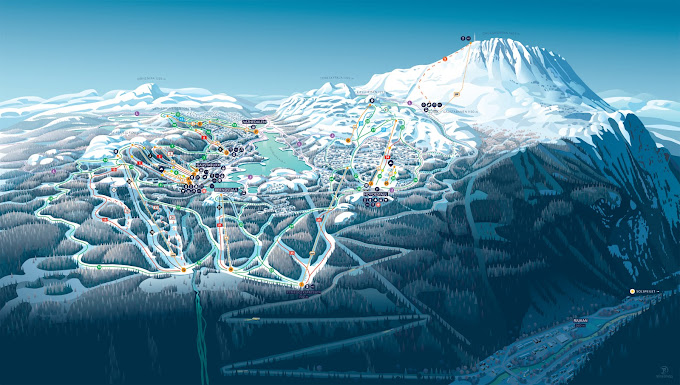
While Gausta is considered a boutique ski area by the standards of the massive interconnected domains in France or Austria, its infrastructure is designed for maximum efficiency. The resort features 35 marked pistes served by a network of 13 lifts. The total length of the marked runs extends to 35 kilometers, but the resort’s layout emphasizes quality and accessibility over sheer volume.
The terrain distribution is strategically weighted toward intermediate and beginning skiers, making it a primary destination for families and those refining their technique. The official grade breakdown is as follows:
- Beginner: 50%
- Intermediate: 40%
- Advanced: 10%
The resort sits at an elevation of approximately 3,150 feet, with a vertical drop of 1,804 feet. This verticality provides ample opportunity for "cruising" on well-manicured pistes, a feature that has become a signature of the Gausta experience. Despite its modest size, the well-thought-out lift system ensures that queue times remain negligible, even during the peak periods leading up to the Easter holidays.
The Gaustatoppen Phenomenon and Technical Engineering
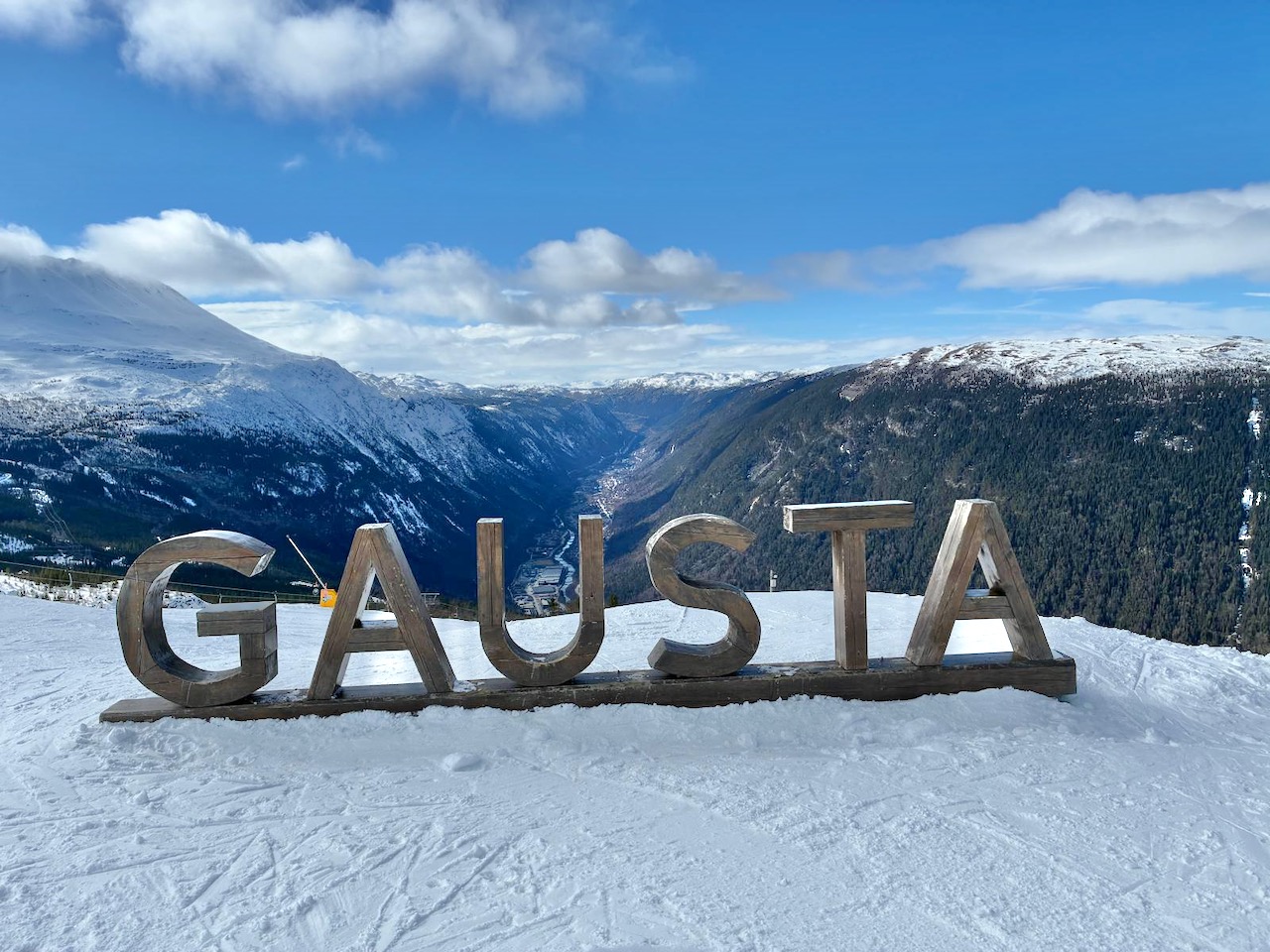
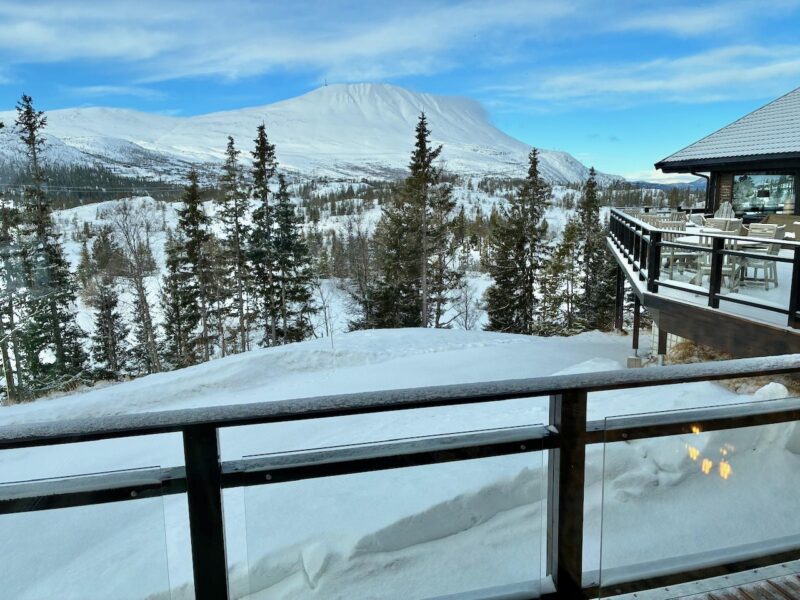
The focal point of the resort is the imposing Gaustatoppen mountain, which towers over the surrounding landscape. Beyond the standard lift-accessed terrain, Gaustatoppen offers one of the most unique off-piste and backcountry experiences in Scandinavia. The mountain is accessed via the Gaustabanen, a unique funicular railway built inside the mountain itself.
The engineering of the Gaustabanen is a marvel of mid-century technical prowess. The journey begins with a battery-powered train that travels 850 meters horizontally into the core of the mountain. From the central station, passengers transfer to a funicular that ascends 1,000 meters at a steep 39-degree angle through a vertical shaft. This transport system allows skiers and sightseers to reach the summit ridge without the need for traditional external chairlifts or gondolas, which would be susceptible to the high winds often found at the peak.
From the top, a marked itinerary allows experienced skiers to descend the mountain’s face. On clear days, the summit offers views that extend across one-sixth of Norway’s total landmass. The combination of industrial engineering and natural topography makes Gaustatoppen a primary attraction for international visitors.
Historical Context: From Cold War Secrets to WWII Sabotage
The region surrounding Gausta is steeped in a complex military and industrial history that informs much of its current identity. The Gaustabanen funicular was not originally intended for tourism; it was constructed as a top-secret military installation during the Cold War. The facility served as a high-altitude listening post, designed to monitor communications and provide early warnings regarding Soviet activity. Its existence remained largely shielded from the public eye for decades before it was decommissioned and repurposed for civilian use.
The historical significance of the area extends further back to the Second World War. Gausta sits adjacent to the Vemork hydroelectric power plant, a site of immense strategic importance during the German occupation of Norway. Vemork was the first facility in the world to produce significant quantities of heavy water (deuterium oxide), a key component in the Nazi efforts to develop nuclear weapons.
The story of the sabotage of the Vemork plant is one of the most celebrated chapters of the Norwegian resistance. In 1943, a team of Norwegian commandos, trained by the British Special Operations Executive (SOE), executed "Operation Gunnerside." The team successfully infiltrated the heavily guarded plant and destroyed the heavy water production cells. This act of daring sabotage is credited with significantly delaying, and ultimately thwarting, the German nuclear program.
Cultural Legacy and the "Heroes of Telemark"
The dramatic events of the 1943 sabotage were immortalized in the 1965 film The Heroes of Telemark, starring Kirk Douglas and Richard Harris. The production of the film created a lasting bond between the Hollywood elite and the local community. Olav Svartdal, the founder of the Gausta Ski Resort and a pioneer in the Norwegian ski industry, served as the stunt double for Kirk Douglas in all of the film’s high-stakes skiing sequences.
The financial proceeds and international visibility generated by Svartdal’s involvement in the film provided the capital necessary to establish the resort’s foundational infrastructure. This includes the construction of the resort’s primary hotel, which has remained a cornerstone of the local economy. In 2022, the hotel underwent an extensive refurbishment, modernizing its facilities to meet contemporary luxury standards while preserving the heritage of the Svartdal era.
Regional Connectivity and Tourism Logistics
Gausta’s appeal is bolstered by its accessibility relative to other Scandinavian highland destinations. The resort is located approximately 180 kilometers from Oslo, with a transfer time of roughly 3.5 hours. Travelers can utilize a variety of transport methods, including private vehicles, dedicated bus services, and the Norwegian rail network.
The proximity to Oslo Airport makes Gausta a viable alternative for international travelers who might otherwise default to the Alps. The ease of logistics, combined with the "Home of Skiing" branding of the Telemark region—widely considered the birthplace of modern skiing techniques—positions Gausta as a premier destination for cultural and sport-oriented tourism.
Implications for the Norwegian Ski Industry
The success of Gausta’s 2026 season highlights a broader trend in the European ski market. As climate change continues to impact the reliability of snow cover in lower-altitude Alpine resorts, the "Snow Guarantee" offered by Norwegian destinations is becoming an increasingly powerful marketing tool.
Industry analysts note that Norway’s late-season stability is drawing a new demographic of skiers who are prioritizing snow quality over the vastness of the terrain. The economic impact of this shift is significant, as it extends the profitable operational window for Norwegian resorts into late April and early May. Furthermore, the integration of UNESCO Industrial Heritage sites like Vemork into the tourism narrative allows resorts like Gausta to offer a multi-dimensional experience that balances sport with education and history.
Future Outlook and Seasonal Conclusion
As the end of the 2025-2026 season approaches, Gausta is well-positioned to maintain its momentum. The combination of fresh late-season snow, a lack of overcrowding, and a rich historical backdrop provides a compelling case for the resort’s continued growth. Operators have indicated that the focus for the coming years will remain on sustainable development, ensuring that the increase in international interest does not compromise the tranquil, "mercifully empty" experience that currently defines the resort.
For the remainder of the week, weather forecasts suggest continued cool temperatures and the potential for further light snow showers. This outlook is ideal for the planned attempts at the Gaustatoppen off-piste itineraries, which require stable snow conditions and clear visibility. As the resort transitions toward the Easter peak, the infrastructure is prepared to handle a modest increase in volume while maintaining the high standard of piste maintenance that has characterized this season.

Gausta stands as a testament to the enduring appeal of the Telemark region. By blending world-class engineering, significant historical weight, and a reliable natural environment, it offers a distinct alternative to the traditional European ski experience. Whether viewed through the lens of a historian, a cinema enthusiast, or a dedicated skier, the resort provides a comprehensive look at the past and future of Norwegian winter sports.
