
Drivers navigating the crucial I-70 mountain corridor in Colorado are advised to brace for continued disruptions as the ambitious Floyd Hill Project advances into a significant new phase: the construction of a major concrete segmental bridge. This development, marking a highly visible milestone in the multi-year undertaking, necessitates a series of overnight closures and potential daytime delays throughout the current week. The Colorado Department of Transportation (CDOT) is implementing these measures to facilitate the erection of temporary support structures essential for the bridge’s construction, aiming to enhance both the safety and capacity of this vital artery.
The immediate impact of this new construction phase is an overnight full closure of eastbound I-70. This closure is scheduled to run again tonight, from 10:00 PM to 4:30 AM, affecting the stretch of highway between the US 6 interchange (Exit 244) and County Road 65 (Exit 248). During this period, traffic will be rerouted via a detour. Vehicles will be directed off I-70 at Exit 244, proceeding onto US 40 eastbound, and will then rejoin I-70 at Exit 248. This detour route is designed to minimize travel time while ensuring the safety of both motorists and construction crews.
A Glimpse into Advanced Bridge Engineering
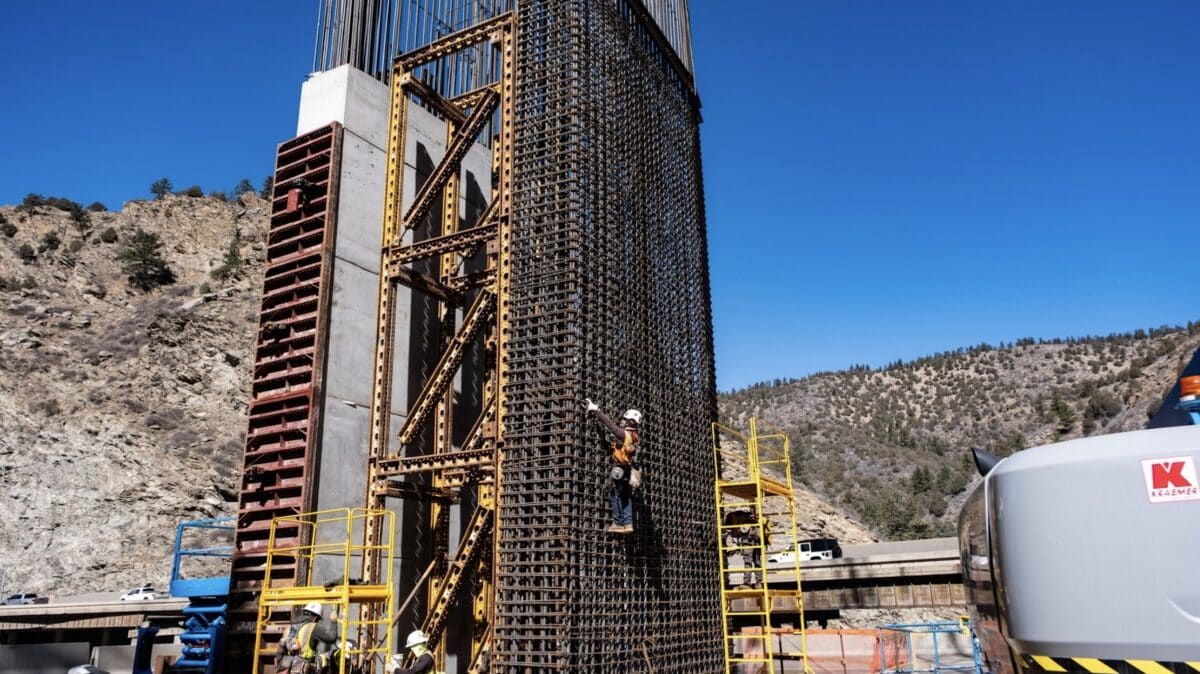
The construction of a concrete segmental bridge represents a sophisticated engineering feat, employing precast concrete segments that are assembled and bonded together to form the bridge structure. This method is often chosen for its efficiency, cost-effectiveness, and ability to span significant distances with minimal environmental impact. The temporary framework system being erected is crucial for supporting these segments during the casting and assembly process, a critical step in realizing the project’s long-term vision for improved infrastructure. This phase underscores the project’s commitment to employing modern construction techniques to address the aging infrastructure and increasing traffic demands on I-70.

Upcoming Westbound Closures and Rock Scaling Operations
Looking ahead, further disruptions are anticipated in mid-to-late April. CDOT has announced a second round of overnight closures, this time targeting the westbound lanes of I-70. These closures will be necessary to allow crews to remove a pier table, a structural component that supports the bridge deck. This removal is a prerequisite for the subsequent stages of the westbound bridge construction, indicating the methodical progression of the project.
In addition to the bridge work, ongoing rock scaling and blasting operations are continuing near Idaho Springs. These operations are concentrated in the area between the Veterans Memorial Tunnels and Homestead Road and are scheduled to take place today through Thursday, between 9:00 AM and 3:00 PM. Unlike the bridge-related closures, there is no designated detour for this section. Motorists should anticipate significant delays, potentially up to 45 minutes, as traffic is held to ensure safety during the blasting and scaling activities. CDOT advises drivers to switch off their engines during these prolonged stops to help mitigate air quality concerns within the tunnel areas.
Daytime Lane Closures and Weather Contingencies
Beyond the overnight work, daytime single-lane closures are also in effect throughout the week in both directions of I-70. These closures are impacting the segment of the highway between Exit 248 and Hidden Valley (Exit 243). They are necessary to accommodate related construction activities and essential utility work that is integral to the overall project scope.
Recognizing the unpredictable nature of mountain weather, CDOT has proactively designated April 7 and 8 as contingency dates for any work that may be postponed due to inclement weather. This foresight ensures that the project remains on track as much as possible, despite potential weather-related setbacks.
Project Background and Long-Term Vision
The Floyd Hill Project, a monumental undertaking by the Colorado Department of Transportation, is fundamentally transforming eight miles of the I-70 mountain corridor. The scope of this ambitious project extends from Evergreen to eastern Idaho Springs, addressing critical infrastructure needs and enhancing traffic flow in one of the state’s most heavily traveled routes. Construction officially commenced in July 2023, and the full completion of the project is not expected until 2029, highlighting the scale and complexity of the improvements being implemented.
The overarching goals of the Floyd Hill Project include widening I-70, improving vertical clearances, enhancing safety features, and constructing a new, more resilient bridge structure. These improvements are designed to accommodate current and future traffic volumes, reduce congestion, and improve travel times for both commercial vehicles and recreational travelers. The project is also aimed at increasing the corridor’s resilience to environmental factors and improving overall driver safety.
CDOT’s Commitment to Information and Safety
The Colorado Department of Transportation emphasizes the importance of real-time information for travelers. Drivers are strongly encouraged to stay informed about the latest project updates and potential traffic impacts. This can be achieved by visiting COtrip.org, the official online resource for road conditions and travel alerts in Colorado, or by subscribing to text alerts. Travelers can receive timely updates on the Floyd Hill Project by texting "floydhill" to 21000. This proactive communication strategy aims to empower drivers to make informed decisions, plan their routes accordingly, and minimize the inconvenience caused by necessary construction activities.
The ongoing work at Floyd Hill is a testament to CDOT’s dedication to modernizing Colorado’s transportation infrastructure, ensuring a safer and more efficient future for the I-70 mountain corridor. While the disruptions are undeniable, the long-term benefits of a significantly improved and expanded roadway are expected to far outweigh the temporary inconveniences. The project’s progression into the bridge construction phase signifies a tangible step towards realizing these critical infrastructure enhancements.
