
The upcoming Norwegian National Ski Championships (NM) part two, scheduled for Lygna this weekend, will see a notable absence of several top-tier cross-country skiing stars, including the reigning World Cup overall champion, Johannes Hösflot Klæbo. This decision comes in the wake of a demanding World Cup season finale in Lake Placid, where Klæbo secured his third overall World Cup crystal globe, alongside victories in the distance and sprint cups.
Klæbo’s withdrawal from the national championships is primarily attributed to a concussion he sustained recently. While he competed successfully in Lake Placid, the cumulative effects of the injury, coupled with the rigors of competition and travel, have prompted his medical team to advise against further racing in the immediate future.
"I was supposed to compete in the NM, but due to the concussion, I have decided to skip it," Klæbo stated in an interview with American broadcaster NBC following the World Cup finals in Lake Placid. This statement confirms the athlete’s decision, highlighting the severity of the injury and the strategic prioritization of his health and recovery.

Medical Justification for Withdrawal
Landslagslege (National Team Doctor) Ove Feragen corroborated Klæbo’s decision, emphasizing the uncertainty surrounding his participation in the Lake Placid World Cup itself due to the head injury. "There was considerable uncertainty before the World Cup in Lake Placid whether Johannes would be medically cleared to travel due to the head injury. The competitions went well, but due to the injury and the total load of competitions and travel, he has been advised to refrain from competing next week," Feragen informed NTB (Norwegian News Agency).
This medical advice underscores a growing awareness within elite sports regarding the long-term implications of concussions and the importance of adequate recovery periods. For an athlete as dominant as Klæbo, who has consistently pushed the boundaries of performance, prioritizing health over immediate competition is a significant, albeit necessary, step.
Klæbo’s Post-Season Engagements in the United States

Instead of returning to Norway for the NM, Klæbo has remained in the United States following the World Cup finale. His itinerary has included extensive media engagements with major international news outlets, further amplifying his global profile. Additionally, Klæbo has been involved in commercial meetings in New York City, signaling a proactive approach to brand building and potential future collaborations.
"There is significant interest from commercial companies, and meetings are being held in that regard. In the coming months, we will see which potential new partners will be added to the portfolio of sponsors. We are also looking at other collaborations, which are not traditional sponsorships," stated his representative, Gimnes, to Nettavisen. This suggests a strategic shift towards diversifying his commercial interests beyond traditional sponsorship deals, potentially exploring avenues such as ambassadorships or joint ventures. The athlete’s presence in New York, a global hub for business and media, points to a deliberate effort to leverage his current success and international recognition.
The Broader Impact of Klæbo’s Absence
Klæbo’s absence from the NM del two is a significant blow to the prestige of the event. As one of the most recognizable figures in cross-country skiing, his participation often draws considerable attention and viewership. His decision highlights the growing trend among elite athletes to carefully manage their schedules, balancing the demands of the World Cup circuit with domestic championships and personal commitments.

The Norwegian National Championships, while a cornerstone of the domestic skiing calendar, are often viewed as a stepping stone or a supplementary event for athletes who have already proven their mettle on the international stage. For many, the primary focus remains on the World Cup, World Championships, and Olympic Games. Klæbo’s situation underscores the complex decision-making process athletes face when prioritizing their physical well-being and long-term career objectives.
Emil Iversen Also Sits Out, Future Uncertain
Klæbo is not the sole prominent athlete opting out of the NM part two. Veteran Norwegian skier Emil Iversen has also confirmed his decision to forgo the championships on Lygna. Following the World Cup finals in Lake Placid, the 34-year-old, who achieved Olympic gold and bronze medals at the Beijing Winter Olympics, declared his season concluded.
Furthermore, Iversen hinted at a potential career crossroads in a post-race interview with Viaplay, suggesting that his participation in the Lake Placid race might have been his last on the World Cup circuit. Speaking to Adresseavisen, Iversen expressed his hope to have a definitive decision regarding his future career by the summer. This sentiment from an athlete of Iversen’s caliber adds another layer of uncertainty to the future landscape of Norwegian men’s cross-country skiing.
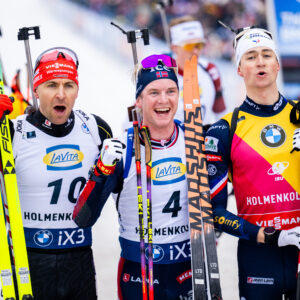
Iversen’s potential retirement or extended break would mark the end of an era for a skier known for his resilience and competitive spirit. His contributions to the Norwegian team have been significant, and his absence from the sport would undoubtedly be felt. The uncertainty surrounding his future mirrors that of other seasoned athletes who are evaluating their commitment to the demanding international circuit.
The Role of Domestic Championships in an Elite Athlete’s Calendar
The decision by Klæbo and Iversen to skip the NM part two raises questions about the role and significance of domestic championships in the modern elite cross-country skiing calendar. While these events provide valuable racing experience and opportunities for national recognition, they also present a logistical and physical challenge for athletes who are already engaged in a demanding international schedule.
For athletes like Klæbo, who have achieved peak performance and secured major titles, the focus often shifts towards maintaining form, recovering from injuries, and engaging in strategic commercial and personal development activities. The NM, in this context, might be perceived as a lower priority compared to the continuous pursuit of World Cup points, major championship titles, or crucial recovery periods.

The timing of the NM part two, immediately following the conclusion of the World Cup season and often coinciding with travel back from international destinations, further complicates the decision-making process. Athletes must weigh the potential benefits of competing domestically against the risks of fatigue, injury, and the need for rest and recuperation.
Background of the Norwegian National Championships
The Norwegian National Ski Championships (NM) are a highly esteemed annual event in the Norwegian cross-country skiing calendar. Traditionally held in two parts, they serve as a crucial platform for skiers of all levels to compete for national titles and gain recognition. The first part of the NM typically focuses on longer distance events, while the second part often includes sprint and mass-start races.
These championships are steeped in history and tradition, representing a significant milestone for aspiring athletes and a testament to the enduring popularity of cross-country skiing in Norway. The Lygna venue, chosen for this year’s NM part two, is a well-established cross-country skiing center known for its challenging terrain and excellent facilities, having hosted numerous national and international events.

However, the increasing globalization of sport and the professionalization of elite athletic careers have introduced new dynamics. The World Cup circuit, with its extensive schedule and lucrative prize money, has become the primary arena for top athletes. Consequently, the prioritization of these international competitions can sometimes lead to the deferral or omission of domestic events, even those as significant as the NM.
Analysis of Implications
The absence of Klæbo and other stars from the NM part two has several implications:
- Reduced Spectacle: The national championships will likely experience a diminished level of public and media attention without the presence of their biggest draw. This could affect viewership figures and sponsorship appeal for the event itself.
- Opportunity for Emerging Talent: Conversely, the absence of established stars creates a valuable opportunity for younger and less experienced athletes to shine. These championships can serve as a crucial stepping stone for emerging talents to gain exposure, earn national recognition, and potentially catch the eye of national team selectors.
- Focus on Athlete Well-being: The decisions made by Klæbo and Iversen underscore a broader trend in elite sports where athlete well-being and long-term career sustainability are gaining increasing importance. This shift reflects a more holistic approach to athletic management, recognizing that consistent peak performance requires careful management of physical and mental health.
- Strategic Career Management: For athletes like Klæbo, the decision to prioritize recovery and commercial engagements over domestic competition is a strategic choice aimed at optimizing their performance and career trajectory. This approach highlights the evolving nature of professional sports, where athletes are increasingly taking a more active role in managing their careers.
- Future of Domestic Championships: The trend of elite athletes skipping national championships may prompt a re-evaluation of their structure and timing. Discussions might arise regarding how to best integrate domestic events into the international calendar to maximize participation and relevance for both elite and developing athletes.
As the cross-country skiing season draws to a close, the focus shifts from the intense competition of the World Cup to strategic planning for the future. The decisions made by prominent athletes like Johannes Hösflot Klæbo and Emil Iversen offer valuable insights into the evolving landscape of elite sports, emphasizing the delicate balance between athletic ambition, physical health, and career longevity. The upcoming NM part two at Lygna, while lacking its usual star power, will undoubtedly provide a platform for new narratives and the emergence of future champions.
