
The frosty relationship between Russian cross-country skiers Saveliy Korostelev and Alexander Bolshunov has reached a new low, with Korostelev explicitly stating he will no longer acknowledge or engage with the celebrated 2022 Olympic champion. This stark declaration comes after a season where Korostelev primarily competed internationally, only recently returning to the Russian Cup circuit two weeks ago, a move that appears to have intensified the existing animosity.
Korostelev, a 22-year-old emerging talent, conveyed his unequivocal stance in a recent interview with news.ru, asserting, "One cannot hide personal qualities behind merits." He emphasized his complete lack of a relationship with Bolshunov, a sentiment echoed in his statements to the Russian state news agency Tass. "I have no relationship with Alexander Bolshunov," the young skier declared, underscoring the depth of his estrangement from the 29-year-old Olympic hero.
Alexander Bolshunov has long been a polarizing figure in the cross-country skiing world, known for his aggressive racing style and a reputation for volatile temperaments. His career has been punctuated by several controversial incidents, including on-course altercations with competitors both domestically and internationally. However, a specific incident earlier in the season has reportedly solidified Korostelev’s negative perception of Bolshunov, pushing their personal ice to an unprecedented level of coldness.
The Infamous Bakurov Incident: A Catalyst for Contempt
The pivotal event that appears to have significantly deepened Korostelev’s disdain for Bolshunov occurred at the beginning of the current season. Bolshunov was suspended for a period following a brutal physical altercation with rival Aleksandr Bakurov. The attack was so severe that Bakurov sustained injuries requiring him to withdraw from the subsequent competition. Crucially, Bolshunov offered no apology for his actions, instead maintaining that Bakurov had obstructed him, thereby justifying his aggressive response. This incident, characterized by a distinct lack of remorse from Bolshunov, drew widespread condemnation, leading to disqualification and suspension from official races.
The incident was not only a disciplinary matter but also a significant blow to Bolshunov’s public image. While his coach, Yuri Borodavko, later attempted to frame Bolshunov’s behavior as merely a consequence of his intense competitive drive – "Bolshunov goes to every race with the goal of winning. For him, it doesn’t matter who he competes against. All he cares about is being stronger than everyone else at the start line. He is just doing his job," Borodavko told Match TV – this explanation did little to assuage critics. The perception of Bolshunov as a sportsman who prioritizes victory above all else, even sportsmanship, became more entrenched.
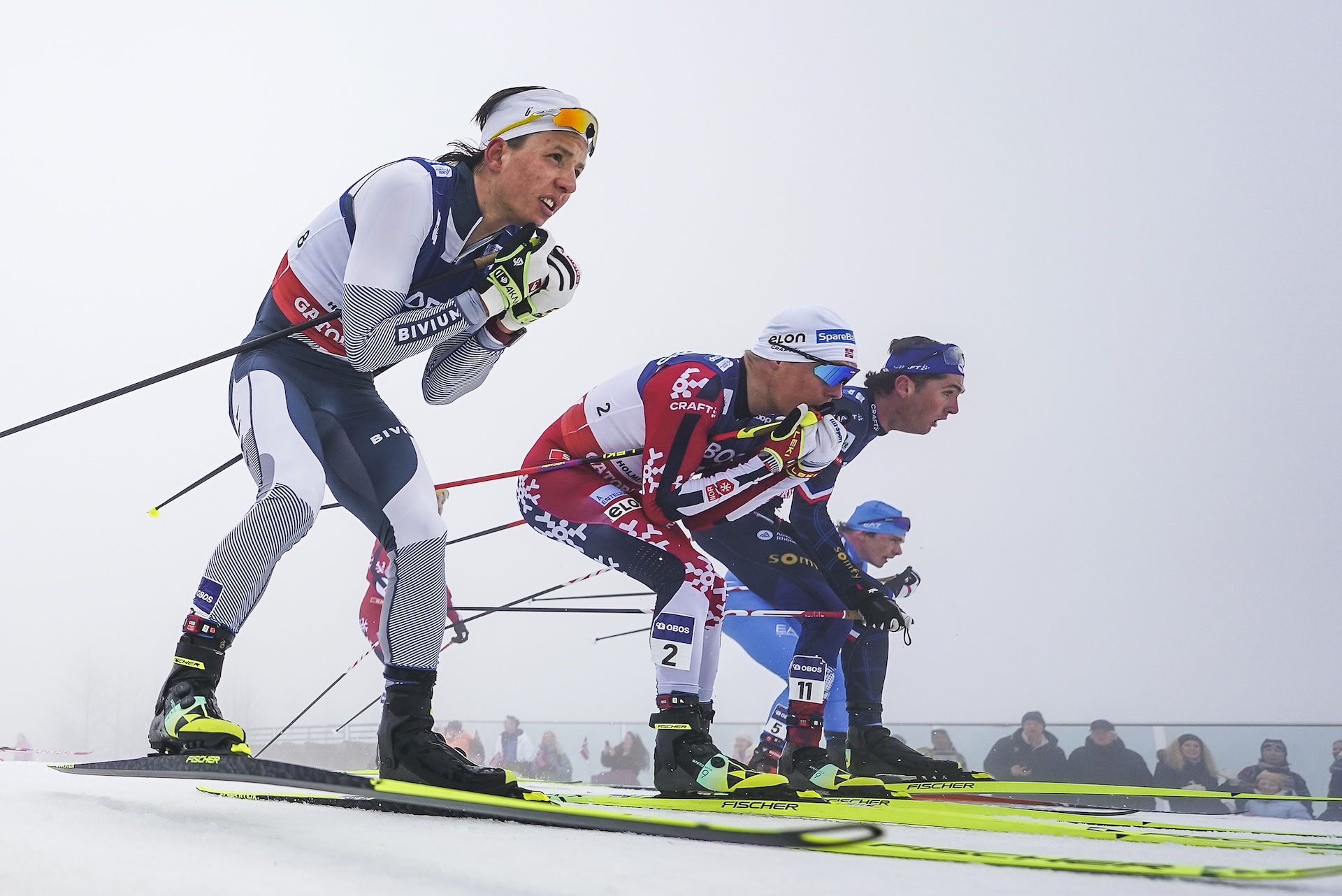
Korostelev articulated that this specific episode served to amplify his existing negative impressions. "In the beginning of the season, my impression of him got even worse, but he wasn’t my idol before that either," Korostelev stated. He further elaborated, acknowledging Bolshunov’s undeniable athletic achievements. "An idol, yes. But he is for many, even for Norwegians. What he has achieved is impressive. But you cannot hide personal qualities behind merits. Therefore, I have no relationship with him." This sentiment highlights a critical distinction Korostelev draws between athletic prowess and personal character, a boundary he believes Bolshunov has repeatedly crossed.
Escalating Rivalry and the Russian Cup Confrontation
The open conflict between the two skiers appears to have intensified towards the latter stages of the season. Korostelev enjoyed a successful international campaign, achieving a fourth and fifth place at the Olympic Games, securing his first World Cup podium, and delivering six other top-10 finishes, including strong performances at the U23 World Championships and an eighth-place overall finish in the Tour de Ski.
Meanwhile, Bolshunov, sidelined from international competitions due to the ban on Russian athletes, focused his efforts on the domestic circuit. He secured four consecutive victories in the final stages of the Russian Cup. Korostelev’s participation in these same Russian Cup events, where he directly competed against Bolshunov, is believed to have further fueled their rivalry. This proximity in competition, after a period of international separation for Korostelev, likely brought the underlying tensions to a head. The direct confrontation on home soil, where Bolshunov’s dominance was on full display, may have served as a stark reminder to Korostelev of the qualities he finds objectionable in the more experienced skier.
The current situation represents a complete frost front between the two. Korostelev’s refusal to even extend a basic greeting speaks volumes about the irreparable damage to their professional relationship. "Do I greet Bolshunov or talk to him? No. His behavior and outbursts? I can understand him as an athlete, but not as a person," Korostelev told Tass. This distinction between athletic performance and personal conduct is central to Korostelev’s refusal to engage, suggesting that while he may respect Bolshunov’s achievements on the track, he fundamentally disapproves of his character off it.
A History of On-Course Confrontations
The animosity between Bolshunov and his competitors is not a recent phenomenon. Even before the widespread ban on Russian athletes due to the conflict in Ukraine in 2022, Bolshunov’s temper had been a recurring feature of international cross-country skiing. Several prominent Norwegian and international stars have experienced his displeasure when races did not go his way.
One of the most infamous incidents occurred during a World Cup relay in 2021. Following the race, Bolshunov physically confronted Finland’s Joni Mäki after the Finn crossed the finish line ahead of the Russian team. The confrontation, captured on video, showed Bolshunov aggressively bumping into Mäki, an act that sparked considerable controversy and further damaged Bolshunov’s reputation.

The 2021 World Championships in Oberstdorf also saw a tense encounter between Bolshunov and Norway’s Johannes Høsflot Klæbo on the course during the 50km freestyle race. While the exact nature of the interaction was debated, it was evident that tensions were high. This incident, coupled with others, contributed to a prevailing sentiment among many international skiers. For instance, Norwegian skier Emil Iversen, reflecting on Bolshunov’s temperament in a previous interview with Langrenn.com, stated, "Bolshunov is not someone I would choose to hang out with in my free time." This sentiment underscores the perception of Bolshunov as a challenging and confrontational personality, making him an undesirable figure for casual social interaction within the skiing community.
It is also worth noting that Bolshunov is not the only Russian skier to have exhibited aggressive behavior. At the 2019 World Championships in Seefeld, Sergey Ustiugov was involved in a physical scuffle with Klæbo after the sprint semi-finals. These incidents collectively paint a picture of a Russian national team that, at times, has struggled with sportsmanship and emotional regulation on the competitive stage.
Broader Implications and the Neutral Status Dilemma
The current situation is further complicated by the broader geopolitical context and the FIS (International Ski Federation) regulations concerning Russian athletes. Korostelev is one of only two Russian cross-country skiers who have been granted neutral status, allowing them to compete in World Cup events. This decision came after the Court of Arbitration for Sport (CAS) mandated that FIS reconsider its blanket ban on Russian athletes. The other skier to receive neutral status is Dariya Nepryaeva, the younger sister of Natalia Terenteva (formerly Nepryaeva).
Conversely, Alexander Bolshunov was denied neutral status, a decision he has reportedly reacted to with considerable anger and frustration. This disparity in opportunities further accentuates the divide within the Russian skiing community and highlights the challenges faced by athletes navigating international sanctions. Bolshunov’s inability to compete on the international stage, while Korostelev can, likely exacerbates any existing personal or professional grievances.
The implications of this ongoing feud extend beyond the personal animosity between two athletes. It reflects a wider tension within the sport, where individual conduct is scrutinized against the backdrop of national sporting policies and international relations. As Korostelev continues his international career under neutral colors, his experiences and statements will undoubtedly be observed closely, particularly in relation to the continued exclusion of prominent figures like Bolshunov. The narrative of Bolshunov as a dominant but controversial figure is likely to persist, with Korostelev’s outright rejection serving as a significant testament to the deeply fractured relationships within the sport’s elite. The question remains whether such personal animosities, fueled by past incidents and current circumstances, will continue to cast a shadow over the competitive spirit and sportsmanship that cross-country skiing strives to embody.
