
Nora Sanness, representing Kjelsås, delivered a dominant performance to win the women’s 30km freestyle at the Norwegian National Championships held at Lygna, securing her family’s second gold medal of the weekend. Her victory followed closely on the heels of her boyfriend, Andreas Fjorden Ree, who had claimed the men’s 10km title the previous day. Sanness’s triumph, achieved through a wire-to-wire lead, underscores a remarkable weekend for the couple and highlights her ascent in the competitive landscape of Norwegian cross-country skiing.
The event, a crucial fixture in the national skiing calendar, drew top athletes from across Norway to the Lygna ski arena, known for its challenging terrain and often demanding weather conditions. The 30km freestyle race, a test of endurance and strategic pacing, is a cornerstone event at the NM, offering significant prestige and a platform for athletes to demonstrate their season-long training and development. The competition was particularly fierce this year, with athletes vying not only for national titles but also for potential selection for upcoming international competitions.

Sanness’s stated motivation for her commanding performance was a desire not to be outdone by her partner. "I couldn’t be worse than my boyfriend!" she remarked, a sentiment that encapsulates the supportive and competitive dynamic within their relationship. This competitive spirit, coupled with her evident form, propelled her to the front of the women’s 30km race from the outset. She maintained a consistent, strong pace throughout the grueling 30-kilometer course, leaving her competitors to chase her shadow.
Kristin Austgulen Fosnæs, another prominent contender, finished in the silver medal position, approximately 10-15 seconds behind Sanness for the majority of the race. Despite her persistent effort, Fosnæs was unable to close the gap. "It was tough at the end, and I didn’t really know how things stood," Fosnæs commented, acknowledging the demanding nature of the race and Sanness’s formidable lead. Ultimately, she finished 16.9 seconds shy of the gold medal, a testament to Sanness’s relentless pacing and unwavering determination.
The battle for the bronze medal was a closely contested affair, primarily between three skiers from the Team Anleggspartner Øst outfit: Karoline Simpson-Larsen, Oline Vestad, and Karoline Grøtting. Olympic champion Simpson-Larsen appeared to have the bronze medal within her grasp for a significant portion of the race. However, a powerful finishing sprint from Oline Vestad ultimately changed the podium complexion. Vestad, who had the advantage of starting behind her two teammates, demonstrated exceptional late-race speed, overtaking both Simpson-Larsen and Grøtting to secure the third spot on the podium.
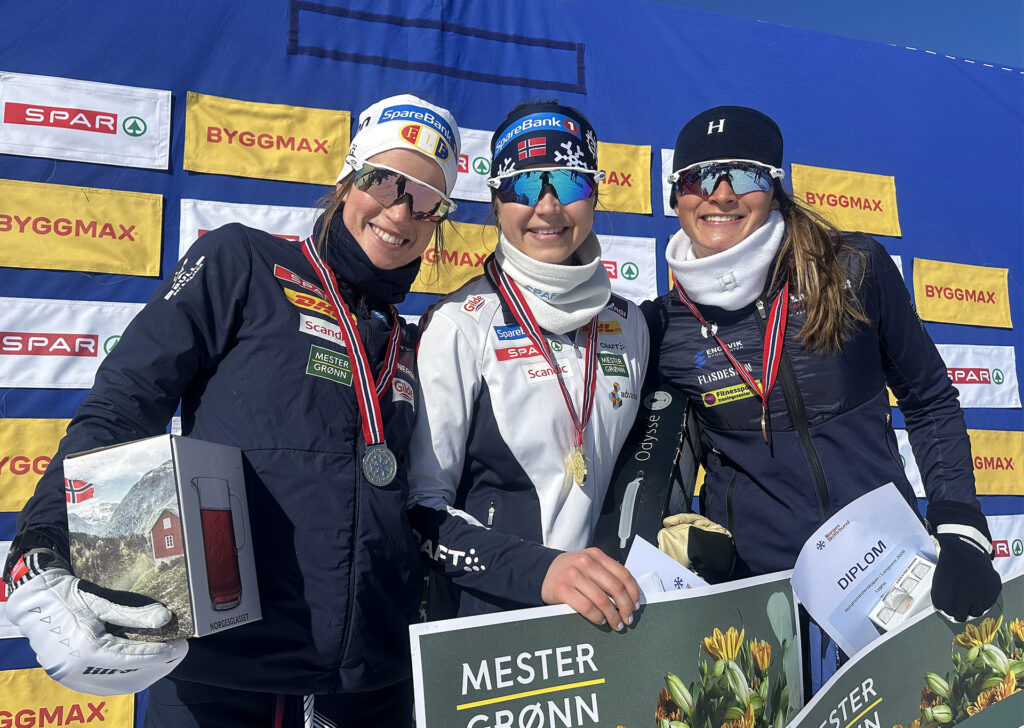
Vestad’s bronze medal performance was a significant achievement for her, marking her first appearance on the NM podium. "I’ve never been on the podium at NM before, so I thought if I give everything, maybe it can happen," Vestad shared, reflecting on her ambition. Having narrowly missed out on a medal at the U23 World Championships, Vestad was clearly motivated to secure a medal at the senior national level. Her surge in the final kilometers was remarkable, as she not only secured bronze but also halved the deficit to Fosnæs, demonstrating her impressive form and tactical execution.
A Weekend of Family Success and Emerging Talent
The success of Nora Sanness and Andreas Fjorden Ree represents more than just individual achievements; it signifies a burgeoning period for the couple in the sport. Their parallel victories at the NM at Lygna amplify the narrative of a shared passion and mutual support driving their competitive endeavors. The NM is a critical event for Norwegian skiers, serving as a key indicator of form and a potential springboard for international selection. The performances at Lygna will undoubtedly be closely scrutinized by national team selectors as the season progresses towards major international championships.
The Lygna venue, nestled in the Øyer municipality of Innlandet county, has a history of hosting significant cross-country skiing events, including World Cup races and previous national championships. Its varied topography, featuring both challenging climbs and technical descents, demands a comprehensive skill set from athletes, including excellent aerobic capacity, muscular endurance, and technical proficiency in classic and freestyle techniques. The 30km distance, in particular, tests an athlete’s ability to manage energy reserves over an extended period, making pacing and strategy paramount.

The women’s 30km freestyle race, being a mass-start event, inherently creates a dynamic and often unpredictable race scenario. Skiers must navigate crowded trails, anticipate moves from competitors, and maintain focus amidst the constant pressure of the pack. Sanness’s ability to lead from the gun and maintain her advantage throughout the entire distance speaks volumes about her confidence and race execution. Her performance suggests a high level of conditioning and mental fortitude, crucial attributes for success in endurance sports.
Under-23 Competition Highlights Emerging Stars
Beyond the senior podium, the U23 (Under-23) category also provided compelling performances. Oline Vestad continued her strong showing by winning the U23 title in the 30km freestyle. She finished ahead of Julie Hammer from Eidsvold Værk, who took silver in the U23 division. Notably, the U23 race also featured participants from biathlon, including Guro Ytterhus from Rennebu, who secured a podium finish.
The presence of biathletes in cross-country ski races is not uncommon, as the disciplines share a strong foundation in aerobic fitness and endurance. However, the specialized techniques and demands of biathlon can sometimes influence their performance in pure cross-country events. Ingrid Landmark Tandrevold, a prominent biathlete, finished seventh in the U23 classification. Another accomplished biathlete, Olympic champion Marte Hjelmeset Kirkeeide, faced a more challenging race, finishing in 29th place, indicating the varying degrees of success biathletes can achieve when competing in a different sport’s discipline.
Tandrevold’s race was notable for her extended period skiing alongside Tiril Udnes Weng, a well-established name in cross-country skiing. Weng ultimately finished sixth in the senior race, showcasing her continued competitiveness at the elite level. The interactions between athletes from different disciplines, such as Tandrevold and Weng, offer insights into the broader athletic community and the transferable skills between sports.
Broader Implications and Future Prospects
The national championships serve as a critical benchmark for athletes aiming for higher honors. Sanness’s commanding victory and her boyfriend’s success will undoubtedly boost their profiles and confidence as they look towards the remainder of the season and potentially the next Olympic cycle. The depth of talent evident in the women’s 30km race, with multiple strong contenders vying for podium spots, underscores the competitive nature of Norwegian cross-country skiing.
The performances of emerging talents like Oline Vestad also signal a healthy pipeline of future stars for the sport. Her determination and strong finish in a highly competitive field suggest that she will be a force to be reckoned with in upcoming seasons. The strategic decisions made by coaches and athletes, particularly in the U23 category, in balancing development with competitive opportunities, will be crucial for nurturing this talent.
The results from Lygna will feed into national team selection processes for World Cup events, World Championships, and potentially the Winter Olympics. Athletes who deliver strong performances at the NM often gain an advantage in the eyes of selectors, particularly if they demonstrate consistency and the ability to perform under pressure. The focus for Sanness and Ree will now shift to maintaining their form and translating their national success onto the international stage.
Analysis of Race Dynamics and Strategic Elements
The 30km freestyle race, particularly in its mass-start format, is a complex strategic challenge. Leading from the start, as Sanness did, carries inherent risks. It requires immense physical conditioning to sustain a high pace for an extended duration while also expending energy to break the wind for competitors behind. However, it also allows the leader to dictate the tempo and potentially demoralize opponents. Sanness’s ability to hold her lead suggests that her pacing was optimal, and she managed her energy reserves effectively.
Kristin Austgulen Fosnæs’s strategy of maintaining close contact with the leader demonstrates a common approach in mass-start races. By staying within striking distance, she aimed to capitalize on any signs of weakness from Sanness or to be in a strong position for a late-race surge. Her inability to close the gap ultimately points to Sanness’s superior pacing or her own limitations on the day.

The battle for bronze, involving multiple teammates from the same team, presents a unique dynamic. While cooperation can be beneficial, it can also lead to internal competition for individual glory. Oline Vestad’s aggressive final sprint, utilizing her starting position advantage, highlights the individualistic nature of racing, even within a team structure. Her success in overtaking her teammates demonstrates her tactical acumen and the effectiveness of her late-race acceleration.
The influence of course conditions cannot be overlooked. Lygna’s terrain, with its ascents and descents, requires skiers to adapt their technique and energy expenditure. Uphill sections demand power and aerobic capacity, while downhill sections test agility and the ability to maintain speed. The consistency of the snow surface and temperature also plays a role in ski preparation and the overall feel of the race. While not explicitly detailed in the initial reports, these factors undoubtedly contributed to the race’s dynamics.
Conclusion
The Norwegian National Championships at Lygna have once again showcased the immense talent and competitive spirit within Norwegian cross-country skiing. Nora Sanness’s impressive victory in the women’s 30km freestyle, mirroring her boyfriend’s success, has cemented her status as a top contender. The performances of Kristin Austgulen Fosnæs and Oline Vestad, securing silver and bronze respectively, highlight the depth of talent in the women’s field. Furthermore, the U23 results and the participation of athletes from other disciplines add further layers of interest to the event. As the season unfolds, the athletes who shone at Lygna will be closely watched, with their performances at this national level serving as a crucial indicator of their potential on the international stage. The narrative of Sanness and Ree’s parallel successes provides an inspiring backdrop to a weekend of elite athletic achievement.
