
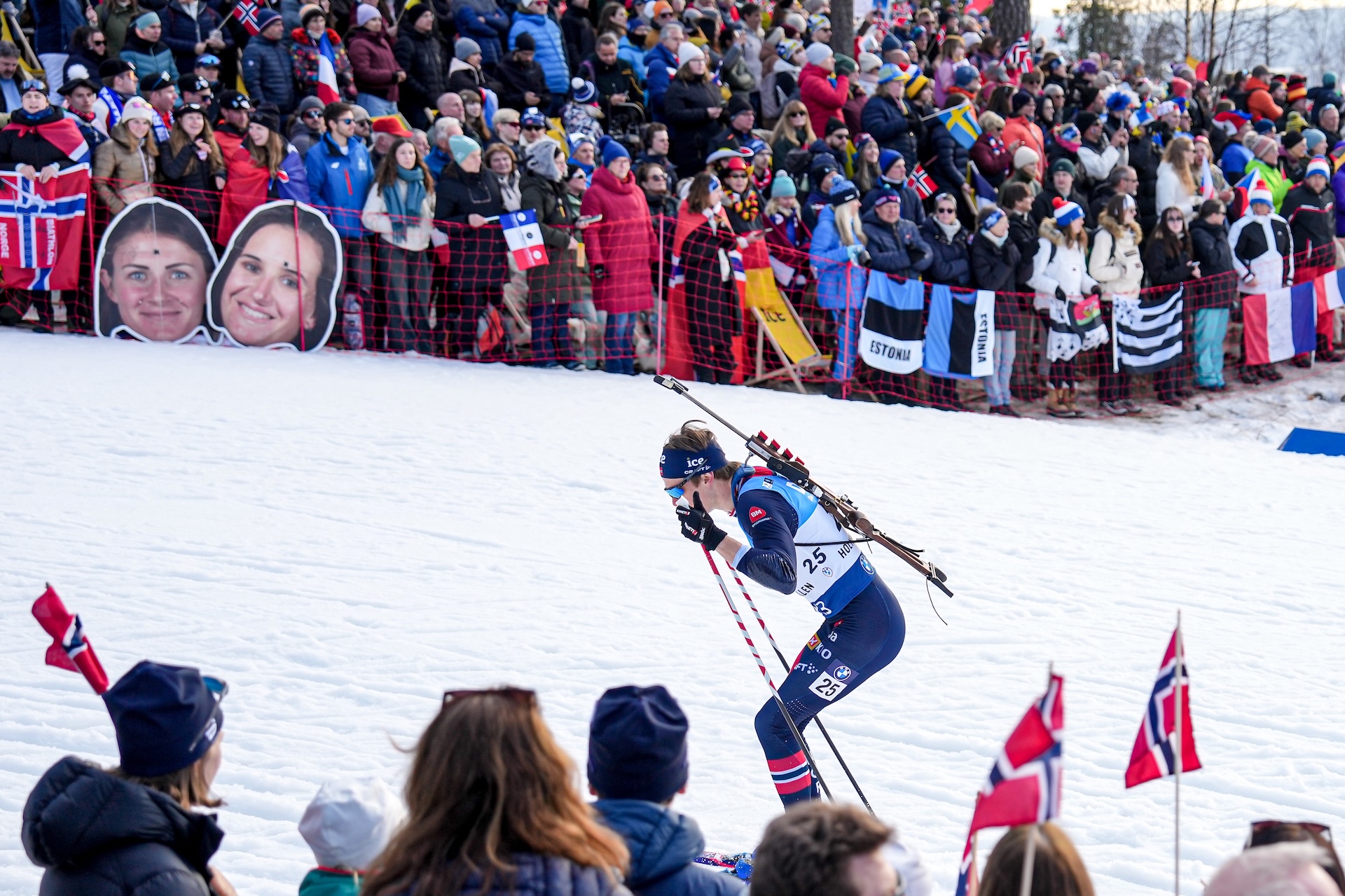
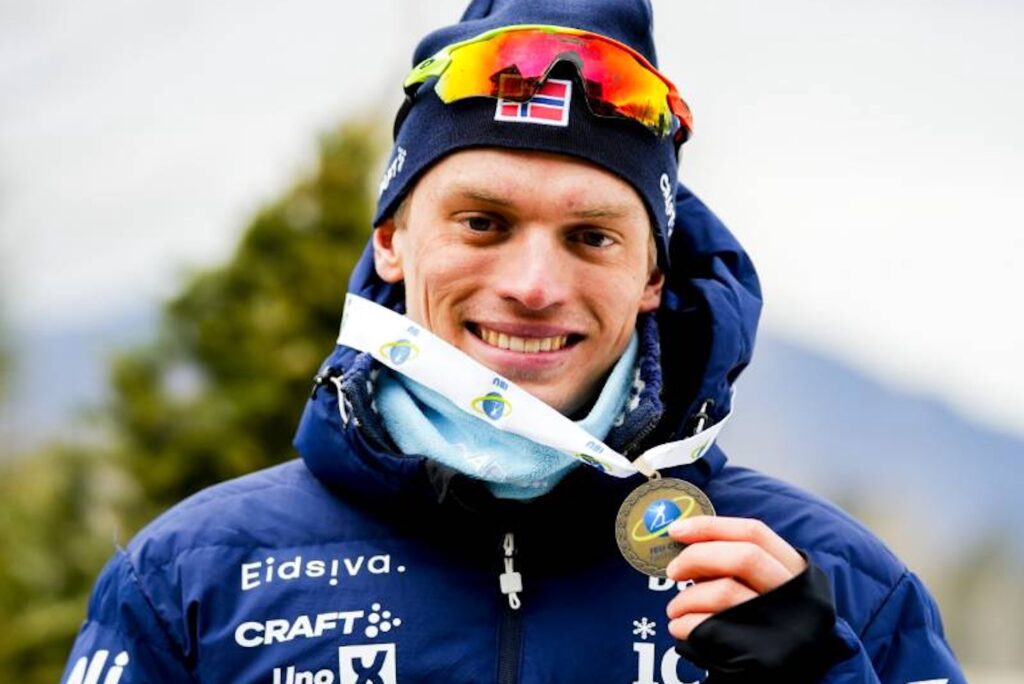
While the roar of the crowd echoes through the World Cup biathlon arenas, 24-year-old Ole Tafjord Suhrke from Tønsberg has experienced a starkly different atmosphere in the world of cross-country skiing. This weekend’s Norwegian National Championships (NM) in biathlon presents his final significant opportunity to showcase his burgeoning talent, a pivotal moment in his pursuit of a national team spot for the upcoming season. The contrast in spectator engagement between the two disciplines has been a notable observation for Suhrke, shaping his perspective on the sport’s appeal.
"In biathlon, there are so many spectators, media, and a general circus atmosphere," Suhrke commented to Langrenn.com. "It’s exciting to see that we’re involved in a sport that can be such a big show and create entertainment for so many people." This sentiment stands in sharp contrast to his experience during a World Cup event in cross-country skiing at Lillehammer last season. "When I competed in the cross-country World Cup in Lillehammer last year, in Norway, which is the world’s premier cross-country nation, there were almost no spectators along the course or at the stadium," Suhrke recalled, reflecting on his debut World Cup appearance in that discipline.
Suhrke, along with Einar Hedegart, who has become a talking point this winter, made waves at the Norgescup opening in cross-country skiing in Gåløy. The duo, both biathletes by primary discipline, managed to outperform the established cross-country elite, a feat that highlighted their raw athletic capabilities and hinted at the potential crossover appeal of their training. This surprising success in a different sport underscored their dedication and physical prowess, even if it was a temporary foray.
NM: A Defining Opportunity
This weekend’s biathlon National Championships in Os are poised to be Suhrke’s last genuine chance to impress selectors and solidify his position. The event is more than just a national title race; it represents a unique convergence of Norway’s top biathlon talent. "The NM is a big event," Suhrke emphasized. "It’s one of the two times a year where all the best Norwegian athletes from the World Cup team, the IBU Cup, and the Norgescup compete against each other." This high-stakes environment provides a crucial benchmark for athletes aiming for higher echelons of the sport.
The significance of the NM cannot be overstated for athletes like Suhrke, who are on the cusp of national team selection. Performance at this event can often be the deciding factor, especially when results are close and other criteria are met. It offers a direct comparison against established national team members and rising stars, providing invaluable data for coaching staff and national selectors.
A Rapid Ascent in the IBU Cup
Suhrke’s recent trajectory has been nothing short of impressive. The 24-year-old, representing the private team Team Havland, experienced a significant breakthrough during the IBU Cup finals in Lake Placid, USA, at the end of February and the beginning of March. This competition marked not only his first international podium finish at the senior level but also saw him achieve podiums in four out of six races. This consistent high-level performance indicates a rapid development and a strong competitive spirit.
Following his strong showing in Lake Placid, Suhrke made a seamless transition to the World Cup, debuting in Holmenkollen two weeks later. He managed to secure a top-25 finish in his debut race, a respectable performance that he himself assessed with a critical eye. "The sprint in Holmenkollen was a good race, but not a top race," he stated. "I shot at my average, and maintained good speed on the course, even though I started late and the conditions deteriorated significantly." This self-awareness of his performance, identifying both strengths and areas for improvement, is a hallmark of a dedicated athlete.
Bridging the Gap to World Cup Podiums
The question of how far Suhrke believes he is from challenging for a World Cup podium is a pertinent one. He acknowledges the significant gap that still exists, particularly in his shooting consistency. "It’s a distance away," he admitted. "And it’s especially about the shooting. All the best athletes ski at approximately the same speed, but the shooting level is very high. In the IBU Cup, you can get away with a few misses on the standing line." This candid assessment highlights the critical importance of precision and mental fortitude under pressure in biathlon, where even a single missed target can have a cascading effect on the final result.
The statistics from the current World Cup season underscore Suhrke’s point. Top biathletes like Sturla Holm Lægreid and World Cup winner Éric Perrot boast shooting percentages in the high 90s, with Lægreid consistently hitting around 94% and Perrot around 90%. In contrast, Suhrke’s shooting percentage at the start of the season hovered between 60-70%. While he has undoubtedly improved, the gap to the very best remains substantial. This data provides concrete evidence of the challenge Suhrke faces and the specific area that requires his most intensive focus.
The Shooting Range: A Critical Bottleneck
Suhrke is acutely aware of the discipline’s demands and where his own performance needs to sharpen. "I have made great physical strides in recent years, but there has been a bit of stagnation on the shooting range, so I need to tackle that now," he confessed. This introspection is vital for his development. While his skiing prowess is evident, the precision required in biathlon shooting is a different skill set that demands dedicated training and mental resilience.
The comparison with the shooting percentages of elite athletes like Lægreid and Perrot serves as a stark reminder of the level required to consistently contend for top positions on the World Cup circuit. Achieving a shooting percentage in the high 80s or low 90s is often a prerequisite for challenging for podiums, especially when competing against athletes who are also strong skiers.
Resisting the Call of the Cross-Country Tracks
Despite his evident speed on skis, which even drew attention from the cross-country community, Suhrke remains steadfast in his commitment to biathlon. When asked if he had considered "taking a Hedegart" and switching to cross-country skiing, a move that Einar Hedegart has made with some success, Suhrke unequivocally stated, "No! I am going to continue with biathlon." This clear declaration of intent demonstrates his passion for the combined sport and his belief in his potential within biathlon.
The fact that he was even posed this question speaks volumes about his skiing capabilities. However, his dedication to biathlon, a sport that demands a unique blend of endurance, strength, and precision, shows his strategic focus. The allure of the spectator-heavy biathlon circuit, which he previously mentioned, likely plays a role in this decision, offering a more dynamic and visible platform for his athletic career.
The Road to the National Team
Suhrke’s immediate goal is to secure a place on the national team for the upcoming season. He hopes that his performance at the NM in Os will be the deciding factor, although he acknowledges that national team selection is a complex process. "I hope for it, even though I believe most of those spots are already decided, and it’s not just results that play a role in national team selection," he said. "But if it’s very close, then the NM could perhaps tip you in." This pragmatic view suggests an understanding of the broader selection criteria, which often include potential, consistency, and overall contribution to the team’s goals, beyond just a single event’s outcome.
The NM program offers a comprehensive test of an athlete’s abilities. The sprint race on Friday will test raw speed and shooting accuracy over a shorter distance. Saturday’s mass start will demand endurance, strategic racing, and sustained focus under pressure, as athletes navigate a crowded field. Finally, the relay on Sunday is a testament to team cohesion and consistent performance, where every leg counts.
Einar Hedegart’s Cross-Discipline Pursuit
Adding another layer of intrigue to the NM is the participation of Einar Hedegart. Having transitioned from biathlon to cross-country skiing prior to this season, Hedegart is also registered for the NM, with his sights set on securing a place on the national biathlon team for the upcoming season. This situation highlights the fluid nature of elite winter sports and the competitive drive of athletes who are willing to explore different paths to achieve their goals. Hedegart’s return to the biathlon arena, even as a participant in the NM, suggests a strategic calculation, perhaps aiming to demonstrate his continued relevance or to prove a point about his decision to switch disciplines.
The possibility of athletes switching between these closely related disciplines, and then potentially returning or vying for spots in both, underscores the high level of athleticism required in Nordic sports. It also raises questions about the strategic decisions athletes make and the potential benefits of cross-training.
Broader Implications and Future Prospects
The NM at Os serves as a critical platform not only for athletes like Suhrke and Hedegart but also for the future of Norwegian biathlon. The event showcases the depth of talent within the country, which has consistently been a powerhouse in the sport. The performances at the NM will inform national team selections for the next season, influencing the country’s competitiveness on the international stage.
The contrast between the vibrant atmosphere of biathlon and the often more subdued events in cross-country skiing, as highlighted by Suhrke, is a recurring theme in discussions about sports popularity and media coverage. Biathlon’s combination of skiing and shooting has an inherent drama that often captivates a wider audience, contributing to its greater commercial appeal and larger spectator base.
For Suhrke, the NM represents a crucial juncture. A strong performance could solidify his place on the national team, providing him with the resources and opportunities to further refine his skills and challenge for World Cup success. Failure to impress could mean another season in the IBU Cup, requiring him to continue his development with less direct support. The pressure is undoubtedly high, but it is in these high-stakes competitions that athletes often reveal their true potential and resilience. The coming days in Os will undoubtedly be a significant chapter in Ole Tafjord Suhrke’s burgeoning career.
Event Details: NM Senior, NM Master, Norgescup Finale
Who: Women and Men – Junior, Senior, and Master categories
What: Norwegian Championships 2026, Norgescup Final Junior 2026
Where: Hummelfjell, Os
When: April 9-12
Program:
Thursday, April 9:
11:00-15:30: Official Training
19:00: Team Leader Meeting
Friday, April 10:
11:00: Sprint 7.5km, Women Senior
14:15: Sprint 10km, Men Senior
17:10: NM Masters, Women and Men
Start Lists, Results, and Details
Saturday, April 11:
08:10: Norgescup Final Mass Start, Men 19 years
08:45: Norgescup Final Mass Start, Men 18 years
09:20: Norgescup Final Mass Start, Men 17 years
10:50: Norgescup Final Mass Start, Women 19 years
11:25: Norgescup Final Mass Start, Women 18 years
12:00: Norgescup Final Mass Start, Women 17 years
13:30: Norgescup Final Mass Start, Women 20-21 years
14:30: Norgescup Final Mass Start, Men 20-21 years
16:35: NM Mass Start, Women Senior
17:30: NM Mass Start, Men Senior
Start Lists, Results, and Details
Sunday, April 12:
11:30: Relay, Women
14:00: Relay, Men
Start Lists, Results, and Details
