
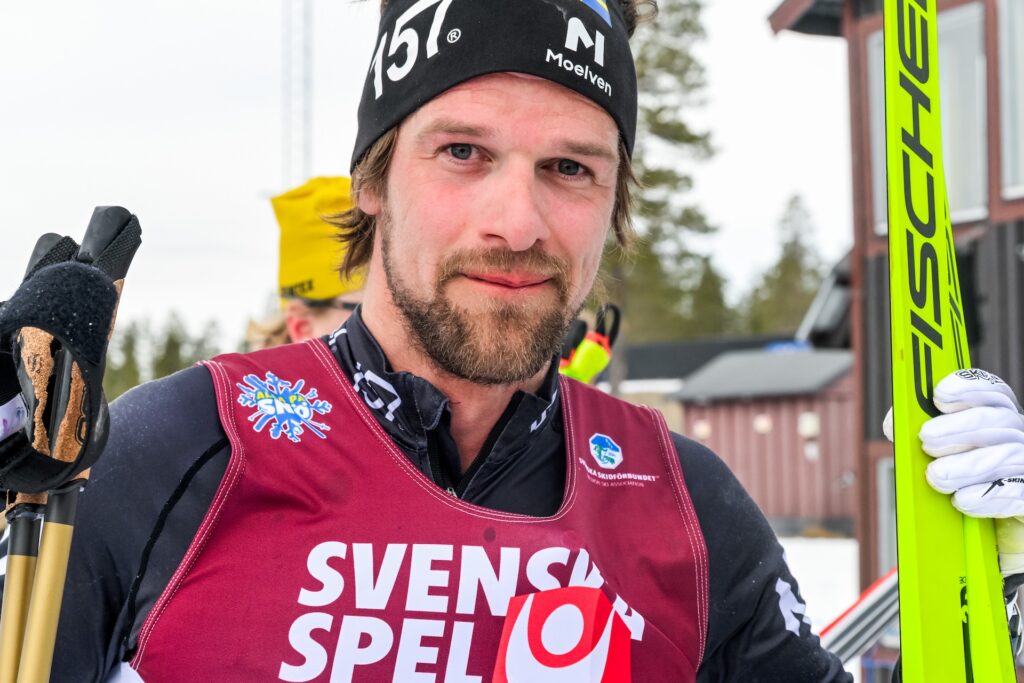
Oskar Kardin, the reigning Vasaloppet champion, delivered a commanding performance at the Swedish National Cross-Country Ski Championships, securing a dominant victory in the 50-kilometer classic race. The 34-year-old skier from Lager157 Ski Team crossed the finish line a full 38 seconds ahead of his closest competitor, Axel Jutterström, marking a significant milestone in his career as his first national championship medal. This triumph further solidifies Kardin’s status as a formidable force in long-distance skiing, demonstrating his ability to outperform even elite national team members on a demanding course.
The Swedish National Championships, held in Idre, serve as a crucial benchmark for domestic cross-country skiers, offering a platform to compete for national titles and prove their mettle against the country’s best. This year’s event, particularly the men’s 50km classic, was highly anticipated, with many looking to see how the established World Cup contingent would fare against the in-form long-distance specialists. The classic technique, demanding precise waxing, tactical pacing, and exceptional endurance, often favors athletes with extensive experience in mass-start races like the Ski Classics circuit, where Kardin has found considerable success.
Kardin’s performance was a masterclass in pacing and execution. From the outset, he established a strong rhythm, quickly building a lead that he consistently extended throughout the grueling 50-kilometer course. Unlike many competitors who might fluctuate in their race strategy, Kardin maintained an unwavering pace, a testament to his meticulous preparation and deep understanding of classic skiing technique. His ability to hold off challengers for such an extended period, especially on a challenging course that tests both physical and mental fortitude, underscores his exceptional form and racing intelligence.

The second-place finish by Axel Jutterström, also a competitor within the Ski Classics circuit, further highlighted the strength of the long-distance skiing community in Sweden. Jutterström, representing Team Eksjöhus, put in a valiant effort but was ultimately unable to match Kardin’s relentless pace. The 38-second gap between them at the finish line, while significant in a sport often decided by mere seconds, speaks volumes about Kardin’s superiority on the day.
Securing the bronze medal was Fredrik Andersson of Piteå Elit, who finished 49 seconds behind Kardin. Andersson, a respected figure in Swedish cross-country skiing, also demonstrated strong form, but the top two positions were clearly out of reach for the rest of the field.
The stark contrast in results between the long-distance specialists and the elite national team members was a notable aspect of the championships. Gustaf Berglund, the highest-placed athlete from the national elite team, finished in sixth position, more than two minutes behind Kardin. This substantial time deficit, exceeding a minute from the podium, suggests a potential disconnect in training focus or race strategy between those prioritizing the World Cup circuit and those excelling in the demanding Ski Classics format. While World Cup races often feature shorter distances and different tactical demands, the performance gap in a major national championship event raises questions about the overall preparedness and competitive edge of some national team members in classic long-distance races.
This victory marks a career-defining moment for Oskar Kardin. His previous triumph in the iconic Vasaloppet in March of this year was already a significant achievement. Adding a national championship title to his resume, especially one earned by outclassing established national team athletes, elevates his standing within the sport. The Swedish National Championships have a rich history, and adding one’s name to the list of champions is a prestigious accomplishment. For Kardin, this gold medal represents the culmination of years of dedication and hard work, validating his commitment to long-distance skiing.
The 50km classic race in Idre served as the concluding event of the Swedish National Championships. Earlier in the day, the women had competed in their 30km classic race, an event that saw an equally dominant performance from one of Sweden’s leading female skiers, who secured her sixth gold medal of the championships, showcasing exceptional consistency and superiority across multiple disciplines.
Historical Context and Significance of the Swedish National Championships
The Swedish National Cross-Country Ski Championships (Svenska Mästerskapen i längdskidåkning) have been held annually since the early 20th century. They are considered one of the most prestigious events in the Swedish skiing calendar, attracting elite athletes from across the country. The championships often serve as a crucial selection event for international competitions, including the World Cup, World Championships, and Olympic Games. Winning a national title is a significant honor and a testament to an athlete’s peak performance within their own country.
The format of the championships can vary from year to year, but typically includes individual classic and free technique races over various distances, as well as team relays. The 50km classic, in particular, is a true test of endurance, strategy, and technical skill. It requires athletes to maintain a consistent pace, manage their energy reserves effectively, and execute flawless waxing strategies to adapt to changing snow conditions. For long-distance specialists like Kardin, these races are the pinnacle of their season, offering a direct comparison against their peers and a chance to showcase their specialized training.
The Ski Classics Circuit: A Breeding Ground for Endurance
Oskar Kardin’s success is intrinsically linked to his participation in the Ski Classics circuit, a series of long-distance cross-country ski races held primarily in classic style across Europe. This circuit includes legendary events like the Vasaloppet, Marcialonga, and Birkebeinerrennet. Skiers in this circuit dedicate their training and racing careers to mastering the unique demands of these ultra-endurance events. They often focus on building exceptional aerobic capacity, refining classic technique for extended periods, and developing the mental resilience required to endure races that can last for several hours.
The Ski Classics season typically runs from December to April, and its races often feature mass starts, adding a tactical element of positioning and drafting. Athletes like Kardin, who excel in this circuit, develop a distinct set of skills that may differ from those optimized for the shorter, more explosive demands of World Cup sprint and interval races. The fact that Kardin, a prominent Ski Classics athlete, has now claimed a national championship title over national team members suggests a growing recognition of the caliber of talent and training within the long-distance skiing discipline.
Analysis of Performance Discrepancies
The notable gap between the performance of long-distance specialists and some national team members at the Swedish Championships warrants closer examination. Several factors could contribute to this:
- Training Focus: National team athletes often balance training for various World Cup disciplines, including sprints and middle-distance events, which may require different physiological adaptations than the extreme endurance of a 50km classic race. Ski Classics athletes, conversely, are highly specialized in this particular discipline.
- Race Strategy and Tactics: The tactical nuances of a mass-start long-distance race differ significantly from individual start World Cup events. Ski Classics athletes are adept at managing pack dynamics, conserving energy, and executing powerful surges over extended periods.
- Waxing and Equipment: In classic technique, precise waxing is paramount. Athletes with extensive experience on varied snow conditions, as is common in Ski Classics, often possess a superior understanding of wax application and equipment tuning, which can provide a critical advantage.
- Depth of Competition: While Sweden boasts many talented skiers, the level of competition at the very top of the World Cup can be intense, often dominated by athletes from nations like Norway and Russia. However, within Sweden, the long-distance specialists have proven their mettle, and the national championships provided a clear indication of their current strength.
Looking Ahead: Implications for Future Competitions
Oskar Kardin’s victory at the Swedish National Championships has several implications:
- Increased Recognition for Long-Distance Skiing: This performance will undoubtedly bring further attention to the Ski Classics circuit and the athletes who compete in it. It demonstrates that these athletes possess the skill and endurance to challenge and defeat top-tier national team members.
- Potential for Strategic Adjustments: National team coaches may re-evaluate their training programs and athlete selections, particularly for classic technique races. The success of Kardin and Jutterström suggests that greater emphasis might be placed on classic technique specialists within the national setup.
- Boost for Lager157 Ski Team: This win is a significant achievement for the Lager157 Ski Team, reinforcing its reputation as a leading force in professional long-distance skiing. It will likely attract further sponsorship and support.
- Rivalry and Competition: The performance sets the stage for exciting future rivalries, both domestically and internationally. Athletes will likely be motivated to improve their classic technique and endurance to challenge Kardin and his fellow long-distance specialists.
The Swedish National Championships in Idre concluded with a clear statement from Oskar Kardin, a testament to the power of specialization and unwavering dedication. His commanding victory in the 50km classic not only earned him his first national championship medal but also underscored the evolving landscape of elite cross-country skiing, where the stamina and tactical prowess of long-distance specialists are proving increasingly formidable.
Full Results – Men’s 50km Classic, Swedish National Championships 2026:
- Oskar Kardin, Lager157 Ski Team, 1:58:18.7
- Axel Jutterström, Team Eksjöhus, +38 seconds
- Fredrik Andersson, Piteå Elit, +49 seconds
- (Details for subsequent finishers would be included here if available)
The full results of the championships can be found on the official Swedish Ski Federation website or dedicated skiing news portals, providing a comprehensive overview of all performances across different categories and disciplines. The event in Idre served as a fitting finale to a season that has showcased the exceptional talent and competitive spirit within Swedish cross-country skiing.
