
Yosemite National Park is facing a significantly diminished snowpack, a stark consequence of an unusually harsh March that saw temperatures soar and precipitation dwindle. April 1st snow surveys conducted in the Tuolumne Meadows area reveal a precipitous drop in snow water equivalent (SWE), now standing at a mere 37% of the historical average for this critical date. This alarming decline, down from 65% of average just one month prior, underscores the dramatic impact of a single month of unseasonably warm and dry weather on the vital winter accumulation that sustains California’s water resources.
The Unprecedented March Meltdown
The stark figures emerging from Yosemite’s April 1st snow surveys paint a concerning picture for the state’s water future. For decades, the Sierra Nevada snowpack has served as California’s natural reservoir, storing vast quantities of water that gradually melt throughout the spring and summer, feeding rivers, reservoirs, and ultimately, the state’s agricultural and urban populations. However, the events of March 2026 have severely compromised this natural system.
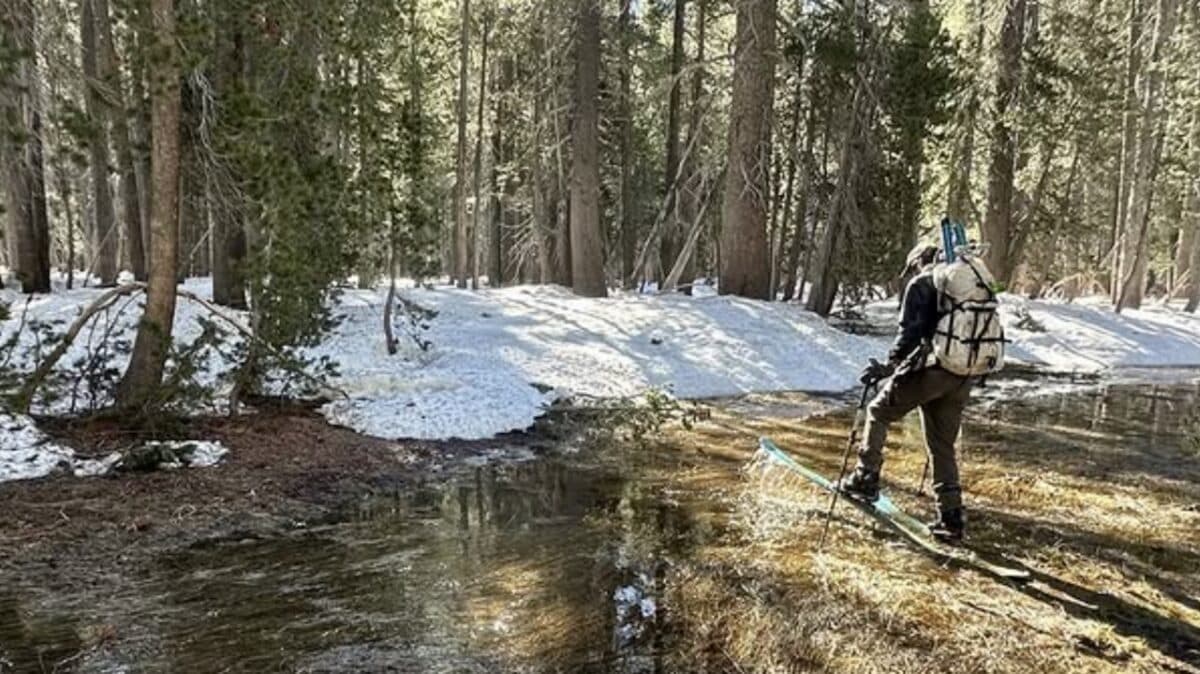
Winter rangers undertaking the arduous task of surveying the Tuolumne Meadows snowpack encountered conditions that directly reflected the season’s anomaly. Over twenty-four miles of challenging terrain were traversed, with snow conditions ranging from near-peak flow in creeks, indicating early and rapid melt, to sections of Tioga Road already revealing bare pavement. These observations provided a tangible, on-the-ground testament to the swift and substantial loss of snowpack experienced throughout the month.
The data from these surveys is particularly alarming when viewed in sequence. On March 1st, the snow courses in the Tuolumne Meadows region were reporting snow water equivalent at a respectable 65% of the historical April 1st average. This suggested a winter that, while perhaps not record-breaking, was on track to provide a reasonable supply of meltwater. However, the subsequent thirty days witnessed an almost complete reversal of fortune. The relentless heat and absence of significant snowfall throughout March led to an astonishing loss of approximately half of the accumulated snowpack, bringing the figure down to an unprecedented 37% of average by April 1st.
Implications for Yosemite and Beyond
The implications of such a depleted snowpack extend far beyond the iconic granite cliffs and giant sequoias of Yosemite National Park. Tuolumne Meadows, a high-country gem within the park, and the broader Yosemite high country are intrinsically linked to the health of the Sierra Nevada snowpack. This vital water source is crucial for several key functions:

- Sustaining Streamflow: A robust snowpack acts as a slow-release water system for rivers and streams that originate in the high country. This consistent meltwater is essential for maintaining aquatic ecosystems, supporting wildlife, and providing water for downstream communities. A significantly reduced snowpack means lower streamflows throughout the spring and summer, potentially impacting water availability for ecosystems and human use.
- Backcountry Water Sources: For hikers, campers, and backcountry enthusiasts who rely on natural water sources in Yosemite’s vast wilderness, the snowpack’s meltwater is a primary provider. Lower snow levels and earlier melt translate to a shorter period of reliable water availability in many alpine lakes, springs, and streams, requiring greater planning and potentially leading to scarcity in popular areas.
- Central Valley Watershed Regulation: The meltwater from the Sierra Nevada is a cornerstone of California’s water supply, particularly for the agricultural heartland of the Central Valley. This meltwater gradually feeds into the state’s intricate network of reservoirs and aqueducts, providing critical irrigation for crops that feed millions. A diminished snowpack directly threatens the volume of water available for agriculture, potentially leading to water restrictions and economic impacts.
The 37% of average figure on April 1st is particularly concerning because it marks a point where the snowpack should ideally be nearing its peak accumulation or beginning a steady, predictable melt. Instead, this low percentage signals a significantly shortened melt season and a substantially reduced overall water yield for the year.
A Glimmer of Hope Amidst the Drought Concerns
While the current snowpack situation is dire, a recent, albeit minor, weather event offered a brief respite. A storm system did manage to deposit approximately six inches of new snow across the Tuolumne Meadows area. Furthermore, meteorological forecasts suggest the possibility of additional precipitation in the coming weeks.
Scientists and water managers are closely monitoring these developing weather patterns. While any new snowfall is a welcome development, the question remains whether these upcoming precipitation events will be sufficient to significantly bolster the snowpack and meaningfully alter the trajectory of the melt season. Accumulation at this late stage of the season is unlikely to fully compensate for the losses experienced in March, but it could offer some marginal relief to water supplies and the overall ecosystem.
Historical Context and Future Outlook
The severity of the March 2026 snowpack decline in Yosemite is not an isolated incident in the broader context of California’s climate. The state has a long history of experiencing cyclical droughts and periods of significantly reduced snowpack. However, the increasing frequency and intensity of extreme weather events, including prolonged heatwaves and prolonged dry spells, are consistent with projections from climate change models.
In years past, the Sierra Nevada snowpack has often rebounded after a slow start, with late-season storms providing crucial replenishment. However, the current situation highlights the vulnerability of this natural reservoir to increasingly volatile weather patterns. The loss of snowpack has direct consequences for water management strategies, agricultural planning, and the ecological health of the region.
Expert Perspectives and Potential Responses
While the provided text does not include direct quotes from specific officials or agencies, the data itself speaks volumes and prompts consideration of likely expert reactions. Hydrologists and water resource managers across California would undoubtedly be expressing grave concern. Agencies such as the California Department of Water Resources (DWR) and the U.S. Bureau of Reclamation would be re-evaluating their water supply forecasts and considering potential drought mitigation measures.
In response to such a significant deficit, state and federal agencies would likely intensify monitoring efforts, potentially implement water conservation advisories, and begin planning for water allocation adjustments. For agricultural sectors, this could mean a reduction in water allocations, impacting crop choices and potentially leading to increased reliance on groundwater, which can have its own set of environmental consequences.
The long-term implications of such a trend are a cause for significant scientific and policy discussion. The reliance on the Sierra Nevada snowpack as a primary water source may need to be re-examined, with a greater emphasis on water storage, recycling, and more efficient water use across all sectors. The extreme variability observed in March 2026 serves as a potent reminder of the challenges posed by a changing climate and the need for adaptive strategies to ensure water security for California’s future. The current situation in Yosemite National Park is not merely a local concern; it is a significant indicator of the broader water challenges facing the entire state.
