
The raw numbers were so extraordinary that the testing laboratory initially suspected manipulation. Now, this once-in-a-generation talent, Philip Lindkvist-Fløtten, is lost to Norway, having officially declared his allegiance to Sweden. Lindkvist-Fløtten, a 19-year-old from Bærum, Norway, is described by his former coaches as an unpolished diamond with immense potential, boasting a sky-high VO2 max and an almost unshakeable self-confidence.
A Meteoritic Rise Under Norwegian Tutelage
Martin Eng, head coach for the Norwegian private team Team Consto, brought Lindkvist-Fløtten under his wing just under a year ago. At the time, the young athlete was in poor physical condition, but Eng and his assistant, Fredrik Grusd, recognized an exceptional talent. Their belief has been vindicated, as Lindkvist-Fløtten has since blossomed into the world’s best junior athlete, a feat that has now propelled him onto the international stage under the Swedish flag.
"They are being handed an unpolished diamond with incredible talent and potential," Eng stated in an interview with Langrenn.com. "I hope they manage him well." He elaborated on Lindkvist-Fløtten’s dedication, noting, "Philip is excellent at training and living like a 24-hour athlete. He absorbs information quickly, endures an incredible amount of training, and responds extremely well to it."
A Stunning Debut in Senior Competition
Less than six months after joining Team Consto, Lindkvist-Fløtten delivered a remarkable performance at the junior World Championships, securing one gold, one silver, and one bronze medal, earning him the title of the championship’s best athlete. This outstanding achievement granted him direct entry into the World Cup finals held at Holmenkollen in late March, an opportunity he relished.
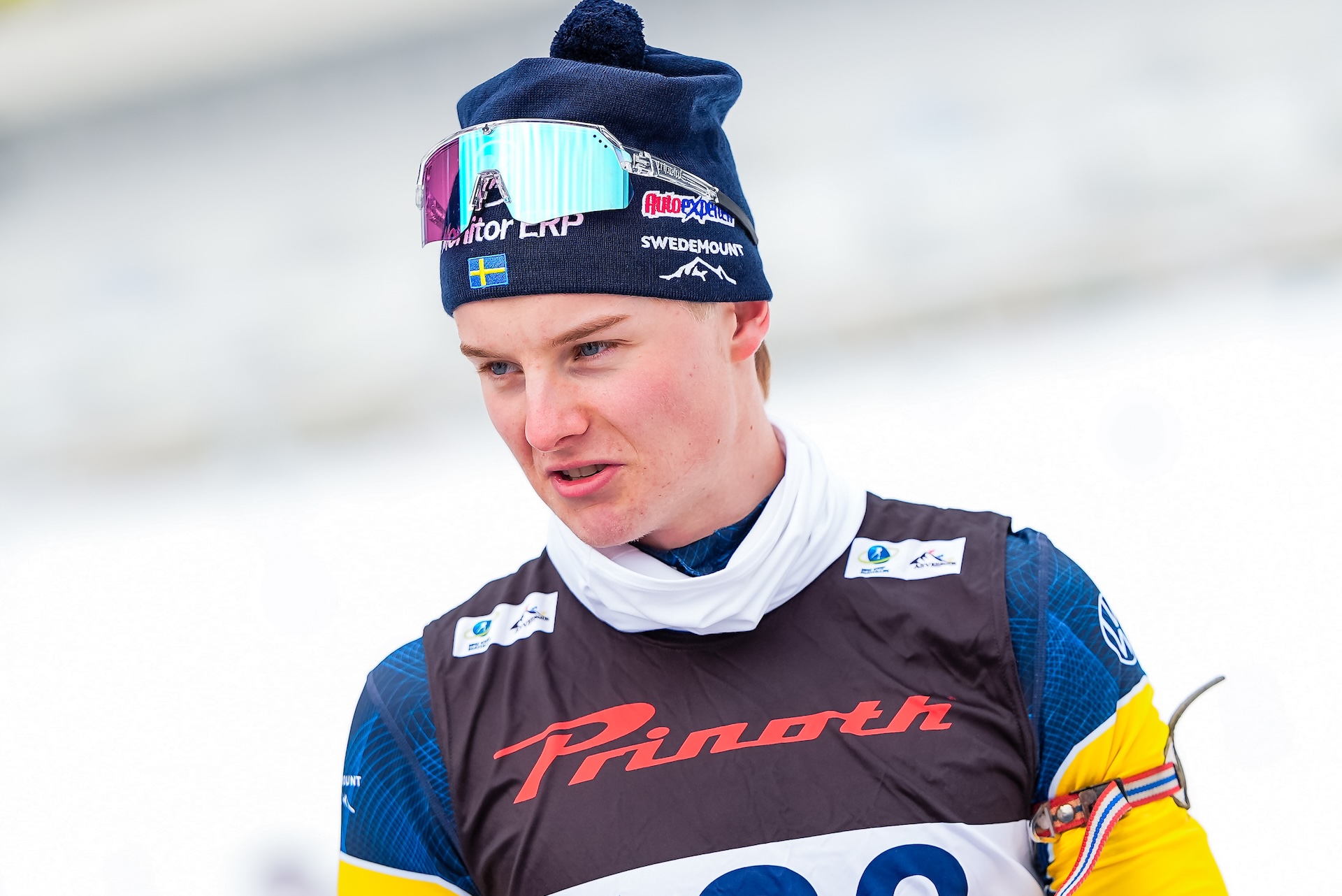
His World Cup debut saw him finish 68th, narrowly missing qualification for the pursuit race by mere seconds. Lindkvist-Fløtten himself attributed this to a rookie mistake, admitting he got caught up in the race dynamics too early. "I got onto the back of (Johannes) Dale-Skjevdal on the first lap," he explained. "That’s cool until you get tired, but I paid for it on the last lap. I had nothing left to give. But it’s great to compete alongside stars I’ve watched on TV for years."
Beyond his junior success, Lindkvist-Fløtten has also achieved two podium finishes in the senior IBU Cup, competing against athletes who qualified for the recent Olympic Games. His rapid ascent to such a high level of competition is largely attributed to his exceptional physical capacity.
The Enigma of an Elite VO2 Max
When questioned about rumors of his extraordinary oxygen uptake, Lindkvist-Fløtten responded with a modest chuckle. "Hehe. Do they? Well, my oxygen uptake is probably alright."
Oxygen uptake, or VO2 max, measured in milliliters of oxygen per kilogram of body weight per minute (ml/kg/min), is a key indicator of an athlete’s aerobic capacity. A higher VO2 max directly correlates to improved performance in endurance sports like cross-country skiing and biathlon. Lindkvist-Fløtten revealed that his current VO2 max is well above 80 ml/kg/min, a figure that matches or surpasses many of the world’s elite cross-country skiers and biathletes. For context, elite male endurance athletes typically have VO2 max values ranging from 70 to 85 ml/kg/min, with some exceptional individuals exceeding this. For instance, legendary marathoner Eliud Kipchoge is reported to have a VO2 max of around 84 ml/kg/min.
A Radical Overhaul of Training Regimen
Lindkvist-Fløtten attributes his dramatic improvement to a complete restructuring of his training this past season. This involved increased volume and intensity, a more structured approach, and closer monitoring. "This year has involved a lot of new things with training and double hard sessions, VO2 testing, and lactate measurements. It’s more professional than what I’ve done before," he stated. He further detailed, "There’s been much more threshold training from May to August than I’ve done previously. Then, there was a period focusing on harder i4 sessions. After that, I did a lot more VO2 max training."

The results of this intensified training program have astounded experts. In just over six weeks, Lindkvist-Fløtten’s maximal oxygen uptake surged from 73 to over 80 ml/kg/min, an impressive 11% increase. "From the first to the second test in the fall, I gained seven such units," he recalled. "Those were my first two VO2 tests ever. I improved much more than I had anticipated."
When asked about his expectations for the training overhaul, Lindkvist-Fløtten admitted, "Honestly, I was almost hoping my oxygen uptake wouldn’t decrease during those weeks. I hoped it would be higher, but I didn’t have many expectations."
The Lab’s Astonishment and a Doubts of Manipulation
The exceptional VO2 max values are only part of the story. According to coach Martin Eng, Lindkvist-Fløtten’s lactate profile is equally remarkable. "He has a threshold value that is very close to his maximal oxygen uptake, which is very high," Eng explained. "This allows him to ski incredibly fast without producing lactate. When you have those two factors together, you ski exceptionally fast on skis."
Eng recounted the moment Lindkvist-Fløtten underwent testing at a specialized lab. "Joar Hansen, who also tests the elite national team, Johan-Olav Botn, and the whole crew, were stunned when Philip came in for testing," Eng said. "He wondered if the boy was trying to manipulate the test, for example, by not eating, or taking caffeine pills or baking soda. But no, he had eaten and trained normally."
Despite the impressive physiological data, Lindkvist-Fløtten remains grounded. "It’s cool that the numbers are increasing. But what I find coolest is that I can feel myself skiing faster and improving."
A Full Commitment to the Sport: School Left Behind

Lindkvist-Fløtten firmly believes that his singular focus on training has been pivotal. "I quit school and started training. The combination became too tough, and I was terribly tired of the tedious Norwegian classes. So, I moved to Lillehammer and joined the private team Team Consto. It’s worked very well, so I’m continuing with it. School can come later in life," the 19-year-old explained. This decision reflects a profound commitment to his athletic career at a formative age.
A Swedish Future: Lost to Norway
In addition to the dedicated training program in Lillehammer, Lindkvist-Fløtten has also participated in parts of the Swedish national team’s training camps in Östersund. Coach Martin Eng anticipates this collaboration will continue and likely intensify. "He is probably lost to Norway forever," Eng stated. "He will most likely move to Östersund, and then we can’t do anything more with him. But he was trained in Norway by a Norwegian private team."
Eng expressed his hope that Sweden will nurture the talent he helped develop. "We are delivering a junior boy with strong self-belief, without being arrogant. Now it’s up to the Swedish national team to invest in him, give him peace and trust. Then he can achieve podium places in the World Cup very soon, and could be Sweden’s golden child at the next Olympics. Philip could well be the next Eric Perrot," Eng remarked, drawing a parallel to the successful French-Norwegian World Cup winner.
Lindkvist-Fløtten still has one season remaining as a junior, but his World Cup debut has whetted his appetite for more. "I find the World Cup fun. Junior competition is also fun, but competing in biathlon races with spectators is something else entirely, so I want to compete in more World Cups next year," he said.
And it will be in the blue and yellow of Sweden. The half-Norwegian biathlete is unequivocal about his national choice. "I have now chosen my nation, and it will be Sweden for my entire career." This decision marks a significant loss for Norwegian biathlon, as Lindkvist-Fløtten represents a rare talent with the potential to dominate the sport for years to come. His trajectory, honed in Norway but now directed towards Sweden, will undoubtedly be closely watched by both nations.
