
The 2025-26 Alpine World Cup season culminates in a single, high-stakes event in Hafjell, Norway, where the men’s slalom crystal globe will be decided. This is the ultimate test of nerve and skill: one race, two demanding runs, with no margin for error for the athletes vying for the sport’s most coveted discipline trophy. While Marco Odermatt has already sealed his dominance by securing the Overall, Downhill, and Super-G globes, and Lucas Pinheiro Braathen has claimed the Giant Slalom title, the slalom title remains fiercely contested, promising a dramatic conclusion to the season.
The Pinnacle of Alpine Skiing: Understanding the Crystal Globes
For those new to the sport, a Crystal Globe represents the season-long championship in a specific discipline (Slalom, Giant Slalom, Super-G, Downhill, Parallel) or across all disciplines (the Overall Globe). Athletes accumulate points throughout the season at various World Cup races. The skier with the most points in a given discipline at the end of the season is awarded the small crystal globe for that discipline. The Overall Globe is awarded to the skier with the highest total points across all disciplines. These trophies are symbols of sustained excellence and consistency over months of competition, making the final race for any unclinched globe a particularly intense spectacle.
The Battle for Slalom Supremacy: Who Will Claim the Globe?
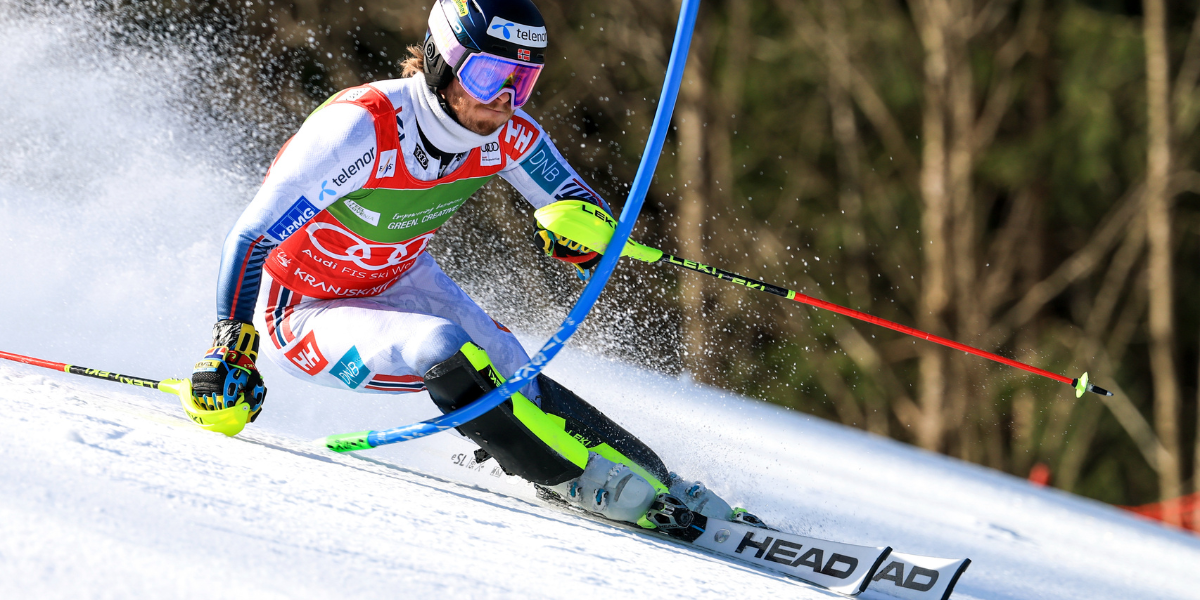
Mathematically, four men still have a chance to lift the slalom globe, but the realistic battle has narrowed to a gripping duel between two young titans: Atle Lie McGrath of Norway and Lucas Pinheiro Braathen, representing Brazil. Behind them, France’s Clément Noël and Norway’s veteran Henrik Kristoffersen lurk as dangerous outsiders, needing a combination of their own flawless performance and missteps from the frontrunners to seize the title. In a final race like this, managing risk is not an option; every contender must adopt an aggressive, all-out attack strategy from the very first gate.
Decoding the World Cup Slalom Standings Ahead of Hafjell
To understand the intensity of this final showdown, a closer look at the standings and the FIS World Cup points system is essential. Points are awarded as follows: 1st place (100 points), 2nd (80), 3rd (60), 4th (50), 5th (45), 6th (40), 7th (36), 8th (32), 9th (29), 10th (26), 11th (24), 12th (22), 13th (20), 14th (18), 15th (16), 16th (15), 17th (14), 18th (13), 19th (12), 20th (11), 21st (10), 22nd (9), 23rd (8), 24th (7), 25th (6), 26th (5), 27th (4), 28th (3), 29th (2), 30th (1).
Here are the top 5 World Cup Slalom Standings before the Hafjell Finals:
1st 🇳🇴 Atle Lie McGrath (NOR, 2000, Head) – 552 pts
2nd 🇧🇷 Lucas Pinheiro Braathen (BRA, 2000) – 511 pts (41 points behind)
3rd 🇫🇷 Clément Noël (FRA, 1997) – 475 pts (77 points behind)
4th 🇳🇴 Henrik Kristoffersen (NOR, 1994) – 453 pts (99 points behind)
5th 🇳🇴 Timon Haugan (NOR, 1996) – 399 pts (153 points behind)
Scenarios for the Slalom Crystal Globe:

- Atle Lie McGrath: Holding a 41-point lead, McGrath controls his destiny. If he wins, he is guaranteed the globe. If Braathen wins, McGrath would need to finish 3rd (60 points) or higher to secure the globe (McGrath 552+60=612, Braathen 511+100=611). If Braathen finishes 2nd (80 points), McGrath would need to finish 5th (45 points) or higher (McGrath 552+45=597, Braathen 511+80=591). A critical aspect for McGrath is to stay ahead of Braathen or minimize the points difference.
- Lucas Pinheiro Braathen: Braathen must outperform McGrath significantly. His clearest path to the globe is to win the race and hope McGrath finishes 4th or lower. If Braathen finishes 2nd, he would need McGrath to finish 6th or lower. The pressure is on Braathen to deliver an exceptionally aggressive performance.
- Clément Noël: Trailing by 77 points, Noël needs to win (100 points) and have both McGrath and Braathen finish outside the top 5. For instance, if Noël wins (575 pts), McGrath would need to finish 6th (40 pts, total 592) or higher, and Braathen 5th (45 pts, total 556) or higher to stay ahead. Noël’s chances are slim but not impossible, relying on a dominant performance combined with errors from the leaders.
- Henrik Kristoffersen: With a 99-point deficit, Kristoffersen’s path is the most challenging. He would need to win and see both McGrath and Braathen fail to score significant points, potentially finishing outside the top 10. While a veteran of many World Cup battles, this scenario is a long shot.
The Contenders: A Closer Look at the Season’s Performers
- Atle Lie McGrath (Norway): The 23-year-old Norwegian has enjoyed a season of remarkable consistency and breakthrough performances. Known for his powerful, fluid technique and ability to handle varying course conditions, McGrath has steadily accumulated points, including multiple podium finishes and victories. His mental fortitude will be key in this home-soil final, as the weight of expectation rests heavily on his shoulders. A globe would mark his definitive arrival as a top-tier slalom specialist.
- Lucas Pinheiro Braathen (Brazil): Braathen’s return to the World Cup circuit after a period away has been nothing short of sensational. Already securing the Giant Slalom globe, his versatility and explosive style make him a dual-discipline threat. Braathen’s aggressive approach and ability to find extra speed, especially in the second run, could be his greatest asset. He thrives under pressure and will undoubtedly attack the Hafjell slope with everything he has.
- Clément Noël (France): The elegant French skier is renowned for his spectacular, high-risk, high-reward style. When Noël is "on," he is virtually unbeatable, often delivering blistering second runs that catapult him up the rankings. His season has seen flashes of brilliance mixed with some inconsistency, but his proven ability to win makes him a formidable dark horse. He’ll need to channel his best form and capitalize on any opening provided by the leaders.
- Henrik Kristoffersen (Norway): A seasoned veteran with multiple Crystal Globes to his name, Kristoffersen brings invaluable experience and tactical acumen to the table. While perhaps not as dominant as in previous seasons, his technical precision and ability to adapt to changing course conditions are unparalleled. He knows how to win big races and will be looking to leverage his calm demeanor and strategic approach to exploit any mistakes made by the younger contenders.
The First Seed: Setting the Tone
The starting bib order for the first run is crucial, especially in slalom, where course degradation can play a significant role. The top 7 in the World Cup Slalom Start List (WCSL) typically get the earliest bibs, aiming to ski on a relatively pristine course.
Top 7 WCSL – First Seed (Bib Order):
Bib 1 🇳🇴 Henrik Kristoffersen (NOR, 1994) – WCSL SL Rank 2
Bib 2 🇨🇭 Loïc Meillard (SUI, 1996) – WCSL SL Rank 6
Bib 3 🇫🇷 Paco Rassat (FRA, 1998, Head) – WCSL SL Rank 7
Bib 4 🇫🇷 Clément Noël (FRA, 1997) – WCSL SL Rank 4
Bib 5 🇳🇴 Timon Haugan (NOR, 1996) – WCSL SL Rank 5
Bib 6 🇳🇴 Atle Lie McGrath (NOR, 2000, Head) – WCSL SL Rank 1
Bib 7 🇧🇷 Lucas Pinheiro Braathen (BRA, 2000) – WCSL SL Rank 3
This elite group represents the most likely podium contenders and the skiers best positioned to control the race from the opening run. Kristoffersen, with Bib 1, has the opportunity to lay down an early marker. The proximity of McGrath (Bib 6) and Braathen (Bib 7) in the start list will allow for a direct comparison of their performances on very similar course conditions, adding another layer of drama to their direct competition.

A Season of Unpredictable Brilliance: The Men’s Slalom Podium Table 2025-26
The 2025-26 men’s slalom season has been characterized by exceptional depth and a refreshing variety of winners, highlighting the sport’s competitive landscape. Unlike some disciplines where one or two athletes dominate, slalom has seen multiple different winners and a broad spread of podium finishers, making it one of the most exciting disciplines to follow.
- Levi: 🇧🇷 Lucas Pinheiro Braathen (1st), 🇫🇷 Clément Noël (2nd), 🇫🇮 Eduard Hallberg (3rd)
- Gurgl: 🇫🇷 Paco Rassat (1st), 🇧🇪 Armand Marchant (2nd), 🇳🇴 Atle Lie McGrath (3rd)
- Val d’Isère: 🇳🇴 Timon Haugan (1st), 🇨🇭 Loïc Meillard (2nd), 🇳🇴 Henrik Kristoffersen (3rd)
- Alta Badia: 🇳🇴 Atle Lie McGrath (1st), 🇫🇷 Clément Noël (2nd), 🇨🇭 Loïc Meillard (3rd)
- Madonna di Campiglio: 🇫🇷 Clément Noël (1st), 🇫🇮 Eduard Hallberg (2nd), 🇫🇷 Paco Rassat (3rd)
- Adelboden: 🇫🇷 Paco Rassat (1st), 🇳🇴 Atle Lie McGrath (2nd), 🇳🇴 Henrik Kristoffersen (3rd)
- Wengen: 🇳🇴 Atle Lie McGrath (1st), 🇧🇷 Lucas Pinheiro Braathen (2nd), 🇳🇴 Henrik Kristoffersen (3rd)
- Kitzbühel: 🇦🇹 Manuel Feller (1st), 🇨🇭 Loïc Meillard (2nd), 🇩🇪 Linus Strasser (3rd)
- Schladming: 🇳🇴 Henrik Kristoffersen (1st), 🇳🇴 Atle Lie McGrath (2nd), 🇫🇷 Clément Noël (3rd)
- Olympic Cortina*: 🇨🇭 Loïc Meillard (1st), 🇦🇹 Fabio Gstrein (2nd), 🇳🇴 Henrik Kristoffersen (3rd)
- Kranjska Gora: 🇳🇴 Atle Lie McGrath (1st), 🇳🇴 Henrik Kristoffersen (2nd), 🇧🇷 Lucas Pinheiro Braathen (3rd)
*Olympic Cortina is not a World Cup race and is included as context only, showcasing recent form.
Podium Count by Nation (World Cup Slalom 2025-26):
- Norway: 10 (4 firsts, 3 seconds, 3 thirds)
- France: 7 (3 firsts, 2 seconds, 2 thirds)
- Switzerland: 4 (0 firsts, 3 seconds, 1 third)
- Brazil: 3 (1 first, 1 second, 1 third)
- Finland: 2 (0 firsts, 1 second, 1 third)
- Austria: 1 (1 first, 0 seconds, 0 thirds)
- Belgium: 1 (0 firsts, 1 second, 0 thirds)
- Germany: 1 (0 firsts, 0 seconds, 1 third)
The statistics clearly demonstrate that no single skier has overwhelmingly dominated the slalom circuit this season. Instead, a strong contingent of athletes, particularly from Norway and France, has consistently pushed the limits, making each race an unpredictable thrill. The diversity of winners and podium finishers speaks volumes about the incredible talent pool in men’s slalom, setting the stage for an even more dramatic finale.

GB Snowsport’s Hope: Laurie Taylor
Representing Great Britain, Laurie Taylor (GBR, 1996, Head) enters the Finals with a World Cup Slalom Rank of 23. As the sole GB Snowsport representative in this elite field, Taylor will be aiming to make a significant impact, pushing for a top-15 finish against one of the deepest and most competitive slalom lineups of the season. His presence at the finals underscores his consistent performance throughout the season and the progress of British skiing on the international stage. A strong result in Hafjell would be a significant boost for his career and the national program.
The Course and the Course Setters: Shaping the Challenge
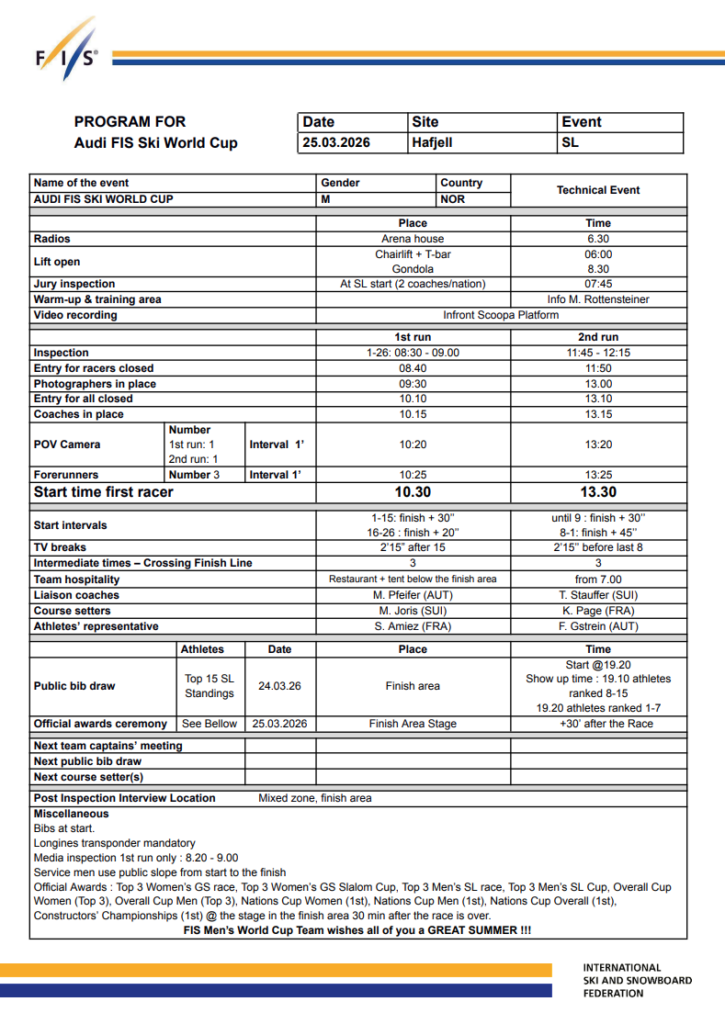
The Hafjell course itself will play a pivotal role. Slalom courses are meticulously set, and the choices of the course setters can significantly influence the race dynamics. For the first run, the course will be set by M. Joris of Switzerland, followed by K. Page of France for the second run. Swiss course setters are often known for their technical and rhythmic gates, demanding precision and consistent flow. French setters, on the other hand, can introduce more dynamic, varied gate combinations that test adaptability and aggressive line choices. The differing styles between the two runs will require skiers to adjust quickly, adding another layer of complexity to an already high-pressure situation. The snow conditions in Hafjell, typical for late-season Norwegian racing, are likely to be firm but could soften, further influencing strategy and equipment choices.
Final Thoughts: One Race Decides Everything
This is the ultimate test for the athletes. The final race of the Alpine World Cup season represents a true "do or die" moment. One blistering run can change everything, propelling a skier to glory, while one small mistake can abruptly end a meticulously planned title campaign. The mental game will be as crucial as the physical performance. The ability to manage nerves, maintain focus under immense pressure, and execute flawless technique when it matters most will differentiate the champion from the rest.
Atle Lie McGrath carries the advantage, but the pressure of leading is immense. Lucas Pinheiro Braathen must respond with unyielding aggression. Clément Noël and Henrik Kristoffersen, though outsiders, are poised to seize any opportunity that arises from the intensity of the leading duel. In Hafjell, the skier who can push the limits the furthest, maintain control, and flawlessly navigate both runs will not only conquer the slope but also leave with the coveted slalom crystal globe, etching their name into the annals of alpine skiing history.
When to Watch:
The men’s slalom final is scheduled for Sunday, March 25th.
- Run One: 5:30 a.m. EDT / 2:30 a.m. PT / 9:30 a.m. GMT
- Run Two: 8:30 a.m. EDT / 5:30 a.m. PDT / 12:30 p.m. GMT
How to Watch:
Fans can access live coverage and replays through official World Cup broadcasting partners and streaming services. For viewers in the USA, SkiAndSnowboard.Live offers comprehensive coverage. Check local listings for broadcast information in your region.
Daily Program and First Run Start List:
For detailed official information, including the daily program and the complete first run start list, refer to the documents provided by FIS (International Ski Federation). These documents, accessible via the links below, offer comprehensive insights into the event schedule and the full lineup of competitors.
- Daily Program: Click here to download the daily program (PDF)
- First Run Start List: Click here to download the first run start list (PDF)
