
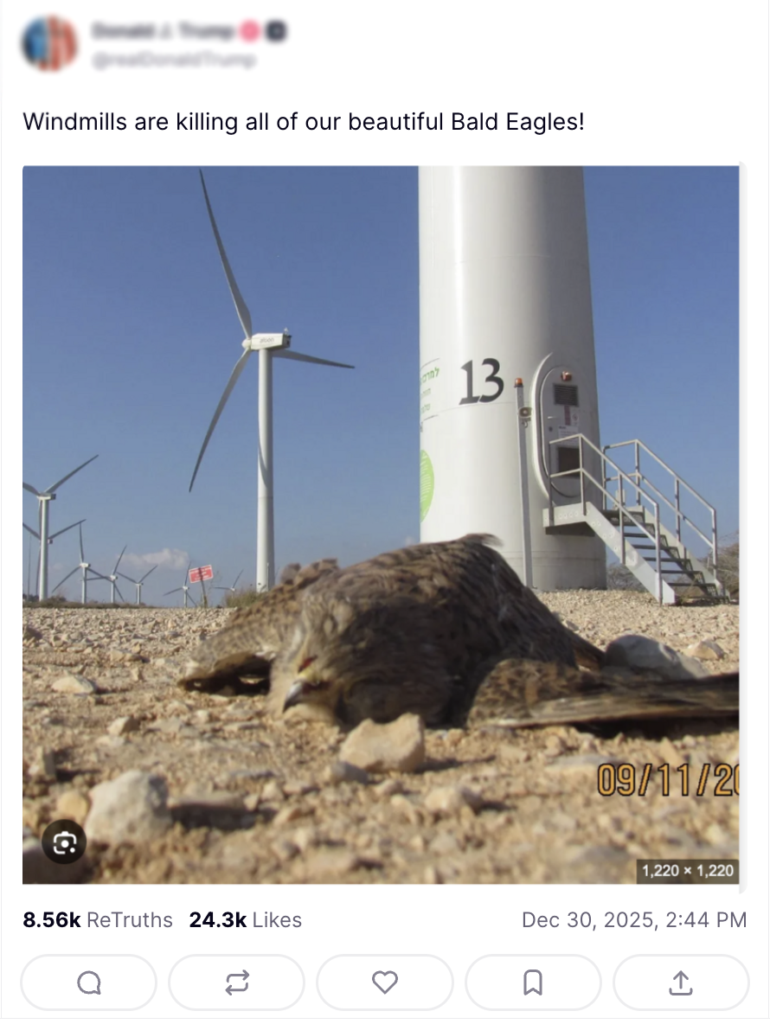
The global shift toward renewable energy has reached an unprecedented scale, yet as wind turbines and solar arrays become more prevalent across the landscape, they have been met by an increasingly sophisticated and coordinated campaign of opposition. This phenomenon, often characterized by high-visibility social media posts and alarmist headlines, suggests that offshore wind projects are decimating property values, that solar farms are permanently destroying prime agricultural land, and that wind energy represents a primary threat to avian populations. While these narratives often circulate within localized community groups and comment sections, analysts and climate advocates suggest they are frequently the product of strategic disinformation efforts funded by entrenched fossil fuel interests. These campaigns are designed not merely to express concern, but to instill doubt regarding the reliability, safety, and aesthetic impact of clean energy, thereby delaying the transition away from carbon-intensive power sources.
The distinction between misinformation and disinformation is critical to understanding the current landscape of energy discourse. Misinformation refers to the inadvertent sharing of false or inaccurate information by individuals who believe the claims to be true. A common example is a concerned citizen repeating a claim that offshore wind farms are responsible for whale strandings—a narrative that has been widely debunked by scientific agencies such as the National Oceanic and Atmospheric Administration (NOAA), yet continues to circulate in coastal communities. Disinformation, conversely, is the intentional seeding of misleading or false narratives by bad actors to achieve a specific goal, such as protecting market share or avoiding regulatory accountability. In the context of the climate crisis, disinformation serves as a tool for "climate delay," shifting the conversation away from systemic solutions and toward narrow, often exaggerated grievances that spark internal conflict among the public and derail legislative progress.
A Chronology of Strategic Energy Narratives
The current wave of energy disinformation does not exist in a vacuum; it is the latest evolution in a decades-long effort to shape public perception regarding fossil fuels and their environmental impact. In the late 20th century, internal documents from major oil companies revealed that their own scientists had identified the link between fossil fuel combustion and global warming as early as the 1970s. However, the public-facing response was often the opposite, focusing on emphasizing scientific uncertainty.

By the early 2000s, as scientific consensus on climate change became undeniable, the strategy shifted from outright denial to "greenwashing" and "delayism." This involved marketing campaigns that portrayed fossil fuel companies as leaders in the energy transition while they simultaneously expanded oil and gas production. In the 2020s, the focus has narrowed significantly onto the alleged flaws of renewable infrastructure. This modern era of disinformation utilizes "astroturfing"—the practice of creating the appearance of grassroots opposition to renewable projects—which is often funded by dark money groups and industry-aligned think tanks. These groups provide localized movements with talking points, legal resources, and digital amplification to stall projects at the municipal and state levels.
Comparative Data: Electric Vehicles and Carbon Emissions
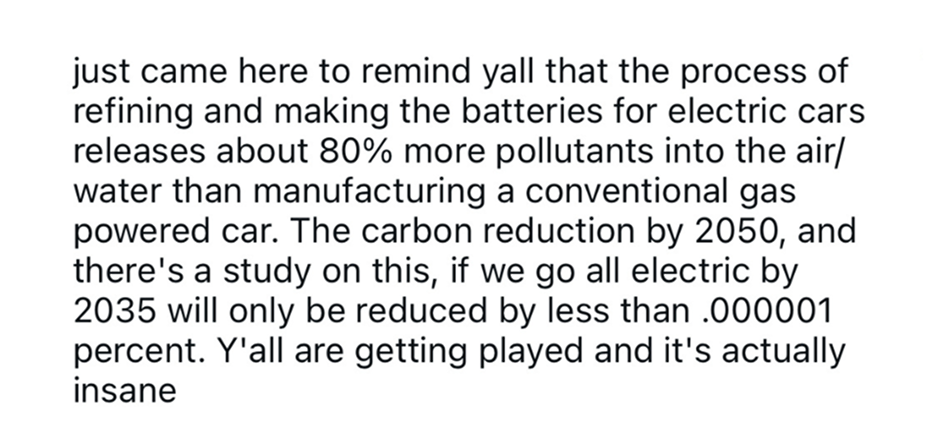
One of the most persistent narratives in the anti-renewable campaign concerns the environmental cost of manufacturing electric vehicles (EVs) compared to internal combustion engine (ICE) vehicles. Critics often point to the carbon-intensive nature of mineral mining for lithium-ion batteries as evidence that EVs are no better for the planet than gas-powered cars. However, empirical data from research institutions, including the Massachusetts Institute of Technology (MIT), provides a more nuanced and factual perspective.
According to MIT’s Laboratory for Aviation and the Environment, the lifecycle emissions of vehicles—which include manufacturing, resource extraction, and operation—reveal a clear advantage for electrification. On average, gasoline-powered cars emit approximately 350 grams of CO2 per mile driven over their entire operational lifetime. In contrast, hybrid and plug-in hybrid vehicles average around 260 grams per mile. Fully battery-electric vehicles (BEVs) produce significantly less, at approximately 200 grams per mile. While the "upfront" carbon cost of mining minerals for EV batteries is indeed higher than that of traditional vehicle manufacturing, the "break-even" point—where the EV becomes cleaner than the ICE vehicle—typically occurs within the first 15,000 to 20,000 miles of driving, depending on the cleanliness of the local power grid. As the global energy grid increasingly incorporates wind and solar, the carbon footprint of every mile driven in an EV continues to decrease, a benefit that gasoline vehicles cannot achieve.
Infrastructure Impacts and the Offshore Wind Debate
The development of offshore wind has become a focal point for environmental and economic anxiety. Opponents frequently claim that these projects disrupt aquatic ecosystems and threaten marine life. While all industrial activity carries inherent risks, scientific analysis requires a comparison between renewable infrastructure and the existing fossil fuel infrastructure it is intended to replace.
Offshore oil and gas operations involve seismic testing, which utilizes high-decibel airguns that can disrupt the communication and navigation of marine mammals. Furthermore, the risk of catastrophic oil spills, such as the 2010 Deepwater Horizon disaster, poses a permanent threat to ocean biodiversity and coastal economies. In contrast, the primary environmental concerns regarding offshore wind—such as noise during construction and habitat alteration—are often mitigable through seasonal construction pauses and the use of "bubble curtains" to dampen sound.
According to reports from Forbes and various environmental agencies, climate change itself remains the single greatest threat to ocean health, contributing to acidification, coral bleaching, and shifting migratory patterns due to warming waters. The transition to offshore wind is viewed by many marine biologists as a necessary trade-off to prevent the total collapse of marine ecosystems under a high-warming scenario.
The Economic Implications of Renewable Energy Adoption
Beyond environmental concerns, the disinformation campaign frequently targets the economic viability of renewable energy. Claims that wind and solar are "too expensive" or "unreliable" often ignore the plummeting Levelized Cost of Energy (LCOE) for these technologies. Data from Lazard’s annual Levelized Cost of Energy Analysis shows that the cost of utility-scale solar and wind has dropped by approximately 90% and 70%, respectively, over the last decade. In many parts of the world, it is now cheaper to build new renewable capacity than to continue operating existing coal or gas plants.
The reliability argument often centers on "intermittency"—the fact that the sun does not always shine and the wind does not always blow. However, modern grid management utilizes a combination of diverse geographic placement, long-duration battery storage, and smart grid technology to maintain stability. The International Energy Agency (IEA) has noted that advanced economies can achieve high levels of renewable penetration without compromising grid reliability, provided there is adequate investment in transmission infrastructure.
Analyzing the Broader Social Impact
The success of disinformation campaigns has tangible consequences for public policy and global climate goals. When local communities are saturated with misleading information, the resulting "Not In My Backyard" (NIMBY) sentiment can lead to the cancellation of vital infrastructure projects. This creates a bottleneck in the deployment of clean energy, making it difficult for nations to meet the targets set by the Paris Agreement.
Moreover, the polarization of energy issues has led to a breakdown in constructive dialogue. When energy choices are framed as identity-based or partisan issues rather than technical and environmental ones, the path to consensus becomes obscured. Organizations such as Protect Our Winters (POW) emphasize that the solution lies in "responsible transition"—pursuing renewable projects with rigorous conservation standards and community engagement while acknowledging that no energy source is entirely without impact.
Official Responses and Advocacy Frameworks
In response to the rise of energy disinformation, various governmental and non-governmental organizations have begun to implement "pre-bunking" and fact-checking initiatives. The U.S. Department of Energy (DOE) and the European Commission have launched transparency portals to provide citizens with direct access to scientific data regarding renewable energy impacts.
Advocacy groups are also shifting their focus toward media literacy and political engagement. The strategy recommended by climate communicators involves three primary pillars:

- Fact-Verification: Encouraging the public to scrutinize sources and demand scientific backing for large-scale claims made in advertisements or social media posts.
- Institutional Support: Funding and following organizations that provide transparent data and employ workers within the clean energy sector.
- Civic Participation: Emphasizing the importance of local municipality elections, where many decisions regarding land use and energy zoning are made.
Conclusion: Navigating the Path to Progress
The transition to a renewable energy economy represents one of the most significant technological shifts in human history. It is a move away from the extractive, combustion-based models of the 19th and 20th centuries toward a model defined by innovation and circularity. While the concerns of local communities regarding land use, aesthetics, and ecosystems are valid and deserve thorough scientific address, they must be weighed against the catastrophic risks of continued fossil fuel reliance.
As the disinformation campaign continues to evolve, the burden of discernment falls upon the public, policymakers, and the media. By grounding the conversation in empirical data—such as the lifecycle emissions of EVs or the comparative safety of offshore wind—the global community can move past the distractions of "red herrings" and "straw man" arguments. The goal of the transition is not perfection, but the achievement of a power system that is demonstrably safer, cleaner, and more sustainable for future generations. The path forward requires a commitment to truth and a collective refusal to allow coordinated disinformation to stall the momentum of human progress.
