
The environmental transformation of the Coast Mountains in British Columbia has reached a critical inflection point, as evidenced by the indefinite suspension of summer skiing operations on the Horstman Glacier at Whistler Blackcomb. For Mike Douglas, a professional skier and Salomon brand ambassador often referred to as the "Godfather of Freeskiing," the loss of this glacial terrain represents more than a change in seasonal scheduling; it is the disappearance of the very proving ground that birthed modern freestyle skiing. When Douglas arrived at Whistler in the 1990s, the Horstman Glacier was a perennial hub for athletes and enthusiasts alike, offering year-round training opportunities that defined the region’s outdoor culture. Today, after three decades of warming temperatures and diminishing snowpack, the glacier has retreated to a state where summer operations are no longer viable, signaling a broader crisis for the global winter sports industry.
The closure of summer skiing on the Horstman Glacier, officially announced in recent seasons, serves as a stark metric for the impact of climate change on high-altitude ecosystems. This development is not an isolated incident but part of a documented trend affecting glaciers across the Pacific Northwest and the European Alps. As winters shift and snowlines recede, the outdoor industry—comprising equipment manufacturers, resort operators, and professional athletes—is being forced to transition from passive awareness to aggressive advocacy and systemic reform. Through partnerships with organizations like Protect Our Winters (POW), brands such as Salomon are attempting to bridge the gap between commercial production and environmental stewardship, recognizing that the future of their business is inextricably linked to the preservation of the climate.
A Chronology of Decline: From Perennial Ice to Seasonal Scarcity
The history of the Horstman Glacier reflects the broader trajectory of the North American ski industry over the last half-century. In the 1980s and 1990s, the glacier was the center of the summer skiing universe, hosting world-renowned camps that attracted athletes from across the globe. During this era, the ice was sufficiently thick to support permanent lift infrastructure and extensive terrain parks well into July and August.
However, the turn of the millennium brought visible signs of instability. By the mid-2010s, the rate of glacial melt had accelerated significantly. In 2020, Whistler Blackcomb took the drastic step of permanently removing the Horstman T-bar, a lift that had been a fixture on the glacier for decades. The decision was driven by the fact that the glacier had thinned to such an extent that the lift towers could no longer be safely anchored in the moving ice and rock. Following several years of marginal conditions and shortened seasons, the resort finally suspended summer operations indefinitely, citing the safety of guests and the long-term health of the remaining ice mass.
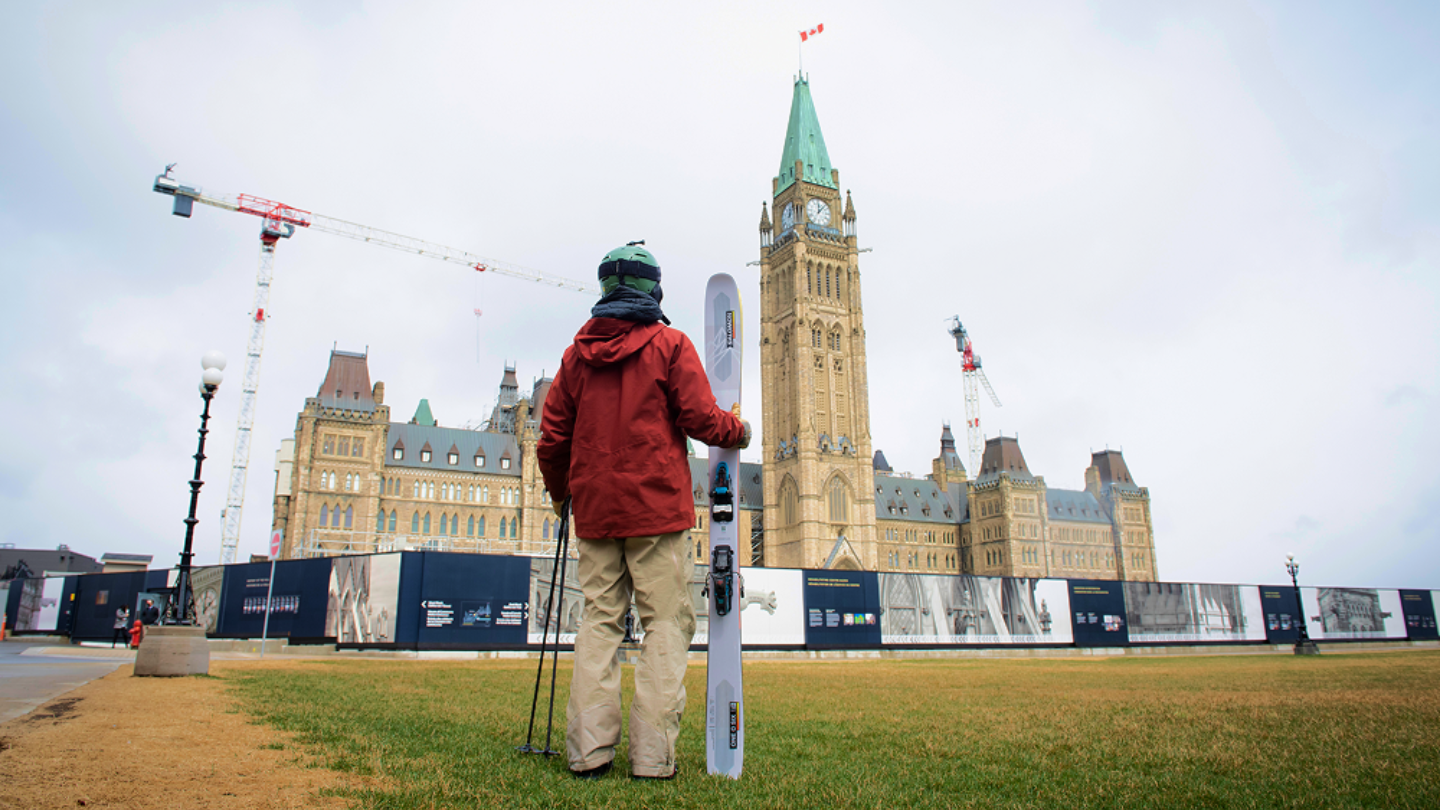
This timeline aligns with broader scientific data regarding the cryosphere. According to the Intergovernmental Panel on Climate Change (IPCC), glaciers in Western Canada are projected to lose 70% to 90% of their volume by the end of the 21st century under current warming scenarios. The loss of the Horstman Glacier’s summer utility is a localized manifestation of a global phenomenon that threatens the $20 billion winter sports economy in North America.
Data-Driven Realities: The Shrinking Snowpack
The challenges facing the outdoor industry are rooted in quantifiable climatic shifts. Meteorological data from the Pacific Northwest indicates that spring snowpack has declined by nearly 20% to 40% across much of the region since the mid-20th century. Furthermore, the "freezing level"—the altitude at which precipitation turns from rain to snow—has been steadily rising. For resorts like Whistler Blackcomb, which rely on a consistent base at mid-to-lower elevations, these shifts result in shorter seasons and increased reliance on energy-intensive snowmaking.
The environmental footprint of the industry itself has also come under scrutiny. The manufacturing of high-performance ski equipment, which often involves complex plastics, carbon fibers, and chemical treatments, contributes to carbon emissions and waste. Salomon, a global leader in outdoor gear, has acknowledged that the traditional "take-make-waste" model of production is no longer sustainable. Internal data from major outdoor brands suggest that the supply chain and manufacturing processes account for the vast majority of their carbon output, prompting a pivot toward circular economy principles.
Turning Advocacy Into Action: The Salomon and POW Partnership
In response to these environmental pressures, the collaboration between Salomon and Protect Our Winters has evolved into a blueprint for corporate climate action. Unlike traditional sponsorships that focus solely on brand visibility, this partnership prioritizes "follow-through" and systemic change. Salomon has integrated climate advocacy into its core business strategy, focusing on three primary pillars: responsible manufacturing, athlete-led advocacy, and supply chain transparency.
Mike Douglas, who has been a member of the POW Canada Alliance since 2018, serves as a vital intermediary in this process. By leveraging his influence as an athlete, Douglas provides a feedback loop between the technical demands of high-level sports and the sustainability goals of Salomon’s headquarters in Annecy, France. "I like to think I can help balance the desire for net zero from the team at Salomon HQ and the practical realities of participating in high-level sports," Douglas noted. He emphasizes that for a global manufacturer, even incremental changes in logistics and production can yield significant environmental benefits.
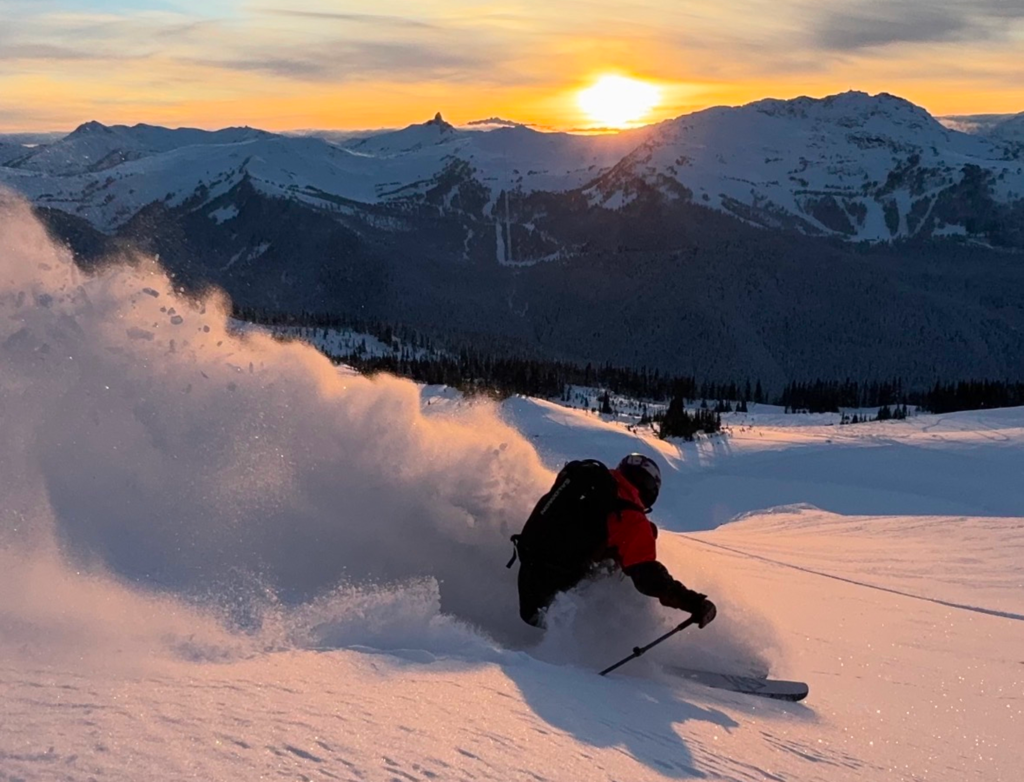
Salomon’s sustainability roadmap, known as the "Play-Minded" program, includes specific targets such as a 30% reduction in overall carbon emissions by 2030 and the elimination of perfluorinated chemicals (PFCs) from all products. One of the brand’s most notable innovations is the development of fully recyclable ski boots and footwear, designed to be disassembled and repurposed at the end of their lifecycle.
The Athlete as a Witness and Advocate
The role of the professional athlete is also undergoing a fundamental transformation. In the past, athletes were primarily valued for their performance and ability to market products. Today, they are increasingly viewed as "witnesses" to the front lines of climate change. Because athletes like Douglas spend more time in high-alpine environments than almost any other demographic, they are uniquely positioned to document the receding glaciers and erratic weather patterns that are often abstract concepts to the general public.
Protect Our Winters has capitalized on this by providing advocacy training to athletes, equipping them with the tools to speak effectively to policymakers. This strategy moves beyond consumer-level lifestyle changes—such as recycling or reducing personal travel—and focuses on systemic policy shifts. Athletes are now appearing in courthouses and boardrooms, advocating for clean energy legislation and carbon pricing.
"If we don’t speak up, who will?" Douglas asks, highlighting the moral obligation felt by those whose careers and passions are tied to the mountains. This sentiment is echoed by POW leadership, who argue that the collective voice of the 50 million people who identify as "outdoor enthusiasts" in the United States alone represents a potent political force.
Industry-Wide Implications and the Path Forward
The situation at Whistler Blackcomb is a bellwether for the rest of the industry. As summer skiing disappears and winter seasons become more volatile, the economic viability of traditional ski resorts is being challenged. This has led to a diversification of business models, with many resorts investing heavily in summer mountain biking and year-round tourism to offset the risks associated with a shrinking winter.

However, diversification is a reactive measure. Proactive industry leaders are arguing that the only long-term solution is aggressive climate mitigation. The shift toward sustainability is increasingly seen not just as an ethical choice, but as a practical business necessity. Efficiency in manufacturing saves on material costs, and a commitment to environmental values builds brand loyalty among a younger generation of consumers who prioritize ethics in their purchasing decisions.
The broader impact of this movement is the normalization of corporate political engagement. Historically, brands avoided taking stances on "political" issues like climate change for fear of alienating segments of their customer base. That dynamic has shifted. In the current landscape, silence is often interpreted as complicity. By partnering with POW, Salomon and other industry peers are signaling that climate action is a foundational requirement for any company operating in the outdoor space.
Conclusion: A Closing Window for Action
The disappearance of the Horstman Glacier as a summer skiing destination is a somber reminder that the window for meaningful climate action is narrowing. The science is unequivocal, and the physical evidence is visible on the peaks of the Coast Mountains. While the partnership between Salomon and Protect Our Winters demonstrates that progress is possible through corporate responsibility and collective advocacy, the scale of the challenge remains immense.
As Mike Douglas and other leaders in the outdoor community continue to push for change, the message to the rest of the industry is clear: the era of passive observation is over. The transition to a low-carbon economy is no longer an optional endeavor for the winter sports world; it is a prerequisite for survival. The loss of the glacier is a permanent change, but the actions taken today will determine whether the culture and industry it inspired can endure in a warming world. The "all-hands-on-deck" moment has arrived, and as the ice continues to thin, the urgency for a unified response has never been greater.
