
As the global transition toward renewable energy accelerates, reaching record levels of investment and deployment, a parallel surge in sophisticated opposition has emerged. Across social media platforms, community town halls, and national news cycles, a pervasive narrative has taken hold, characterizing clean energy as a threat to property values, agricultural stability, and ecological health. While some of these concerns stem from genuine local anxieties, a growing body of evidence suggests that much of the vitriol is the product of a coordinated disinformation campaign. This campaign, often funded by entrenched fossil fuel interests, seeks to stall the decarbonization of the global economy by sowing doubt, confusion, and division among the public.
To understand the current landscape of energy discourse, it is essential to distinguish between the two primary forms of false information currently circulating: misinformation and disinformation. While the terms are often used interchangeably, they represent different motivations and methods. Misinformation occurs when individuals share incorrect or misleading information without the intent to deceive—often a result of misunderstanding complex scientific data or repeating common myths. Disinformation, however, is the intentional seeding of false narratives designed to manipulate public opinion or protect specific economic interests.
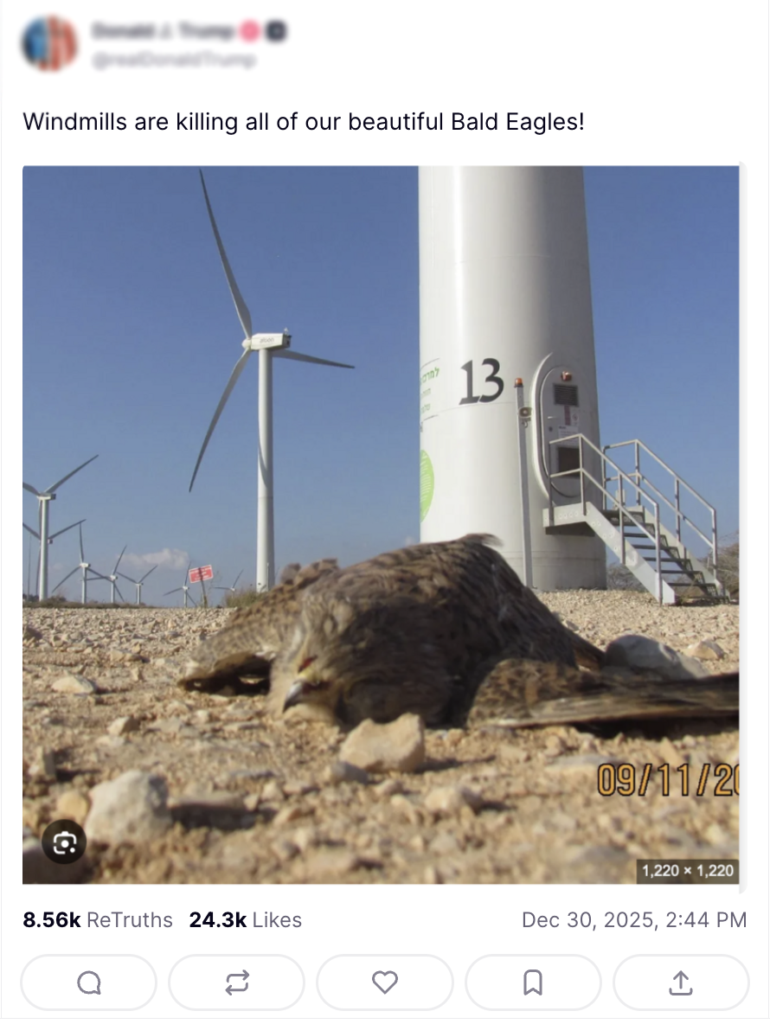
In the context of the climate crisis, both forms of information have proven effective at derailing progress. A common example involves the perceived impact of offshore wind turbines on avian populations. While it is true that turbines can pose a risk to birds, the scale of this threat is frequently exaggerated to distract from much larger systemic issues. According to data from the U.S. Fish and Wildlife Service, building collisions and domestic cats account for hundreds of millions more bird deaths annually than wind turbines. By focusing the conversation on a narrow, sensationalized claim, bad actors can shift the debate away from the broader environmental benefits of displacing coal and gas power.
A Chronology of Obstruction: The History of Climate Denial
The current wave of anti-renewable sentiment did not emerge in a vacuum. It is the latest evolution in a decades-long effort to protect the fossil fuel industry from regulatory and competitive pressure. The history of this movement can be traced back to the late 1970s and early 1980s. Internal documents from major oil companies, such as Exxon, reveal that their own scientists had accurately predicted the trajectory of global warming as early as 1977. However, rather than pivoting their business models, these entities invested heavily in public relations campaigns designed to emphasize scientific uncertainty.
In the 1990s, the formation of the Global Climate Coalition (GCC) marked a significant escalation in organized climate skepticism. The GCC, a lobby group representing the interests of the oil, coal, and auto industries, worked aggressively to prevent the United States from signing the Kyoto Protocol. As the scientific consensus on man-made climate change became undeniable in the 2000s, the strategy shifted. Instead of denying that the climate was changing, the narrative moved toward "delayism"—arguing that renewable technology was not yet ready, was too expensive, or would destroy the economy.
By the 2020s, the focus had shifted again, this time targeting the specific infrastructure of the energy transition. This current phase is characterized by "astroturfing," a practice where corporate-funded campaigns are disguised as grassroots movements. Local opposition to solar farms or wind projects is often supported by legal resources and marketing materials provided by national organizations with ties to the fossil fuel sector. This creates the illusion of widespread public rejection of clean energy, even as national polls consistently show that a majority of citizens support the transition to renewables.
Deconstructing the Narrative: EV Production and Mineral Extraction
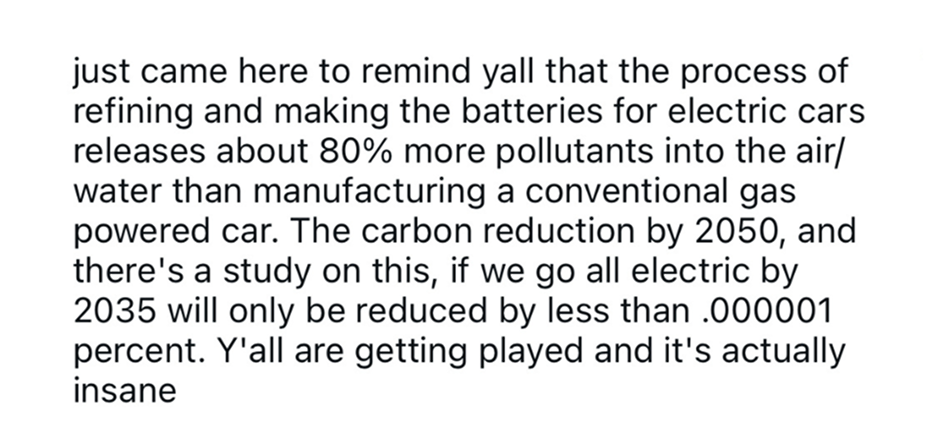
One of the most persistent arguments used to undermine the transition to electric vehicles (EVs) centers on the environmental impact of battery production and mineral mining. Critics frequently claim that the carbon footprint of manufacturing an EV and the ecological damage caused by lithium and cobalt mining make them more harmful than traditional internal combustion engine (ICE) vehicles.
While it is a factual reality that mineral extraction carries environmental and social costs, a comprehensive life-cycle analysis reveals a different picture. Researchers at the Massachusetts Institute of Technology (MIT) Energy Initiative have conducted extensive studies comparing the lifetime emissions of various vehicle types. Their findings indicate that on average, gasoline-powered cars emit more than 350 grams of CO2 per mile driven over their entire lifespan. In contrast, fully battery-electric vehicles generate approximately 200 grams per mile.
Furthermore, the "embodied carbon" in an EV battery—the emissions generated during mining and manufacturing—is typically "paid back" within the first 6 to 18 months of driving, depending on the cleanliness of the local power grid. Unlike gasoline vehicles, which require the continuous extraction and refining of fuel for every mile driven, the minerals in an EV battery are a one-time investment that can be recovered and reused. The International Energy Agency (IEA) projects that by 2040, recycled minerals could meet a significant portion of the demand for new battery production, creating a circular economy that fossil fuels cannot replicate.
The Offshore Wind Controversy and Marine Ecosystems
In recent years, offshore wind projects have become a primary target for disinformation, particularly concerning their impact on marine life. High-profile claims have linked whale strandings along the U.S. Atlantic coast to the seismic surveys conducted for wind farm development. These claims have been amplified by political figures and media outlets, leading to calls for a moratorium on offshore wind.
However, scientific agencies, including the National Oceanic and Atmospheric Administration (NOAA) and the Bureau of Ocean Energy Management (BOEM), have repeatedly stated that there is no evidence linking offshore wind activity to whale mortalities. Instead, NOAA scientists point to two primary causes for the "unusual mortality events" observed in whale populations: vessel strikes and entanglement in fishing gear.
Furthermore, climate change itself remains the single greatest threat to ocean ecosystems. Rising sea temperatures are shifting the distribution of prey species, forcing whales to venture into new areas where they are more vulnerable to ship strikes. By reducing the carbon emissions that drive ocean warming and acidification, offshore wind projects serve as a critical tool for the long-term conservation of marine habitats. While the construction of any industrial infrastructure requires careful environmental oversight, the risks associated with wind power are significantly lower than the catastrophic potential of offshore oil spills or the slow degradation caused by fossil fuel-induced climate change.
The Economic Reality: Cost and Grid Reliability
A secondary pillar of the anti-renewable campaign focuses on the alleged unreliability and high cost of clean energy. Critics often point to extreme weather events, such as the 2021 Texas blackout, as evidence that the grid cannot handle a high percentage of renewables.
Post-event analysis by the Federal Energy Regulatory Commission (FERC) debunked this narrative. The primary cause of the Texas grid failure was the lack of weatherization in the state’s natural gas infrastructure. Gas wells froze, and pipelines lost pressure, preventing power plants from operating. In fact, wind and solar assets performed largely as expected or even exceeded expectations during the crisis.
Economically, the argument against renewables has become increasingly difficult to sustain. According to the 2023 Levelized Cost of Energy (LCOE) report from Lazard, the cost of utility-scale solar and wind has plummeted by roughly 90% and 70%, respectively, over the last decade. In many parts of the world, building new wind or solar capacity is now cheaper than continuing to operate existing coal or gas plants. This economic reality is driving the transition as much as environmental policy, as utility companies and investors seek the lowest-cost energy sources.

Broader Implications and the Path to Media Literacy
The proliferation of disinformation poses a significant threat to global climate goals. When public discourse is poisoned by false narratives, it creates political friction that slows the permitting of essential infrastructure, delays the phase-out of high-emitting assets, and discourages private investment. The result is a prolonged reliance on fossil fuels, which exacerbates the physical and economic risks of climate change.
Addressing this challenge requires a multi-faceted approach. On a systemic level, there are increasing calls for greater transparency in political spending and stricter regulations on the funding of "astroturf" organizations. On an individual level, the burden falls on citizens to develop the media literacy skills necessary to navigate a digital environment saturated with conflicting claims.
Experts suggest several strategies for identifying energy disinformation:
- Source Verification: Investigate whether an organization making large claims has a history of fossil fuel funding or if the "experts" cited have relevant scientific credentials.
- Contextual Analysis: Be wary of "red herring" arguments that focus on a single negative aspect of renewables without comparing it to the equivalent impact of the fossil fuel industry.
- Scientific Consensus: Look for information from reputable scientific bodies, such as the Intergovernmental Panel on Climate Change (IPCC) or national academies of science, rather than isolated social media posts or opinion pieces.
The transition to a clean energy economy is a massive undertaking that involves real trade-offs and legitimate questions about land use, resource extraction, and community impact. However, for these questions to lead to productive solutions, they must be based on factual reality rather than manufactured fear. By debunking disinformation and focusing on data-driven progress, society can ensure that the move toward a sustainable future is both responsible and timely. The cost of inaction, fueled by a campaign of doubt, is a price the global community can no longer afford to pay.
