
Yellowstone National Park, established in 1872 as the world’s inaugural national park, stands as a testament to the Earth’s raw power, celebrated globally for its extraordinary geothermal features. The intricate network of boardwalks weaving through these volatile areas is not merely a convenience for the park’s millions of annual visitors; it is a critical engineering feat designed to ensure both human safety and the preservation of delicate, often fragile, ecosystems. This extensive infrastructure, spanning over 15 miles, represents a continuous effort by park management to balance accessibility with environmental stewardship, adapting to the dynamic nature of Yellowstone’s thermal landscape.
The ongoing construction and maintenance of these boardwalks underscore the unique challenges faced by Yellowstone National Park. Unlike conventional construction projects, building in geothermal zones demands meticulous planning and specialized techniques. Park staff must navigate areas characterized by extreme temperatures, corrosive gases, and unstable ground, all while protecting the unique flora and fauna that have adapted to these harsh conditions. The process involves extensive surveys, including botanical assessments to identify and safeguard rare plant species, and the use of thermal imaging to map heat signatures and determine the safest and most stable routes. This scientific rigor ensures that visitor access does not lead to ecological degradation, a core tenet of the National Park Service’s mission.
The Evolution and Necessity of Yellowstone’s Boardwalks
The concept of boardwalks in Yellowstone’s thermal basins emerged as a practical solution to a growing problem: the increasing number of visitors venturing too close to hazardous geysers, hot springs, and mudpots. Early visitors, captivated by the otherworldly beauty, often strayed from designated paths, leading to injuries and damage to the sensitive microbial mats and mineral formations that define these areas. The development of a comprehensive boardwalk system began in earnest in the early 20th century, evolving over decades to become the sophisticated network present today.
The current infrastructure is a testament to this long-term commitment. Sections of boardwalk are routinely rebuilt or extended each year, a necessity driven by both natural processes and the sheer volume of foot traffic. Geothermal features are not static; they shift, expand, and recede, often altering the ground beneath existing structures. This constant flux necessitates ongoing adaptation of the boardwalk routes to maintain safe passage and prevent erosion or disturbance of the underlying thermal features.
Engineering for Extremes: The Construction Process
The construction of Yellowstone’s boardwalks is far from a simple undertaking. The engineering and construction teams must contend with a variety of environmental hazards. The ground itself can be deceptively fragile, with thin crusts concealing boiling water or acidic mud. High concentrations of sulfur dioxide and hydrogen sulfide can corrode materials and pose respiratory risks to workers. Furthermore, the presence of large wildlife, such as bison and grizzly bears, adds another layer of complexity.
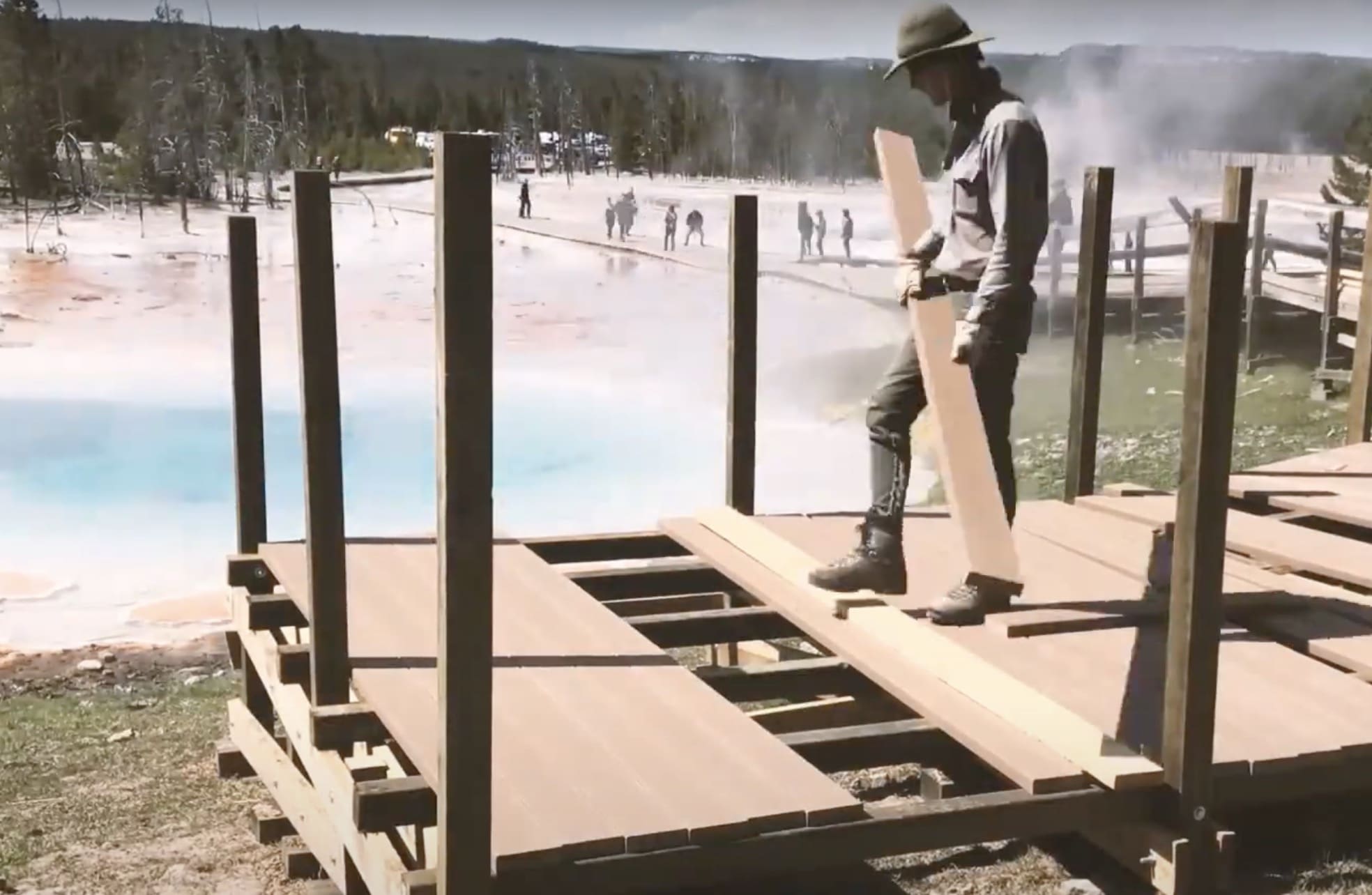
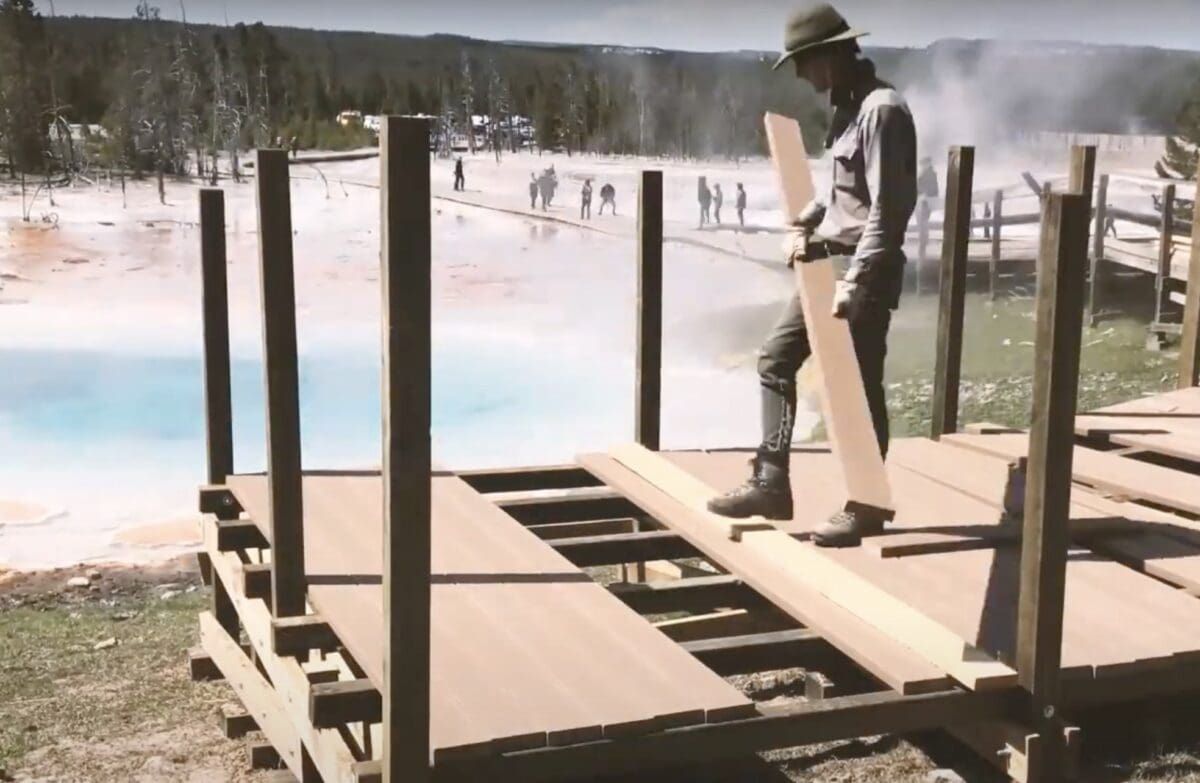
When planning new boardwalks or renovating existing sections, the process begins with thorough geological and ecological surveys. Botanists meticulously map the distribution of plant life, particularly rare or endemic species that are highly susceptible to trampling. Hydrologists and geologists assess the thermal activity, identifying areas of high heat flow, potential geyser eruptions, and subsurface instability. This data informs the precise placement of pilings and the overall layout of the boardwalk, ensuring it skirts the most hazardous zones and minimizes impact on the surrounding environment.
Materials are carefully selected for their durability and resistance to corrosion. Treated lumber, composite decking, and specialized fasteners are commonly employed. The foundation often involves driving pilings deep into the ground to reach stable strata, a process that can be challenging in areas with fluctuating water tables or soft sediment. The design must also account for the expansion and contraction of materials due to extreme temperature fluctuations, a common occurrence in Yellowstone’s high-altitude environment.
Wildlife Encounters: When Nature Reclaims the Path
While the boardwalks are designed for human passage, they also serve as convenient thoroughfares for Yellowstone’s abundant wildlife. Bison, elk, and even bears are frequently observed traversing these elevated walkways, particularly during periods of high visitor activity when they may seek refuge on the less crowded structures. This cohabitation, while often a highlight for visitors, can also present unexpected challenges to the infrastructure.
The sheer weight and power of animals like bison, which can weigh up to 2,000 pounds, can exert significant stress on the boardwalks. Instances have been documented where a well-placed hoof or the abrasive action of an animal rubbing against a railing has compromised the structural integrity of sections of the boardwalk. Such events necessitate immediate repairs and reinforce the need for robust construction and vigilant monitoring. The park service regularly patrols these areas, assessing the condition of the boardwalks and responding to any damage caused by wildlife or environmental factors.
A notable example of this phenomenon occurred at Norris Geyser Basin, where a large bison was filmed cracking through a section of boardwalk. This incident, widely shared on social media, highlighted the dynamic interplay between human infrastructure and wild animals in Yellowstone. While such events are relatively rare, they serve as a potent reminder of the park’s wild nature and the constant need for adaptation in managing its resources.
Safety and Preservation: A Dual Mandate
The primary purpose of the boardwalks is to ensure visitor safety while protecting the park’s unique thermal features. Stepping off a boardwalk can lead to severe burns from boiling water, slips into scalding mudpots, or falls into deep, unseen crevices. The park service employs a multi-faceted approach to safety, including educational signage, ranger patrols, and the continuous maintenance of the boardwalks themselves.
The educational aspect is crucial. Visitors are constantly reminded of the dangers of straying from the designated paths and the importance of respecting the natural environment. Signage near thermal features provides information about the specific hazards and the ecological significance of the area. Park rangers actively engage with visitors, answering questions and reinforcing safety guidelines.
The implication of these safety measures extends beyond immediate injury prevention. By keeping visitors on the boardwalks, the park service minimizes human impact on the fragile geothermal landscapes. The microbial mats that thrive in the hot, mineral-rich waters are incredibly delicate and can be destroyed by a single footprint. The mineral formations, built up over centuries by the action of hot springs, can be easily broken or eroded. The boardwalks, therefore, act as a vital barrier, allowing millions of people to witness these wonders without causing irreparable harm.
Future Considerations and Ongoing Challenges
Looking ahead, Yellowstone National Park faces continued challenges in maintaining and expanding its boardwalk infrastructure. Climate change presents a potential threat, with altered precipitation patterns and increased frequency of extreme weather events potentially impacting the stability of thermal areas and the longevity of construction materials. The growing number of visitors also places increasing demands on the park’s facilities.
Park planners are continuously exploring innovative construction techniques and materials to enhance the durability and sustainability of the boardwalks. Research into self-healing materials or modular designs that can be easily replaced or adapted is ongoing. Furthermore, the park service is committed to integrating traditional ecological knowledge with modern engineering practices to ensure that future developments are in harmony with the natural environment.
The story of Yellowstone’s boardwalks is one of continuous adaptation, scientific innovation, and a deep-seated commitment to conservation. They are more than just pathways; they are intricate engineering solutions that enable us to witness the raw, untamed beauty of our planet’s geothermal heart, ensuring that these wonders are preserved for generations to come. The ongoing efforts to build, maintain, and adapt these structures reflect a profound respect for both the power of nature and the importance of responsible human interaction with it.
