
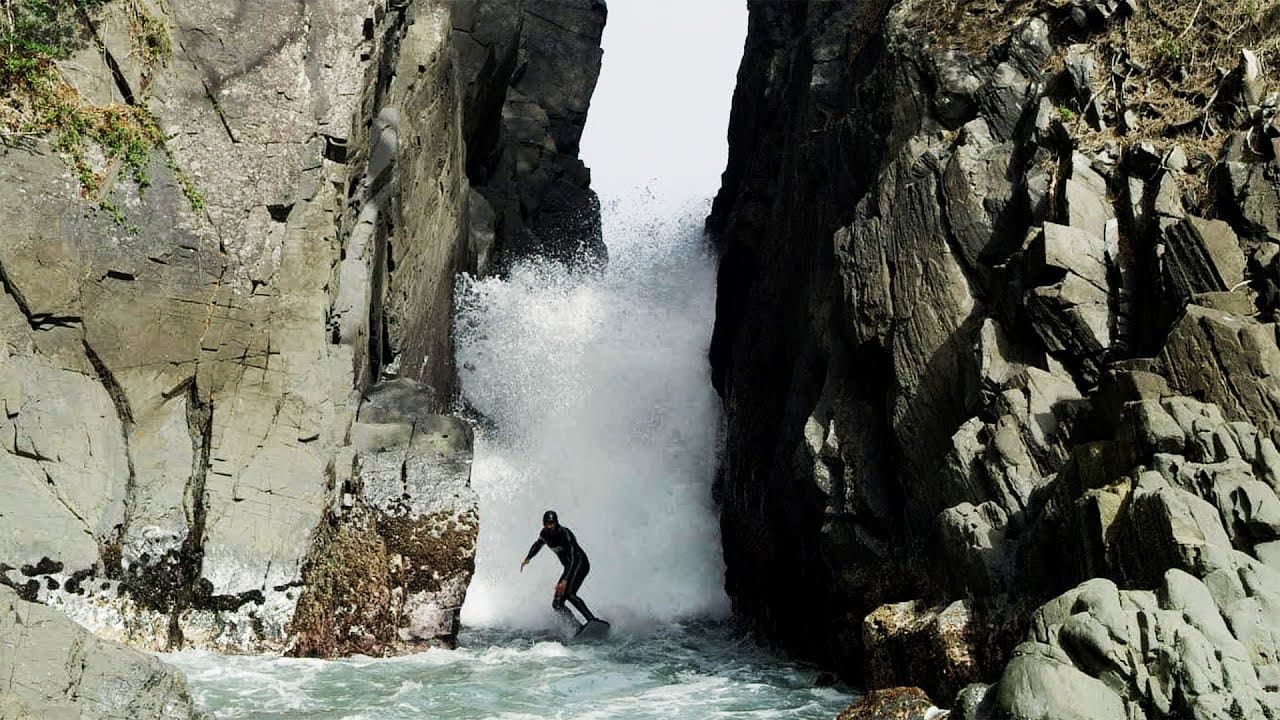
The stark, dramatic landscape of Northern Japan has become the backdrop for an extraordinary display of surfing prowess, as captured in a recent viral video. Professional surfer Dylan Graves, accompanied by local Japanese wave rider Keito Matsuoka, successfully navigated the formidable and exceptionally narrow rock formation colloquially known as "God’s Crack." This natural geological marvel presents a unique and challenging aquatic environment, where the ocean’s power is channeled through an almost impossibly confined space. The feat, documented and shared widely, highlights not only the surfers’ exceptional skill and bravery but also the captivating allure of Japan’s less-explored coastal wonders.
The Genesis of a Remarkable Ride
The expedition to "God’s Crack" was not a spur-of-the-moment decision but rather the culmination of local knowledge and an adventurous spirit. Keito Matsuoka, a surfer deeply familiar with the coastal intricacies of Northern Japan, brought Dylan Graves to this specific, awe-inspiring location. Matsuoka’s insistence on exploring this wave, described as a "unique wave," underscores its reputation within the local surfing community. The inherent danger and extreme conditions of "God’s Crack" necessitate a profound understanding of the ocean and the geological features that shape it, making it a destination reserved for the most experienced and daring individuals.
The legend surrounding the formation of "God’s Crack" adds a layer of mystique to the already compelling natural spectacle. According to local lore, the rock formation’s dramatic split is attributed to a divine intervention. The narrative recounts a historical event where a whale carcass washed ashore, leading to a prolonged dispute among local communities vying for its claim. It is said that after three days of contention, a bolt of lightning struck the rock, cleaving it into two distinct sections. This cataclysmic event was interpreted as a celestial sign, a divine decree for the communities to share the bounty, thus giving the formation its evocative name. This origin story imbues the location with cultural and spiritual significance, enhancing its appeal beyond its purely geological and surfing merits.
The Challenge and Execution
Upon reaching the site, Graves and Matsuoka faced the critical decision of whether the wave was indeed rideable given the extreme narrowness of the rock walls. This assessment would have involved a careful observation of wave dynamics, tidal conditions, and the precise geometry of the channel. The potential for injury in such a confined space is exceptionally high, with any miscalculation potentially leading to severe consequences. The surfers’ decision to paddle out and attempt to catch waves signifies a high degree of confidence in their abilities and a thorough, albeit brief, evaluation of the risks involved.
The video evidence confirms the successful execution of their objective. Both surfers are shown skillfully maneuvering their boards within the tight confines of "God’s Crack," demonstrating remarkable balance, timing, and control. The visual of a surfer riding a wave through this natural chasm is both exhilarating and breathtaking, showcasing the raw power of nature and the human capacity to engage with it at its most extreme. The successful rides were met with a celebratory acknowledgement, signified by the Japanese toast "Kanpai!" – a fitting exclamation for such an audacious and successful endeavor.
Supporting Data and Context
While specific data on the dimensions of "God’s Crack" and the wave conditions during the recorded session are not publicly available, general information about coastal erosion and wave dynamics provides context. Narrow sea channels, often formed by differential erosion of rock types or tectonic activity, can act as natural wave amplifiers and guides. The phenomenon of wave refraction and shoaling within such confined spaces can lead to increased wave height and power. The average wave height in Japan varies significantly by region and season, with some areas experiencing swells of considerable size, particularly during typhoon season. The geological composition of Northern Japan includes volcanic rock formations, which are susceptible to fracturing and erosion, potentially leading to the formation of features like "God’s Crack." The precise age of the geological event that formed the crack, based on the legend, is impossible to ascertain scientifically, but geological processes of this nature can occur over millennia.
The popularity of extreme sports, including big wave surfing and narrow chute skiing/snowboarding, has seen a significant increase in recent decades. This trend is often fueled by social media, where visually striking feats can gain global traction, inspiring others and attracting commercial interest. The risk-reward ratio in these activities is inherently high, demanding extensive training, specialized equipment, and a deep respect for the environment. For surfers like Dylan Graves, a professional known for seeking out challenging and unconventional waves, expeditions to locations like "God’s Crack" are part of their career trajectory and a testament to their dedication to pushing the boundaries of the sport.

Broader Impact and Implications
The footage of surfing "God’s Crack" has significant implications for several areas. Firstly, it serves as a powerful testament to the diverse and often overlooked natural wonders present in Japan’s coastal regions. Such spectacles can attract tourism, encouraging visitors to explore beyond the well-trodden paths and engage with the natural environment responsibly. This, in turn, can foster a greater appreciation for marine conservation and the preservation of unique geological formations.
Secondly, the event highlights the ongoing evolution of extreme sports. The ability to identify, assess, and successfully ride waves in such an unprecedented environment signifies a new frontier in surfing. It may inspire other surfers to seek out similar geological features, potentially leading to new discoveries and further advancements in wave riding techniques.
However, this also raises important considerations regarding safety and environmental impact. The increased attention on "God’s Crack" necessitates a careful balance between showcasing its allure and ensuring its protection. Local authorities and environmental groups may need to consider guidelines or regulations to manage visitor access and mitigate any potential negative consequences. The legend of "sharing" the whale carcass, while apocryphal, can be reinterpreted as a modern-day call for responsible stewardship of these natural treasures, ensuring they remain for future generations to appreciate and, for the most skilled, to ride. The successful navigation of "God’s Crack" is not merely a sporting achievement; it is a narrative of human daring, natural wonder, and the enduring allure of the unexplored.

