
For Canadian speed skier Stef Fleckenstein, the landscape of her career has been irrevocably altered, marked by a journey that few athletes endure and even fewer successfully navigate. Two years ago, her competitive future hung precariously in the balance following a catastrophic crash. Today, however, Fleckenstein stands as the reigning NorAm downhill overall champion, a title that not only signifies her triumphant return but also secures her a coveted start spot in every World Cup downhill race for the 2026/2027 season. This remarkable achievement transcends mere athletic prowess; it is a testament to an extraordinary will, a profound redefinition of risk, and an unwavering commitment to a sport that nearly claimed her leg.
Her current status as a formidable force in alpine racing belies the harrowing path she forged to get here. The narrative of her comeback is intrinsically linked to a fateful day in Val d’Isère, a crash so severe it precipitated seven surgeries, a prolonged hospital stay, and a two-year battle against medical complications, physical limitations, and the psychological toll of uncertainty. This period of intense struggle reshaped not only her approach to ski racing but also her fundamental understanding of resilience, gratitude, and the relentless pursuit of progress when faced with odds that seemed insurmountable.
The Val d’Isère Nightmare: A Crash That Changed Everything
Val d’Isère, France, is renowned as one of the most demanding and iconic venues on the FIS Alpine Ski World Cup circuit. Its steep pitches, icy conditions, and high-speed sections demand absolute precision and courage from the world’s elite skiers. It was on this unforgiving terrain, two years prior, that Stef Fleckenstein’s career, and indeed her physical well-being, faced its gravest challenge.
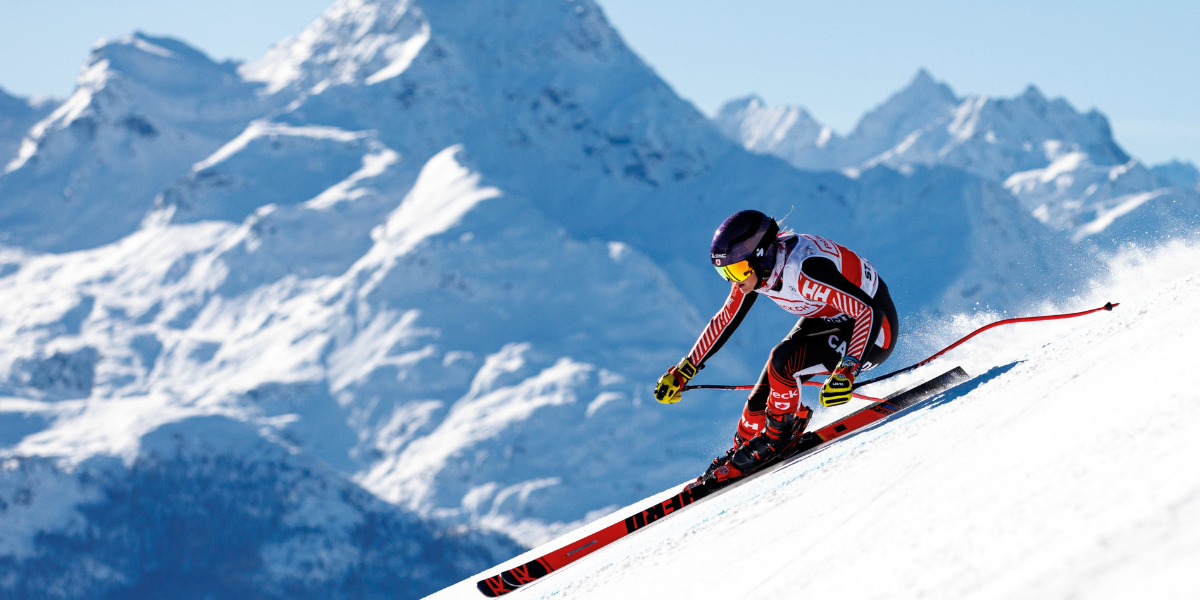
In the immediate aftermath of her brutal fall, a chilling clarity cut through the chaos. “I honestly felt like my leg was just gone. I couldn’t feel anything,” Fleckenstein recounted, detailing a scene that would haunt any athlete. “I looked at it and could see the top of my tibia and the end of my femur. It was just scary.” The graphic nature of the injury suggested a potential career-ending, or even life-altering, outcome. Most individuals would be consumed by panic in such a dire situation. Yet, Fleckenstein’s mind, remarkably, pivoted to a rapid, almost detached assessment of her remaining faculties. “I was just so happy I could feel everything else. I didn’t hit my head. I was fully conscious,” she observed. “I remember thinking, okay, it is just my leg.” This seemingly simple, almost stoic thought became the unexpected bedrock of her arduous recovery, providing a nascent framework for survival rather than surrender.
The impact of such a severe injury in a high-speed sport like downhill skiing cannot be overstated. According to various sports medicine studies, severe lower limb trauma, particularly involving multiple bone and soft tissue structures, carries a significant risk of long-term disability and often forces athletes into early retirement. Fleckenstein’s injury, exposing bone and causing extensive tissue damage, immediately placed her in a critical category, where the priority shifted from athletic performance to limb salvage.
A Race Against Time: Battling Compartment Syndrome
The gravity of Fleckenstein’s situation escalated rapidly. Shortly after the initial trauma, she developed compartment syndrome, a critical medical emergency characterized by increased pressure within one of the body’s muscle compartments. This pressure can cut off blood supply to the muscles and nerves, leading to permanent damage or, if left untreated, amputation. The urgency was immediate and profound; her life, and certainly her leg, was now on the line.
“They told me I basically had five days to come up with a plan or I was going to lose my leg,” Fleckenstein revealed, highlighting the terrifying race against the clock. The diagnosis necessitated immediate, aggressive surgical intervention. Her leg was left open after the emergency procedure, a common practice to relieve pressure and prevent further tissue necrosis. This dire prognosis galvanized her family, who, in conjunction with the Austrian Ski Federation, worked tirelessly to secure a transfer to a specialist facility in Austria, renowned for its expertise in complex orthopedic trauma.
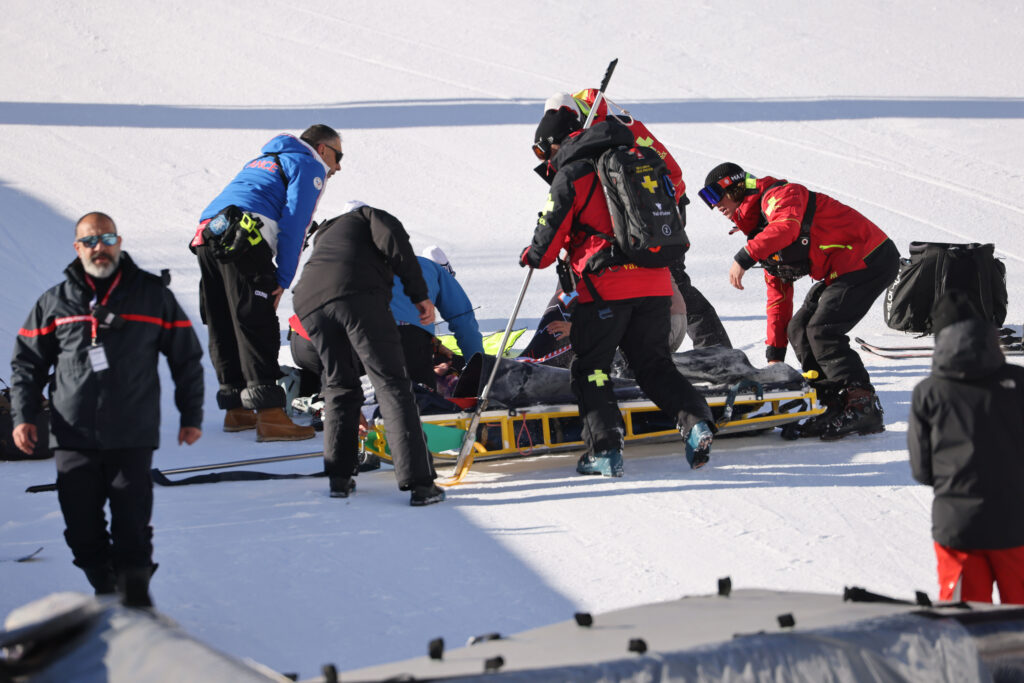
She was swiftly airlifted to Austria, where she was immediately prepped for what would become a marathon 17-hour surgery. This extensive operation was a desperate attempt to reconstruct and repair the extensive damage to her leg. “It was honestly a miracle,” she reflected on the intricate procedure. “They fixed everything except my ACL. At that point it was just about saving my leg.” The anterior cruciate ligament (ACL) is a crucial stabilizer in the knee, and its repair would be deferred until the more immediate, life-threatening issues were addressed. This strategic decision underscored the severity of her condition; functional recovery was secondary to preserving the limb itself.
The 17-hour surgery, however, was merely the first chapter in a long and painful medical saga. Fleckenstein spent nearly six weeks hospitalized, her world confined to the sterile environment of recovery and agonizing uncertainty. This period was followed by an unrelenting regimen of rehabilitation and additional procedures. In total, she underwent seven surgeries, each a necessary step in the painstaking process of mending her shattered limb. There was no single, dramatic turning point in her recovery; rather, it was a protracted, grinding battle where progress was measured in infinitesimal increments, and the outcome remained perpetually uncertain. Every decision, every day, was a hard-earned victory in itself.
Rebuilding from the Ground Up: The Micro-Victories of Recovery
The path to recovery for an injury of this magnitude is not paved with grand breakthroughs but with a mosaic of micro-victories. For Fleckenstein, these seemingly insignificant moments carried immense personal weight, marking her gradual return from the brink. Progress was redefined, measured not by traditional athletic milestones but by the reclamation of basic human functions that most take for granted. “The first day I took three steps on crutches was crazy to me,” she shared, her voice still reflecting the wonder of that initial movement. “The first time I could lift my leg on my own. Even being able to stand up.” Each of these fundamental steps, no matter how small, represented a significant shift from a state of critical dependence toward nascent independence.
The profound loss of basic autonomy forced a radical recalibration of her values. Tasks that were once automatic now demanded immense effort, patience, and unwavering focus. “Being able to take a shower on my own or walk with one crutch, those were huge milestones,” she emphasized. “When you lose that, you realize how much you take it for granted.” These everyday triumphs instilled a deeper appreciation for the intricate mechanics of her body and the sheer privilege of normal function.
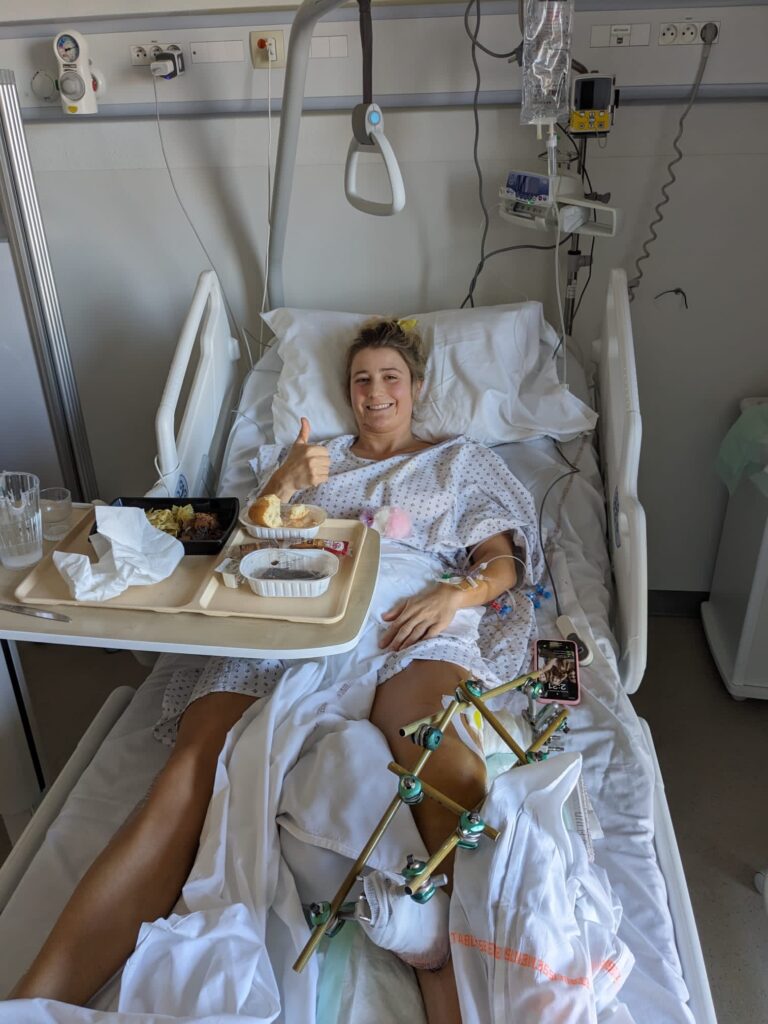
Concurrently, the mental aspect of her recovery was an ever-present, demanding companion. Even as her physical wounds began to heal, a heightened awareness of her body’s vulnerability remained. “You have to be locked in all the time,” she explained. “I still don’t walk down stairs without thinking about every step.” This persistent vigilance has not faded; instead, it has become an integral part of her being, a constant, visceral reminder of the immense challenges she overcame and the distance she has traveled. This mental fortitude, the ability to maintain unwavering focus through protracted discomfort and uncertainty, is a hallmark of elite athletes, but Fleckenstein’s experience deepened this quality to an extraordinary degree.
A Deepened Understanding of Gratitude
Fleckenstein frequently speaks of gratitude, but her perspective on it has undergone a significant evolution. In the initial phases of her recovery, she admits her gratitude felt somewhat superficial, a sentiment expressed more out of obligation than profound understanding. “At the beginning, my gratitude was very surface,” she confessed. “I would say I am grateful for my family or my life, but it was repetitive.” It was a mindset shaped by the immediate shock of her circumstances rather than a truly integrated perspective.
This superficiality gradually eroded, replaced by a deeper, more authentic appreciation forged in the daily crucible of rehabilitation. As progress manifested in agonizingly slow, hard-won steps, she began to notice and cherish aspects of life she had previously overlooked. “I started to realize that everything your body gives you is something to be grateful for. Some days it was as small as being able to sit without pain or make it up the stairs.” These incremental victories, often invisible to an outside observer, fundamentally reframed her perception of both her physical self and her journey.
Over time, this profound awareness of her body’s resilience and the sheer fortune of her recovery became one of the most meaningful facets of her comeback. It provided an anchor during periods of doubt and served as a constant reminder of how precariously close she had come to a different, far more devastating outcome. “A lot of what happened could have gone very differently,” she reflected. “There were a lot of moments that were honestly miracles.” This hard-earned gratitude now fuels her renewed passion for skiing, transforming it into more than just a sport but a celebration of life and movement.
The Return to the Gates: NorAm Triumph
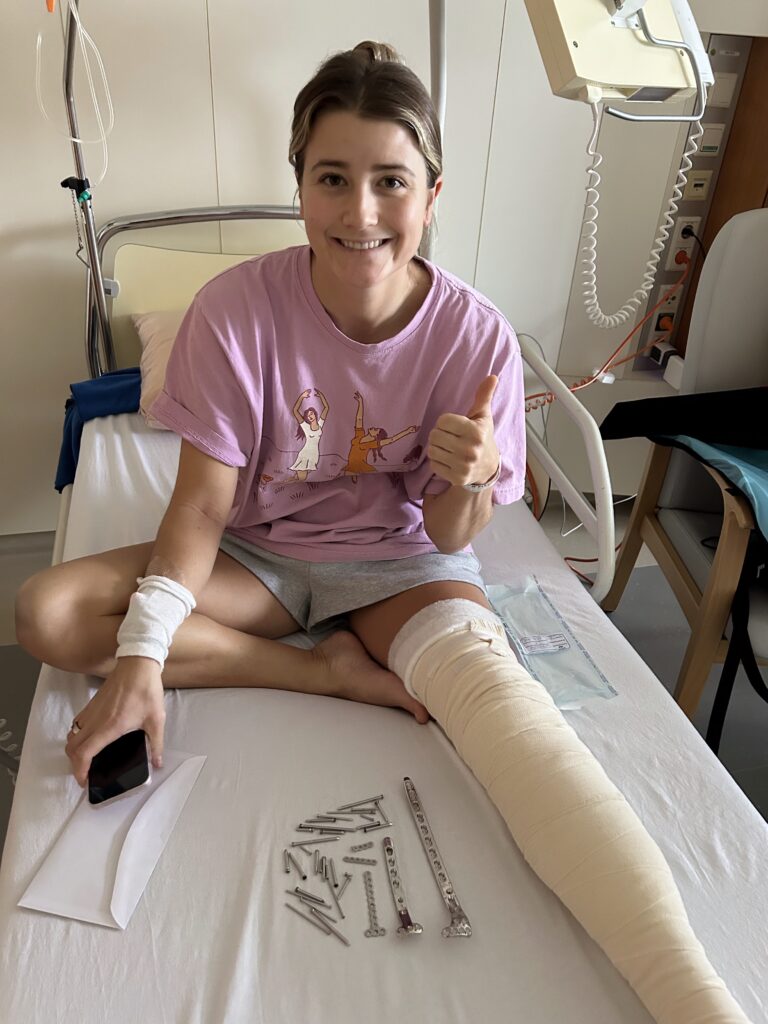
Nearly two years after the life-altering crash, the moment of truth arrived: Fleckenstein’s return to competitive racing at a NorAm downhill event in Whiteface, NY. This occasion was a potent cocktail of excitement and trepidation. The nerves were palpable, almost overwhelming. “I was so nervous I felt like I was going to throw up at the start,” she admitted. It was her first true test back in the high-stakes, high-speed environment of a race, where physical capability, mental fortitude, and competitive pressure converge.
Yet, the moment she exploded from the starting gate, something shifted. As the course unfolded beneath her skis, instinct, honed over years of training and competition, began to reassert itself. By the time she crossed the finish line of that first training run, the gnawing doubt had evaporated, replaced by an exhilarating sense of triumph. “When I got to the bottom of that first training run, it was probably the most euphoric moment. I was like, I can do this.” It was more than mere relief; it was a powerful resurgence of self-belief, the profound realization that she could still perform at the elite level she had fought so desperately to regain.
What followed was a swift, almost unexpected, ascent. Within weeks of her return, Fleckenstein wasn’t just participating; she was winning. Her performances rapidly gained momentum, culminating in her capture of the NorAm downhill overall title. This was not merely a symbolic comeback; it was a powerful, quantifiable validation of her extraordinary journey. “It was very validating,” she stated with quiet pride. “But more than that, it just means I have a path again.” The NorAm circuit, a vital developmental pathway in North American alpine skiing, serves as a crucial proving ground for aspiring World Cup athletes. Winning the overall title not only demonstrated her return to form but also granted her the essential World Cup start rights, a tangible reward for her unparalleled perseverance.
A Different Kind of Athlete: Redefining Risk
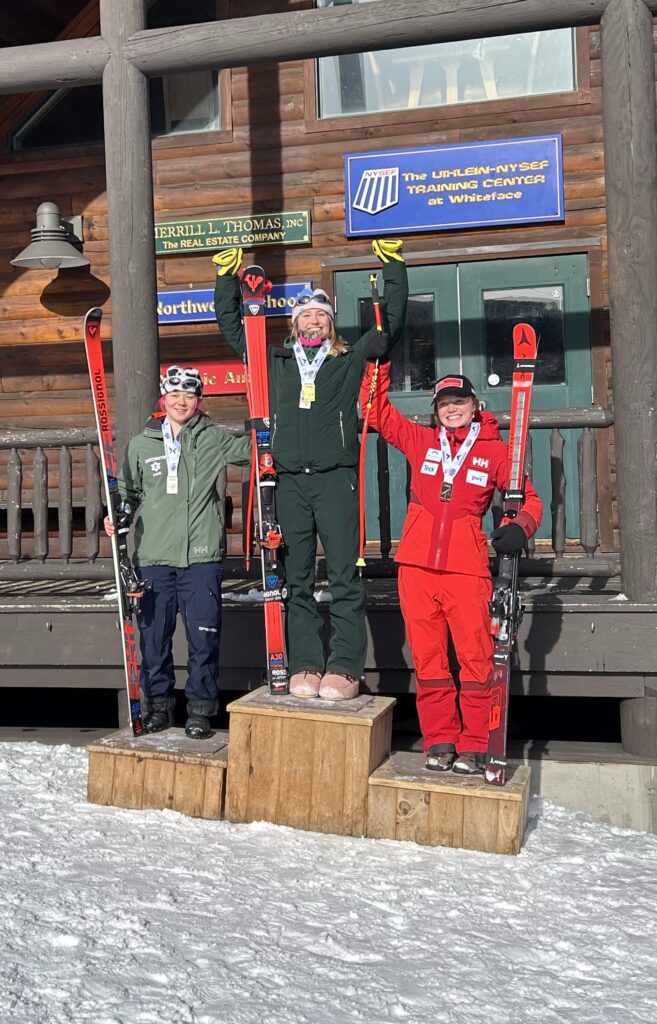
The Stef Fleckenstein who is now preparing to rejoin the World Cup circuit is fundamentally different from the athlete who left it. Prior to her injury, her approach to speed skiing was characterized by an almost primal instinct and an unquestioning commitment to pushing limits. “I think I used to just go full gas with no thought,” she reflected. This mindset, while common in the high-risk discipline of downhill, has been profoundly reevaluated through the crucible of her experience.
Returning from an injury that nearly cost her a limb has reshaped her perception of risk. It is no longer something to be blindly ignored or simply accepted, but rather something to be deeply understood, meticulously managed, and strategically navigated. “I have a different understanding of risk. I don’t think you have to go beyond your ability to be fast. It can be technical and tactical.” This nuanced shift reflects not only the hard-won wisdom of experience but also a more sustainable, intelligent approach to a sport inherently fraught with danger. It’s a balance between aggressive intent and precise execution, where raw speed is augmented by a sophisticated understanding of line, terrain, and personal limits.
Her relationship with the sport itself has also evolved dramatically. What was once primarily a pursuit of performance and progression now carries a deeper, more expansive appreciation for every facet of the alpine skiing world. “I always loved skiing, but now I understand how special this life is,” she mused. “The community, the people, the support. I feel very lucky to be part of it.” The enforced hiatus provided her with a perspective that is often elusive amidst the relentless demands of elite competition. This broadened outlook, infused with profound gratitude, is a powerful asset she now carries as she steps back into the intense crucible of the World Cup.
Forging a Path Forward: Implications for Canadian Women’s Speed
As Fleckenstein prepares for her return to the World Cup, she is also stepping into a system where the pathway for women in speed disciplines, particularly within Alpine Canada, is still very much in development. Unlike some other leading ski nations, Canada currently lacks a dedicated World Cup speed team for women. While athletes like Valérie Grenier and Cassidy Gray have achieved success in speed events, they often do so alongside technical disciplines, without the singular, specialized focus that downhill and super-G typically demand at the highest international level.
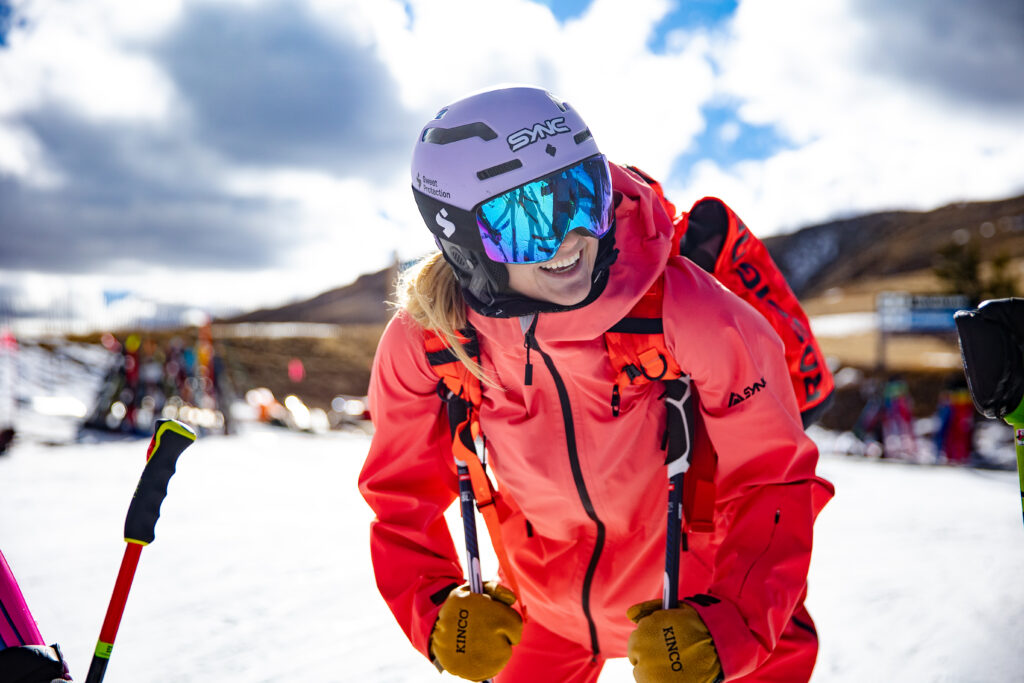
Rather than perceiving this structural gap as a limitation, Fleckenstein views it as an opportunity to contribute to its evolution. “We have proven that you can do it on your own. It is hard, but it is possible,” she asserted, highlighting the self-reliance and grit required of Canadian speed athletes. Her return to the World Cup stage is accompanied by a broader hope that the next steps in her career, and for Canadian women’s speed skiing generally, will not be taken in isolation. As she readies herself for a full downhill season, there is a distinct sense that greater alignment and institutional support from Alpine Canada could significantly bolster not only her individual trajectory but also the future prospects of Canadian women in speed disciplines as a collective.
Fleckenstein’s focus extends beyond her personal ambitions. She understands the crucial role of visibility and representation in inspiring the next generation. “There are young Canadian athletes who want to race speed. They are putting in the work and taking those risks,” she emphasized. “They need to be able to see that there is a future for them in it.” Her presence on the World Cup circuit, particularly given her extraordinary comeback story, serves as a powerful beacon of possibility. Visibility matters; representation matters. Progress, sometimes, originates from athletes willing to demonstrate what is achievable even before the institutional structures are fully in place. However, lasting progress, she firmly believes, is ultimately realized when that individual momentum is met with robust, systemic support. “If I can help make that path clearer, even just a little bit, then that is something I am really proud of.”
A Second Chance, Sharpened Ambition
Ultimately, Stef Fleckenstein’s narrative is defined not solely by the severity of her injury or the sheer improbability of her comeback, but by the profound way she now embraces the second chance bestowed upon her. “I just feel so lucky to be getting a second chance,” she reiterated. “A lot of people with injuries like mine do not get that.” This profound perspective has not, however, diminished her competitive drive. If anything, it has sharpened it, focusing her ambition with renewed clarity and purpose. “I still have big goals. I am not doing this just to participate. I want to compete,” she declared. “But at the same time, everything now feels like a bonus.”
Two years ago, Stef Fleckenstein was engaged in a desperate fight to save her leg, her career seemingly over. Today, she is meticulously preparing for a full 2026-27 World Cup downhill season, every start a testament to her indomitable spirit. She carries with her a deeper wellspring of resilience, a sharper, more nuanced perspective on her sport, and an unshakeable, hard-earned gratitude, built painstakingly, step by agonizing step, along an unimaginable path back to the pinnacle of alpine racing. Her story is not just one of survival, but of transformation, an inspiring blueprint for how to not only overcome adversity but to emerge from it stronger, wiser, and more profoundly connected to one’s purpose.

