
The European Alps are currently undergoing a period of profound geological instability, characterized by a visible increase in rockfalls, landslides, and ice collapses that threaten both high-altitude infrastructure and valley communities. As temperatures in the Alpine region continue to rise at nearly twice the global average, the mechanisms holding these massive rock formations together are being fundamentally altered. Robert Kenner, a prominent permafrost researcher from the WSL Institute for Snow and Avalanche Research (SLF), has provided a comprehensive analysis of the complex relationship between thawing permafrost, melting glaciers, and the structural integrity of mountain slopes. His findings challenge common misconceptions about "ice glue" and highlight the critical role of internal water pressure in driving catastrophic slope failures.
The Scientific Definition and Distribution of Permafrost
To understand the current volatility of the Alps, it is essential to define the thermal state of the ground. Permafrost is defined as soil, rock, or debris that remains at or below 0 degrees Celsius for at least two consecutive years. In the Swiss Alps, this frozen ground covers approximately 3% of the total land area, predominantly at elevations exceeding 2,500 meters. Unlike the deep permafrost of the Arctic, Alpine permafrost is often discontinuous and highly sensitive to seasonal fluctuations.
While the core of a mountain may contain permafrost extending several hundred meters deep, the surface layer—known as the "active layer"—is subject to annual thawing. Historically, this active layer reached a depth of about two meters during the summer months. However, recent data suggests that as summers become longer and more intense, the active layer is deepening, allowing heat to penetrate further into the mountain’s "cold core." This thermal degradation is a primary driver of the geological shifts observed over the last decade.
The Mechanics of Rock Slope Failure
The collapse of a mountain slope is rarely the result of a single factor; rather, it is the culmination of geological structure, rock properties, and topography. Every mountain contains inherent weak zones or fractures. Over millennia, gravity exerts constant stress on these zones, causing cracks to widen. For a major failure to occur, the rock face must be sufficiently steep, and there must be "accommodation space" at the base—a gap that allows the material to move.
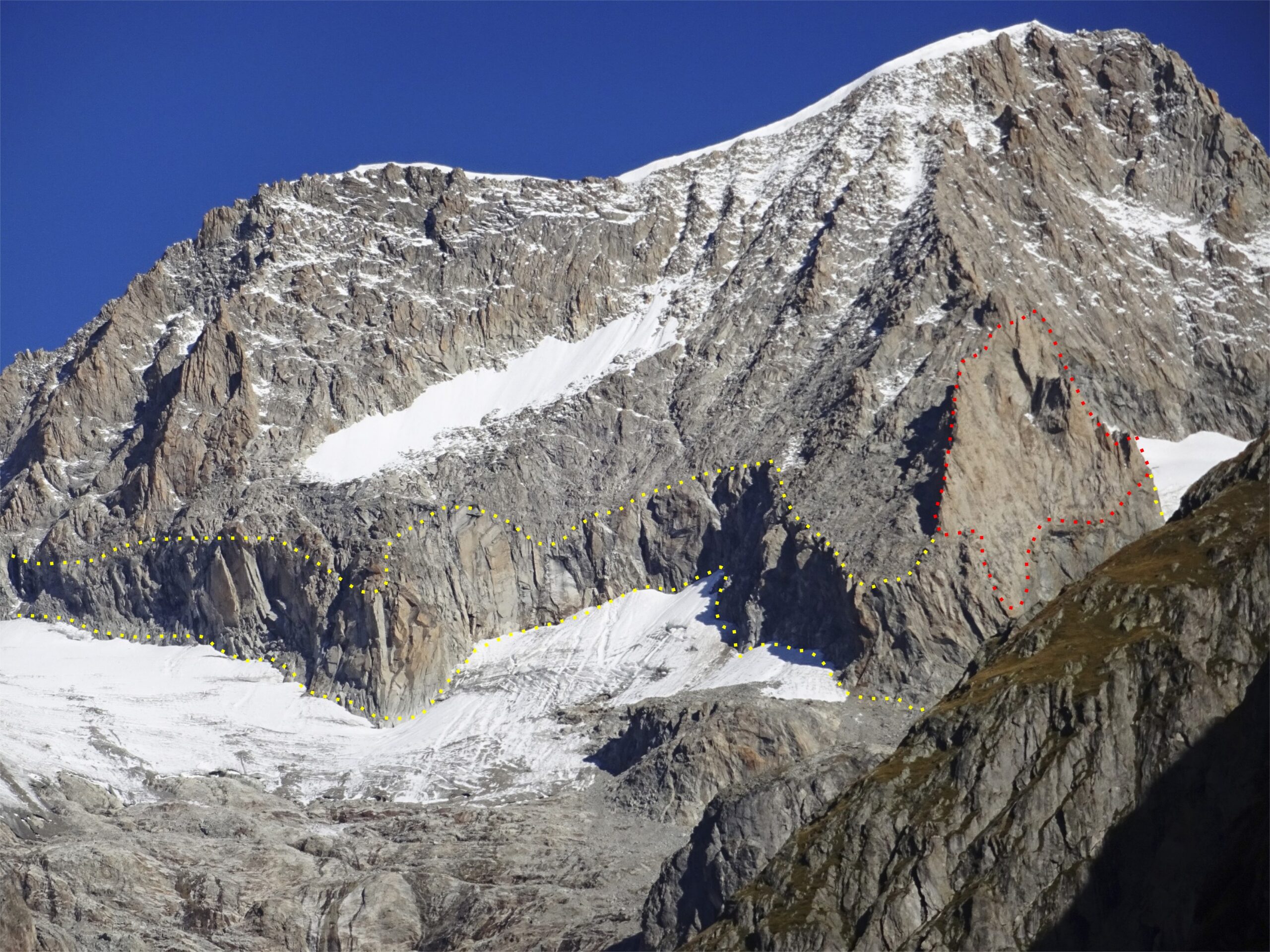
In the Alps, this space was historically occupied by glaciers. Glaciers act as a physical buttress, supporting the base or "toe" of the slope. As glaciers retreat due to global warming, they leave behind over-steepened slopes that lack foundational support. This process, known as glacial debuttressing, creates a "pile of sand" effect: when the base is removed, the material above eventually succumbs to gravity.
Debunking the Myth of Permafrost as "Alpine Glue"
A common misconception in popular media is that permafrost acts as the "glue" holding the Alps together. Kenner clarifies that while ice can stabilize small amounts of loose debris, its role in large-scale mountain stability is far more complex. Under the immense pressure found within a massive mountain slope, ice behaves plastically. Instead of acting as a rigid bond, it can yield to pressure and even facilitate movement over long periods.
Furthermore, permafrost can have a destabilizing effect through a process known as frost wedging. As ice grows slowly within fractures, it exerts outward pressure, contributing to rock fragmentation and erosion. Rather than glue, Kenner suggests that cold permafrost acts more like a "sealant." When the ground is frozen solid, it prevents liquid water from penetrating deep into the mountain’s internal fracture network. When this seal thaws, the mountain becomes vulnerable to the most dangerous driver of rockfalls: hydrostatic pressure.
The Role of Subterranean Water Pressure
When the permafrost seal is breached, meltwater from snow and glaciers can penetrate deep into the mountain. This water accumulates in fractures, creating immense pressure. In some instances, this water may refreeze at greater depths, generating ice pressures of up to 10 Megapascals (MPa). To put this in perspective, 10 MPa is equivalent to the pressure experienced 1,000 meters underwater. Such forces are more than capable of prying apart massive blocks of granite.
At Spitze Stei in Kandersteg, researchers are observing a specific variation of this phenomenon. The mountain’s base contains a layer of marl—a lime-rich mudstone. Water infiltration weakens this specific rock layer, while simultaneous water pressure from summer snowmelt accelerates the entire slope’s movement. This combination of chemical weakening and physical pressure creates a high-risk environment for a major landslide.

A Chronology of Recent Alpine Disasters
The last fifteen years have provided several stark examples of how these thermal and hydrological processes manifest in catastrophic events:
- 2011 & 2017: Pizzo Cengalo, Switzerland: A massive rock avalanche in 2011 revealed enormous ice wedges in the detachment zone, proving that permafrost had been slowly fracturing the rock for centuries. In 2017, a second detachment occurred. Investigations found that water columns within the mountain’s fractures were over 80 meters high, creating the pressure necessary to trigger the collapse that devastated the village of Bondo.
- 2022: Marmolada Glacier, Italy: A tragic ice collapse on the Marmolada glacier killed 11 hikers. This event was attributed to a "heatwave" of internal meltwater that lubricated the interface between the ice and the rock, coupled with the collapse of a water-filled crevasse.
- 2024: Piz Scerscen, Switzerland: A massive rock avalanche was triggered after an unusually warm period. Meltwater flowed through the mountain’s ice cap and into the internal rock structure for the first time in recorded history. The water refroze inside the still-cold rock, creating the explosive pressure required for detachment.
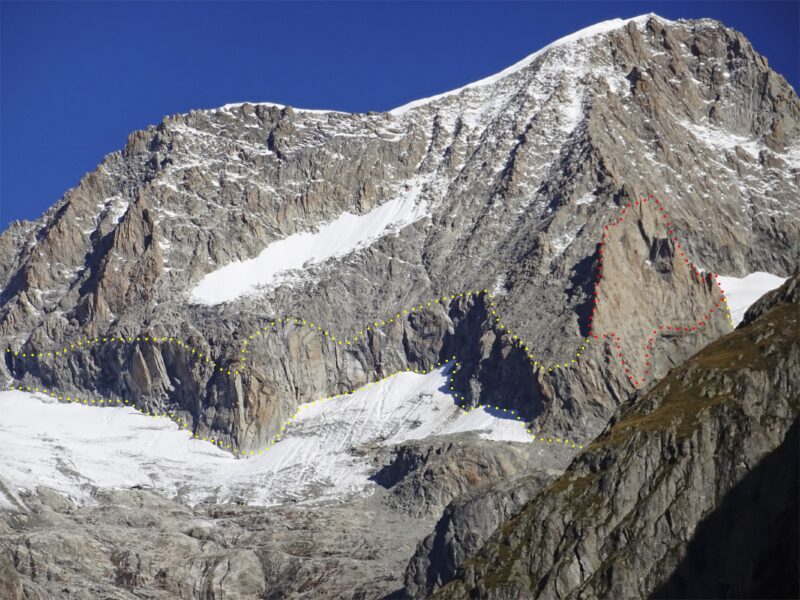
- 2026: Kleines Nesthorn, Valais: Recent observations at Kleines Nesthorn above Blatten show a different set of mechanics. Unlike the water-driven failures at Piz Scerscen, the detachment zone here appears dry and ice-free. However, the rock is severely fragmented by geological processes and historical glacial erosion at its base. Small, frequent rockfalls are occurring as the slope adjusts to the loss of glacial support.
Statistical Trends and Data Challenges
One of the most pressing questions for geologists is whether large rock avalanches are becoming more frequent. While the visual evidence is compelling, statistical confirmation remains difficult. Historically, there was no systematic recording of rockfalls in high-alpine regions, as these areas were largely uninhabited and unmonitored.
However, modern monitoring by the SLF and other institutions suggests a clear upward trend in small to medium-sized rockslides. These events are directly correlated with warmer summer temperatures and the deepening of the permafrost active layer. Regarding massive rock avalanches (events involving millions of cubic meters of material), Kenner notes that while they are likely to increase in frequency in regions above 3,000 meters, they will remain relatively rare "extreme events." The primary concern for authorities is that as these events occur, their unpredictability poses a significant challenge for regional safety and infrastructure planning.
Broader Implications for Alpine Safety and Infrastructure
The destabilization of the high Alps has far-reaching consequences beyond the scientific community. The tourism industry, which relies heavily on cable cars, hiking trails, and mountain huts, is facing an era of increased maintenance costs and liability. Many high-altitude structures are anchored directly into permafrost; as that ground thaws, foundations can shift, leading to structural failure.
Furthermore, the "cascading" nature of these hazards is a growing concern. A rockfall in a high-altitude zone can land on a glacier, triggering an ice avalanche, which then enters a stream and becomes a debris flow (murgang) that reaches a valley floor kilometers away. This was the case in the Bondo disaster, where the initial rockfall transformed into a mudflow that overran the village.
Conclusion and Future Outlook
The research conducted by Robert Kenner and the SLF emphasizes that the Alps are in a state of transition. The "seal" provided by permafrost is breaking, and the "buttresses" provided by glaciers are receding. As water replaces ice within the internal structures of the mountains, the risk of pressure-induced failures will continue to rise.
The SLF continues to expand its monitoring networks, using satellite interferometry, seismometers, and terrestrial laser scanning to track slope movements in real-time. While technology cannot prevent the mountains from moving, it provides crucial early warning data that can save lives. As the climate continues to warm, the focus of Alpine management must shift from passive observation to active risk mitigation, acknowledging that the very floor of the high Alps is no longer as solid as it once was.

