
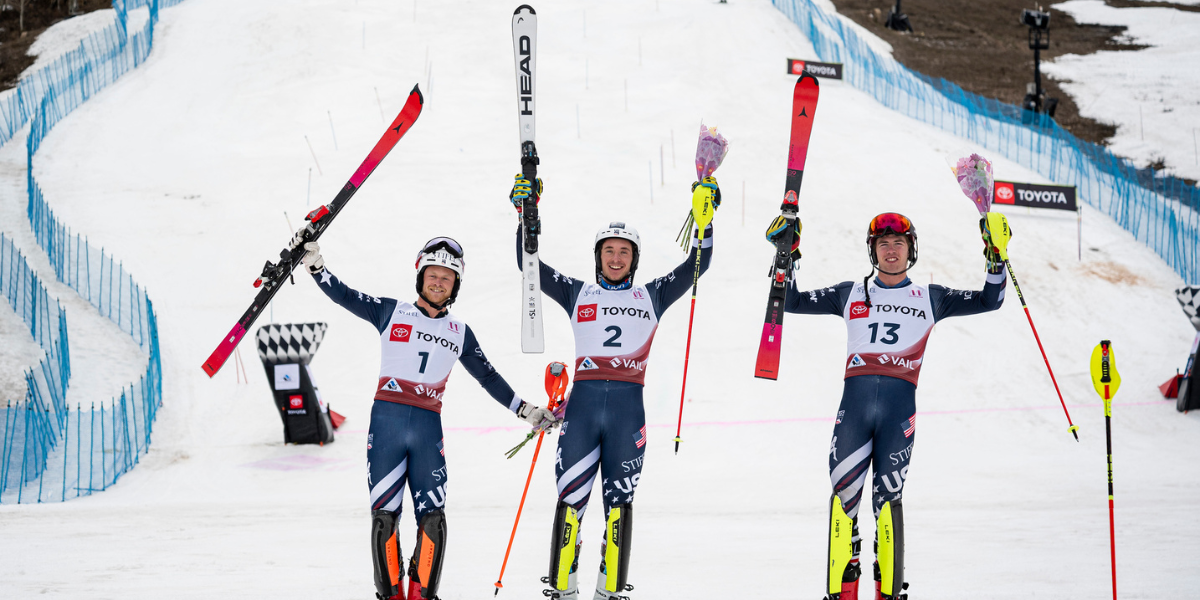
Vail, Colorado witnessed a rigorous test of alpine racing prowess as A.J. Hurt and Cooper Puckett emerged victorious in the women’s and men’s slalom events, respectively, at the Stifel U.S. Alpine Nationals. The competition, held amidst challenging warm and soft snow conditions, highlighted both the seasoned experience of World Cup athletes and the formidable ascent of rising stars within the Stifel U.S. Ski Team pipeline. Hurt secured her third U.S. National slalom title with two impeccably executed runs, while Puckett celebrated his maiden national slalom championship with a breakthrough performance on home soil, underscoring the depth and resilience of American ski racing talent.
The Crucible of Vail: Conditions and Event Significance
The U.S. Alpine Nationals represent the pinnacle of domestic alpine ski racing, serving as a crucial battleground for national titles, a proving ground for emerging talent, and a valuable opportunity for World Cup veterans to fine-tune their form or conclude their season on a high note. Hosted in Vail, Colorado – a venue steeped in alpine racing history, having hosted multiple World Ski Championships – the event itself carries significant prestige. This year, the conditions presented an additional layer of complexity. Persistent warm temperatures had softened the snow, transforming the meticulously prepared course into a demanding surface that rapidly broke down with each passing skier.
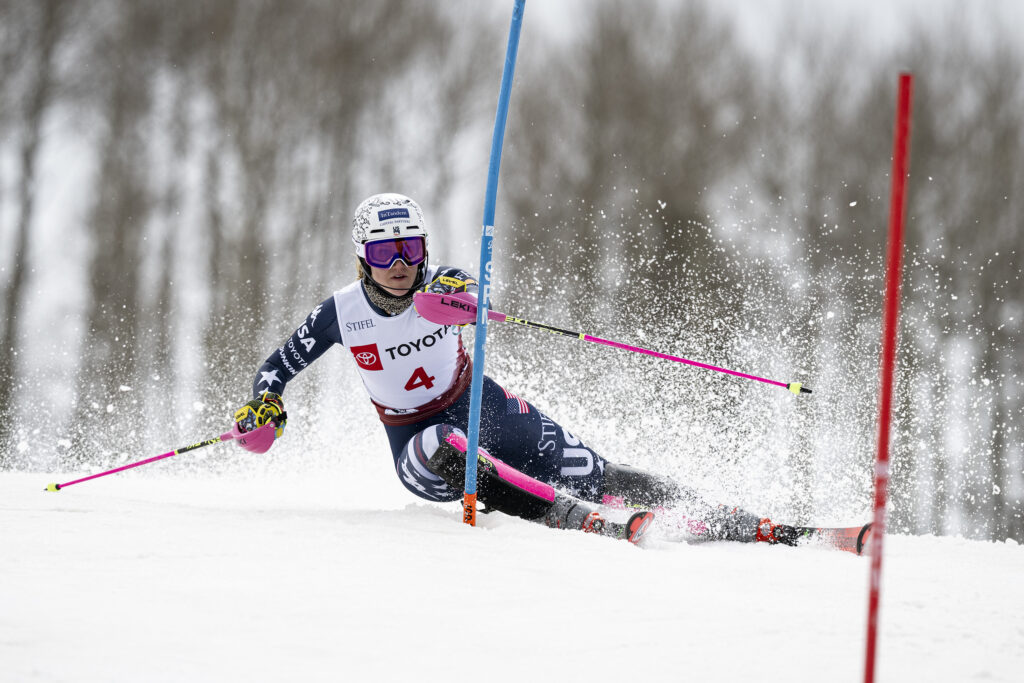
Such conditions are often described by athletes and coaches as a "survival slalom," where pure speed must be balanced with exceptional finesse and tactical acumen. The initial crispness of the gates quickly gave way to ruts and slush, making it exceedingly difficult to maintain a consistent line and edge pressure. Every turn became a precise calculation of timing and execution, demanding unparalleled focus. Any lapse in concentration, any hesitation, or any forced movement resulted in a loss of rhythm and, crucially, speed. The ability to adapt, to "feel" the snow, and to release cleanly from turns without getting caught in the deteriorating surface became the ultimate differentiator. The Stifel U.S. Alpine Nationals, presented by Stifel, thus became not just a race against the clock, but a masterclass in adapting to the most challenging of alpine environments.
Women’s Slalom: Hurt’s Masterclass in Precision and Poise
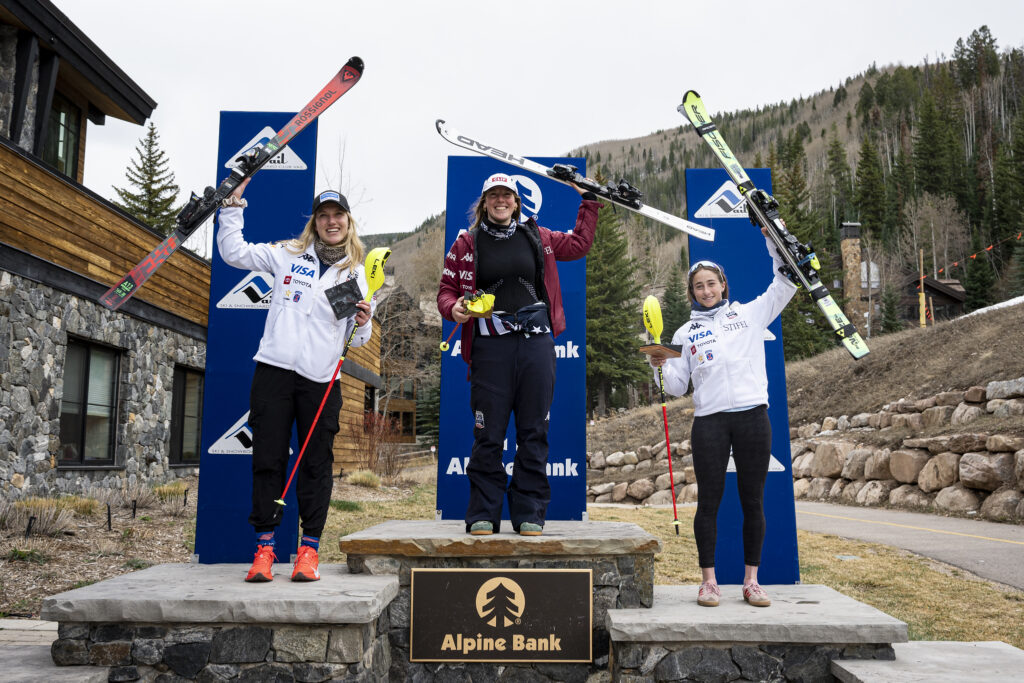
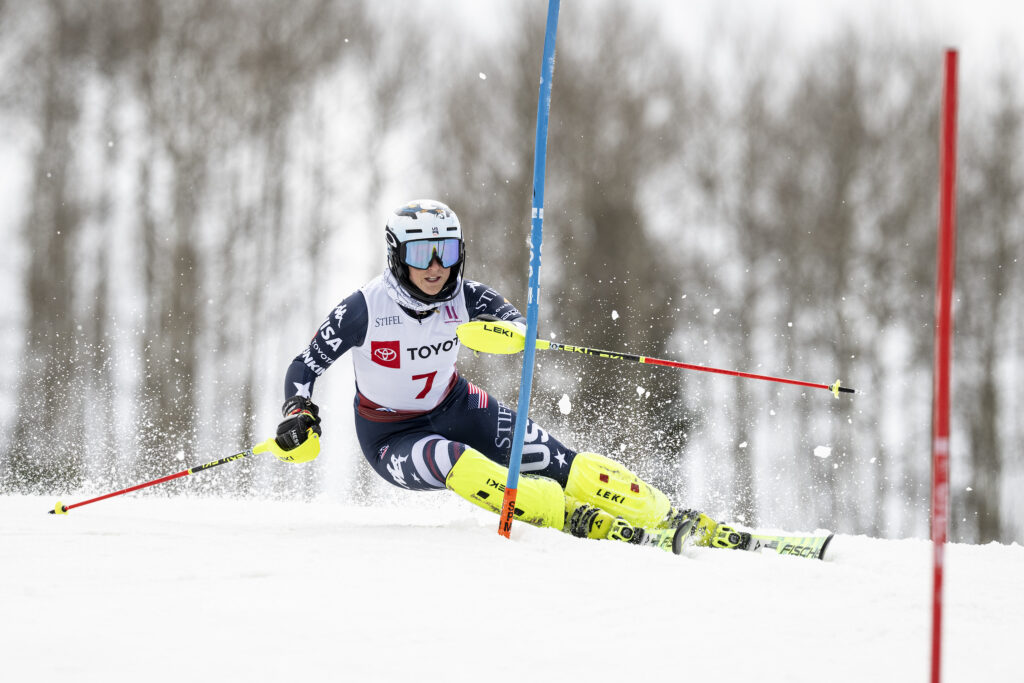
In the women’s slalom, A.J. Hurt delivered a performance that underscored her status as a top-tier athlete capable of excelling under pressure. The Stifel U.S. Ski Team member, a two-time Olympian (Beijing 2022, Cortina 2026) and a World Cup podium athlete in both slalom and giant slalom, navigated the deteriorating course with remarkable composure across both runs. Her ability to maintain an unwavering focus and timing was instrumental in securing her third career U.S. National slalom title.
Hurt’s victory was characterized by her seamless connection to the terrain. While many competitors struggled with the increasingly soft and rutted snow, getting "late" on turns or rushing their movements, Hurt demonstrated a fluid, almost intuitive, mastery of the course. She consistently matched her timing to the subtle shifts in the surface, releasing cleanly between gates and allowing her skis to carry speed naturally, rather than forcing it. This disciplined approach minimized risk while maximizing efficiency, a hallmark of her World Cup experience. "It’s nice to end on a good race," Hurt remarked, a sentiment undoubtedly echoed by the relief of completing a long and arduous season successfully. Her win in Vail not only adds another national title to her impressive resume but also reinforces her position as a versatile and dependable force in American alpine skiing.
Following Hurt, Nina O’Brien secured a commendable second place, finishing a mere 0.18 seconds behind. Representing the Stifel U.S. Ski Team and Burke Mountain Academy, O’Brien showcased composed and disciplined skiing, particularly in her second run, which was among the strongest in the field. Her ability to improve her timing as the race progressed allowed her to stay connected to the course while others faltered. A World Cup Finals qualifier and a future 2026 Olympian, O’Brien’s performance highlighted her experience and the refined control that defines top-level execution. "Honestly, it feels great," O’Brien stated, expressing her satisfaction at concluding the season on a high note, especially racing in her current home state of Colorado, which added a special personal dimension to her silver medal finish.
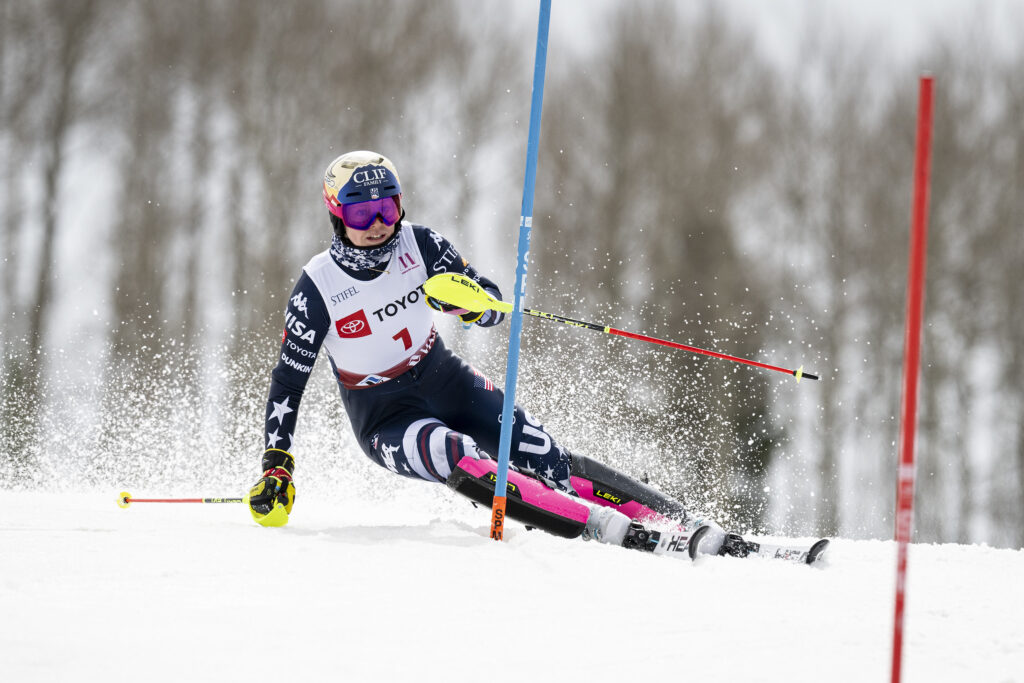
The bronze medal was a significant triumph for Kjersti Moritz, a local talent from the Vail Valley. The Stifel U.S. Ski Team athlete, affiliated with Ski & Snowboard Club Vail and Middlebury College, delivered under immense pressure, racing on her home snow. Her performance was not just about speed, but crucially, about impeccable timing and staying connected to the course as conditions worsened. "It was a really good end of the season," Moritz shared, highlighting the joy of celebrating with her friends and family who were present, including her two sisters who also competed. This personal connection undoubtedly fueled her drive. Moritz’s podium finish is particularly notable as she also finished second in the NorAm slalom standings, a result that earns her a coveted fixed World Cup start position for the upcoming season. This achievement signals her readiness to translate her domestic success to the highest echelons of international ski racing, building on her existing World Cup starts.
Rounding out the top five, Madison Hoffman, an Australian standout and University of Utah All-American, demonstrated disciplined skiing to manage the breaking course, securing fourth place. Her World Cup points-scoring performance in Levi and her status as a 2026 Olympian underscore her ability to execute under pressure. Katie Hensien, a Stifel U.S. Ski Team athlete from Rowmark Ski Academy and a University of Denver All-American, completed the top five. Overcoming injury challenges this season, Hensien delivered two consistent runs, maintaining her timing and efficiency in the difficult conditions, further cementing her reputation for reliable performances when precision is paramount.
Men’s Slalom: Puckett’s Home-State Breakthrough
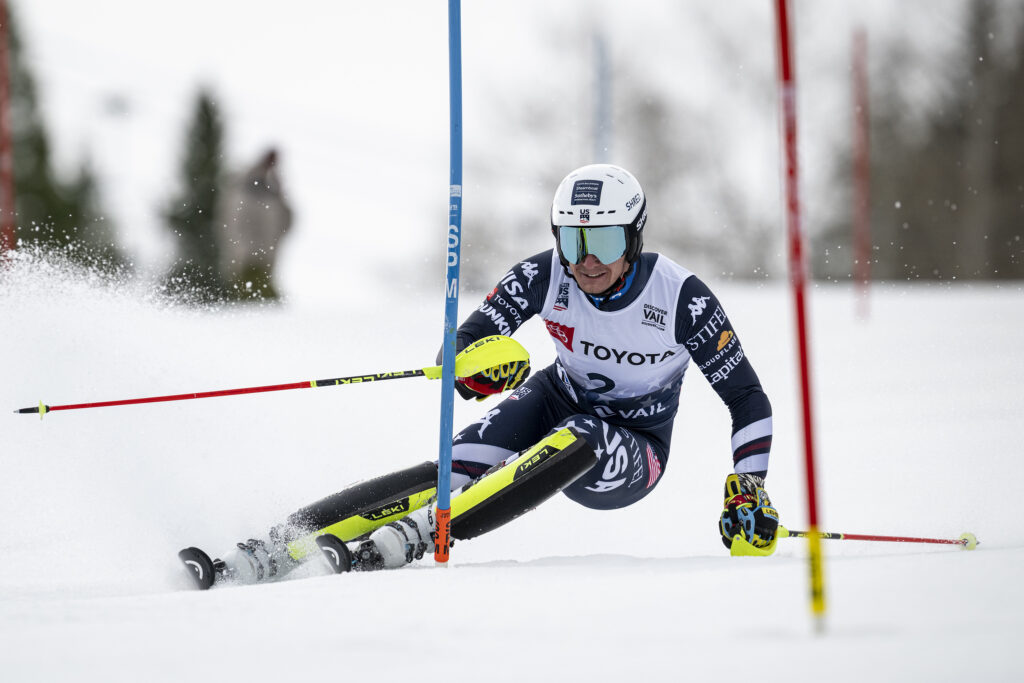
The men’s slalom event delivered equally compelling drama, with Cooper Puckett seizing his first U.S. National slalom title in front of a supportive home-state crowd. The Stifel U.S. Ski Team athlete, a former Dartmouth College skier with deep roots in Colorado, having skied with the Steamboat Springs Winter Sports Club and attended Steamboat Mountain School, showcased remarkable adaptability as the course deteriorated.
Puckett’s victory was a culmination of a challenging but ultimately rewarding season. "It was a really, really challenging year," Puckett admitted, "But to end it like this is incredible—I’m really happy." His defining strength lay in his exceptional timing. He moved in harmony with the terrain, released cleanly from turns, and carried speed without over-forcing his line. Where other racers might have been late or struggled for balance, Puckett maintained a crucial connection to the snow. His season included a memorable World Cup debut in Levi, where he scored points from bib 69, an exceptionally rare feat for a first-time World Cup slalom start. This accomplishment, coupled with his NorAm success, highlights his rapid progression. "That was probably the coolest thing I’ve ever done," he recalled, reflecting on his Levi performance. Despite limited slalom preparation and a season spent juggling various disciplines and travel, Puckett’s national title underscores his talent and resilience, particularly given his strong connection to the Colorado ski community. "I love racing here—so many friends and family," he said, emphasizing the collective effort behind his success: "Steamboat Springs Winter Sports Club means everything to me… it takes a village."
Jett Seymour, another product of the Steamboat Springs Winter Sports Club and a Stifel U.S. Ski Team member, secured second place, further solidifying his reputation as one of the most reliable American slalom athletes. Seymour has consistently scored World Cup slalom points in four consecutive seasons, demonstrating a remarkable level of consistency at the sport’s highest level. "It’s a great way to end the season," Seymour commented, appreciating the unique opportunity that Nationals provides to bring together the best American skiers. He also emphasized the importance of the event for the development pipeline, stating, "It’s important for the next generation to see us, to race against us, and to get to know us." His ability to compete close to his Colorado home, with family present, added to the significance of his strong finish.
The bronze medal went to Jevin Palmquist, a 19-year-old rising star from the Stifel U.S. Ski Team, developed through Team Summit and originally from Buck Hill, Minnesota. Palmquist’s performance was one of the most exciting of the day, signaling his rapid ascent in U.S. skiing. "To end with a strong result like this feels really good," Palmquist said, noting his improved skiing throughout the season. His achievements this year include a fourth-place finish at the FIS Junior World Ski Championships in Narvik and third in the NorAm slalom standings, ranking second among North Americans. This impressive NorAm result earned him a personal World Cup start position for the 2027 slalom season, a testament to his burgeoning talent. The moment was made even more special by the presence of his family, with two brothers and a sister also competing. "It was super fun racing with my brothers and watching my sisters," he shared, highlighting the familial bond woven into his success.
Veteran Luke Winters, a new father and a Stifel U.S. Ski Team member, finished fourth, showing clear signs of returning to his World Cup form. Winters is the only athlete in this field to have qualified for World Cup Finals, underscoring his extensive experience at the highest level. After a period of struggles, Winters closed the World Cup season with improved performances, carrying that momentum into Nationals. He skied with remarkable efficiency, staying in contention on a course that ruthlessly exposed mistakes, reminding everyone of his formidable capabilities when in rhythm. Rounding out the top five was Johs Braathen Herland, the Norwegian standout and University of Utah All-American, who added a strong slalom result to his Nationals campaign after winning the giant slalom earlier in the week. While demonstrating strong fundamentals, the deeply grooved surface demanded near-perfect timing, ultimately separating the podium finishers.
The Stifel U.S. Ski Team Pipeline: A Deep Bench for the Future

The 2024 Stifel U.S. Alpine Nationals presented a compelling narrative of both established excellence and burgeoning potential within U.S. alpine skiing. The outcomes in Vail highlighted a clear and encouraging trend: significant depth across generations in both men’s and women’s slalom. From the seasoned World Cup veterans like A.J. Hurt, Nina O’Brien, Jett Seymour, and Luke Winters, whose consistent performances and extensive international experience serve as benchmarks, to the rapidly emerging talents such as Kjersti Moritz, Cooper Puckett, and Jevin Palmquist, the Stifel U.S. Ski Team pipeline is demonstrably robust.
These races were more than just contests for national titles; they were crucial tests of character, adaptability, and fundamental skiing skills. On a demanding surface that punished hesitation and rewarded flawless execution, the athletes who could maintain their focus, feel the nuances of the snow, time their movements precisely, and execute cleanly were the ones who separated themselves from the rest of the field. This ability to perform at the highest level, even when conditions are far from ideal, is a critical skill honed through years of training and competition, and it is a non-negotiable standard for success on the World Cup circuit.
The success of young athletes like Moritz and Palmquist, earning World Cup starts through their NorAm standings, signifies a promising future for American alpine skiing. Their ability to compete shoulder-to-shoulder with, and even challenge, established World Cup athletes provides invaluable experience and accelerates their development. Simultaneously, the continued strong performances from veterans like Hurt and Seymour offer stability and mentorship, creating a dynamic and mutually beneficial environment within the team. The collective results from Vail underscore that the U.S. Ski & Snowboard development pathway is effectively nurturing a diverse group of athletes, ensuring a continuous stream of talent capable of competing at the highest international levels. The mix of experience and raw potential showcased at the U.S. Alpine Nationals is a powerful indicator of the vibrant health and exciting trajectory of U.S. alpine slalom.
Ultimately, the races in Vail were a testament to the core tenets of alpine ski racing: the profound importance of focus, the nuanced feel for the snow, precise timing, and flawless execution. These are the qualities that define success at the limit, and they were on full display as A.J. Hurt and Cooper Puckett etched their names into the history books of American ski racing.

