
Ski racing has long been celebrated as a crucible of discipline, speed, and unwavering commitment. It demands relentless training, extensive travel, significant physical sacrifice, and profound emotional resilience, a reality long accepted by athletes and coaches who dedicate their lives to the sport. Yet, beneath the surface of this demanding world, a quiet but profound challenge is unfolding, particularly for women who transition from elite racing careers into coaching and leadership roles: the moment motherhood enters the picture. This pivotal life change often subtly, yet dramatically, alters the professional equation, leading to a system that frequently undervalues and ultimately loses some of its most talented female leaders. The very qualities that made these women exceptional—dedication, availability, and intense focus—are suddenly viewed through a lens of skepticism, with their commitment often implicitly assumed to be compromised. The prevailing infrastructure of ski racing, largely designed without families in mind, leaves many women navigating an impossible choice between their professional passion and their personal calling.
The Historical Arc: Pioneers Paving the Way
For generations, women in ski racing have found ingenious, often solitary, ways to remain connected to the sport they love, even as societal norms and institutional structures offered little support. Pioneers like Darlene Nolting represent the early vanguard, forging careers in high-performance environments that were overwhelmingly male-dominated. Nolting’s journey in the Rocky Mountain Division unfolded long before discussions of flexibility or childcare integration were commonplace. When she became a mother, continuing in a high-performance coaching capacity was not an option; it necessitated a fundamental shift from coaching elite athletes to a more administrative, local youth coordinator role, reducing travel and intense on-hill presence. This move, born not of diminished ambition but of necessity, highlights the profound sacrifices made by early female leaders. Nolting, with her infant daughter often accompanying her to races and hiking hills in a carrier, built her career through sheer force of will and a robust personal support system, primarily her partner. Yet, she acutely felt the "loss of credibility" that came with reduced visibility, a subtle but persistent challenge to her expertise despite her knowledge remaining undiminished. Her experience underscores a critical historical pattern: the burden of adaptation, and often compromise, falling squarely on individual women.
The Contemporary Imperative: A Generation Refusing to Retreat
Today, that evolution continues, fueled by a new generation of former World Cup athletes and high-level coaches who are actively challenging outdated assumptions and reshaping the very definition of coaching. Figures like Alice McKennis Duran, Keely Kelleher, Julia Ford, and Chelsea Marshall are not just making it work; they are demonstrating how structural support can enable women to thrive in both roles. Across the sport, countless women are still coaching, leading programs, running camps, mentoring athletes, and shaping culture while raising families. Many adapt quietly, scaling travel, sharing responsibilities, or stepping into more flexible positions to maintain their connection to ski racing. However, the critical question ski racing must confront is not whether women can balance coaching and motherhood—they demonstrably already are—but whether the sport is doing enough to proactively and intentionally support them. The current landscape, while showing pockets of progress, still largely places the onus of adaptation on the individual rather than the institution.
The False Dichotomy: Coaching vs. Family Life
Alice McKennis Duran, a former World Cup racer, embodies the refusal to accept the false choice between high-performance coaching and motherhood. Now working within the U.S. Ski Team’s women’s regional programming alongside her husband, Pat Duran, while raising their young son, McKennis Duran’s experience is a testament to meticulous planning and unwavering intention. She articulates her approach as an extension of her athlete mindset: "It’s really just about balance and planning and timing and preparation… making sure I have everything organized." This level of foresight extends far beyond typical professional demands, involving months-in-advance childcare arrangements spanning continents—from Mammoth to New Zealand. Her days are scheduled with military precision, ensuring that when she is on the hill, her full attention is dedicated to the athletes. This rigorous preparation, however, masks a deeper systemic imbalance. Many male coaches rarely confront such logistical hurdles; their careers often proceed uninterrupted, frequently supported by partners who shoulder the majority of childcare responsibilities. For women, these invisible support systems are rarely a given, and their absence often forces women to step away.
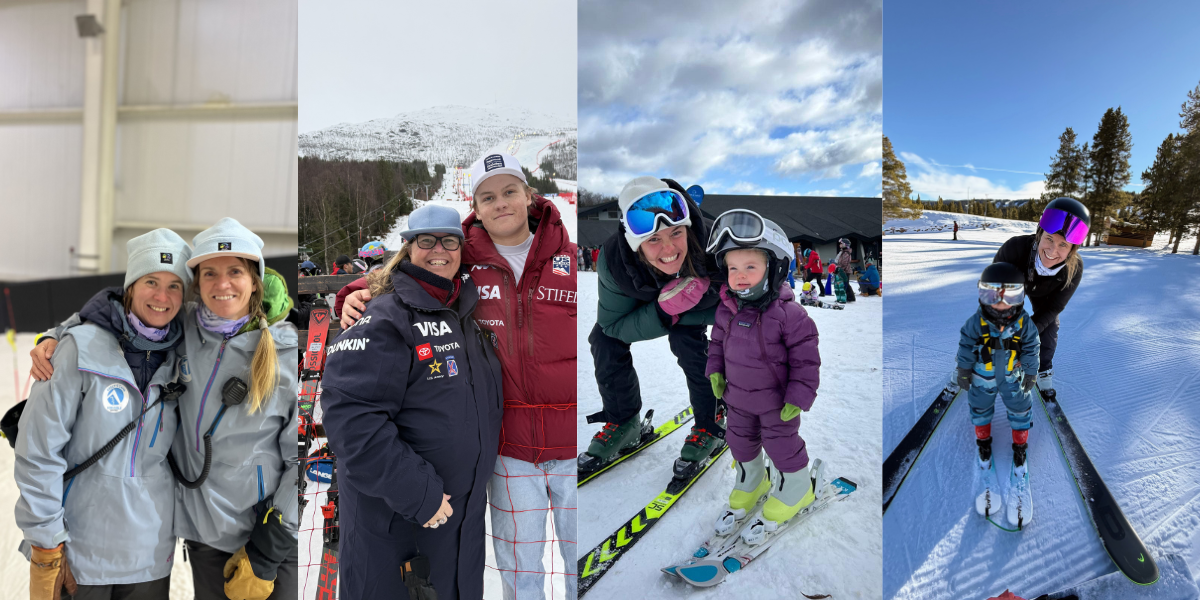
McKennis Duran’s situation is unique not because it is inherently easier, but because it has been made possible. The U.S. Ski Team, recognizing the value of retaining experienced female coaches, demonstrated a surprising willingness to "figure it out," creating a role structure that accommodates both her coaching responsibilities and her family life. This flexibility, while still rare across the sport, offers a crucial blueprint. Her perspective leads to an unavoidable question for the ski racing community: "How are we not trying to figure this out better? We’re losing coaches every day." This loss represents not merely a gap in staffing but a significant depletion of expertise, diverse perspectives, and vital mentorship for aspiring athletes.
The Unseen Cost: Losing Coaches at Their Peak
The ski racing community frequently laments a coaching shortage, yet it less often scrutinizes who is leaving and why. Women often exit high-level coaching not due to a lack of expertise, ambition, or commitment, but because the structural realities of the job become fundamentally incompatible with family life. The barriers are remarkably consistent: protracted travel blocks, often inconsistent pay, ambiguous or nonexistent maternity leave policies, and a glaring absence of clear re-entry pathways after a period of parental leave. Individually, each of these challenges might be navigated; collectively, they form an unsustainable gauntlet.
This exodus is far from theoretical. It manifests every season as programs struggle to retain experienced staff, as talented female coaches are forced into lower-level roles or depart the sport entirely, and as leadership rooms continue to lack diverse representation. The irony is profound: motherhood frequently enhances a coach’s capabilities, endowing them with heightened empathy, superior organizational skills, and a deeper understanding of human dynamics—qualities invaluable in athlete development. A 2022 study by the Women’s Sports Foundation highlighted that only 44% of head coaches in women’s collegiate sports are female, a number that has stagnated, and the percentage drops significantly for mothers in high-travel roles. The broader professional landscape mirrors this, with mothers disproportionately affected by career interruptions and slower advancement compared to their male counterparts, a phenomenon often termed the "motherhood penalty."
What Motherhood Adds: A Deeper Coaching Dimension
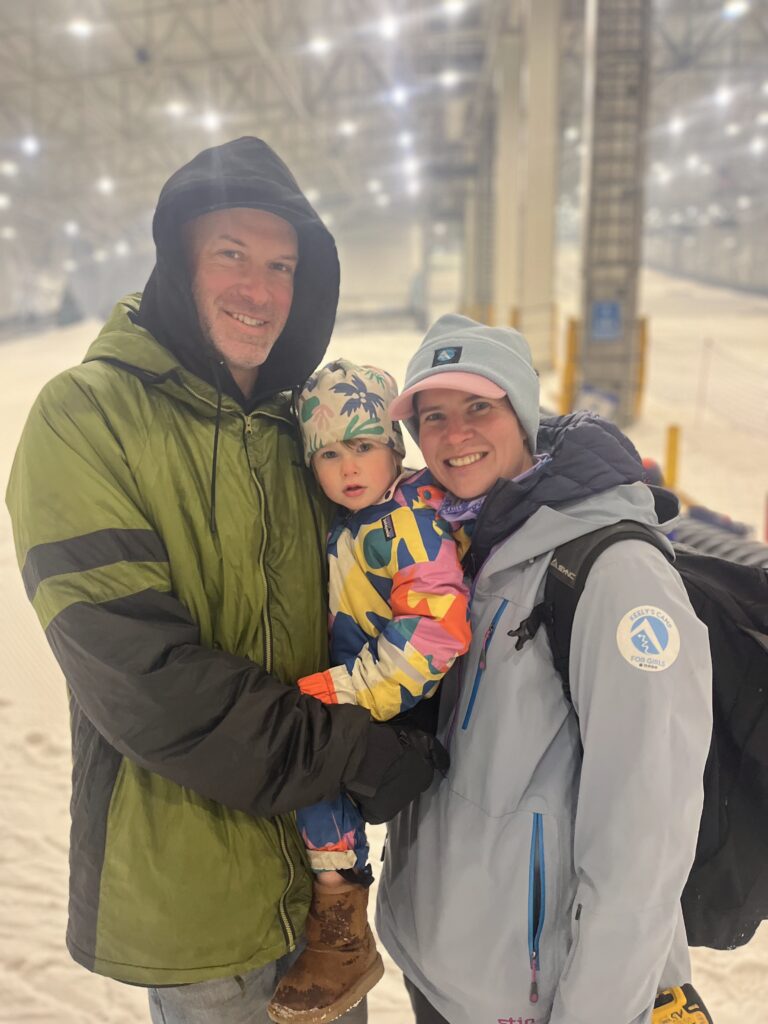
Keely Kelleher, founder of Keely’s Camp for Girls, offers a compelling model for how to not just retain but leverage the unique strengths of mothers in coaching. Her women-led program is designed differently, by design. Kelleher openly acknowledges the transformative impact of motherhood on her coaching philosophy: "I validate parents more now… Now I understand where that anxiety comes from." This shift in perspective has fundamentally reshaped her leadership approach. At her camps, childcare is not an afterthought but an integrated component of the program’s structure. Coaches rotate days, babies are often present, and schedules are flexible to accommodate family needs. Motherhood is not treated as a disruption but as an expected, valued aspect of her coaches’ lives. Kelleher asserts, "There are a lot of things I’m way better at now than I was before being a mom… I’ve never felt so dialed."
While acknowledging the inherent challenges and moments of doubt, stepping away from the sport was never an option for Kelleher. Her approach is elegantly simple: instead of demanding women adapt to an inflexible structure, she adapts the structure to them. Her commitment is unequivocal: "I don’t care how much it costs. I want them there. I don’t want to lose a Chelsea Marshall in coaching because we couldn’t make it work." Chelsea Marshall’s experience at Keely’s Camp vividly illustrates the power of this structural support. As a lead coach and a mother, Marshall is empowered to show up fully, her role designed with inherent flexibility and respect for her dual responsibilities. Childcare is integrated into the conversation, scheduling reflects real-life demands, and her value is unequivocally assumed. The outcome is not just retention but continuity, strong leadership, and invaluable mentorship that would otherwise be lost to the sport. Women are not leaving because their passion or commitment wanes; they are leaving because the cost of staying, in terms of personal sacrifice and systemic hurdles, becomes prohibitively high. When programs proactively adapt, women stay, enriching the sport with their enhanced capabilities and diverse perspectives.
Leadership, Visibility, and Cultural Transformation
Julia Ford, another former World Cup athlete, brings a crucial perspective on the impact of visibility and cultural context. Now leading the alpine program at Cardigan Mountain School while raising her daughter, Ford initially harbored anxieties about how families would perceive her ability to perform her job. To her surprise, she found overwhelming support, highlighting the potential for positive cultural shifts within institutions. "I think my biggest surprise was how excited people were for me," she recalls. This support was instrumental in allowing her to continue her demanding role, acknowledging that "You’re adding a whole other layer to everything you’re already doing… And it takes a lot of support around you."
Ford also recognizes that her experience, while positive, may not be universal, underscoring the uneven landscape of support across the sport. Her confidence, however, was shaped long before her own career by a strong lineage of female role models. Growing up, she was surrounded by women who seamlessly balanced leadership in ski racing with raising families. Her mother coached her and her three siblings, embedding ski racing deeply into their lives. Her aunt Wendy Neal served as head of school at Okemo Mountain School, and her aunt Julie Woodworth has long been president of the Vermont Alpine Racing Association. These women, operating "before a lot of women were" in such prominent roles, instilled in Ford a fundamental belief: "moms belong in the sport and we can do both. They fit together."
Ford’s presence extends beyond her coaching acumen; in an all-boys environment, her visibility as a strong female leader and mother is transformative. "If I can show them what a strong woman looks like in this role, hopefully that carries forward," she states. Her core conviction is simple yet profound: "I don’t think women want to choose between being a mom and being in ski racing. We believe we can do both." This belief challenges the outdated paradigm and underscores the urgent need for systemic change that fosters inclusivity and diversity at all levels of the sport.
A Critical Juncture: The Sport’s Unanswered Question
Across the diverse landscape of ski racing, women are indeed making it work through various adaptations—reducing travel, shifting roles, stepping into leadership or administrative positions, or even building entirely new, supportive models. Their careers may deviate from the traditional linear path, but their unwavering commitment to ski racing remains constant. What also remains consistent, however, is the disproportionate burden of adaptation that continues to fall on them.
Ski racing prides itself on relentless innovation. Equipment constantly evolves, training methodologies are perpetually refined, and athlete development pushes new frontiers. Yet, coaching structures, particularly concerning the integration of family life, have largely failed to keep pace with these advancements. These women are not asking for concessions; they are asking for recognition and structural support. Motherhood does not diminish commitment; it reshapes it, often enriching a coach’s capabilities in profound ways that benefit the athletes and the sport as a whole.
If ski racing is genuinely committed to retaining its invaluable pool of female coaching and leadership talent, mere acknowledgment is insufficient. Creativity in structural design cannot be optional; it must become a core strategic imperative. This includes implementing flexible roles, promoting shared responsibilities, establishing clear and generous maternity leave policies, developing robust re-entry pathways for returning mothers, and providing tangible childcare support. These are not luxuries; they are fundamental investments in the long-term health, diversity, and competitive viability of the sport.
The women featured in this article, along with countless others, are already proving that it can work. They are demonstrating the immense value that mothers bring to the coaching realm, not despite their family responsibilities, but often because of them. The pivotal question now facing ski racing is not whether its female coaches can balance their dual roles, but whether the sport itself is willing to meet them halfway, transforming its structures to truly support and empower all its leaders. The future of ski racing, its talent pool, and its cultural vibrancy depend on the answer.

