
The release of a comprehensive accident report by Avalanche.org and the Sierra Avalanche Center has provided the first detailed look into the catastrophic events of February 2026, when nine individuals lost their lives in a massive avalanche near Castle Peak. Located in the Donner Summit area of the Central Sierra Nevada, the incident now stands as the deadliest avalanche in the United States in over four decades. The report, which synthesizes survivor testimony, meteorological data, and search and rescue logs, paints a harrowing picture of a professional backcountry expedition overwhelmed by one of the most unstable snow configurations seen in the region in half a century.
According to the investigative findings, the tragedy was the result of a "perfect storm" of environmental volatility and complex group dynamics. Between February 15 and February 19, 2026, a powerful winter storm system moved through the Lake Tahoe region, depositing several feet of new snow atop a pre-existing, fragile snowpack. While the storm itself was significant, investigators highlighted that the precise hour of the avalanche saw conditions reach their most extreme state. Sustained winds of up to 125 mph were recorded on the ridges, causing massive amounts of snow to be redistributed into unstable "wind slabs." These drifts were far deeper than what was measured at sheltered weather stations, creating a lethal hazard on the slopes of Castle Peak.
Historical Context and Comparative Scale
The loss of nine lives in a single event has sent shockwaves through the American snowsports community. To find a comparable tragedy in California, historians point back to March 31, 1982, when an avalanche at the Alpine Meadows Ski Resort claimed seven lives. Nationally, the Castle Peak incident is the most significant since the 1910 Wellington, Washington, disaster, where 96 people perished after a slide swept two passenger trains into a gorge.
On average, the United States sees approximately 25 to 30 avalanche fatalities per year, typically involving solo travelers or small groups of two to three people. The scale of the Castle Peak event—involving a professionally guided party of fifteen—represents a statistical anomaly that has prompted a deeper look into the protocols of commercial backcountry operations and the decision-making processes employed during extreme weather cycles.
Chronology of the Expedition and the Fatal Merge
The report clarifies the structure of the party for the first time, revealing that the group was not originally a single unit. On February 15, 2026, two separate guided trips departed for the Frog Lake Huts, a remote backcountry lodging facility in the Castle Peak area. The first group consisted of six female clients and two guides, while the second comprised three male clients and two guides. Both groups were serviced by the same professional guiding organization.
As the storm intensified over the next 48 hours, the decision was made on the morning of February 17 to combine the two groups for the return journey to the trailhead. This created a single, large party of eleven clients and four guides. Investigators suggest that this "group consolidation" may have played a role in the tragedy, as larger groups are often more difficult to manage in high-consequence terrain and can create a false sense of security among participants.
The descent began in whiteout conditions with extreme wind loading. The report notes that shortly before the avalanche released, the group became slightly separated. A technical issue with a ski binding forced Guide #4 to stop and assist Client #11. This equipment failure, while frustrating at the moment, ultimately saved their lives by placing them several hundred feet behind the main body of the group when the slope gave way.
The Mechanics of the Slide and Immediate Aftermath
At approximately 11:30 a.m., the slope fractured. Quoting testimony from the New York Times published shortly after the event, the report describes a "wall of white" descending upon the skiers. Client #10, one of the few to survive the initial impact, recalled seeing "strange blurs of colors"—the tumbling gear and clothing of his companions—before diving behind a dead tree to avoid being swept away. He was partially buried but managed to extricate himself.
The avalanche is classified as a "soft slab" of size D2 to D2.5, meaning it was large enough to bury, injure, or kill a person and traveled approximately 400 vertical feet. It tore through a stand of trees, which likely contributed to the trauma sustained by those caught in the flow. When Guide #4 and Client #11 arrived at the scene moments later, they did not see the slide occur; they simply encountered a silent, 100-foot-wide debris field where their companions had been seconds before.
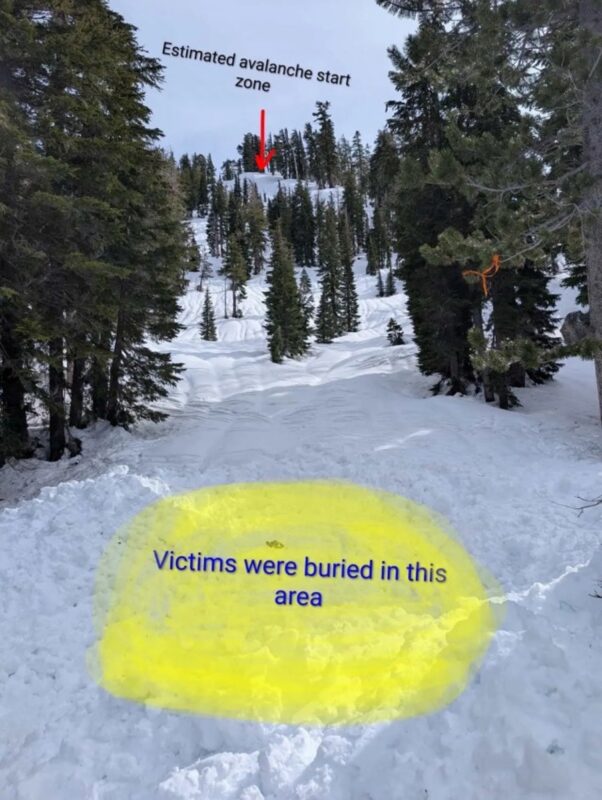
One of the most sobering revelations in the report is that although several members of the group were equipped with avalanche airbag backpacks—designed to keep a person on the surface of moving snow—none were deployed. This suggests the speed and violence of the event may have overwhelmed the victims before they could react.
A Desperate Companion Rescue
The report provides a minute-by-minute account of the rescue efforts undertaken by the three survivors on the surface: Guide #4, Client #11, and Client #10. Working in a blizzard with 125 mph wind gusts, they began a transceiver search.
The first person located was Client #9, who was found after Client #11 spotted a moving ski pole protruding from the snow. Client #9 had miraculously maintained an airway along his arm and was not seriously injured. The search continued, with Guide #4 using a transceiver and probe to locate Clients #8 and #7. As they dug to expose the faces of these survivors, they discovered the remains of others. The report states that while excavating Client #7, rescuers encountered the leg of one member and the backpack of another.
Upon reaching Guide #3 and Client #6, the rescuers determined that neither showed signs of life. Faced with the reality of multiple burials and the ongoing threat of further avalanches, Guide #4 made the difficult tactical decision to focus on the living. The six survivors were moved to an emergency shelter constructed in a protected area downslope.
Search and Recovery Operations
A 911 call was successfully placed by Client #10 at the start of the search, triggering a massive response from Tahoe Nordic Search and Rescue (TNSAR) and other regional agencies. However, the same conditions that caused the avalanche hampered the rescue. SAR teams had to navigate through the storm, with some teams using snowcats to reach the Frog Lake Huts while others approached on skis from the trailhead.
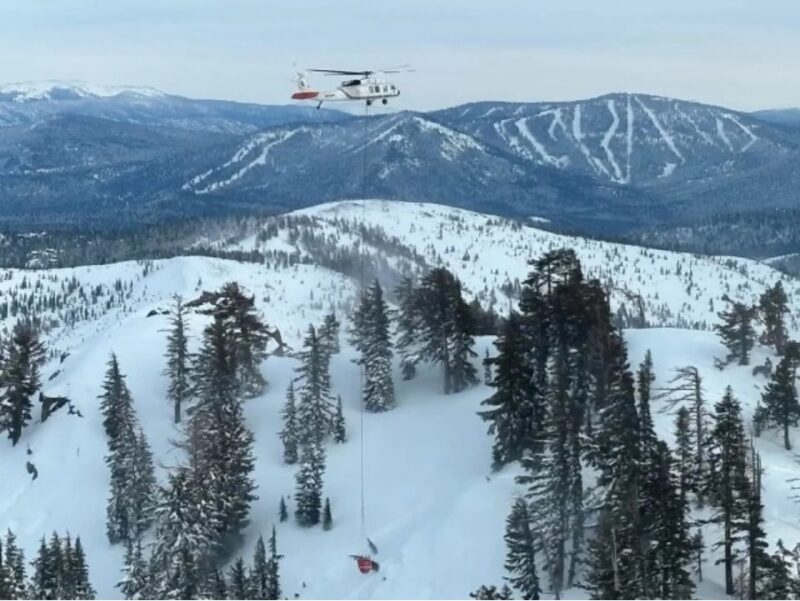
By the time TNSAR reached the site at 5:30 p.m., two feet of fresh snow had already buried the original avalanche debris. Rescuers described the surreal nature of the scene: on the packed debris, they could walk normally, but if they stepped off the edge, they sank past their waists into the unconsolidated powder.
Using advanced sonar and probing techniques, TNSAR located the remaining eight victims that evening. They were found clustered in a remarkably small 20-foot by 20-foot area, buried between three and eight feet deep. All eight were confirmed deceased. The recovery of the final victims took several more days, requiring a specialized mitigation operation. PG&E helicopters were brought in to drop 5,500-pound water buckets on the upper slopes to trigger any remaining unstable snow before recovery teams could safely enter the "kill zone." The final victims were not brought out until February 21.
Findings and Future Implications
The investigators from the Sierra Avalanche Center identified four primary factors that contributed to the scale of the disaster:
- Extreme Weather: The "50-year" snowpack instability and wind loading created a hazard that exceeded typical safety margins.
- Group Size: The decision to merge two groups into a 15-person party complicated communication and increased the number of people exposed to the hazard simultaneously.
- Terrain Choice: The route taken crossed a slope that, while perhaps safe in normal conditions, became a terrain trap under extreme wind loading.
- Human Factors: The report suggests that "social facilitation" (the tendency for people to perform differently when in a large group) and "expert halo" (the assumption that guides can mitigate all risks) may have influenced the decision to travel during the height of the storm.
As of April 2026, the Nevada County Sheriff’s Office and the California Division of Occupational Safety and Health (Cal/OSHA) maintain active investigations into the guide service’s protocols. No formal charges have been filed, but the industry is already seeing a shift toward more conservative group-size limits and stricter "go/no-go" parameters during high-wind events.
The Castle Peak tragedy serves as a grim reminder of the inherent risks of the backcountry. While technology like transceivers and airbags are essential tools, the report concludes that they are no substitute for avoiding high-consequence terrain during extreme weather cycles. For the families of the nine victims and the six survivors who witnessed the "wall of white," the events of February 17 remain a definitive marker of the power and unpredictability of the Sierra Nevada mountains.

