
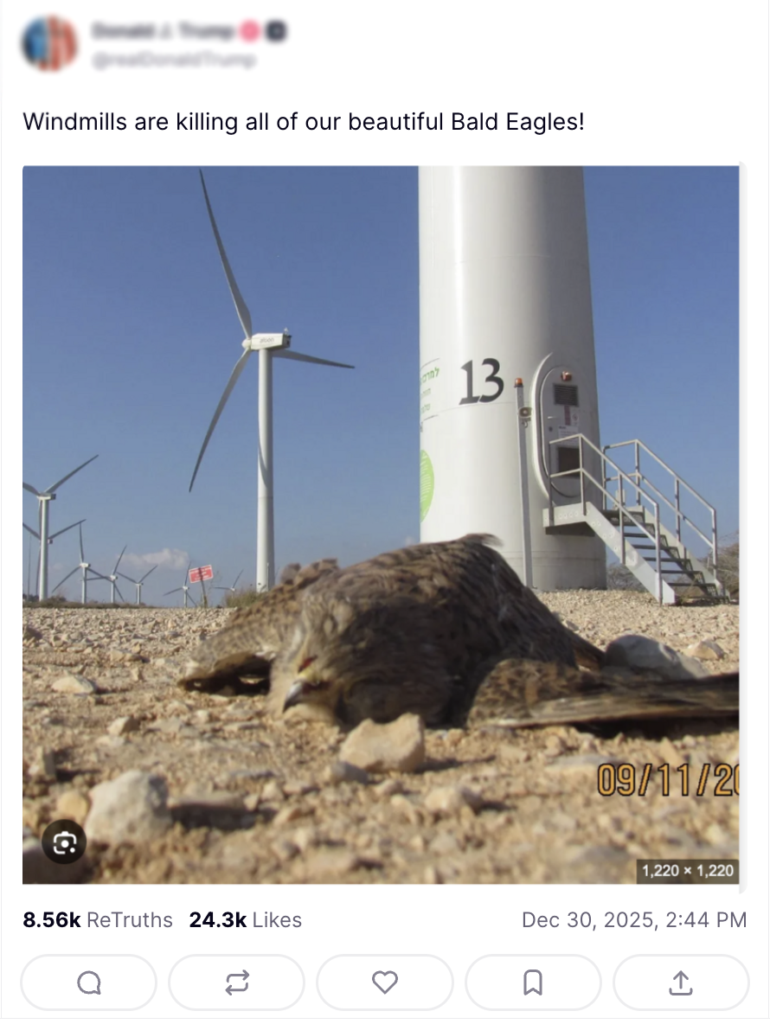
The global transition toward renewable energy has reached a critical inflection point, marked by record-breaking investments in solar, wind, and electric vehicle technology. However, as the infrastructure for a low-carbon economy scales up, it is being met by an increasingly sophisticated and coordinated campaign of disinformation. These campaigns, often funded by entrenched fossil fuel interests, seek to stall progress by seeding doubt regarding the reliability, safety, and environmental impact of clean energy solutions. From claims that offshore wind turbines are responsible for whale strandings to assertions that solar farms permanently destroy arable land, the narratives are designed to exploit local anxieties and derail systemic climate action. Understanding the mechanics of this information war is essential for policymakers, investors, and the public as the world moves to meet the targets set by the Paris Agreement.
The Distinction Between Misinformation and Disinformation
In the context of climate discourse, it is vital to distinguish between misinformation and disinformation, as the two have different origins and require different responses. Misinformation refers to the unintentional spread of false or inaccurate information. This often occurs when individuals, concerned about their local environment or property values, share unverified claims they believe to be true. For example, a resident might post on social media about the perceived noise levels of a nearby wind farm based on hearsay rather than acoustic data. While incorrect, the intent is rarely malicious.
Disinformation, conversely, is the deliberate creation and distribution of false or misleading information with the intent to deceive or achieve a specific strategic goal. Historically, fossil fuel entities and associated lobbying groups have utilized disinformation to protect market share and delay regulatory shifts. By funding "think tanks" or front groups that mimic grassroots organizations, these interests can inject skepticism into the public sphere. This tactic, often referred to as "astroturfing," creates the illusion of widespread public opposition to renewable projects where it might not otherwise exist. The primary goal of disinformation in the energy sector is "climate delayism"—a strategy that acknowledges the reality of climate change but argues that the proposed solutions are too expensive, too unreliable, or more harmful than the status quo.
A Chronology of Strategic Skepticism
The current wave of anti-renewable sentiment is the latest chapter in a decades-long effort to influence public perception regarding energy. A brief timeline of this evolution illustrates how the focus has shifted from denying climate science to attacking specific technological solutions:
- 1970s – 1980s: Internal Recognition and External Silence. Internal documents from major oil companies, such as Exxon, reveal that their scientists accurately predicted global warming trends as early as 1977. Despite this internal consensus, public communications focused on the benefits of petroleum and the necessity of fossil fuels for economic growth.
- 1990s: The Rise of Scientific Uncertainty. Following the 1988 testimony of NASA scientist James Hansen regarding the greenhouse effect, industry-funded groups like the Global Climate Coalition (GCC) were formed. Their primary objective was to emphasize "scientific uncertainty" to prevent the United States from signing international climate treaties like the Kyoto Protocol.
- 2000s: The "Climategate" Era. The focus shifted toward attacking the credibility of climate scientists. In 2009, hacked emails from the University of East Anglia were misrepresented to suggest that scientists were manipulating data, a claim that was later debunked by multiple independent investigations.
- 2010s – Present: The War on Renewables. As solar and wind became the cheapest forms of new electricity generation, the narrative shifted. Opponents began targeting the perceived flaws of the technology itself, focusing on "grid intermittency," the environmental impact of mineral mining for batteries, and the aesthetic impact of turbines and panels on rural landscapes.
Empirical Data: Debunking Common Myths
To counter the narratives generated by disinformation campaigns, it is necessary to examine the empirical data provided by academic institutions and international energy agencies. Several recurring themes in the anti-renewable movement can be addressed through rigorous life-cycle assessments and ecological studies.
The Life-Cycle Emissions of Electric Vehicles
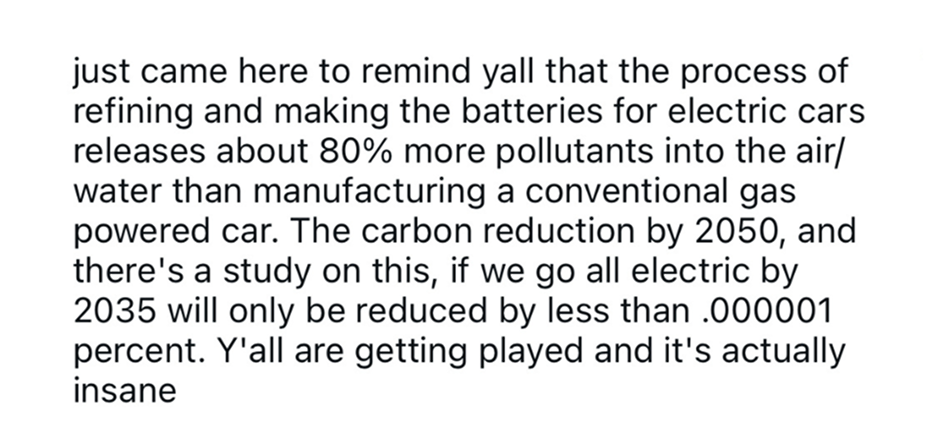
A common critique of the transition to electric vehicles (EVs) is that the carbon footprint of battery production and the mining of lithium, cobalt, and nickel outweighs the benefits of reduced tailpipe emissions. However, data from the Massachusetts Institute of Technology (MIT) Energy Initiative provides a more nuanced reality. According to their research, the average internal combustion engine (ICE) vehicle emits approximately 350 grams of CO2 per mile driven over its lifetime. In contrast, a fully battery-electric vehicle, even when accounting for the carbon-intensive process of battery manufacturing and the current mix of the electrical grid, produces roughly 200 grams per mile. As the power grid continues to decarbonize through the addition of more renewable sources, the lifetime emissions of EVs will continue to decrease, a benefit that ICE vehicles cannot achieve.
Offshore Wind and Marine Ecosystems
Recent narratives have attempted to link offshore wind development to marine mammal mortality, particularly whales. However, the National Oceanic and Atmospheric Administration (NOAA) and the Bureau of Ocean Energy Management (BOEM) have stated that there is no scientific evidence to support the claim that noise or vibrations from wind farm surveys or construction are killing whales. The primary threats to these populations remain vessel strikes, entanglement in fishing gear, and the warming of ocean temperatures—the latter of which is directly driven by the continued combustion of fossil fuels. While all industrial activity in the ocean requires careful conservation-minded planning, the risks posed by wind infrastructure are significantly lower than the catastrophic risks associated with offshore oil spills and long-term ocean acidification.
Land Use and Agriculture
The "loss of farmland" is a frequent talking point used to oppose utility-scale solar projects. In reality, solar farms currently occupy a tiny fraction of total agricultural land. Furthermore, the emerging field of agrivoltaics—the co-location of solar panels and agriculture—shows that certain crops actually thrive in the partial shade provided by panels, which also helps retain soil moisture. In many cases, solar leases provide a stable, long-term source of income for farming families, allowing them to keep their land rather than selling it to developers for residential or commercial use.
The Economic Reality: LCOE and Market Trends
The shift toward renewables is not merely a moral or environmental imperative but an economic one. According to Lazard’s Levelized Cost of Energy (LCOE) analysis, the cost of generating electricity from utility-scale solar and wind has dropped by approximately 90% and 70%, respectively, over the last decade. In many regions, it is now cheaper to build and operate new renewable energy capacity than it is to continue running existing coal-fired power plants.
Disinformation campaigns often ignore these market dynamics, instead focusing on the "unreliability" of wind and solar. However, advancements in battery storage and grid management are rapidly addressing intermittency issues. In 2023, the International Energy Agency (IEA) reported that global renewable capacity additions increased by 50% over the previous year, the fastest growth rate in two decades. This momentum suggests that despite the noise of disinformation, the global market is moving decisively toward electrification.
Official Responses and Policy Implications
Government agencies and international bodies have begun to take more aggressive stances against energy disinformation. The United Nations has identified climate disinformation as a major barrier to climate action, calling for increased transparency in digital advertising and more robust fact-checking on social media platforms.
In the United States, the Inflation Reduction Act (IRA) has provided a significant policy tailwind for clean energy, offering tax credits and subsidies that have sparked a domestic manufacturing boom. In response, opponents have intensified their efforts at the local level, lobbying for zoning restrictions that effectively ban renewable projects. Environmental advocacy groups, such as Protect Our Winters (POW), have responded by mobilizing "pillars of truth"—community members who engage in local municipality elections and advocate for renewables based on economic and climate benefits.
Broader Impact and the Path Forward
The persistence of disinformation has real-world consequences. It delays the deployment of critical infrastructure, leading to higher long-term costs for consumers and increasing the severity of climate-related disasters. When public discourse is poisoned by "red herring" arguments—such as focusing on the aesthetics of a wind turbine while ignoring the health impacts of air pollution from a nearby coal plant—the pace of progress slows.
To counter these effects, a multi-pronged approach is required. First, there must be a commitment to scientific literacy and the promotion of credible sources. Second, the financial ties between disinformation campaigns and their funders must be made transparent. Finally, the clean energy movement must acknowledge that the transition is not perfect. Infrastructure development of any kind has an environmental footprint. The goal is not to find a "zero-impact" solution, but to choose the path that causes the least harm while ensuring a livable future.
As the energy landscape continues to evolve, the ability of the public to discern fact from fiction will be as important as the technological innovations themselves. The transition to renewable energy remains the most viable path toward powering modern society while preserving the ecological systems upon which human life depends. By dispelling myths and focusing on data-driven solutions, the global community can move past the distractions of the current "fear campaign" and toward a more resilient and sustainable energy future.

