
In August 2012, explorer Alban Michon and scientist Vincent Berthet embarked on a harrowing two-month expedition, navigating approximately 620 miles of the treacherous East Greenland coast by kayak. Their journey, documented in the film "Le Piège Blanc" (The White Trap), stands as a testament to human resilience against one of the planet’s most unforgiving environments, pushing the boundaries of extreme adventure and survival.
The expedition’s objective was to traverse a significant portion of Greenland’s eastern coastline, a region characterized by its immense fjords, colossal glaciers, and volatile weather systems. This starkly beautiful but lethally challenging landscape presents unique obstacles for any explorer, let alone those reliant on human power and lightweight watercraft. The duo faced an array of environmental hazards, including extreme cold, sub-zero temperatures that could plummet to -50°C (-58°F), frigid waters, colossal icebergs, and winds that have been recorded exceeding 120 mph. The constant threat of shifting ice, unpredictable currents, and the presence of wildlife, such as polar bears, added layers of peril to an already demanding undertaking.
A Chronology of Extreme Challenges
The expedition commenced in August 2012, strategically timed to maximize daylight hours before the onset of the polar night. This temporal constraint added urgency to their ambitious route. The initial phase involved meticulously planning their resupply points and potential emergency extraction zones, a critical consideration given the near-total absence of human settlements along their intended path. The vastness of the East Greenland coast means that settlements are few and far between, with hundreds of miles often separating one community from the next. This isolation amplifies the stakes of any mishap.
Michon, an experienced explorer known for his daring expeditions, and Berthet, a scientist bringing a methodical approach to the journey, relied heavily on their specialized equipment and extensive preparation. Their kayaks were designed to withstand extreme conditions, but the unforgiving nature of the Arctic ice and coastline proved to be a relentless adversary.
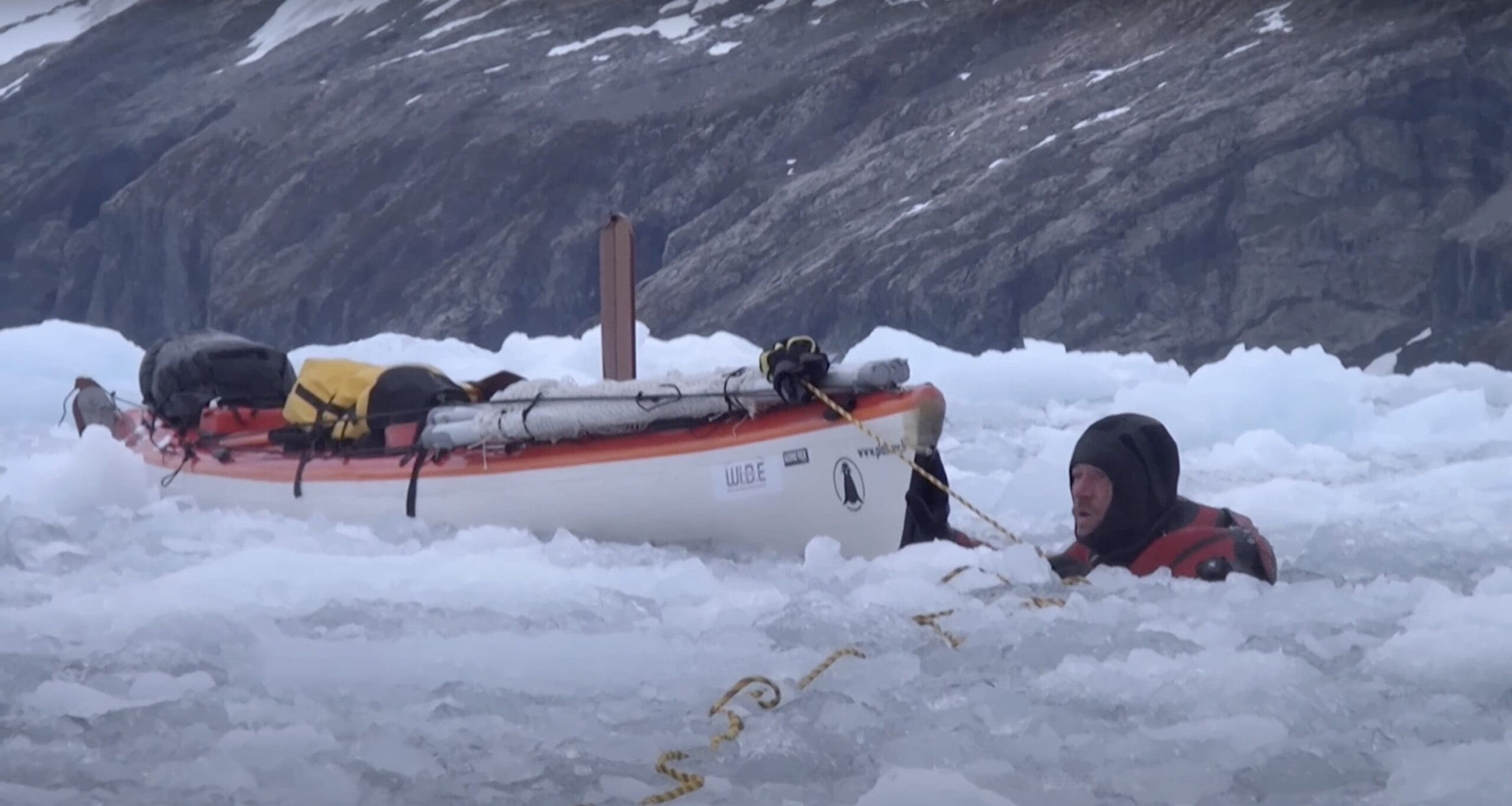
A pivotal moment in the expedition occurred approximately midway through their journey when one of the kayaks sustained significant damage to its bow. In the remote and unforgiving Arctic, a breach in a kayak’s hull is not merely an inconvenience; it is a potentially fatal threat. With rescue operations virtually impossible in such conditions, survival hinges entirely on the crew’s self-sufficiency and their ability to effect immediate repairs. The incident underscored the precariousness of their endeavor and the critical importance of their preparedness. Fortunately, the team was equipped for such contingencies and managed to execute an emergency repair, allowing them to continue their voyage through the labyrinthine fjords and past towering glaciers that define Greenland’s eastern seaboard.
The final weeks of the expedition were characterized by a race against time. As September progressed, the days grew shorter, and the encroaching polar night loomed, threatening to plunge the region into months of perpetual darkness. This environmental factor added a psychological and logistical pressure, forcing the team to maintain a rigorous pace and make crucial decisions under duress.
Supporting Data and Environmental Context
The East Greenland coast is renowned for its dramatic topography, carved by millennia of glacial activity. It is home to the world’s largest fjord system, a complex network of deep, narrow inlets that are constantly shifting with the movement of ice. The sheer scale of these features, combined with the dynamic nature of sea ice, creates a uniquely challenging paddling environment. Icebergs, calved from massive glaciers, can range in size from small chunks to floating mountains, posing a constant navigational hazard. Their unpredictable movement, influenced by currents and tides, requires constant vigilance.
The meteorological conditions are equally extreme. The East Greenland Current, a cold ocean current, flows south along the coast, contributing to frigid sea surface temperatures. The region is also prone to katabatic winds, powerful downdrafts from the ice sheet that can generate hurricane-force gusts, making open water paddling exceptionally dangerous.
In terms of scale, the distance covered, approximately 620 miles (1000 kilometers), is equivalent to traversing the length of England twice. This immense distance, undertaken in a kayak, highlights the extraordinary physical and mental endurance required. The expedition also took place in a largely uninhabited region. For instance, the nearest major settlement to some of the points along their route could be hundreds of miles away. This remoteness dictates a high degree of self-reliance for any expedition.

The Documentary: "Le Piège Blanc"
The documentary "Le Piège Blanc" captures the raw intensity of Michon and Berthet’s expedition. It offers viewers a visceral experience of the challenges they faced, from the awe-inspiring beauty of the Arctic landscape to the moments of sheer terror and determination. The film serves not only as a record of their achievement but also as an educational tool, illustrating the power of nature and the human capacity to confront it. The title itself, "The White Trap," aptly describes the deceptive allure and inherent dangers of the Arctic environment.
Implications and Broader Impact
Alban Michon and Vincent Berthet’s kayak expedition along the East Greenland coast is more than just a feat of endurance; it represents a significant contribution to the understanding of human limits in extreme environments. Their journey provides invaluable insights into the practicalities of long-duration, self-supported expeditions in polar regions. The successful navigation of such a formidable landscape, despite facing critical equipment failure, underscores the importance of meticulous planning, robust equipment, and unwavering mental fortitude.
The expedition also serves as a powerful reminder of the raw, untamed beauty of our planet’s most remote regions. In an era of increasing human impact on the environment, such journeys highlight the importance of conservation and the need to protect these pristine wildernesses. For aspiring adventurers and explorers, their story offers inspiration, demonstrating that with sufficient preparation, skill, and a profound respect for nature, even the most daunting challenges can be overcome. The documentary, by bringing their experience to a wider audience, fosters a greater appreciation for the Arctic and the fragile ecosystems it supports. It encourages a dialogue about responsible exploration and the ongoing pursuit of knowledge in the face of extreme natural forces.

